
NEW YORK, May 24, 2026, 14:05 EDT
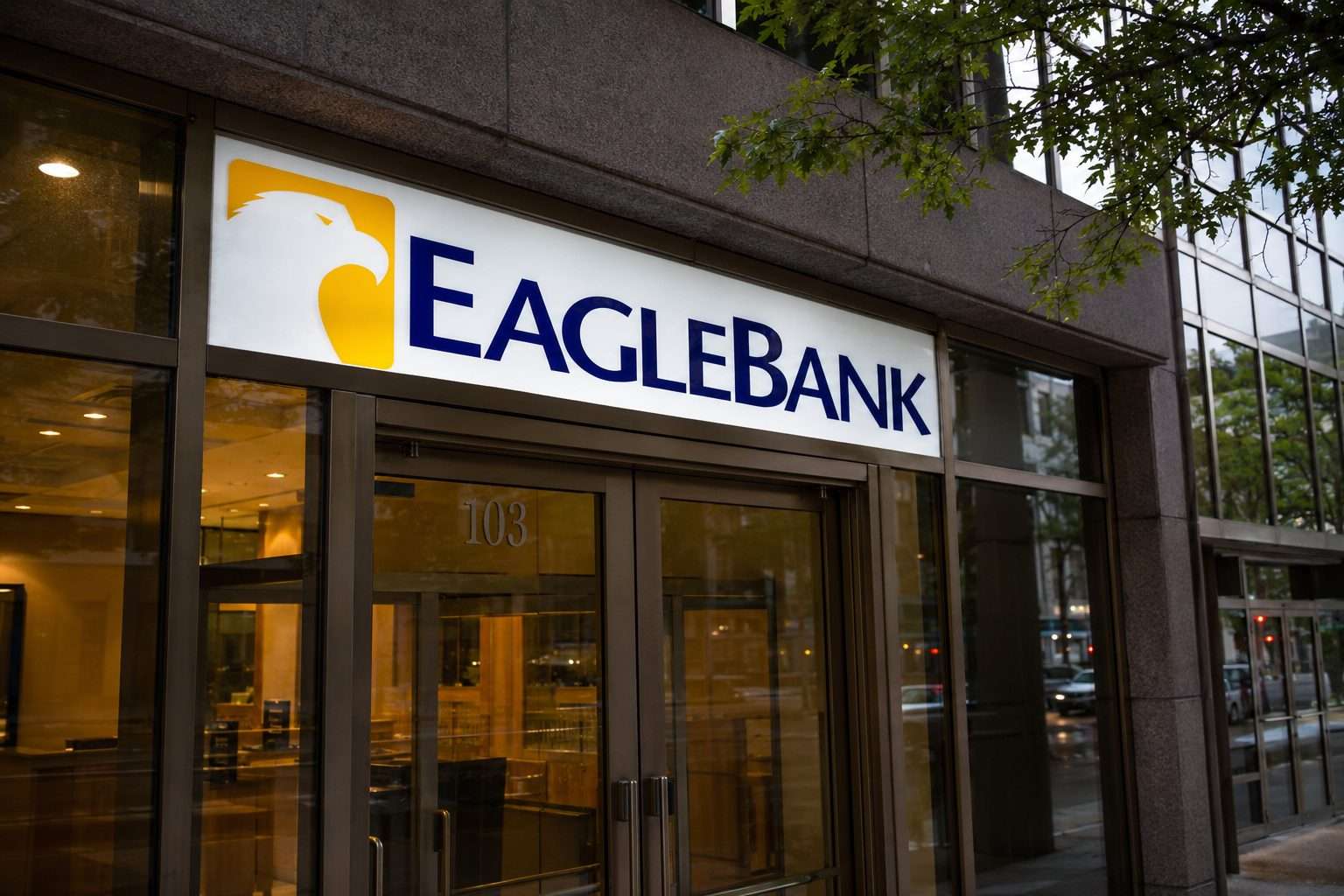
Eagle Bancorp ended Friday at $26.19, climbing roughly 7.0% from $24.47 a week earlier. Shares for the Bethesda, Maryland-based lender advanced in four of five sessions last week. The regional bank still trades below its April price.
This time, there’s no Monday reset. The Nasdaq will be shut May 25 for Memorial Day, so trading opens up Tuesday, which will be the first full day for investors to react to last week’s rally, the new CEO, and the latest on the bank’s credit.
Eagle Bancorp named Stephen R. Curley as its next president and CEO, the company said May 12. Curley, who previously worked at Western Alliance Bank, will take over July 6 at both Eagle Bancorp and EagleBank. Susan G. Riel stays on as CEO until July 5 and will be a consultant after her retirement. Board chair James A. Soltesz said the company was looking for “strategic judgment.” Curley described EagleBank as a “strong commercial franchise.” Nasdaq
A later filing spelled out the terms. Curley will get a $1.05 million salary, plus a target bonus matching his salary and $3.2 million in equity awards. Riel’s consulting deal comes out to $94,000 a month for a year.
Eagle’s new leader takes over as the company works to win back investors following a tough credit cycle. For the first quarter, Eagle posted net income of $14.7 million, or 48 cents per share, after a net loss of $2.4 million in the prior quarter. Net interest margin improved to 2.47% from 2.38%. Riel said current profit numbers “do not yet reflect the earnings power” of the company. Eagle Bancorp
Balance sheet numbers are in focus. Eagle reported $157.7 million growth in commercial-and-industrial loans for the quarter. Commercial real estate concentration dropped to 295.1% from 336.6%. CRE loans are tied to property that brings in rent, like offices, apartments, and retail. Office exposure is still a worry for investors looking at Washington banks.
The stock outperformed other bank stocks in the area Friday. Burke & Herbert Financial Services dropped 1.1%, Atlantic Union Bankshares was down 0.3%, while the SPDR S&P Regional Banking ETF gained 0.2%. The ETF tracks regional-bank stocks for a sector snapshot.
Governance issues have faded for now. At Eagle’s annual meeting on May 14, shareholders picked 11 directors, backed Crowe LLP as auditor and signed off on executive pay in the advisory vote. Trevor Montano, who leads West Potomac Capital and holds a large stake, got over 20.5 million votes, with only around 181,000 votes withheld.
Eagle’s week isn’t shaping up as a clear breakout. The 10-Q showed nonperforming assets at $130.8 million as of March 31, climbed from $109.0 million at year-end. Total deposits slid to $8.59 billion from $9.13 billion. Brokered deposits stayed high at $2.9 billion, or 34% of all deposits. More trouble with office or construction loans could wipe out the stock gains fast.
Tuesday’s focus is clear: will buyers see last week’s gain as a real shift, or just light action ahead of the holiday? A new CEO at Eagle puts a new story on the table. Credit quality will show if it’s more than a short-term trade.