
ARCHBOLD, Ohio, June 3, 2026, 11:16 (EDT)
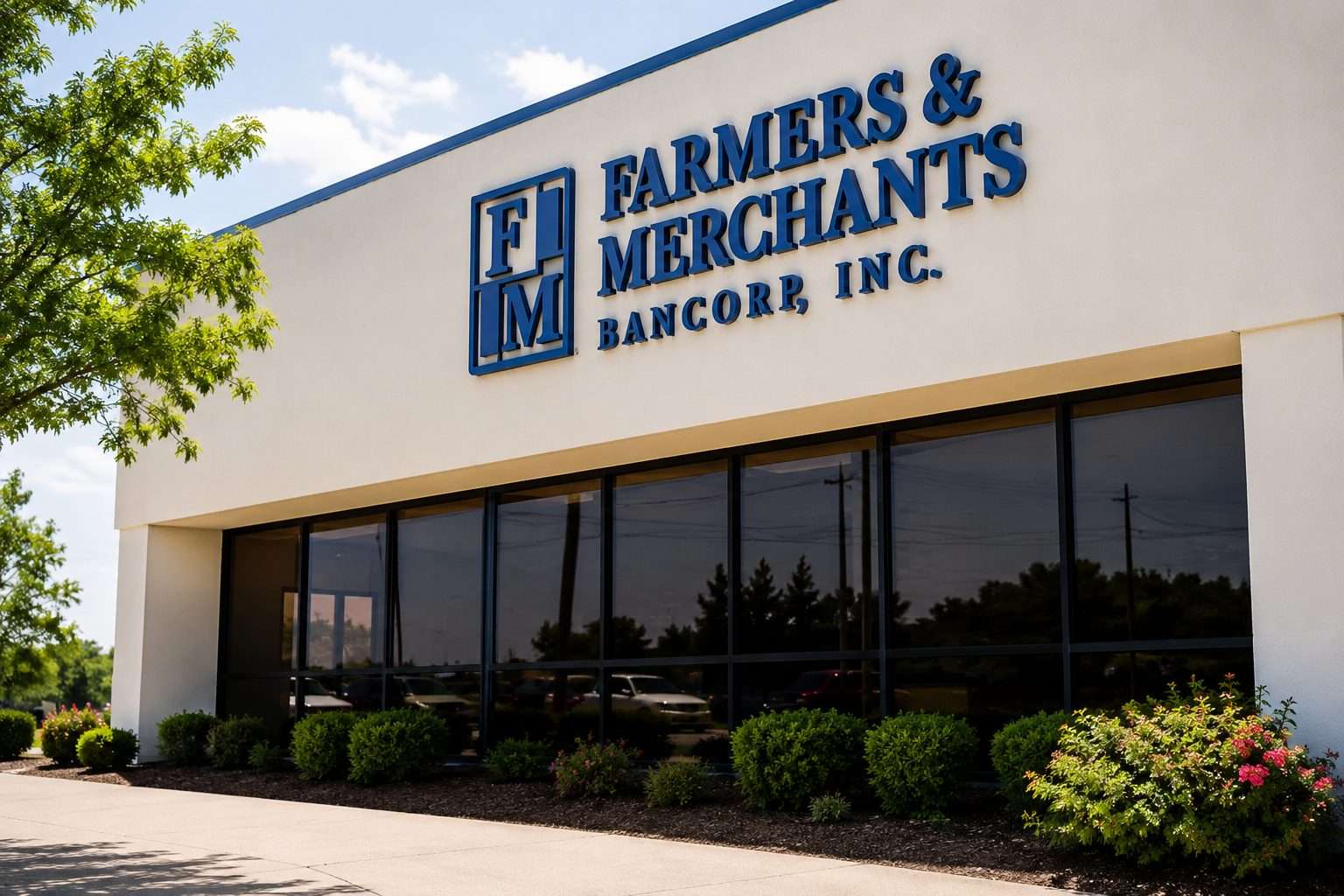
Farmers & Merchants Bancorp, Inc. shares fell about 2.5% in delayed late-morning trading on Wednesday, last quoted at $27.35, as the small Ohio lender slipped with the regional-bank tape. The Nasdaq-listed stock traded between $27.34 and $27.97, with volume at 18,955 shares and the company’s stock-market value near $376.6 million.
The timing matters because the bank has little fresh operating news in the market. Its investor site listed April 22 first-quarter results as the newest press release, while the latest filing shown on the company’s filings page was a June 1 Form 144 insider-sale notice.
That Form 144 named director Andrew J. Briggs and covered a proposed sale of 15,000 common shares, with an aggregate market value of $414,600, around June 1. The notice also listed 13,768,188 shares outstanding, putting the proposed sale at roughly 0.1% of the share count, and showed a Dec. 16, 2025 plan-adoption or instruction date.
A Form 144 is a notice tied to the possible resale of restricted or control securities; it is not the same thing as a completed-sale report. The SEC says Rule 144 allows public resale of those securities if a set of conditions is met.
The pullback took FMAO below where it ended last week. The company’s historical price page showed closes of $27.78, $27.87, $27.81 and $27.93 from May 26 through May 29; at $27.35, Wednesday’s quote sat close to the bank’s March 31 stockholders’ equity of $27.30 per share, a measure of reported net assets divided by shares.
Peers were weak too. Farmers National Banc Corp. fell about 2.0%, Civista Bancshares dropped about 1.9%, and the SPDR S&P Regional Banking ETF, an exchange-traded fund that holds a basket of regional-bank shares and trades like a stock, lost about 1.9%.
The last operating update was stronger than Wednesday’s tape. F&M reported first-quarter net income up 37.8% to $9.6 million, or 70 cents a share, and said net interest margin widened by 0.39 percentage point to 3.42%; net interest margin is the spread between what a bank earns on loans and securities and what it pays for funding. CEO Lars B. Eller called it an “outstanding start in 2026” and cited “meaningful operating leverage.” Farmers & Merchants Bancorp, Inc.
The credit picture was not one-way good. Deposits rose 4.1% from a year earlier to $2.81 billion and loans rose 3.9% to $2.68 billion, but nonperforming loans — loans where repayment is in doubt or no longer current — were $11.1 million, or 0.42% of total loans, up from 0.17% a year earlier. Commercial real estate, or CRE, made up 49% of the loan book.
Dividends remain part of the FMAO story. The board approved a quarterly cash dividend of 23 cents a share in March, up 4.0% from a year earlier, payable April 20 to holders of record as of April 3.
F&M is not a national-bank trade. The company describes itself as a $3.6 billion bank holding company based in Archbold, Ohio, with 38 full-service offices across Ohio, Indiana and Michigan.
Management has also been pushing technology and cybersecurity deeper into the strategy. In April, F&M named Shalini Singhal chief information and technology officer; Eller said she had helped build a “resilient and secure technology platform.” Farmers & Merchants Bancorp, Inc.
But the setup can break the other way. If deposit costs stop improving, loan demand cools, or CRE credit weakens, the margin gains that helped the first quarter could narrow fast. The company’s own risk language flags interest-rate levels, deposit flows, liquidity, credit quality, commercial real estate exposure, collateral values, inflation, FDIC assessments and cybersecurity.
For now, the trade is about balance. FMAO remains profitable and dividend-paying, but Wednesday’s move shows how quickly a quiet community-bank stock can react when a sector downdraft meets fresh insider paperwork.