
New York, May 27, 2026, 18:09 (EDT)
• Founder Group closed up 40.43% at $2.64, then traded at $2.75 after hours.
• A resale-registration filing tied to a convertible note became the main fresh item for traders.
• The Malaysia solar contractor still carries dilution, execution and listing-history risks.
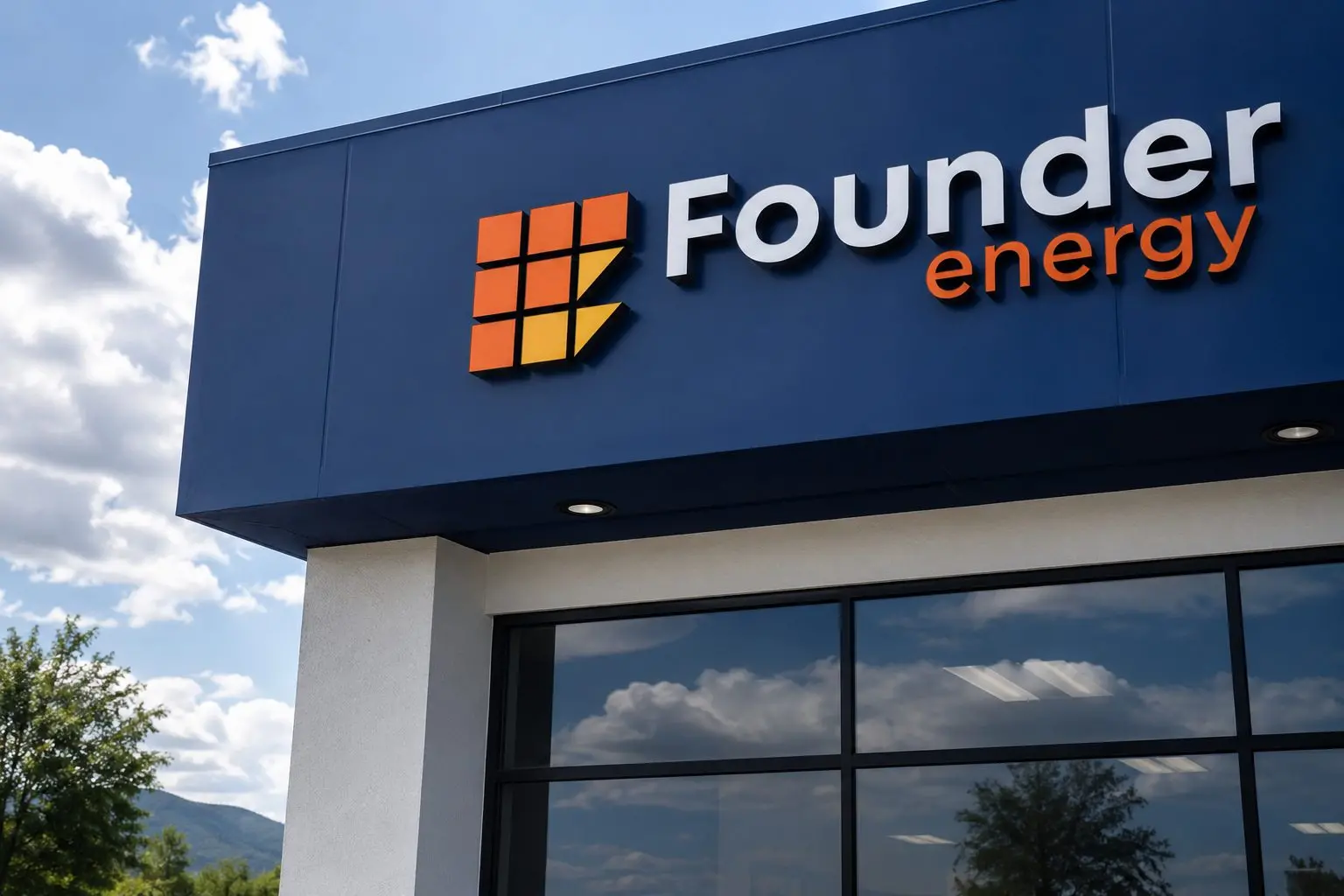
Founder Group Limited’s Nasdaq-listed shares surged 40.43% on Wednesday, closing at $2.64 on heavy volume before rising to $2.75 in after-hours trading, a sharp move for a small Malaysia-focused solar contractor with little fresh operating news in the last 48 hours.
The rally landed after a regulatory notice showed effectiveness for a post-effective amendment tied to the company’s resale-registration statement. In plain English, that type of filing can clear the way for a named holder to resell registered shares, though it is not the same thing as the company selling new stock into the market.
The underlying prospectus covered resale of up to 900,000 Class A ordinary shares issuable on conversion of a secured convertible promissory note issued in December 2025. Founder said the note had an original principal amount of $16.07 million, carried 6% simple interest, and converted at 82.5% of the lowest daily volume-weighted average price over a 10-day measurement period; volume-weighted average price, or VWAP, is a trading price adjusted for how many shares changed hands at each price.
That is why the move matters now. A rising share price can ease some pressure on a company’s Nasdaq standing and financing flexibility, but the same financing structure can raise dilution concerns if more shares are issued or resold.
Founder is not a U.S. solar-panel maker. Its business is mostly in Malaysia, where it provides engineering, procurement, construction and commissioning services — EPCC, meaning it helps design, buy equipment for, build and test solar projects — for large-scale and commercial solar photovoltaic systems.
The stock’s move stood out against larger solar names. First Solar rose 1.4%, Canadian Solar gained 0.7%, while JinkoSolar fell 1.6%, leaving Founder’s jump looking more like a company-specific trading move than a broad solar-sector rally.
The broader tape was firm but not euphoric. Wall Street indexes closed at record highs on Wednesday, with the Nasdaq Composite up 0.07% and the S&P 500 up 0.02%, according to Reuters.
Founder’s operating backdrop has improved on revenue, but not on profits. In its 2025 annual report, the company reported revenue of RM120.7 million, about $29.7 million, up 33.6% from 2024, but also posted a net loss of RM7.3 million, about $1.8 million.
The company’s solar pipeline remains the bull case. In March, Founder said it had secured an RM34 million, about $8.6 million, contract under Malaysia’s Large Scale Solar 5 programme, bringing its total contract value under that programme to about RM70 million, or $17.7 million. Chief Executive Lee Seng Chi said the award showed “accelerating trust in our technical capability” and could help lay a base for “sustained recurring revenue generation.” GlobeNewswire
But there is a less tidy side. Founder disclosed in its annual report that its Malaysian unit had failed to declare and submit 31 contracts to the Construction Industry Development Board, though it said the non-compliance had been rectified and no fine or notice had been issued as of the report date. The company said it could potentially face fines of up to RM1.55 million.
The share move also comes after a bruising listing history. Founder announced a 100-for-1 share combination effective Feb. 10 to regain compliance with Nasdaq’s minimum bid price rule, and the company later said it regained compliance with Nasdaq’s minimum publicly held shares requirement in April.
Nasdaq’s regular session had closed before the latest after-hours quote; the exchange’s standard cash-equity session runs from 9:30 a.m. to 4 p.m. Eastern time, with after-hours trading running until 8 p.m.
The risk is that Wednesday’s jump proves more about float, filings and trading momentum than a change in the business. If conversion-linked selling grows, if project execution slips, or if Malaysia regulatory issues resurface, the same thin setup that helped the shares rip higher could work hard the other way.