
New York, February 17, 2026, 12:10 EST — Regular session.
- Gold slid over 2% as safe-haven demand faded and the dollar strengthened.
- Traders are on alert for the Fed minutes due Wednesday, with U.S. PCE inflation figures landing Friday.
- With fewer traders in the market, moves around the $5,000 mark are getting sharper.
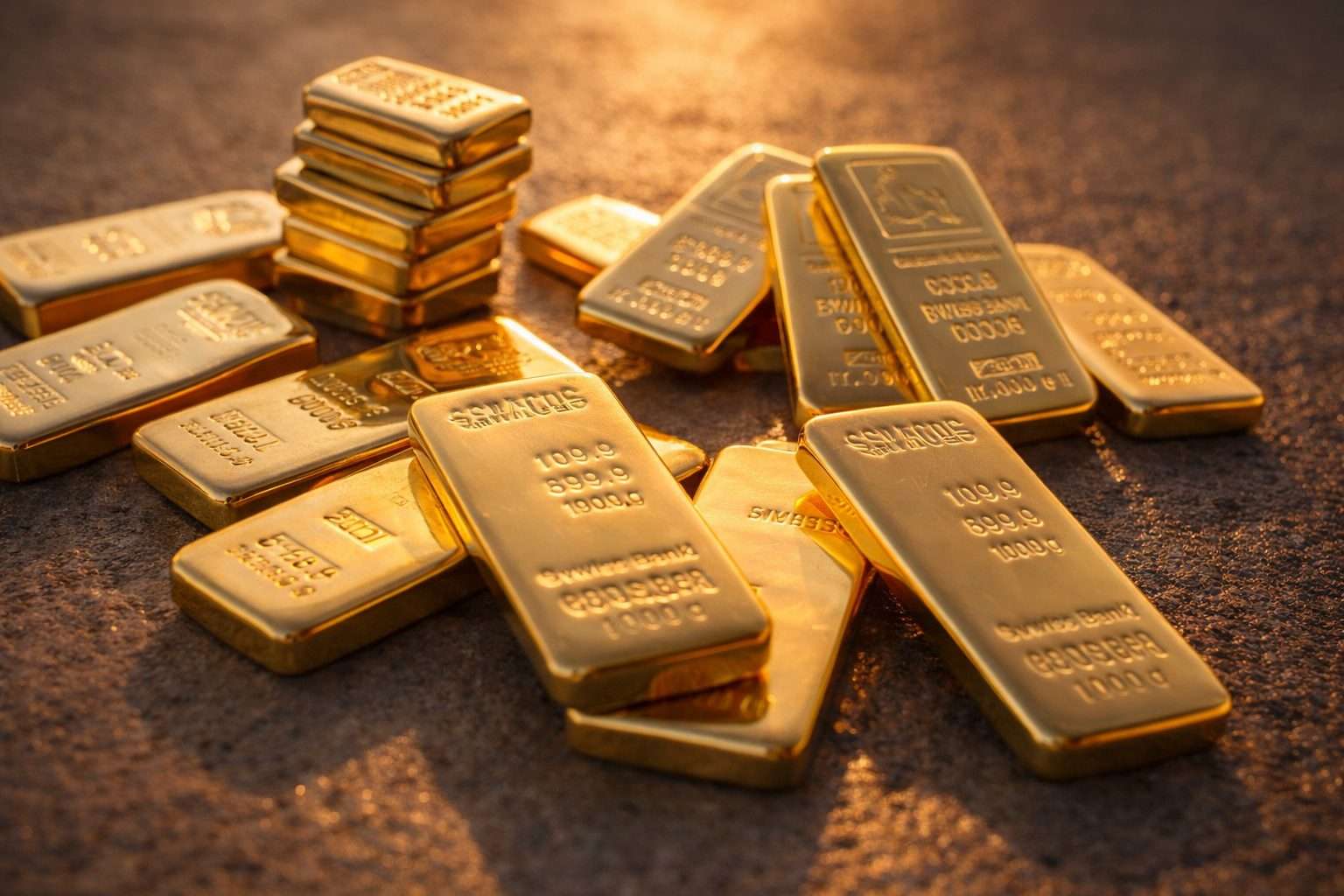
Gold dropped sharply on Tuesday, losing over 2% and dipping below $4,900 an ounce after signs of progress in U.S.-Iran negotiations eased safe-haven demand and pushed the dollar higher. Spot gold slid 2.2% to $4,883.85 per ounce as of 11:33 a.m. ET. April futures in the U.S. were hit even harder, off 2.9% at $4,900.80. “Bull markets need fresh news,” noted Jim Wyckoff, senior analyst at Kitco Metals. Investors are watching for minutes from the Fed’s January meeting on Wednesday (Feb. 18) and the U.S. Personal Consumption Expenditures report for December on Friday (Feb. 20), with a June rate cut still expected. Reuters
After a muted Monday—liquidity thin with U.S. markets shuttered for Presidents Day and much of Asia offline for Lunar New Year—gold slipped. UBS’s Giovanni Staunovo pointed out gold’s been “range-trading around $5,000/oz,” which tends to set up jumpy moves whenever headlines break. MarketPulse by OANDA’s Zain Vawda described the scene as a “very fluid situation” and dialed back his near-term outlook. Reuters
Here’s the standoff in bullion: geopolitics can send bids swinging within minutes, yet interest rates remain the main driver. Gold doesn’t yield, so if traders dial back rate-cut wagers or the dollar strengthens, support for the metal can disappear in a hurry.
The dollar’s strength has a straightforward effect: it puts pressure on gold. As the greenback climbs, gold tagged in dollars costs more for overseas buyers, which can cool off demand.
Negotiators from the U.S. and Iran pointed to headway on “guiding principles,” though officials were quick to caution this doesn’t signal an imminent deal—a boost for general risk sentiment. Treasury yields in the U.S. showed a mixed picture early in New York, the 10-year benchmark slipping to roughly 4.039%, as traders watched for any hawkish signals from the Fed on policy expectations. Reuters
Silver and the platinum group caught some of the selling, too — not just gold in play here.
Still, the path lower isn’t smooth. Diplomatic stumbles or a sudden inflation jolt—anything that alters the expected rate moves—could send investors scrambling back to safe-haven plays. And if the Fed minutes strike a hawkish note, that would likely prop up the dollar and put a ceiling on any rally.
Eyes now shift to Wednesday’s Fed minutes, then Friday brings PCE inflation data—two events on the calendar with the most sway over June-cut bets, and, by extension, the near-term fate of bullion: steady, or still dropping.