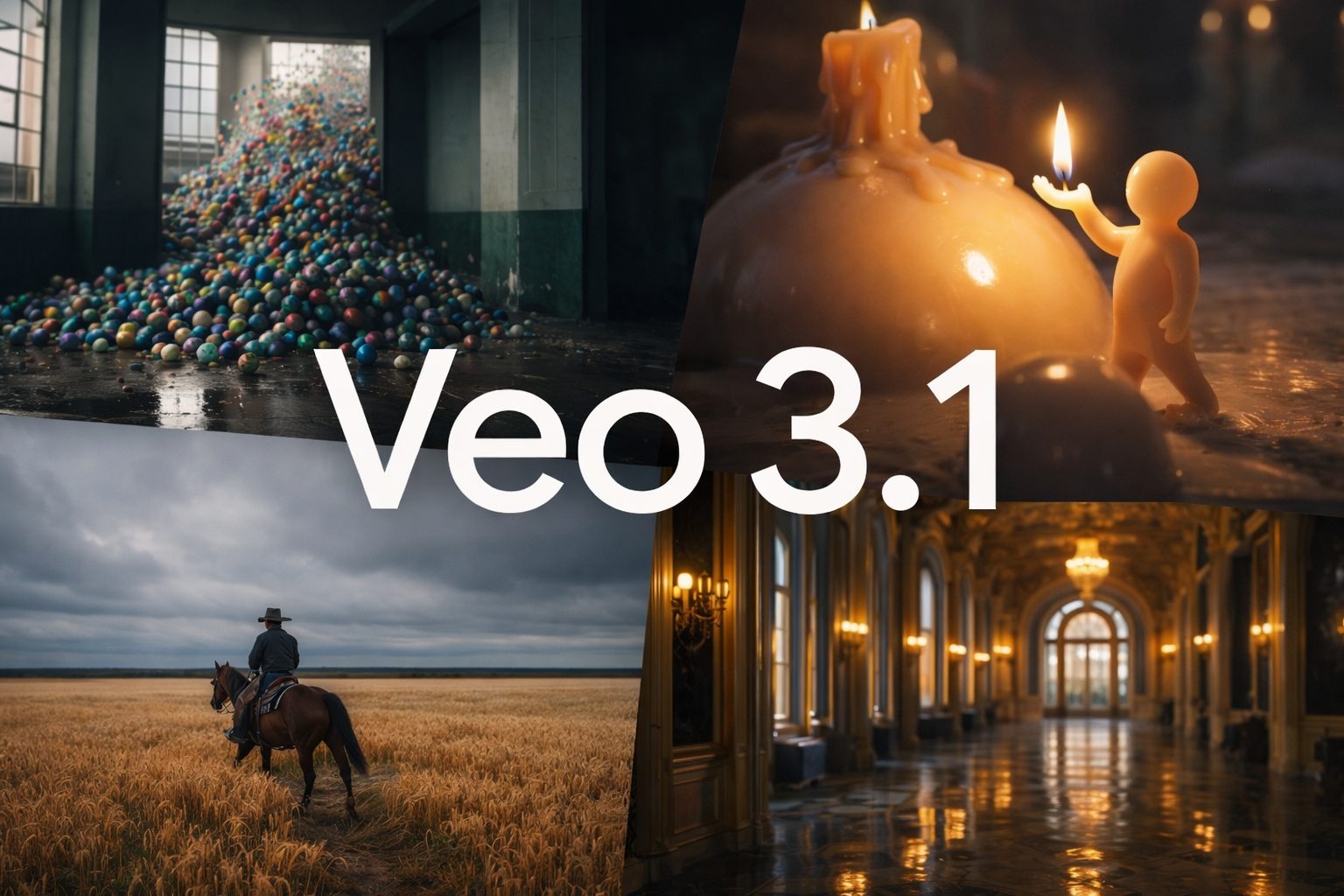
- Google’s Veo 3.1 can now generate native 9:16 vertical videos from reference images, aimed at Shorts-style platforms.
- “Ingredients to Video” gets upgrades for more expressive motion and better consistency for characters, objects, and backgrounds.
- Google is also adding 1080p and 4K upscaling options in select pro workflows, including Flow and Google Cloud tools.
Google is pushing its Veo 3.1 AI video model further into the short-form creator pipeline, adding native vertical video generation tied to reference images and bringing the feature directly into YouTube Shorts and the YouTube Create app.
The headline change is simple: no more generating a landscape clip and cropping it down after the fact. Veo’s “Ingredients to Video” tool now supports 9:16 output — the tall, phone-native format used by Shorts, TikTok, and Instagram Reels.
This matters because AI video has been moving fast, but the practical friction is still real. If a creator can’t reliably keep a character’s face, outfit, or setting consistent across shots, the tool stays in “cool demo” territory. Google is positioning this update as a step toward something more usable for everyday editing and posting.
“Ingredients to Video” is Google’s name for generating a clip based on “ingredient images” — reference visuals that steer what the model produces. Instead of describing everything in text, you feed images in and ask Veo to animate them into a video.
Google says the updated system produces more expressive, dynamic results even with shorter prompts, including improved character expressions and movement. The company also points to “richer dialogue and storytelling” as part of the upgrade, framing it as less stiff and more natural on screen.
Consistency is a core focus in the update. Google says Veo 3.1 is better at keeping a character’s identity stable as scenes change, and it’s also improving how backgrounds and objects hold together from clip to clip. The company describes the ability to reuse objects, backgrounds, or textures across scenes, and to blend characters and elements into a single cohesive output.
The vertical piece is the most creator-facing, day-one feature. Google says “Ingredients to Video” can now generate in a native 9:16 aspect ratio, which means the output is already full-screen for phone viewing without extra cropping — and without the quality drop that can come with reframing a wider video.
Resolution is getting attention too, with “state-of-the-art” upscaling to 1080p and 4K. Upscaling here means software increasing the resolution of generated video after the initial output, aimed at sharper, cleaner footage for editing or larger screens. Google notes those higher-resolution options are available in Flow, the Gemini API, and Vertex AI, rather than everywhere Veo shows up.
Access is spreading across Google’s stack. Consumers can use the updated Veo 3.1 features in the Gemini app, and Google says it’s integrating the tool into YouTube Shorts and the YouTube Create app. For more production-oriented workflows, the same capabilities are also rolling out to Flow, the Gemini API, Vertex AI, and Google Vids.
This is an expansion moment for Veo 3.1, not its debut. TechCrunch notes Google first released Veo 3.1 in October 2025, highlighting improved audio output and more granular editing controls compared with earlier versions. This week’s update is more about control and format — reference-based generation that fits where most video posting happens now.
Google is also pairing the creative push with a nod to verification. In its announcement, the company points to SynthID, its “imperceptible” digital watermark for AI-generated content, and says the Gemini app’s verification tool was expanded in December to include video — letting users upload a clip and ask whether it was generated with Google AI.
Still, there are a few open questions that will matter in practice. Google describes the changes as rolling out across products, but availability can vary by tool, and the higher-resolution options are limited to certain pro and developer surfaces. And even with better consistency claims, AI video quality can swing depending on inputs and prompts — especially when creators try to push beyond simple, single-subject clips.
What’s clear is the direction: Google wants Veo-generated video to be something you can make quickly, in the format that dominates social feeds, and publish inside YouTube’s own creation flow without leaving the app.