
New York, May 29, 2026, 08:01 (EDT)
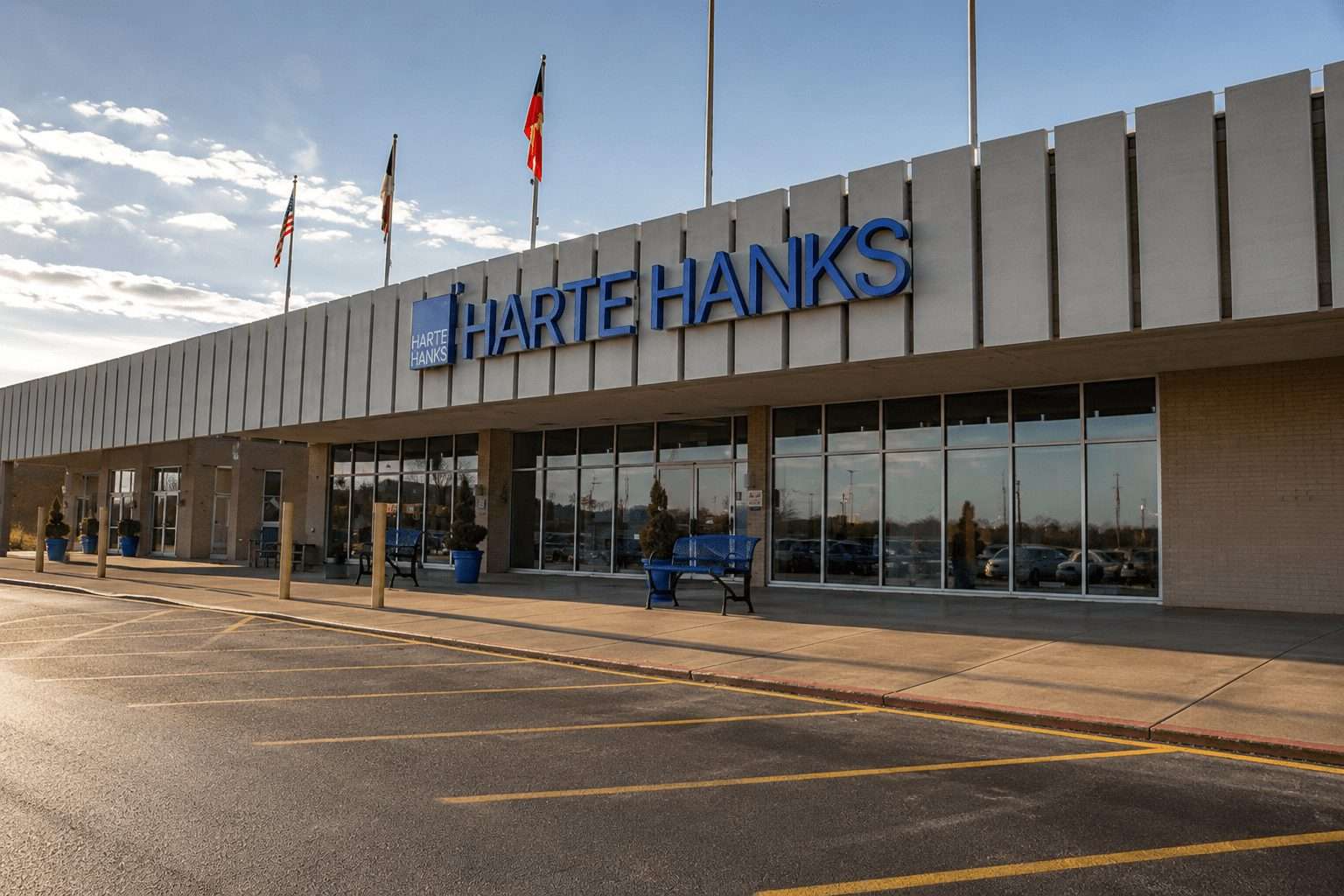
Harte Hanks shares entered Friday’s U.S. session near $2.58 after closing Thursday down 2.3% on just 1,399 shares, a thin print even by small-cap standards. The Nasdaq-listed customer-experience company was last shown around the same level before the regular market open.
That matters now because this is not a deep, heavily traded stock. Harte Hanks’ market value was about $19.1 million, meaning even small orders can make the price look more dramatic than the underlying news flow.
The regular Nasdaq session was still ahead. Nasdaq’s standard trading hours run from 9:30 a.m. to 4:00 p.m. ET, while pre-market trading — the electronic session before the open — runs from 4:00 a.m. to 9:30 a.m. ET and can carry less liquidity and higher volatility. May 29 was not listed among Nasdaq’s 2026 market holidays.
The broader tape was firmer. U.S. index futures were little changed to slightly higher early Friday after Wall Street closed at records on Thursday, with Reuters reporting Dow futures up 0.14%, S&P 500 futures up 0.08% and Nasdaq 100 futures up 0.05% at 6:28 a.m. ET. “Risk appetite has improved as geopolitical fears ease,” Daniela Hathorn, senior market analyst at Capital.com, told Reuters. Reuters
Harte Hanks’ own story is more mixed. The company said first-quarter revenue fell 10.3% to $37.3 million, operating loss widened to $768,000, and net loss was $0.6 million, or 8 cents a share. Adjusted EBITDA — earnings before interest, taxes, depreciation and amortization, adjusted for items such as stock-based pay and restructuring costs — fell to $0.7 million from $1.8 million a year earlier.
David Fisher, Harte Hanks’ president, said revenue was still “pressured by legacy offerings and market headwinds,” while the company was shifting toward “higher-value services” and seeking positive EBITDA through 2026. Nasdaq
The pressure was not spread evenly. Fulfillment & Logistics revenue fell 16.6% to $16.5 million, mainly because of a reduction from an existing customer, while Revenue Solutions fell 9.9% on customer losses and weaker demand. Customer Care revenue slipped 1.1%, though its operating income fell more sharply because of higher labor expense tied to increased headcount at the start of 2026.
There was some balance-sheet cushion. Harte Hanks ended March with $4.5 million in cash and cash equivalents and restricted cash, no borrowings under its credit facility, and $24.3 million of available borrowing capacity.
The competitive backdrop is lopsided. Harte Hanks competes in customer experience, marketing, fulfillment and care services, a field that also includes larger listed names such as Concentrix, which describes itself as a global technology and services company, and TTEC, which says it provides customer-experience technology and services. Concentrix and TTEC were quoted with market values of about $1.62 billion and $132 million, respectively, far above Harte Hanks.
But the downside case is plain enough: clients can cut marketing budgets quickly, and Harte Hanks said its revenue depends on client demand, client budgets, industry conditions and regulatory factors. If lower logistics volume or weaker marketing demand persists, cost cuts may not be enough to keep margins from slipping again.
For now, the stock is less a broad market call than a company-specific one. Friday’s open will test whether investors see the latest decline as noise in a thinly traded name, or another sign that the Q1 revenue slide still owns the story.