New York, Feb 13, 2026, 13:41 EST — Regular session.
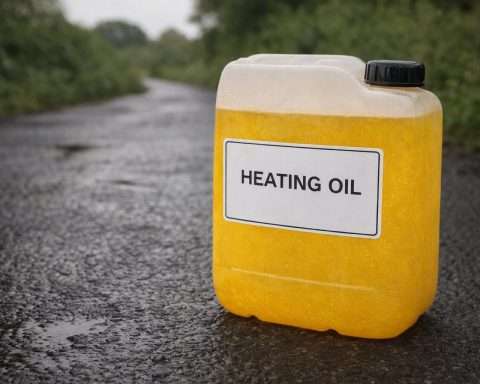
- Heating oil futures were slightly higher in U.S. trading on Friday after Thursday’s slide.
- Traders weighed softer U.S. inflation data against fresh supply headlines.
- Fuel inventories and policy signals remain the next checkpoints.
U.S. heating oil futures inched up on Friday, with the front-month contract at $2.3977 a gallon by 1:40 p.m. EST, up about half a cent on the day after a choppy week for refined products. The contract traded between $2.3652 and $2.4180. (Investing)
The move matters because the market is still trying to price winter demand against a run of supply headlines. Distillate traders tend to get jumpy when macro news and product stocks pull in opposite directions.
Heating oil is the old name for the U.S. benchmark distillate futures contract, now tied to ultra-low sulfur diesel. It usually follows crude, but it can break away when refinery margins shift or when U.S. inventory data surprise.
In crude, Brent was up 11 cents at $67.63 a barrel and U.S. West Texas Intermediate held at $62.84 by midday, after both slid nearly 3% a day earlier. “Looks like inflation is stabilizing,” Dennis Kissler, senior vice president of trading at BOK Financial, said, adding that the risk was OPEC lifting output. (Reuters)
U.S. consumer prices rose 0.2% in January from December and were up 2.4% from a year earlier, Labor Department data showed. Core CPI, excluding food and energy, rose 0.3% on the month and 2.5% year-on-year; the CPI tables also showed fuel oil down 4.2% over the past 12 months. (Bureau of Labor Statistics)
On supply, OPEC+ is leaning toward resuming output increases from April, sources familiar with the talks said, with a decision expected at a March 1 meeting of eight key members. The prospect of more crude tends to cap distillate gains unless demand or inventories tighten fast. (Reuters)
The International Energy Agency, in its February oil market report, forecast 2026 demand growth of 850,000 barrels per day and said world oil output is set to rise by 2.4 million bpd this year. It also noted refinery crude throughputs slipped in January and margins fell further as December’s high runs eased product tightness. (IEA)
In the physical market, wholesale heating oil in New York Harbor settled at $2.18 a gallon on Thursday, down 2.9%, while low-sulfur diesel in the same hub ended at $2.32, down 2.8%, EIA pricing data showed. The Gulf Coast 3-2-1 crack spread — an estimate of the margin from turning three barrels of crude into two of gasoline and one of distillate — was $22.25 a barrel, down 4.3%. (U.S. Energy Information Administration)
A heavy U.S. inventory build helped set the tone a day earlier. U.S. crude stocks rose 8.5 million barrels to 428.8 million last week and refinery utilisation fell to 89.4%, the EIA said; Andrew Lipow, president of Lipow Oil Associates, said talks with Iran “would lead to a reduction of geopolitical risk” and that the market was “anticipating an increase in supply from Venezuela.” (Reuters)
Washington added another supply variable on Friday. The U.S. Treasury’s Office of Foreign Assets Control posted Venezuela General License 49 on contingent investment negotiations and General License 50 on oil and gas sector operations involving certain entities. (OFAC)
Separately, the Kremlin said the next round of peace talks on Ukraine would take place next week, without confirming a venue. Russian-flow headlines still matter for distillate pricing, even when heating oil is trading off U.S. demand. (Reuters)
But the trade can still snap back the other way. A colder turn in the U.S. Northeast, an unplanned refinery outage, or a sudden squeeze in diesel supply can push heating oil higher quickly. Warm weather and faster output growth would do the opposite.
The next hard catalyst is U.S. government fuel-inventory data: the weekly petroleum status report is due Thursday, Feb. 19, after a delay tied to the Feb. 16 federal holiday, with releases scheduled for 12:00 p.m. and 2:00 p.m. Eastern. (U.S. Energy Information Administration)