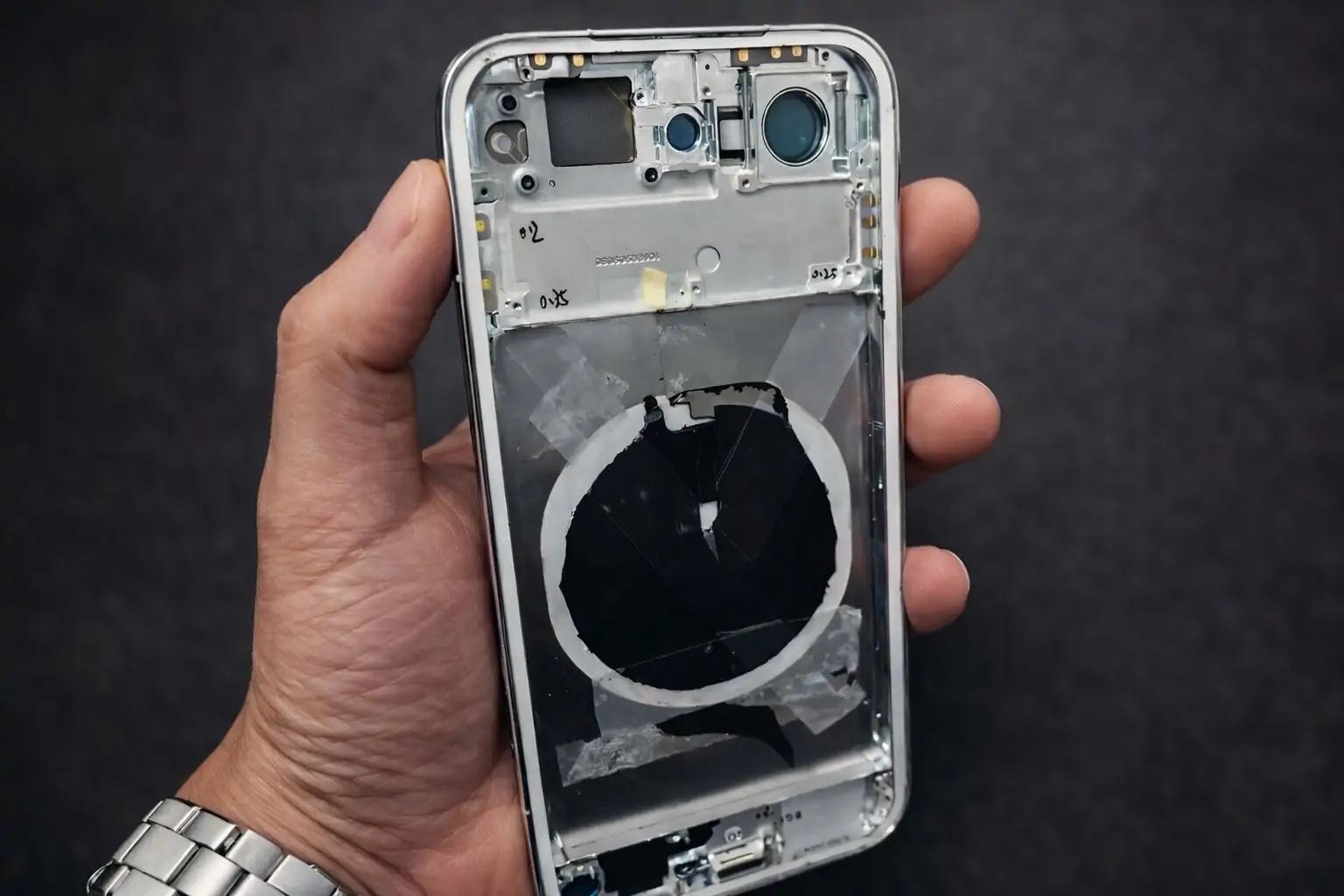
A leaked Xiaomi 17 Air prototype shows a 5.5mm body, 6.59-inch display, and dual rear cameras. Here’s what the leak suggests—and why Xiaomi may have shelved it.
January 11, 2026 — A fresh leak is giving tech fans a rare look at a phone Xiaomi may have nearly launched: the Xiaomi 17 Air. According to multiple reports published today, the device appears to have reached an advanced prototype or engineering-mould stage before being canceled internally—and its headline feature is the kind that instantly grabs attention in a market full of “bigger, heavier, thicker” flagships: a body said to measure just 5.5mm. Wccftech
The leak also adds an interesting twist: unlike some ultra-thin concepts that cut cameras to the bone, the alleged Xiaomi 17 Air prototype is shown with a dual rear camera setup and what looks like wireless-charging hardware—a combination that underscores how aggressively Xiaomi was pushing the “thin flagship” idea before pulling the plug. Wccftech
What happened today: the Xiaomi 17 Air leak, explained
Today’s reports trace back to tipster activity around January 10–11, with a short video and imagery circulating that show what’s described as a canceled Xiaomi 17 Air prototype. Wccftech says the clip shared by Ice Universe shows the phone’s frame from multiple angles and highlights the ultra-thin profile. Wccftech
Separately, Gizmochina describes an early engineering mould shared on social media (credited there to tipster “Bald Panda”), again pointing to a device with a horizontally aligned camera module and the same 5.5mm thickness claim. Gizmochina
Xiaomi-focused outlet XiaomiTime also published details today, describing a white prototype with a horizontal camera unit and adding additional claims about camera and connectivity features. XiaomiTime
Put together, the picture is clear even if the fine print isn’t: Xiaomi appears to have explored an iPhone Air-style “thin prestige phone,” then opted not to ship it.
The leaked design: “iPhone Air vibes,” but with two cameras
The most striking element in the leak is how thin the phone appears—paired with a rear design that multiple outlets compare to Apple’s iPhone Air aesthetic, especially the horizontal camera bar look. Wccftech
From the reporting, these are the most consistently repeated design details:
- Thickness: ~5.5mm (ultra-thin flagship territory) Wccftech
- Display size: around 6.59 inches Wccftech
- Rear cameras:dual-camera layout (rather than a single lens) Wccftech
- Wireless charging indicators: Wccftech notes visible placement suggesting wireless charging Wccftech
One extra detail that’s fueling debate: XiaomiTime reports the camera bar includes a “MASTER” marking/logo, not typical Xiaomi consumer branding—suggesting this may have been an internal test unit rather than a market-ready device. A Vietnamese write-up also points out the same odd branding detail as a reason to treat the leak as “reference-only” rather than final design proof. XiaomiTime
Rumored specs: what’s supported vs. what’s still speculation
Because this is a leak of a prototype, the line between “seen in the frame/mould” and “assumed for the final phone” matters. Here’s a clean breakdown.
Likely (supported by multiple reports)
- 5.5mm ultra-thin body
- 6.59-inch-class display
- Dual rear cameras
- Project cancellation before mass production
These points show up repeatedly across today’s coverage. Wccftech
Possible (mentioned, but less certain)
- 200MP main camera: XiaomiTime claims a 200MP primary camera; Gizmochina notes an earlier leak that also floated a 200MP main camera for an “ultra-thin flagship” expected to be the 17 Air. Treat this as unconfirmed. XiaomiTime
- eSIM support: XiaomiTime claims eSIM support on the prototype. XiaomiTime
- Silicon‑carbon battery: Wccftech speculates Xiaomi would likely use a silicon‑carbon battery to offset the thinness/battery trade-off—plausible in the current Chinese flagship trend, but not confirmed for this device. Wccftech
Why Xiaomi may have canceled the 17 Air: thin phones look cool… until the numbers arrive
The most important part of today’s story isn’t that Xiaomi can build a 5.5mm phone—it’s that Xiaomi apparently decided it shouldn’t.
Wccftech frames the decision as a reaction to the weak commercial performance of other ultra-thin flagships, pointing to the iPhone Air and Samsung’s Galaxy S25 Edge as cautionary examples. Wccftech
The “iPhone Air effect”: demand concerns turned into production cuts
Several reports in late 2025 suggested Apple’s ultra-thin iPhone Air struggled to maintain demand, with supply chain adjustments and sharp reductions in production expectations. MacRumors summarized supplier capacity reductions and referenced reports from analysts and Nikkei about weak demand and production cuts. MacRumors
9to5Mac also relayed a Nikkei Asia claim that iPhone Air orders were cut close to “end of production” levels, quoting a supplier manager suggesting a dramatic reduction compared with earlier projections. 9to5Mac
German outlet heise similarly reported suppliers were told to reduce components for the iPhone Air and described orders as near “end-of-production” level, noting the model had immediate availability where other iPhone 17 models had waits. heise online
If you’re Xiaomi looking at that trendline, the conclusion is obvious: don’t pour money into a category the market may already be rejecting.
Samsung’s Galaxy S25 Edge: engineering flex, real-world compromises
Samsung’s Galaxy S25 Edge was positioned as an ultra-thin flagship at 5.8mm and 163g, but even the specs highlight the key trade-off: a thinner phone typically means fewer cameras and a smaller battery. Wccftech
By early January 2026, Android Central noted the S25 Edge had seen a muted consumer response and was being heavily discounted—again suggesting that “thin” alone didn’t create sustained demand. Android Central
The real challenge: ultra-thin phones fight physics, not competitors
If you’ve ever wondered why we don’t already have a wave of 5–6mm “normal” phones, the answer is a long list of trade-offs that show up the moment you try to turn a concept into a mass-market product.
1) Battery capacity and battery confidence
Batteries are still the largest single component in most phones. Shaving millimeters often means either:
- smaller capacity, or
- expensive chemistry/packaging innovations (and sometimes both).
Silicon‑carbon batteries can help—Wccftech specifically suggests that’s the kind of tech Xiaomi would need here—but they aren’t a magic wand, and they add cost/complexity. Wccftech
2) Thermals and sustained performance
Thinner chassis = less space for cooling solutions (vapor chambers, graphite layers, etc.). That can trigger throttling or heat discomfort—especially in a flagship-class chip scenario.
3) Camera bumps don’t disappear; they get more awkward
Even if the phone body is incredibly thin, modern sensors and optics still need depth. The result is often a more pronounced camera bump, which can make an ultra-thin phone feel unbalanced on a table or in the hand.
4) Durability, flex, and manufacturing yield
A razor-thin frame is harder to keep rigid and harder to manufacture consistently at scale. Even a small drop in yield can ruin the business case for a niche model.
This is why “we built it” doesn’t always become “we launched it.”
How thin is 5.5mm, really? A quick comparison
To put the leak in context, here’s how today’s reported Xiaomi 17 Air prototype stacks up against the slim flagships that defined the trend:
- Xiaomi 17 Air prototype: ~5.5mm (leaked/canceled) Wccftech
- Apple iPhone Air:5.6mm (official spec reporting) Wccftech
- Samsung Galaxy S25 Edge:5.8mm Wccftech
On paper, 0.1–0.3mm sounds minor. In hardware design, it can be the difference between fitting a component cleanly… and redesigning the entire internal layout.
Will Xiaomi bring back the “Air” idea?
Right now, the most responsible answer is: don’t expect a Xiaomi 17 Air launch soon. Multiple outlets describe the project as canceled, and there’s no official Xiaomi confirmation of a consumer release plan. Wccftech
That said, prototypes like this rarely die forever. They tend to return when one of two things changes:
- Battery tech improves enough that thin phones no longer take a battery-life hit people can feel.
- Consumers start valuing thinness again—not as an aesthetic bonus, but as a must-have.
Wccftech also suggests the category could be revived “at the right time,” echoing the idea that this is a timing problem, not a capability problem. Wccftech
FAQ: quick answers for readers
Is the Xiaomi 17 Air real?
A device described as a Xiaomi 17 Air prototype appears in leaked footage and mould imagery, but it’s widely reported as an internal project that was canceled. Wccftech
Was it going to compete with the iPhone Air?
Yes—today’s coverage repeatedly frames it as Xiaomi’s answer to the ultra-thin flagship push popularized by Apple’s iPhone Air. Wccftech
Why would Xiaomi cancel it if it looked this impressive?
Because ultra-thin phones can be expensive to build and often require compromises (battery, thermals, cameras). And crucially, the market response to thin flagships has looked shaky, with multiple reports of weak demand and production cuts in the segment. MacRumors