
Sydney, June 9, 2026, 20:04 AEST
- Lynas Rare Earths closed down 4.85% at A$17.28, after touching A$16.98 in Tuesday trade.
- The fall came in the first ASX session after Monday’s King’s Birthday market closure.
- Investors are weighing Pol Le Roux’s move to interim CEO against a rare-earth market still shaped by China export controls and Western supply-chain policy.
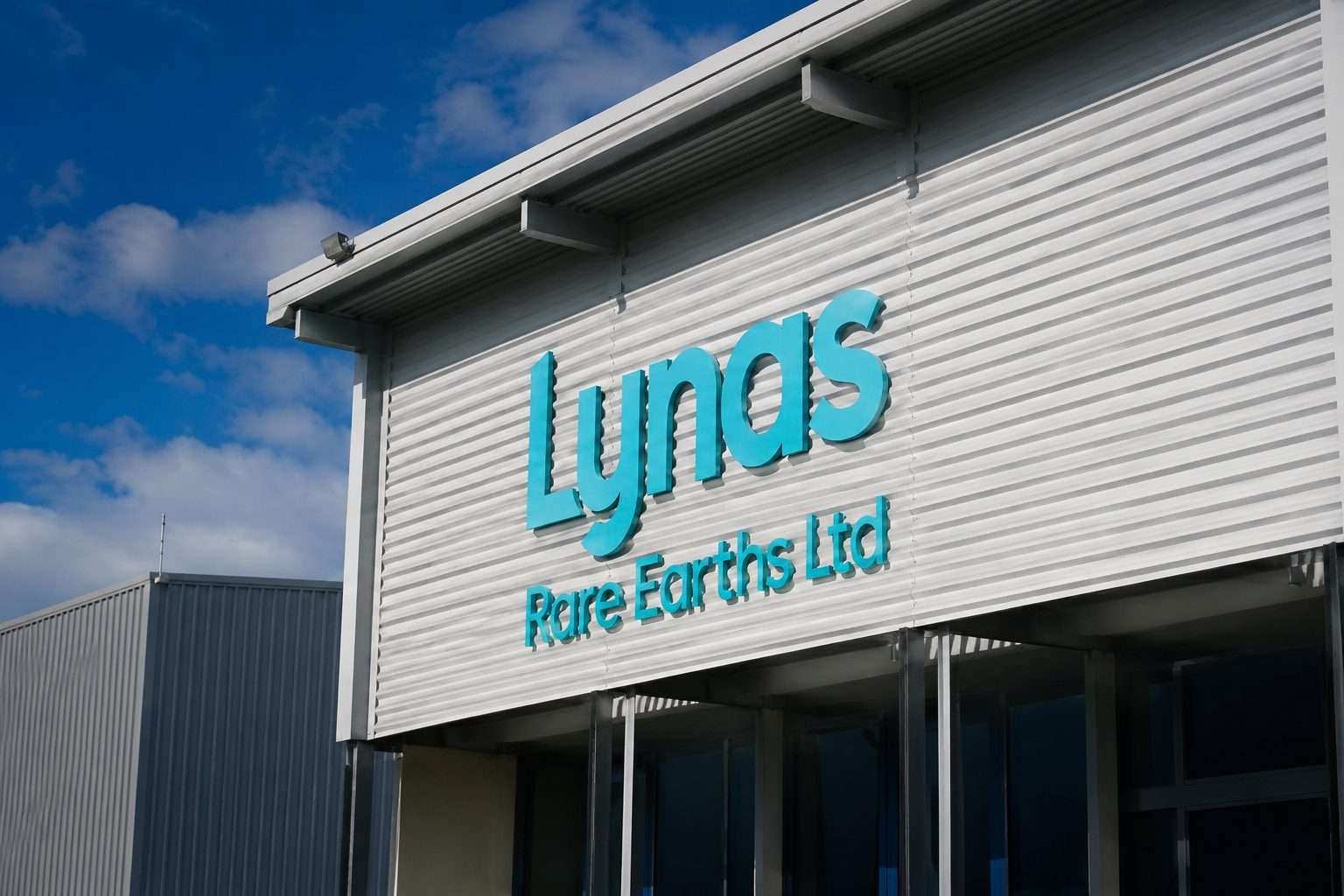
Lynas Rare Earths shares fell sharply on Tuesday, putting Australia’s biggest rare-earth stock back under pressure as investors returned from a long weekend and reassessed the company’s leadership handover.
The stock closed at A$17.28, down 4.85%, with volume at about 7.36 million shares. It opened at A$18.13, hit the same level as its day high, and fell as low as A$16.98 before recovering some ground into the close.
That matters now because the selloff came just days after Lynas named Chief Operating Officer Pol Le Roux as interim chief executive from July 1. Amanda Lacaze, who has led the company for 12 years, is due to retire as CEO and managing director on June 30.
Lynas Chair John Humphrey said Le Roux would “provide continuity” and keep the company moving through its Towards 2030 growth plan. The board also said it would update the market on the CEO search “in due course,” leaving investors without a named permanent successor for now.
The timing is awkward. Lynas is not a small speculative miner; it is widely watched because it is the largest rare-earth producer outside China and owns the Mount Weld deposit in Western Australia, with processing facilities in Kalgoorlie and Malaysia. Rare earths are a group of 17 elements used in electric vehicles, wind turbines, electronics and defence equipment.
The stock remains well above last year’s lows, but Tuesday’s close leaves it about 23% below its A$22.37 52-week high. That drawdown is large enough to make short-term holders question whether the earlier rally had run ahead of execution at Kalgoorlie, Malaysia and the company’s newer heavy rare-earth projects.
Lynas’ latest reported operating backdrop is still stronger than it was a year earlier. The company reported first-half FY2026 net profit after tax of A$80.2 million, up from A$5.9 million a year earlier, and revenue of A$413.7 million, up from A$254.3 million. Lacaze said rare-earth “supply chain security is reshaping the market.”
But the same update also pointed to costs and reliability risks. Lynas said cost of sales rose 32%, partly because of higher NdPr sales volumes and a full six months of costs from Lynas Kalgoorlie, while December-quarter results reflected power outages at Kalgoorlie and maintenance in Kuantan. NdPr means neodymium-praseodymium oxide, a key input for permanent magnets.
The wider rare-earth tape was weak. Arafura Rare Earths, another Australian rare-earth name, fell 3.77% to A$0.26, while Iluka Resources dropped 3.87% to A$7.45. Iluka is not a pure rare-earth producer, but it sells rare-earth minerals and is a relevant local peer as investors price Australia’s role in non-China supply.
China remains the swing factor. Reuters reported Tuesday that China’s rare-earth exports climbed to a four-month high of 5,490 metric tons in May, even as rare earths remain a flashpoint in trade tensions with the West. Higher headline exports can ease panic over shortages, but they can also cool the scarcity premium that helped lift non-China producers.
The market is not simple. Ilya Epikhin, senior principal at Arthur D. Little, told Reuters that “headline export volumes can be misleading,” saying China appeared to be licensing selectively while keeping leverage over sensitive supply chains. Reuters has reported that exports of heavy rare earths such as yttrium, dysprosium and terbium remain down about 50% since China imposed controls in April 2025. Reuters
That is why policy still supports the Lynas story. The European Commission is weighing rules that could push companies in sensitive sectors to diversify away from single suppliers, especially China, and toward at least three sources. Such rules would fit the same demand logic behind Lynas’ long-running pitch to Japan, the United States and Europe.
The risk is that the bullish case needs several things to go right at once. If Chinese supply keeps flowing, rare-earth prices could soften; if Kalgoorlie reliability disappoints again, costs could stay in focus; and if the permanent CEO search drags, investors may keep applying a discount to a stock that already trades on large growth expectations.
The ASX regular session was already closed at the time of writing. Normal trading on ASX business days runs from 10 a.m. to 4 p.m. Sydney time, and Tuesday was the first cash-market session after the King’s Birthday holiday closure on June 8.