
London, June 8, 2026, 11:06 (BST)
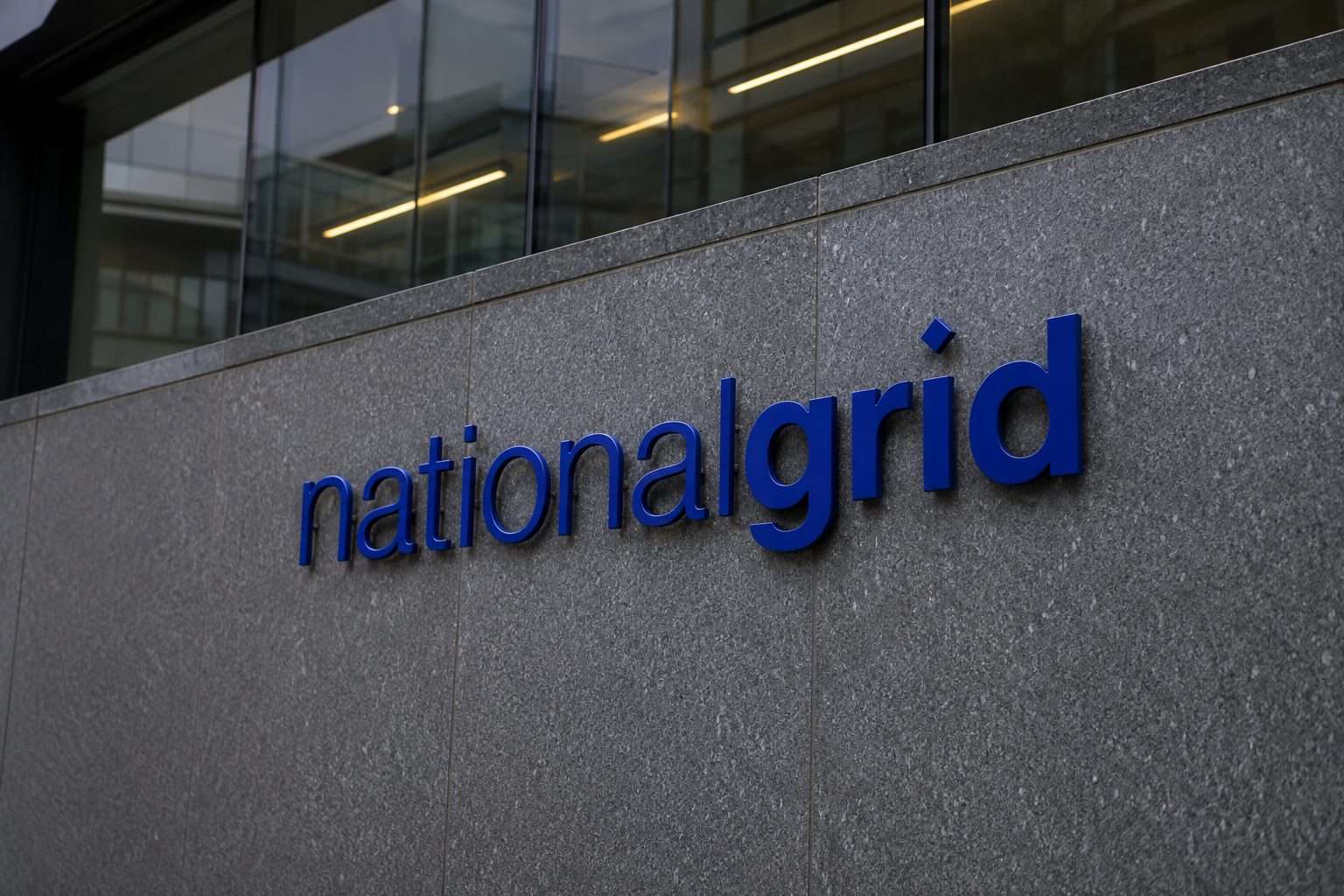
National Grid shares dropped over 1% in London on Monday after Deutsche Bank downgraded the stock to “hold” from “buy”. The bank pointed to higher political risk for UK utilities and said the valuation case is now weaker. National Grid was last down 1.07% at 1,204.50 pence, according to a London South East market report. London South East
National Grid is not just a defensive dividend play anymore. Now it’s also a stock for investors betting on a big buildout in power networks across the UK and the U.S. Northeast. The company is planning to put at least £70 billion into capital projects over the five years through 2030/31.
National Grid’s downgrade came during a soft session. The FTSE 100 slipped 0.34%, according to Reuters. Broader markets traded lower as risk appetite fell. Investors are now questioning how to value regulated growth at National Grid with political risks in the mix.
National Grid traded at a sell price of 1,204.00p and a buy price of 1,204.50p on Hargreaves Lansdown’s delayed quote, down 13.50p, or 1.11%. Shares had opened at 1,215.00p after closing at 1,217.50p. About 1.55 million shares changed hands.
Deutsche lowered its price target for the stock to 1,250p from 1,370p. The new target is about 4% above Monday’s share price, putting it nearer a “hold” than a buy. London South East
Deutsche Bank lowered price targets across several names. The broker cut targets for SSE, Severn Trent and United Utilities, but left SSE and United Utilities at “buy” and stuck with a “hold” on Severn Trent. Shares in National Grid, Pennon, Severn Trent and United Utilities traded down 1.2% to 1.6% by 0933 BST, Sharecast said. London South East
National Grid runs electricity transmission and distribution across Great Britain, plus electricity and gas networks in the U.S. Northeast. That spread means big scale for investors, and also opens the company up to regulatory and policy risks in both the U.K. and U.S.
National Grid’s May update offered bulls a few numbers to hold onto. The company reported record capital investment for 2025/26 at £11.6 billion. Underlying EPS came in at 78.0p, up 8% at constant currency. The full-year dividend was 48.49p, up 3.8%. Underlying EPS excludes some items that National Grid says distort the operating trend.
Chief Executive Zoë Yujnovich described the plan as the “largest investment programme in our history” and said the networks would “strengthen energy security”. She said results for the year give a base for asset growth of roughly 10% and underlying EPS to rise 8% to 10% under the five-year framework.
National Grid expects underlying EPS growth of 13% to 15% for 2026/27 as RIIO-T3, the next UK electricity transmission price-control cycle, begins. Under this regime, regulators set out what network operators are allowed to charge customers and keep in earnings.
Politics, higher borrowing costs or rising bills could still shift the picture. Deutsche flagged the risk of more “public control” over utilities if Labour’s leadership changes. National Grid’s net debt hit £44.2 billion at March 31 after stepped-up investment. AJ Bell’s Dan Coatsworth said, “Oil staying higher for longer will push up energy and transport costs,” which could pressure households, companies and policymakers. London South East
National Grid shares fell, but this looks like a valuation pullback, not a full retreat from the company’s story. The utility still has a big regulated build-out in front of it. Monday’s selloff signals that investors want more clarity on how much of that growth flows through to shareholders, versus what could get pulled back by politics, higher bills or more debt.