PHILADELPHIA, January 30, 2026, 14:23 (EST)
- Researchers supported by the NIH enhanced a blood-marker method by adding two proteins, boosting pancreatic cancer detection in stored samples
- At a 5% false-positive rate, the four-marker panel detected 91.9% of cancers overall and caught 87.5% of early-stage cases.
- Researchers emphasized that larger, prospective studies are necessary before this can be used for screening
A four-protein blood test panel boosted detection of pancreatic cancer in stored samples, the National Institutes of Health announced Friday. The test caught 91.9% of cases overall and 87.5% of early-stage cancers, with a 5% false-positive rate among people without cancer, the agency said. “We’ve significantly improved our ability to detect this cancer when it’s most treatable,” said Kenneth S. Zaret from the Perelman School of Medicine at the University of Pennsylvania. 1
Timing is crucial because pancreatic ductal adenocarcinoma (PDAC), the most common type of pancreatic cancer, is usually diagnosed late, limiting treatment options. Penn Medicine reports that the five-year survival rate is around 44% if caught early and confined locally, but it plummets to just 3% once the cancer spreads. “Pancreatic cancer usually doesn’t present with symptoms until it’s too late for surgery,” Zaret noted. 2
Routine screening for pancreatic cancer isn’t recommended for adults at average risk. The U.S. Preventive Services Task Force advises against testing people who show no symptoms. Their reasoning points to the potential harms from false positives and the invasive follow-ups that can result. They also highlight the lack of reliable, validated blood biomarkers for early detection. 3
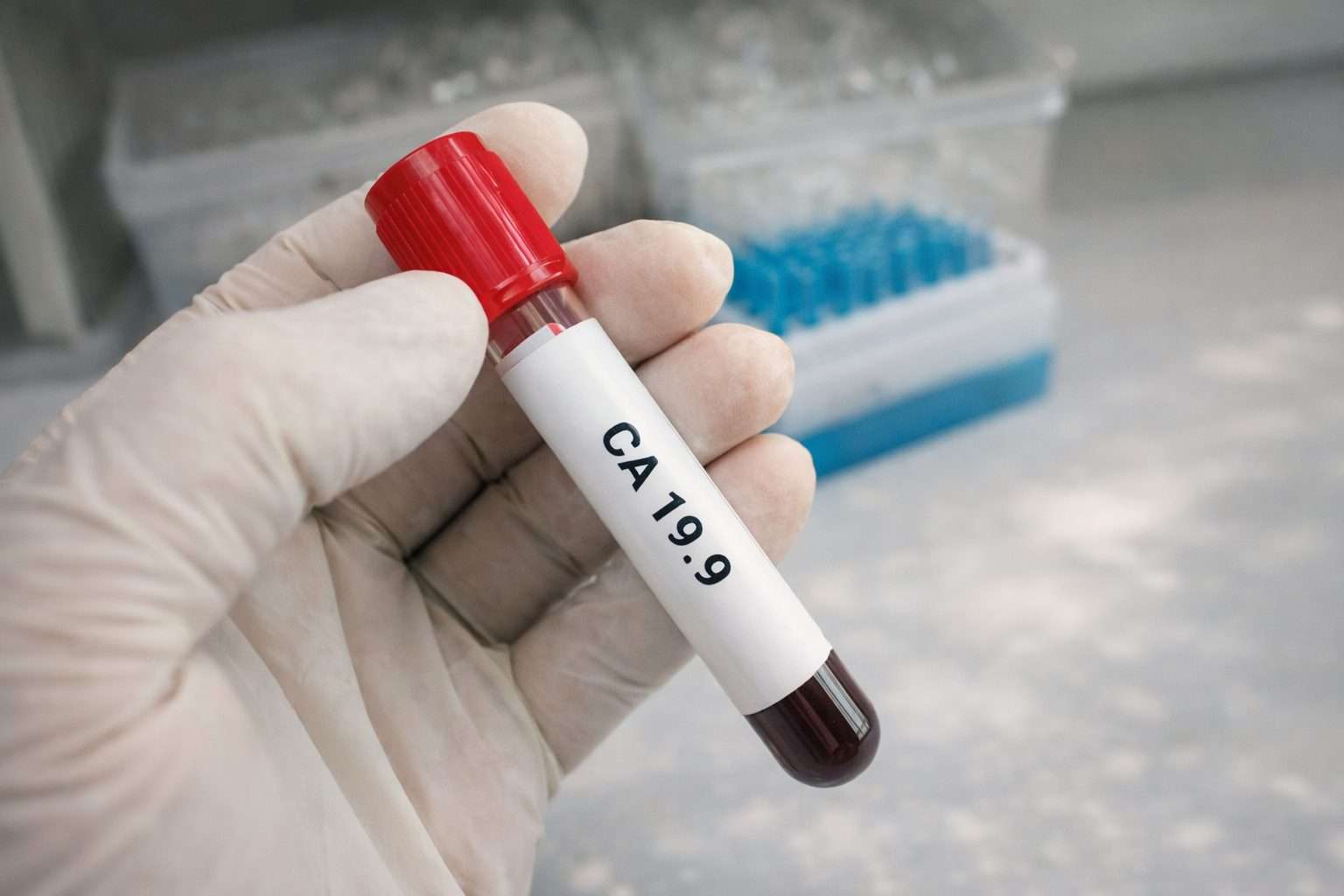
Researchers analyzed protein levels in stored plasma from PDAC patients and cancer-free individuals at Mayo Clinic and Penn, per the American Association for Cancer Research. They found two proteins, ANPEP and PIGR, elevated in early-stage cases and paired them with known markers CA19-9 and THBS2. This four-marker panel achieved AUC scores of 0.97 and 0.96 for distinguishing stage I–II disease from healthy controls, outperforming CA19-9 alone. Although the improvement for early-stage detection wasn’t statistically significant, Zaret noted the additional markers “could therefore reduce the number of missed cancer cases while keeping false positives low.” 4
A biomarker panel combines multiple biological signals—like proteins detected in blood—to identify disease more accurately than any single indicator. The AUC, or “area under the curve,” summarizes a test’s ability to distinguish between two groups, with 1.0 indicating flawless separation.
The researchers pitched the blood panel as a “first pass” tool—something to guide who should get follow-up scans, not a replacement for imaging or diagnosis. Since this cancer often stays hidden until it spreads, even a small move toward earlier detection could alter how many patients make it to surgery.
The work remains far from ready as a screening test. Researchers analyzed stored samples rather than blood drawn from symptom-free individuals followed over time. Plus, the study groups didn’t reflect the diverse range of patients seen in typical surveillance programs. And any blood screen could still lead to unnecessary imaging and invasive procedures for some people.
Zaret and colleagues highlighted prospective studies—trials tracking individuals over time and gathering samples before diagnosis—as the crucial next step to verify if the signal remains consistent beyond retrospective datasets. They also emphasized the need for testing in larger groups, especially among high-risk populations, to determine if this method could serve as a viable screening tool.
CA19-9 is still primarily a marker for tracking existing disease rather than detecting it early, so doctors continue to depend on symptoms and imaging once they show up. The new panel is part of a broader effort to catch pancreatic cancer sooner, but the real challenge lies in proving it can identify issues early without triggering unnecessary harm.