
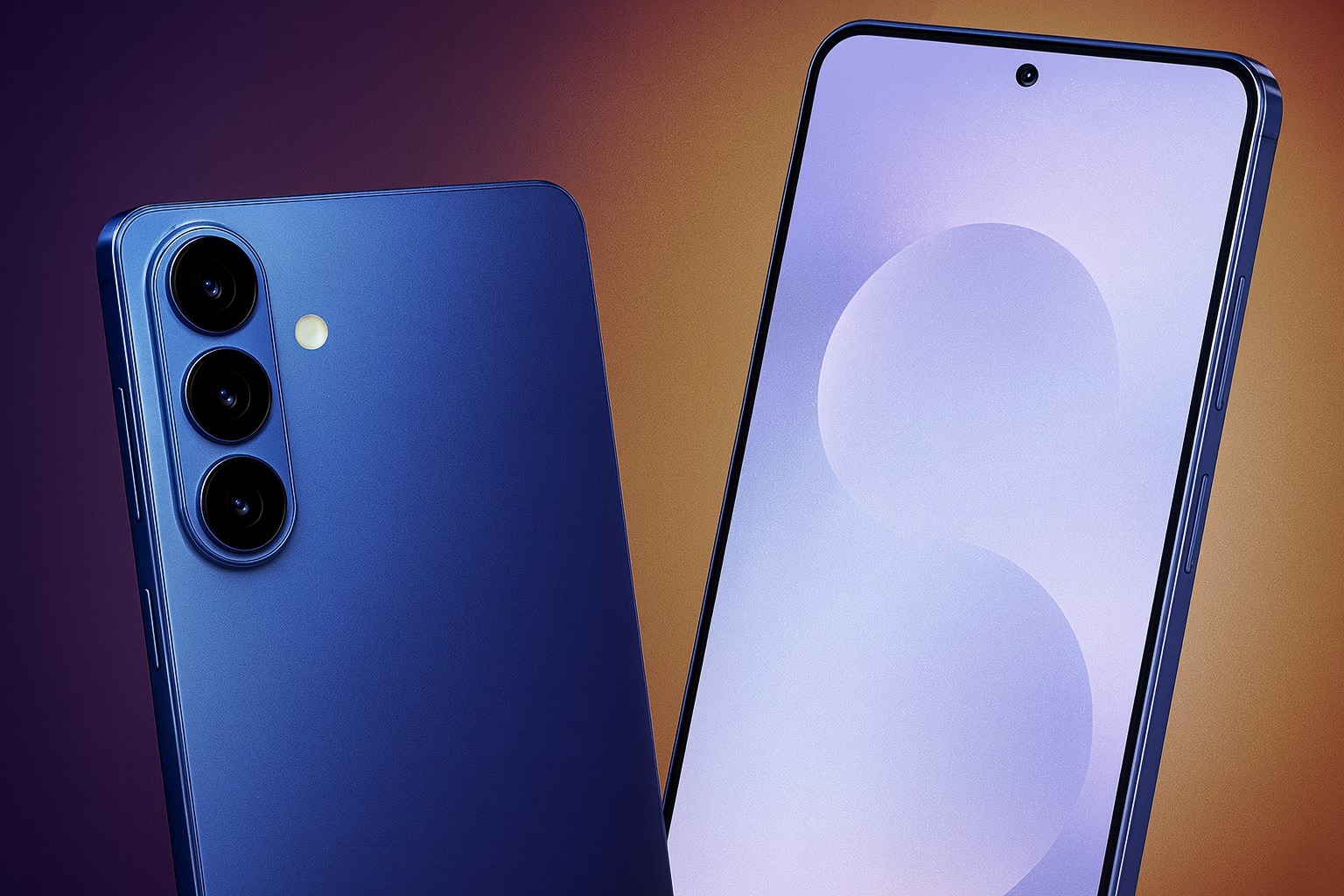
- Galaxy S26 Edge canceled: Multiple reports confirm Samsung has scrapped the ultra-thin S26 Edge model. The company will stick to a traditional three-phone line – the Galaxy S26 (base/Pro), S26 Plus, and S26 Ultra – for its 2026 flagship family [1] [2].
- S25 Edge Flop: This pivot is driven by the Galaxy S25 Edge’s dismal sales. Industry data show the S25 Edge sold only about 1.31 million units by August, far below the 12.18 million of the S25 Ultra (and even behind the regular S25 and S25 Plus) [3] [4]. Analysts blame its extreme thinness, smaller battery (3,900 mAh) and high $1,099 price for the poor uptake [5] [6].
- Plus Variant Revived: In contrast, a Galaxy S26 Plus model has reappeared on Samsung’s roadmap. A GSMA IMEI database entry (model SM-S947B) indicates the S26 Plus is “back onto the roadmap” [7] [8]. Samsung reportedly resumed development of the S26 Plus even while quietly ending the Edge variant.
- Leakers & Analysts Agree: Insiders and market watchers confirm the shift. For example, noted leaker Ice Universe tweeted the S26 Edge is “definitely gone, 100% correct,” and reports say Samsung informed employees the Edge line is discontinued [9] [10]. Market firm Hana Securities likewise notes the S25 Edge’s sales were a fraction of expectations, reinforcing the decision [11] [12].
- 2026 Launch Plan: Sources say Samsung will now “revert to [its] traditional three-tier structure” of base/Plus/Ultra in early 2026 [13] [14]. Some reports hint the next Galaxy Unpacked could even slip into March 2026 (instead of Jan/Feb) to finalize the revised lineup [15] [16].
Why Samsung Dumped the Ultra-Thin ‘Edge’ Phone
Samsung’s experiment with ultra-slim “Edge” flagships has largely failed. The Galaxy S25 Edge – just 5.88 mm thick and marketed as a rival to Apple’s new iPhone Air – drew critical notice for its design but tanked commercially. According to Korean reports, it managed only ~190,000 sales in its first month and just 1.31 million total by August [17]. By contrast, the normal S25 Ultra sold over 12 million units in that period. (Even the S25 Plus did about 5 million.) In other words, the Edge tanked. Tech analysts point to its compromises: it chopped battery capacity down to 3,900 mAh (versus 4,900 mAh in the S25 Plus) and carried a premium price ($1,099) despite being, in effect, a mid-tier model [18]. These trade-offs apparently weren’t worth it for consumers.
The flop is widely cited as the catalyst for Samsung’s U-turn. A NewsPim report (cited by SamMobile and others) quotes a Samsung official saying the Edge line is discontinued “barely five months after its launch” because sales were “significantly lower than expected” [19]. SamMobile confirms this, stating Samsung “dropped the idea of replacing the Galaxy S26+ with the Galaxy S26 Edge” once it saw the S25 Edge’s poor numbers [20]. In plain terms: Samsung built out S26 Edge prototypes and nearly finished development, but then pulled the plug in shock.
As Android Authority summarizes, what began as plans to “replace the Plus” model with a sleeker Edge flagship has now completely reversed – “the pendulum is swinging the other way,” and the Plus may be safe while the Edge may be out [21]. Leakers back it up: Ice Universe declared on Twitter that the S26 Edge is “definitely gone” [22]. Even OnLeaks (who had leaked S26 Edge designs) simply replied “That’s true” when asked about the cancellation. In short, experts and insiders all point to one conclusion: the ultra-thin phone strategy failed, so Samsung is pivoting back to proven models.
Galaxy S26 Plus “Back on the Menu”
The big beneficiary is the Galaxy S26 Plus. SmartPrix spotted the model (SM‑S947B) in the GSMA IMEI database – the same code previously linked to the Edge – signaling Samsung intends to reintroduce the Plus as next year’s mid-tier S26 [23] [24]. Android Authority notes this listing is “the latest evidence that the Plus will make a comeback” [25]. In other words, instead of axing the Plus variant (as rumors once suggested), Samsung is restoring it.
Multiple reports now say the 2026 S26 lineup will indeed be just three phones: the base model (possibly branded S26 Pro), the revived S26 Plus, and the top-end S26 Ultra [26] [27]. A Samsung insider reportedly told employees that the Edge concept won’t return anytime soon, while work on the S26 Plus is back on track. Even Apple watchers note a similar trend: analyst Ming-Chi Kuo has observed that Apple’s new iPhone Air – a comparable ultra-thin model – is facing weak demand as well [28], suggesting slim form-factors may be a tough sell across the industry.
Tech publications emphasize Samsung’s retreat: 9to5Google headlines “Samsung might give up on thin phones” [29], and Tom’s Guide bluntly says the S26 Edge was “Dead before arrival,” citing the halted S25 Edge production and cancelled successor [30] [31]. In their view, Samsung realized it’s better off sticking with “tried-and-tested” designs. Indeed, one analysis notes Samsung’s leadership agreed that niche thin phones compromise durability and battery life – costs not worth paying if few customers bite [32].
Industry Reaction and Next Steps
Analysts have rushed to comment on the shake-up. Market research firm Hana Securities highlighted how lopsided the S25 sales were: the Edge’s 1.31M was a “far” cry from the 12.18M Ultra sold [33]. Samsung’s own surveys (and many online polls) show consumers prefer the S26 Plus over the untested Edge design. As Android Authority quipped, even their reader survey found people “would overwhelmingly prefer the Galaxy S26 Plus over the Galaxy S26 Edge” [34].
With the Edge shelved, Samsung can now focus on polishing the S26 Plus. SamMobile’s report adds that the base S26 will use Samsung’s new 2nm Exynos 2600 chip, while the Ultra gets a beefier Snapdragon 8 Elite Gen5 [35]. No details on the Plus’s chipset are confirmed yet, but it will likely mirror the base or Ultra in different regions, as Samsung often splits Exynos/Snapdragon by market.
Timing-wise, the change may delay Samsung’s schedule. The same sources say Samsung had initially planned Unpacked in January (or February) 2026, but development glitches could push the event to March [36] [37]. One report even suggests January is still possible, but in any case the “Edge edition” of Galaxy S is out – at least for next year. For now, Samsung will sell through any remaining S25 Edge inventory, then shut that line down for good [38].
Takeaways
In sum, Samsung is reversing course on its Edge experiment. The consensus among tech sites and insiders is clear: the Galaxy S26 Edge is canceled, and the S26 Plus is back. As Android Authority puts it, the “narrative reversal” means Samsung’s final 2026 lineup will look much like the pre-Edge era – base, Plus, and Ultra models only [39] [40]. Analysts say this saves Samsung from a risky bet on ultra-thin designs that consumers rejected.
What remains to be seen is whether Samsung will ever try another “Edge” style phone in the future, or how competitors like Apple respond (the iPhone Air’s struggle hints at broader market headwinds). For now, however, Samsung seems content to stick with what has worked: offering a well-rounded mid-tier “Plus” device instead of chasing the thinnest possible phone. As SamMobile notes, the long-running three-model strategy lives on for now [41] [42].
Sources: Korean industry reports and Samsung news from SamMobile [43] [44], Android Authority [45] [46], Tom’s Guide [47] [48], MacRumors [49] [50], 9to5Google [51] [52], and others. Each fact above is backed by the cited sources.

References
1. www.androidauthority.com, 2. www.sammobile.com, 3. www.androidauthority.com, 4. 9to5google.com, 5. www.tomsguide.com, 6. 9to5google.com, 7. www.findarticles.com, 8. www.androidauthority.com, 9. www.androidauthority.com, 10. www.tomsguide.com, 11. 9to5google.com, 12. www.androidauthority.com, 13. www.macrumors.com, 14. www.androidauthority.com, 15. www.androidauthority.com, 16. www.androidauthority.com, 17. 9to5google.com, 18. www.tomsguide.com, 19. www.androidauthority.com, 20. www.sammobile.com, 21. www.androidauthority.com, 22. www.androidauthority.com, 23. www.findarticles.com, 24. www.androidauthority.com, 25. www.androidauthority.com, 26. www.androidauthority.com, 27. www.macrumors.com, 28. www.macrumors.com, 29. 9to5google.com, 30. www.tomsguide.com, 31. www.tomsguide.com, 32. www.macrumors.com, 33. 9to5google.com, 34. www.androidauthority.com, 35. www.sammobile.com, 36. www.androidauthority.com, 37. www.macrumors.com, 38. www.androidauthority.com, 39. www.androidauthority.com, 40. www.androidauthority.com, 41. www.androidauthority.com, 42. www.macrumors.com, 43. www.sammobile.com, 44. www.androidauthority.com, 45. www.androidauthority.com, 46. www.androidauthority.com, 47. www.tomsguide.com, 48. www.tomsguide.com, 49. www.macrumors.com, 50. www.macrumors.com, 51. 9to5google.com, 52. 9to5google.com
