
Published: December 2, 2025
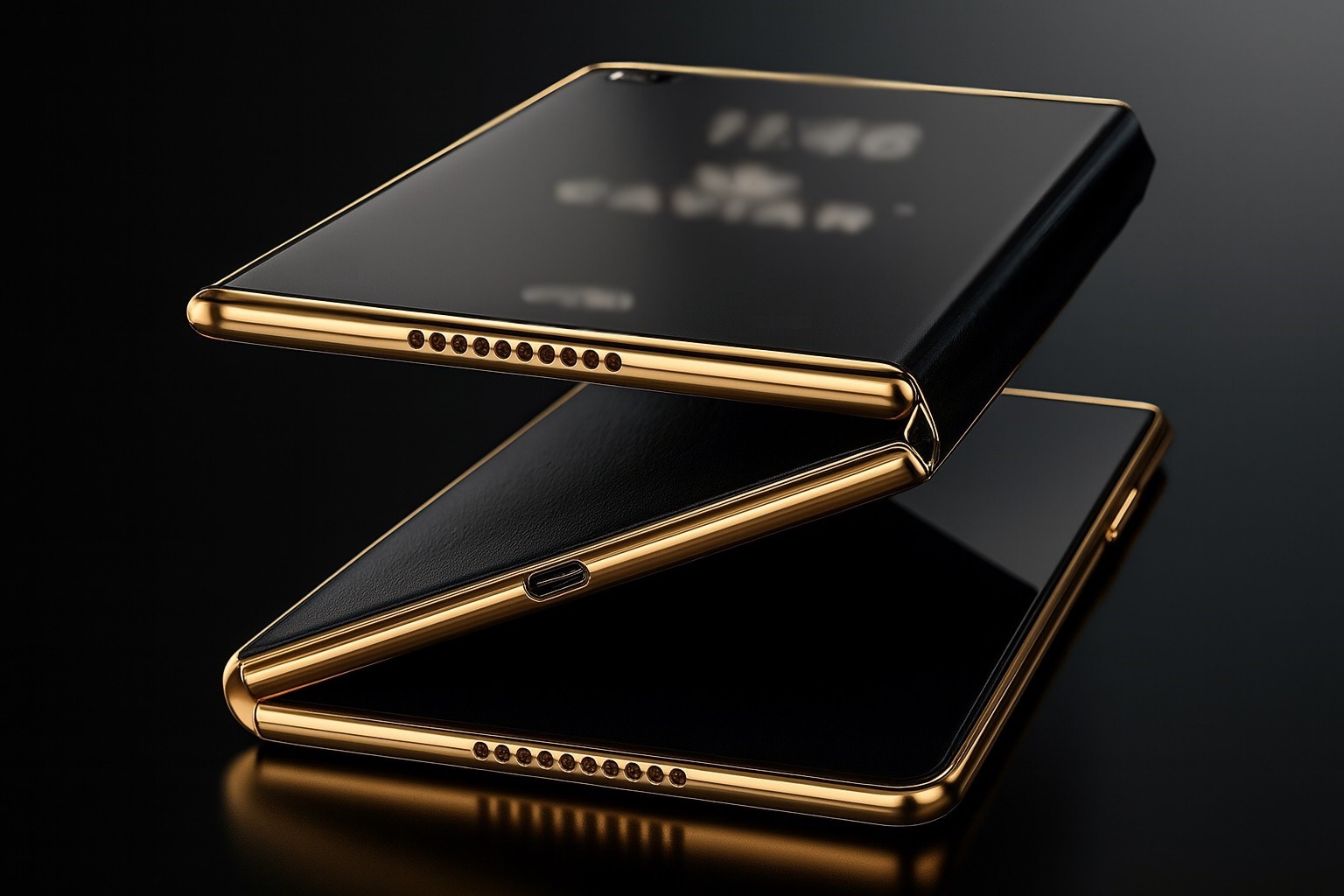
Samsung has finally taken the wraps off the Galaxy Z TriFold, its first tri‑fold smartphone and arguably the first triple‑folding device headed for a truly global launch. Announced in Seoul today, the Galaxy Z TriFold opens out into a 10‑inch tablet‑class screen, costs 3.59 million Korean won (roughly $2,440–$2,500), and goes on sale in South Korea on December 12 before expanding to China, Taiwan, Singapore, the UAE and the US in early 2026. [1]
Beyond the wow factor of a screen that folds twice, this launch is strategically timed. Samsung is trying to reassert its dominance in foldables just as Chinese brands step up innovation and Apple’s first foldable iPhone, expected in 2026, creeps closer. [2]
Galaxy Z TriFold at a glance
Here’s how Samsung’s new tri‑fold stacks up on the key hardware:
- Form factor: Triple‑hinge, inward‑folding design with three panels
- Main display: 10.0‑inch Dynamic AMOLED 2X, 2160 × 1584, 1–120 Hz, up to 1,600 nits peak brightness [3]
- Cover display: 6.5‑inch FHD+ (2520 × 1080), 21:9, 120 Hz, up to 2,600 nits
- Dimensions & weight: 159.2 × 75.0 × 12.9 mm folded; 159.2 × 214.1 × ~4 mm unfolded; 309 g [4]
- Chipset: Snapdragon 8 Elite for Galaxy (3 nm)
- Memory & storage: 16 GB RAM with 512 GB or 1 TB storage (no microSD) [5]
- Battery: 5,600 mAh three‑cell system; up to ~50% in ~30 minutes with 45 W wired charging; 15 W fast wireless charging [6]
- Cameras (rear):
- 200 MP wide, OIS
- 12 MP ultra‑wide
- 10 MP 3× telephoto, up to 30× “Space Zoom” [7]
- Cameras (front): 10 MP selfie on cover display + 10 MP selfie on inner display [8]
- Software: Android 16 with One UI 8 and full Galaxy AI feature set
- Price: 3.59 million KRW in Korea (about US$2,440–$2,500, before local taxes) [9]
- Protection: IP48 water resistance, Gorilla Glass Ceramic 2 on the front, titanium hinge housing and “advanced armor aluminium” frame [10]
Design: a phone that unfolds into a 10‑inch tablet
The TriFold’s party trick is its dual‑hinge design. Folded, it looks like a slightly chunky but ordinary smartphone with a 6.5‑inch outer display. Open it up and both side panels unfold inward over a central panel, revealing a 10‑inch, almost square tablet‑like canvas. [11]
This inward‑folding approach distinguishes Samsung from Huawei’s Mate XT series, which uses a Z‑shaped fold that leaves parts of the inner display exposed when the phone is closed. Samsung’s design keeps the main screen completely protected inside when shut, at the cost of a bit of extra thickness. [12]
Some key design details:
- Thickness: Each of the three panels is just under 4.2 mm when unfolded; folded together, the device is 12.9 mm thick — thicker than a Galaxy S25 Ultra or Z Fold 7, but surprisingly slim for a triple‑folding device. [13]
- Build: A ceramic‑glass fibre reinforced back panel, Gorilla Glass Ceramic 2 on the front, and a titanium‑reinforced dual‑rail hinge system aim to address concerns that early foldables felt fragile. [14]
- Durability: Samsung says the main display has been tested for 200,000 folding cycles — roughly 100 folds a day for five years — and the device carries an IP48 rating, meaning strong water resistance but no official dust protection. [15]
India‑focused outlet SiliconIndia reports that buyers will also get a one‑time 50% discount on display repair, a nod to consumer anxiety around multi‑hinge devices. [16]
Performance, battery and charging: built for power users
Inside, the Galaxy Z TriFold is effectively a flagship tablet and smartphone fused together:
- Chipset: Qualcomm’s Snapdragon 8 Elite for Galaxy, the same 3 nm chip powering Samsung’s S25 series. [17]
- RAM & storage: 16 GB of memory paired with either 512 GB or 1 TB of internal storage should comfortably handle heavy multitasking, gaming and large media libraries. [18]
The battery is one of the phone’s biggest talking points. Samsung has spread a 5,600 mAh three‑cell system across the three panels, the largest capacity on any Samsung flagship to date. Reuters notes that Samsung is explicitly pitching this as its biggest flagship battery yet, with “super‑fast” charging that pushes the phone to around 50% in 30 minutes using a 45 W adapter. [19]
Wireless charging is supported up to 15 W, and Wireless PowerShare lets the TriFold reverse‑charge smaller devices like Galaxy Buds or a smartwatch — handy given how much battery Samsung has packed in. [20]
Cameras and Galaxy AI: a creator‑friendly trifold
Samsung hasn’t treated the TriFold as a tech demo with mid‑range cameras. The triple rear array matches or exceeds its current top flagships:
- Main camera: 200 MP wide‑angle with OIS
- Ultra‑wide: 12 MP, 120° field of view
- Telephoto: 10 MP, 3× optical zoom, up to 30× “Space Zoom” with AI upscaling [21]
Two 10 MP selfie cameras — one in the cover display and one on the inner tablet screen — allow for flexible shooting angles whether the device is partially folded, fully unfolded, or used like a conventional slab. [22]
On the software side, Samsung’s latest Galaxy AI suite is baked in from day one. That includes tools like Generative Edit and Photo Assist for images, and Writing Assist for text, plus a six‑month Google AI Pro trial (with Gemini‑based video generation and 2 TB of cloud storage) in supported markets. [23]
For creators, that combination — a large canvas, versatile cameras and AI editing features — is exactly the kind of “halo” experience Samsung wants the TriFold to embody.
One notable omission: there’s no S Pen support. Samsung confirmed to reviewers that, like the Z Fold 7, the TriFold doesn’t work with the company’s Bluetooth stylus, signalling a shift away from stylus‑centric foldables in its mobile roadmap. [24]
Multitasking and DeX: turning three screens into a mini desktop
The point of a 10‑inch foldable isn’t just watching Netflix with fewer black bars — it’s running more apps at once.
Early hands‑on coverage shows the TriFold running up to three apps side‑by‑side on the inner display, with a refined version of Samsung DeX that no longer needs an external monitor. You can dock the TriFold, pair a keyboard and mouse, and get a multi‑window desktop layout directly on the device, complete with support for multiple virtual workspaces. [25]
This is the most PC‑like experience Samsung has ever shipped on a phone, and it’s clearly targeting people who want to travel with one device that can be a phone, a tablet and a lightweight productivity machine.
From leaks to launch: Android Authority’s price rumor was close
The Galaxy Z TriFold has been leaking for months, and one of the most widely cited reports came from Android Authority on November 28. That leak, based on a Korean blog post, suggested a home‑market price of about 3.6 million won (~$2,446), down from earlier chatter around a 4 million won (~$2,718) tag. [26]
The official Korean price of 3.59 million won is almost exactly in line with that later leak, and still a big step up from Samsung’s already‑premium Galaxy Z Fold 7, which costs roughly $1,600 equivalent in Korea. [27]
Android Authority also nailed some of the key specs ahead of today’s launch: a 10‑inch inner display, 6.5‑inch cover screen, Snapdragon 8 Elite, 5,600 mAh battery and a camera setup broadly matching the Z Fold 7. [28]
In other words, the TriFold is exactly what recent leaks implied: a super‑high‑end, super‑expensive “concept you can buy.”
How much does it cost, and where is it launching first?
Here’s the rollout as it stands today:
- South Korea: On sale from December 12, 2025, at 3.59 million KRW (~$2,440–$2,500).
- China, Taiwan, Singapore, UAE: Launches “before the end of the year,” according to Reuters and regional outlets. [29]
- United States: Planned for Q1 2026; pricing is not yet announced, but multiple reports expect a figure around $2,500 given the Korean RRP. [30]
CNBC and other syndicated reports emphasise that Samsung is launching this as competition from Chinese brands intensifies rather than as a mainstream volume driver. [31]
Alex Lim, who heads Samsung’s Korea sales and marketing office, has described the TriFold as a device aimed at customers who specifically want the new form factor, not as a mass‑market product. Analysts quoted in Reuters and other outlets frame it as much as a technology showcase as a revenue play, given the complexity and production cost of a triple‑hinge design. [32]
Galaxy Z TriFold vs Huawei Mate XT / Mate XTs
Samsung is not the first to ship a triple‑folding phone. Huawei’s Mate XT Ultimate Design, followed by the Mate XTs, became the world’s first commercially available tri‑fold foldables, initially limited to China and select international markets. [33]
Key contrasts:
- Folding direction:
- Samsung TriFold: Both side panels fold inward over a central panel, hiding the inner display when closed.
- Huawei Mate XT series: Uses a Z‑shaped fold where some of the inner screen remains exposed and acts as an outer display. [34]
- Software & ecosystem:
- Samsung leans on Android 16, One UI 8, Galaxy AI and deep integration with Google Play services.
- Huawei relies on HarmonyOS and its own ecosystem, with limited or no access to Google services in many markets. [35]
- Availability: TriFold is slated for broader global release, including the US, where Huawei foldables are effectively absent. [36]
Hindustan Times’ early comparison notes that Huawei may still be ahead in tri‑fold refinement, but Samsung now has the more globally accessible product — and a much tighter link to Android apps and Google’s AI stack. [37]
The bigger picture: Samsung, Apple and the foldable market in 2026
Market‑research firms have been warning that foldables are still a niche, and growth has wobbled. Reuters, citing Counterpoint Research, says foldable phones are expected to make up under 2% of the global smartphone market this year and remain under 3% by 2027. [38]
At the same time, analysts expect:
- A 68% jump in US foldable shipments in 2025, with Apple’s first foldable predicted to arrive in 2026 and reshape the segment there. [39]
- A 50% rebound in global foldable shipments in 2026 after a flat 2025, as more brands (including Apple) enter and flip‑style devices get cheaper. [40]
In other words: the TriFold is arriving at the end of the “early adopter” era, just before the market potentially goes mainstream.
For Samsung, there’s another twist: Counterpoint recently projected that Apple could overtake it in total smartphone shipments for the first time in about 14 years. [41]
Bloomberg’s framing of the TriFold as “months ahead of a folding iPhone” is telling. Samsung wants to set the narrative that when Apple eventually unveils its first foldable, Samsung will already have a generation‑ahead tri‑fold in the market — even if that product only sells in relatively small numbers. [42]
Who is the Galaxy Z TriFold really for?
Given the price and form factor, the TriFold clearly isn’t aimed at casual buyers upgrading from a mid‑range slab.
Based on today’s coverage and analyst commentary, the core audience looks like:
- Early adopters and tech enthusiasts who want the most advanced mobile hardware available.
- Productivity‑focused professionals who can benefit from three‑app layouts, on‑device DeX desktops and a tablet‑class screen in a pocketable form.
- Creators and mobile photographers who will lean on the 200 MP camera, large display and AI editing tools. [43]
Reuters notes that Samsung itself is positioning the TriFold as a special‑interest device rather than a volume driver, and other outlets describe it as a “special edition” that tests consumer appetite for a new form factor. [44]
There are still open questions:
- Durability: More hinges means more potential failure points, and analysts caution that the first‑generation hardware could still face issues around long‑term reliability. [45]
- Ergonomics: At 309 g, this is heavier than most phones and even many small tablets, so long–term comfort will depend on how often you use it fully unfolded. [46]
- App optimisation: While Samsung and Google have been pushing large‑screen Android improvements, not every app will be optimised for a triple‑fold layout on day one.
Should you buy now or wait for what’s next?
If you’re the kind of person who bought the first Galaxy Fold or Huawei Mate X despite their quirks, the Galaxy Z TriFold is almost tailor‑made for you. You get cutting‑edge display engineering, top‑tier specs, serious multitasking software and a design that will turn heads everywhere you go.
For everyone else, the calculus is more complicated:
- Prices for standard foldables (especially flip phones) are trending downward, while triple‑folds remain ultra‑premium.
- Apple’s entry is widely expected in 2026, which could accelerate software optimisation and bring more competition — and possibly more sensible pricing — across the board. [47]
- Research houses like Omdia and Counterpoint anticipate a big rebound in foldable volumes from 2026 onward, suggesting that second‑generation tri‑folds and cheaper variants are likely. [48]
If you’re curious but cautious, the smart move is probably to watch the first wave of reviews and long‑term durability tests, and see how quickly app developers embrace the TriFold’s three‑panel layout.
If you’re all‑in on foldables, though, Samsung just gave you the wildest form factor you can actually go and buy.
References
1. www.reuters.com, 2. www.reuters.com, 3. news.samsung.com, 4. news.samsung.com, 5. news.samsung.com, 6. news.samsung.com, 7. news.samsung.com, 8. news.samsung.com, 9. www.reuters.com, 10. news.samsung.com, 11. www.theverge.com, 12. www.theverge.com, 13. www.theverge.com, 14. news.samsung.com, 15. www.theverge.com, 16. www.siliconindia.com, 17. news.samsung.com, 18. news.samsung.com, 19. www.reuters.com, 20. news.samsung.com, 21. news.samsung.com, 22. news.samsung.com, 23. news.samsung.com, 24. www.theverge.com, 25. www.theverge.com, 26. www.androidauthority.com, 27. www.androidauthority.com, 28. www.androidauthority.com, 29. www.reuters.com, 30. www.bloomberg.com, 31. ground.news, 32. www.reuters.com, 33. www.hindustantimes.com, 34. www.theverge.com, 35. www.hindustantimes.com, 36. www.bloomberg.com, 37. www.hindustantimes.com, 38. www.reuters.com, 39. counterpointresearch.com, 40. omdia.tech.informa.com, 41. counterpointresearch.com, 42. www.bloomberg.com, 43. english.mathrubhumi.com, 44. www.reuters.com, 45. www.reuters.com, 46. english.mathrubhumi.com, 47. counterpointresearch.com, 48. omdia.tech.informa.com
