
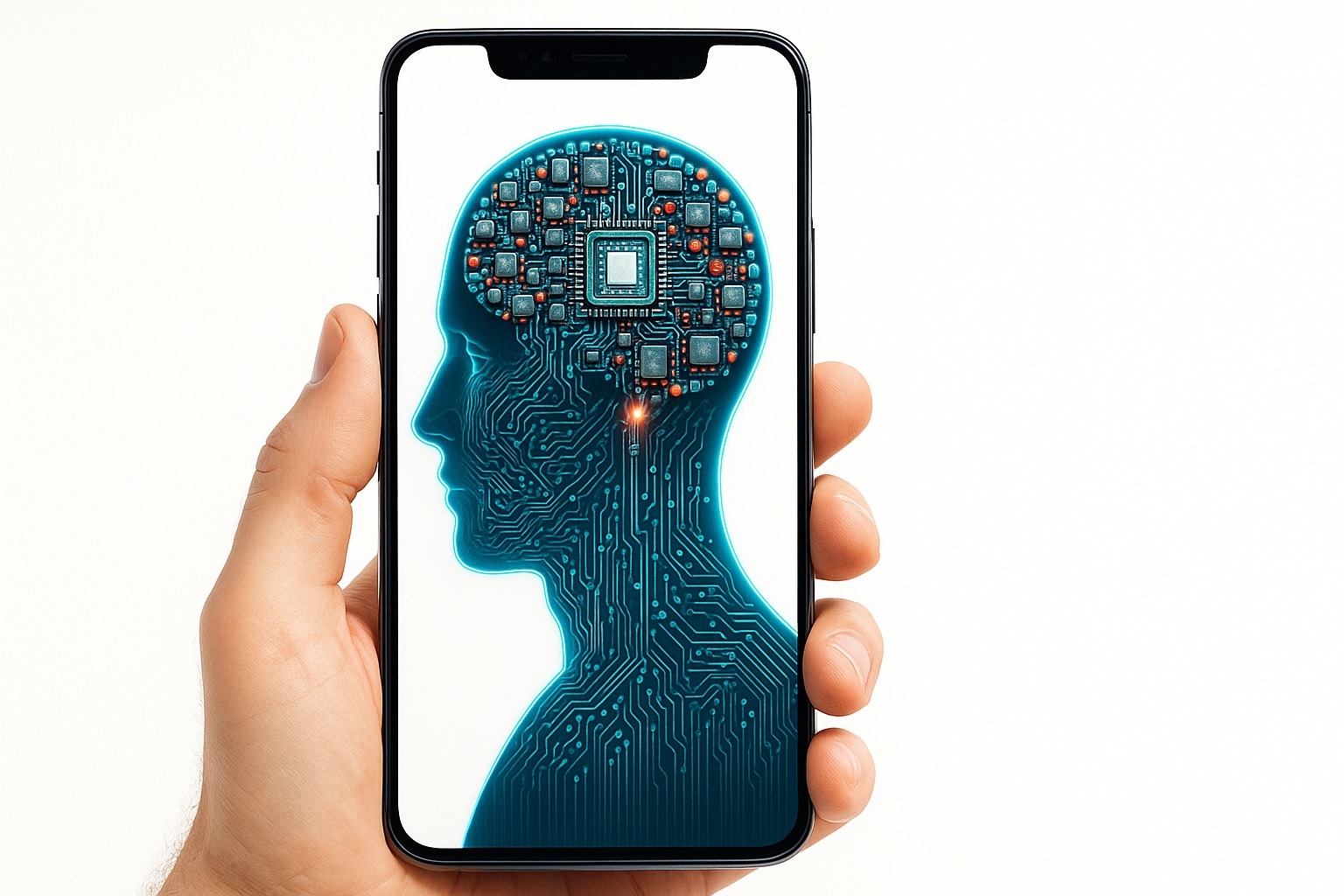
On paper, 2025 should be the year your smartphone turns into a genuinely intelligent assistant. Neural Processing Units (NPUs) inside flagship chips like Qualcomm’s Snapdragon 8 Elite Gen 5 and Snapdragon 8 Gen 5 boast huge jumps in AI performance, and vendors promise “agentic” assistants, real‑time translation, and on‑device generative AI. [1]
Yet as Ars Technica pointed out in a widely shared article this week, the NPU arms race hasn’t obviously transformed what your phone actually does for you day to day. For most buyers, the reason they “need” dedicated AI silicon still feels abstract, and the benefits remain hard to see. [2]
Today’s news cycle on December 5, 2025, underlines that tension. We’re getting faster chips, new AI‑branded features and aggressive forecasts for “gen AI smartphones”—but the experience often feels more incremental than revolutionary.
This article breaks down what’s happening right now with phone NPUs and on‑device AI, why the leap in hardware isn’t yet matched by visible AI magic, and what you should actually care about if you’re buying a new phone in late 2025.
The Ars Technica Question: Where’s the Payoff From All This NPU Power?
In a column published on December 4, 2025, Ars Technica’s Ryan Whitwam asks the blunt question: if the NPU in your phone keeps getting better, why doesn’t the AI feel dramatically better too? [3]
The piece highlights a core contradiction:
- Chipmakers keep touting TOPS numbers (trillions of operations per second) and big gains in NPU throughput.
- Phone launches are full of “AI” branding, from camera modes to assistants.
- But most users struggle to point to a must‑have AI feature that feels new compared with two or three years ago.
It’s not that nothing has changed—speech recognition, photo processing, spam filtering and background features have improved—but these upgrades are subtle and often invisible. The headline features that would justify all this AI horsepower are still rare, limited, or in beta. [4]
Today’s Headlines: Big NPUs, Small Visible Gains
Several stories from December 5 and the last few days show how the AI‑hardware gap is playing out in the real world.
OnePlus 15: Massive Battery, Elite Gen 5… Familiar AI
A detailed review of the new OnePlus 15, published today, shows what a cutting‑edge 2025 flagship looks like. It ships with: [5]
- A Snapdragon 8 Elite Gen 5 processor (one of the first phones to do so).
- A 7,300 mAh battery, nearly two days of real‑world use.
- Triple 50 MP rear cameras and a 165 Hz display for gaming.
Qualcomm’s 8 Elite Gen 5 platform includes a 37% faster Hexagon NPU and new on‑device AI features like a personal knowledge graph and continuous learning via the Sensing Hub. [6]
Yet in the review, the headline wins are still performance, battery life, gaming and camera quality—with AI mostly described as a supporting player (enhanced photos, a smarter Recorder app, some “Mind Space” and assistant features). [7]
In other words: the NPU is doing work, but the impact feels evolutionary, not game‑changing.
Apple: Quietly Betting on On‑Device AI, Not Eye‑Candy
A new Barron’s piece today argues that Apple might actually be winning the AI race—despite shipping fewer flashy AI features than its rivals. [8]
Key points from that coverage:
- Apple’s major AI initiative, Apple Intelligence, and a more powerful Siri have been delayed by strict privacy and security requirements.
- Rather than relying heavily on cloud servers, Apple insists on running more machine learning on the device, which is technically harder but fits its privacy brand. [9]
- Investors seem comfortable with Apple being late on big AI announcements, betting that AI models will become commodities and Apple’s tight integration and privacy stance will matter more over time.
Again, the story is less “explosive new consumer AI capability” and more “complex, careful engineering to make on‑device AI actually safe and sustainable.”
ByteDance and ZTE: A New AI Voice Assistant in China
In China, ByteDance is rolling out a new AI voice assistant powered by its Doubao large language model on ZTE’s Nubia M153 smartphone. [10]
- The assistant can search for content, book tickets and perform tasks via voice.
- It debuts on a prototype phone priced at 3,499 yuan (about $495) and will spread to more handsets as ByteDance signs deals with other OEMs.
- The launch positions ByteDance against AI features from Huawei and Xiaomi, and highlights Apple’s absence in the Chinese on‑device AI race so far. [11]
Here, the NPU‑plus‑LLM combo is being used to create a more visible voice assistant, but it still resembles what Western users have seen from Google Assistant or Siri upgrades rather than a fundamentally new category of mobile AI.
Why Faster NPUs Don’t Automatically Mean Smarter AI
So what’s holding things back? If NPUs are so powerful, why aren’t we seeing dramatic changes in how our phones behave?
1. Models Are Still Huge—and Phones Are Small
The most capable generative AI models are massive, often tens or hundreds of billions of parameters, designed to run in data centers with stacks of GPUs. Shrinking those models to fit on a phone means:
- Aggressive quantization and compression.
- Smaller parameter counts.
- Careful trade‑offs between quality and latency.
Ars Technica’s piece notes that shrinking models for phones is “no simple matter” and that many of the promised benefits remain theoretical for everyday users. [12]
Even with 5–20 TOPS NPUs (which many high‑end phones now offer), you can’t just drop in a cloud‑scale model and expect instant, high‑quality results. [13]
2. Thermals, Battery and Storage Still Matter
Running intensive AI workloads on‑device:
- Heats up your phone quickly.
- Drains the battery, no matter how efficient the NPU is.
- Requires significant storage for models and caches.
Manufacturers are cautious: they don’t want AI features that cook the phone, tank the battery or force users to delete apps and photos to save space. This leads to conservative designs—short bursts of on‑device AI rather than always‑on, “agentic” assistants that think continuously in the background.
3. Software Tools and Ecosystems Are Only Now Catching Up
This is where some of the most interesting news of the week comes in. On November 24, Google announced LiteRT Qualcomm AI Engine Direct (QNN) Accelerator, a new way to tap Qualcomm NPUs directly from its on‑device ML framework. [14]
Paired with further coverage and early benchmarks, this stack promises: [15]
- Up to 100× speedups vs CPU and roughly 10× vs GPU for some models on Snapdragon NPUs.
- A more unified workflow so developers don’t need to wrestle with chip‑specific SDKs.
- Easier deployment of quantized generative AI models, including multimodal models like small vision‑language systems.
Until recently, a lot of NPU capability was effectively stranded—there, but hard for ordinary app developers to use. These new tools are only now starting to unlock the silicon.
4. The Business Case for “Wow” Features Isn’t Clear Yet
A recurring theme in analyst reports is that manufacturers aren’t sure which AI features truly sell phones:
- IDC forecasts show next‑gen AI smartphones growing from tens of millions in 2023 to well over 150–200 million units in 2024, with shipments expected to grow another ~73% in 2025. [16]
- Deloitte and other firms note that AI‑capable phones could reach more than half of the market by 2028. [17]
But “AI‑capable” often just means the hardware could run GenAI, not that there’s a blockbuster feature driving upgrades. Until the killer on‑device use cases are obvious—and monetizable—phone makers will keep experimenting with modest camera tricks, summarization tools and assistant features instead of betting the farm on radical new AI experiences.
The Quiet Revolution: What’s Actually Changing Under the Hood
Even if you don’t see dramatic AI changes, there’s a lot happening beneath the surface in late 2025.
Snapdragon 8 Gen 5 and 8 Elite Gen 5: Designed for Agents
Qualcomm’s latest platforms are built around on‑device AI and “agentic” assistants: [18]
- A significantly faster NPU for generative models and multimodal tasks.
- A Sensing Hub that uses microphones and other sensors to infer when you want to talk to your assistant.
- Features like a personal knowledge graph, letting the device learn from your usage while keeping data local.
Phones like the OnePlus 15 already ship with 8 Elite Gen 5, while others are expected to adopt 8 Gen 5 in 2026. [19]
Google’s LiteRT + Qualcomm NPU: Making On‑Device GenAI Realistic
Google’s LiteRT stack, now integrated with Qualcomm AI Engine Direct, is a huge step toward democratizing on‑device GenAI: [20]
- Developers can target NPUs through a consistent API instead of custom vendor toolchains.
- LiteRT supports ahead‑of‑time and on‑device compilation, making it easier to ship optimized models.
- Early reports and blog posts suggest major latency improvements and smoother real‑time interactions—exactly what you want for assistants, AR overlays and live language tools. [21]
This is the kind of boring, infrastructure‑level work that rarely makes headlines but is essential for turning NPU potential into real apps.
AI‑Native Games and Apps Are Emerging
Developers are beginning to treat the NPU as a creative playground, not just a faster math coprocessor. Recent commentary on “AI in your pocket” describes: [22]
- Games that use on‑device models for dynamic storylines and NPC behavior, not just better canned dialogue.
- Apps that run compact vision‑language models locally, enabling offline visual search and assistance.
- More context‑aware, multi‑turn assistants that don’t have to round‑trip to the cloud for every interaction.
These are still early, niche examples, but they hint at where things could go once the ecosystem matures.
What This Means If You’re Buying a Phone in December 2025
If you’re trying to decide whether to upgrade now—or which “AI phone” to buy—here are practical takeaways based on today’s news and the broader trend:
1. Don’t Buy on TOPS Numbers Alone
Yes, a faster NPU is good for future‑proofing, but:
- A 20–30% NPU bump won’t magically transform your experience overnight.
- What matters more is how many AI features your OS and preferred apps actually expose today.
If a phone ships with a fast NPU but only uses it for slightly better photo bokeh, you won’t feel a huge difference.
2. Look at the Software Roadmap
For Android phones with Snapdragon 8 Gen 5 / 8 Elite Gen 5, pay attention to: [23]
- Whether the manufacturer promises on‑device assistants, live translation or summarization features.
- How long they commit to OS and security updates (OnePlus, for example, is promising multiple years of support on the 15). [24]
- Whether they mention LiteRT, “AI Engine Direct” or similar frameworks in developer documentation—these are signs the NPU will actually be used. [25]
On iPhone, watch how quickly Apple Intelligence and a revamped Siri roll out globally (including in markets like China where local partnerships are required). [26]
3. Consider Where Your Data Lives
One big reason for pushing AI onto NPUs is privacy: on‑device processing keeps more of your data off the cloud. Apple leans heavily into this narrative; Google and Qualcomm also emphasize on‑device inference for speed and user control. [27]
If you care about privacy:
- Prefer features that explicitly say they run on‑device.
- Dig into whether transcripts, summaries, or personal knowledge graphs are stored locally or synced to servers.
4. Expect 2026 to Be the “Show, Don’t Tell” Year
Analyst forecasts suggest that 2025–2026 will see a sharp rise in gen AI smartphone shipments globally, especially as high‑end AI chipsets move into mid‑range devices. [28]
Right now, we’re still in the phase where manufacturers talk about NPUs more than they use them in ways you can feel every day. The groundwork being laid in 2024–2025—tools like LiteRT, new Snapdragon platforms, ByteDance’s Doubao assistant integrations—sets the stage for more noticeable everyday AI features over the next couple of years. [29]
Bottom Line: Your Phone’s NPU Is Getting Better—The Software Just Needs to Catch Up
The disconnect Ars Technica highlighted is real: hardware has sprinted ahead of software. Your 2025 flagship may have an NPU that can crunch through small generative models at impressive speeds, but most of the apps on your home screen aren’t taking full advantage of it yet. [30]
Today’s news—from the OnePlus 15 review to Apple’s cautious AI strategy and ByteDance’s new assistant—shows the same pattern: increasingly capable NPUs, gradually improving AI features, but no single breakthrough that makes last year’s phones feel instantly obsolete. [31]
If you’re buying now, treat “AI phone” labels with healthy skepticism. Focus on battery, camera, update policy and the specific AI features you’ll actually use, not just NPU marketing numbers. The real payoff from all this on‑device AI work is probably coming—but it’s arriving as a slow, steady evolution rather than a single dramatic leap.
References
1. www.qualcomm.com, 2. arstechnica.com, 3. arstechnica.com, 4. www.deloitte.com, 5. www.sfgate.com, 6. www.qualcomm.com, 7. www.sfgate.com, 8. www.barrons.com, 9. www.barrons.com, 10. www.reuters.com, 11. www.reuters.com, 12. arstechnica.com, 13. www.linkedin.com, 14. developers.googleblog.com, 15. www.infoq.com, 16. blogs.idc.com, 17. www.deloitte.com, 18. www.qualcomm.com, 19. www.sfgate.com, 20. developers.googleblog.com, 21. medium.com, 22. medium.com, 23. www.qualcomm.com, 24. www.sfgate.com, 25. developers.googleblog.com, 26. www.barrons.com, 27. www.barrons.com, 28. www.rcrwireless.com, 29. developers.googleblog.com, 30. arstechnica.com, 31. www.sfgate.com
