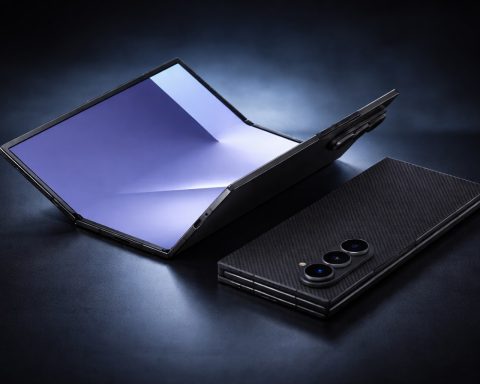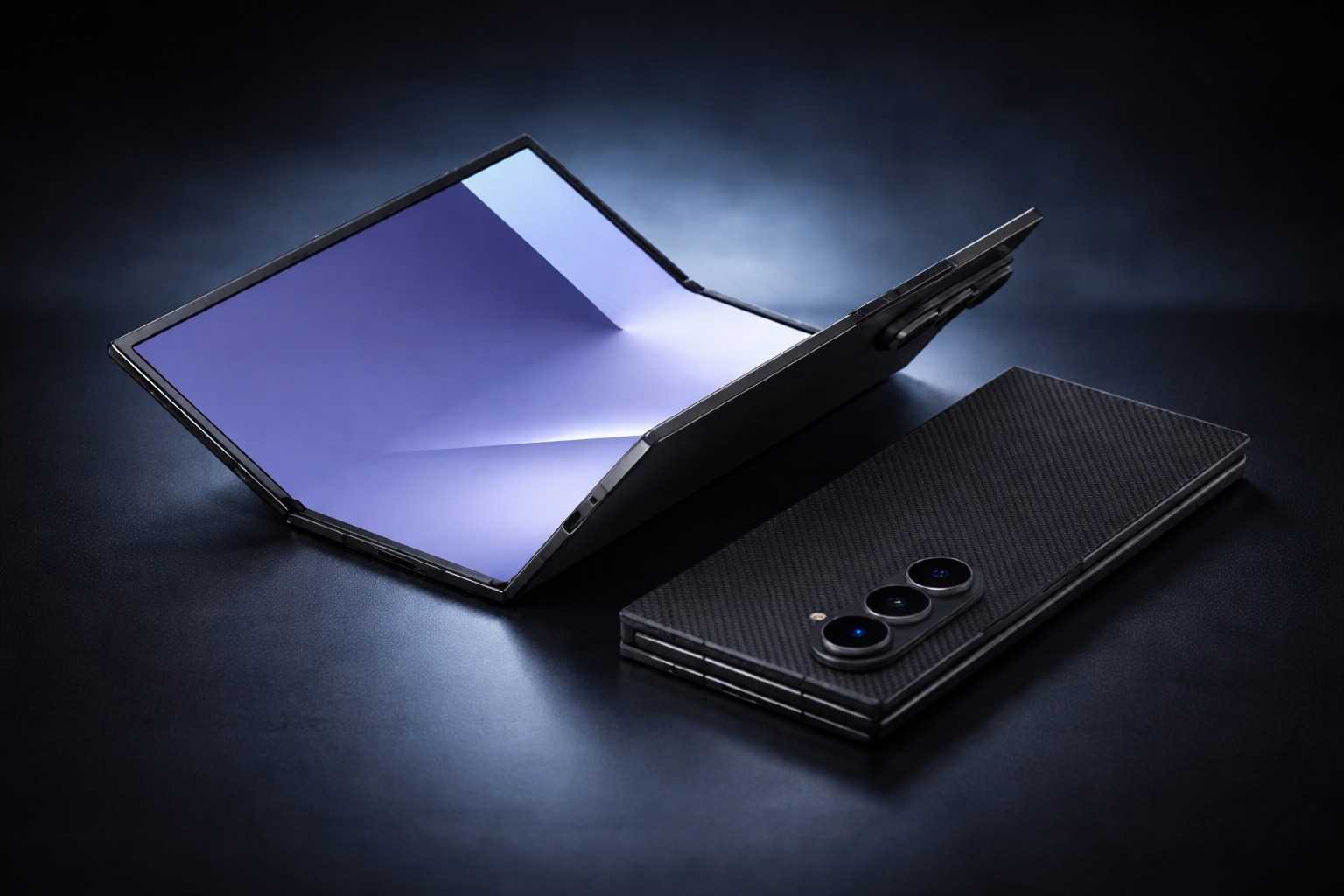
Dec. 16, 2025 — Samsung’s first tri-fold phone, the Galaxy Z TriFold, is quickly turning into one of the most talked-about launches in the foldable market: it sold out fast in South Korea, a new restock window is now being reported, and early coverage is converging on two big realities—you can’t use an S Pen, and Samsung may be squeezing margins to get the device out the door at a headline-grabbing price. [1]
Below is everything that’s making news today (16.12.2025) around the Galaxy Z TriFold—availability, S Pen support, early quirks, and why Samsung’s “trifold moment” may be as much about showcasing engineering as it is about selling volume. [2]
Galaxy Z TriFold restock: when Samsung’s sold-out trifold may be available again
After the Galaxy Z TriFold’s initial stock sold out at launch, Korean coverage circulating today says Samsung plans to accept additional purchase requests on Samsung.com at 10 a.m. on Dec. 17, with the possibility of some allocation to offline retail stores as well. [3]
The sell-out has also sparked a familiar pattern for hot, limited hardware: reports note resale listings above retail, with some transactions hovering around ₩4 million compared to the official price level widely reported at around ₩3.59 million. [4]
SamMobile also reports the phone has returned to availability after selling out at launch—underscoring how quickly inventory is moving in early markets. [5]
Why this matters for buyers: if you’re trying to get the Z TriFold at MSRP, the story so far looks less like a normal flagship rollout and more like a limited-drop strategy—whether intentional or simply a reflection of constrained early production. [6]
No, the Galaxy Z TriFold does not support the S Pen
One of the biggest questions around a 10-inch-class foldable is stylus support—and the answer is now unambiguous: Galaxy Z TriFold does not support S Pen. [7]
Samsung’s own product FAQ states plainly: “No, Galaxy Z TriFold does not support S Pen.” [8]
Android Central echoes the same conclusion, noting that no existing S Pen models work on the TriFold’s screens, and tying the decision to Samsung’s broader pullback from stylus support on recent foldables. [9]
The Verge also reports Samsung confirmed the TriFold lacks S Pen compatibility. [10]
Why Samsung may have skipped S Pen on a “tablet-sized phone”
While Samsung hasn’t published a long technical explanation in the sources above, the most consistent rationale offered in coverage is practical: integrating pen tech into foldable display stacks can add thickness and complexity, and thinness is one of the TriFold’s headline engineering achievements. [11]
That thinness is not trivial. Samsung specs and product information highlight a 3.9 mm measurement at the device’s thinnest point when unfolded. [12]
A surprising “quirk” getting attention today: App Continuity affects screenshot resolution
Another Galaxy Z TriFold detail making the rounds today isn’t a hardware defect—it’s a software behavior tied to multitasking.
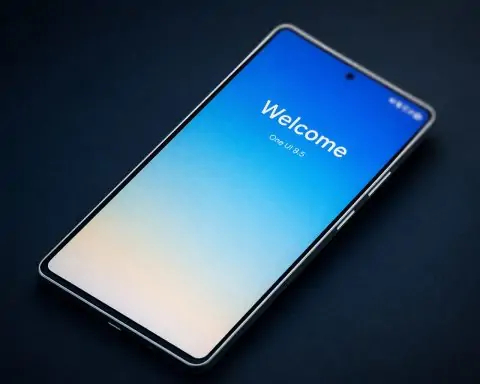
Samsung explains that enabling App Continuity (so your content carries smoothly from the cover screen to the main screen) will adjust the cover screen resolution slightly, applying upscaling to keep image quality similar—but screenshots don’t get that upscaling, so captured images come out at reduced resolution. [13]
SamMobile’s reporting adds detail on what users are seeing in practice: the TriFold’s cover display is 2520×1080, but screenshots can drop to 1918×822 when the continuity setting is enabled, with Samsung using upscaling tech (described as “ProScaler”) for the live image rather than the saved screenshot file. [14]
The takeaway: this isn’t likely to matter to most buyers day-to-day, but it’s an example of the kind of “first-gen new form factor” edge case that shows up when Android UI behaviors are stretched across brand-new screen geometries. [15]
Demand is real—so why are profitability concerns surfacing?
PhoneArena frames Samsung’s early headache as a two-part issue: meeting demand and making the numbers work, even if build quality itself isn’t the problem right now. [16]
The profitability question is also showing up in regional business reporting. Korea JoongAng Daily describes the TriFold as selling strongly but suggests high production costs leave little room for margin, positioning the device as a technology showcase as much as a profit engine. [17]
That same report points to expensive components (like the foldable OLED panel and a flagship processor), plus broader component-cost pressure, as reasons margins may be tight at launch. [18]
It also cites extremely limited availability estimates—roughly 2,000–3,000 units domestically and around 20,000 units globally—figures that help explain both scarcity and the sense that Samsung is carefully controlling exposure while it gauges demand and economics. [19]
Korean coverage syndicated today similarly notes industry expectations that Samsung may not dramatically increase production, with sources characterizing the TriFold as a statement product where “there’s almost nothing left” in profit after costs—especially as memory and processor pricing fluctuates. [20]
Hands-on impressions: sturdy engineering, but you’ll feel the size
A major theme of early hands-on coverage is that the Galaxy Z TriFold feels like serious hardware—not a fragile concept device.
Tom’s Guide, after a brief hands-on, says the phone feels sturdy and the hinge action feels smooth, but notes the device is substantial: Samsung lists 309g weight, and the device measures 12.9mm when folded—numbers that reinforce why this product sits in a very different portability category than a standard slab phone. [21]
Those same Samsung specs appear on the official product information page, which lists 309g weight and highlights the 12.9mm folded thickness. [22]
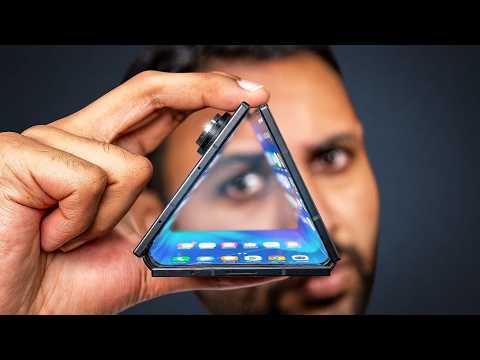
The Verge similarly describes the TriFold’s inward-folding approach and notes the folded thickness, positioning it as a “tablet-like” device that still closes into a phone-shaped footprint. [23]
Quick spec recap: what Samsung’s Galaxy Z TriFold is (and isn’t)
Based on Samsung’s published product information and official launch materials, here are the headline points most readers are searching for right now:
- Display: 10.0-inch main screen (tri-fold) plus 6.5-inch cover display [24]
- Processor: Snapdragon 8 Elite for Galaxy (as described by Samsung) [25]
- Battery: 5,600mAh [26]
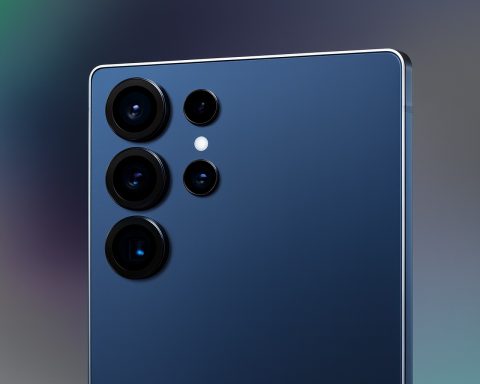
- Cameras: triple rear cameras including a 200MP main camera (as listed by Samsung) [27]
- Durability notes: Samsung highlights an IP48 rating and a dual-hinge infolding design aimed at protecting the inner display [28]
- S Pen:Not supported [29]
- FlexMode: Samsung’s FAQ indicates the TriFold does not support FlexMode [30]
What happens next: global availability and the U.S. timeline
Samsung’s official newsroom announcement says the Galaxy Z TriFold is expected to be available in Korea first (Dec. 12, 2025) followed by additional markets (including China, Taiwan, Singapore, and the UAE), with a U.S. launch planned for Q1 2026. [31]
For now, the center of gravity remains Korea, where today’s biggest development is simple: restock is coming, but it still looks limited—and the phone’s early narrative is being shaped as much by supply and economics as by the novelty of that three-panel folding design. [32]
Bottom line
On Dec. 16, 2025, the Galaxy Z TriFold story has three clear pillars:
- Restocks are happening (or imminent), but quantities look tight—with Korean reports pointing to a Dec. 17 morning window for additional purchase requests. [33]
- S Pen support is officially a no-go, even on a device that opens into a 10-inch workspace. [34]
- Samsung’s bigger challenge may be scaling profitably, not proving it can build a trifold—because by all accounts, it already did. [35]
References
1. v.daum.net, 2. v.daum.net, 3. v.daum.net, 4. v.daum.net, 5. www.sammobile.com, 6. koreajoongangdaily.joins.com, 7. www.samsung.com, 8. www.samsung.com, 9. www.androidcentral.com, 10. www.theverge.com, 11. www.androidcentral.com, 12. www.samsung.com, 13. www.samsung.com, 14. www.sammobile.com, 15. www.sammobile.com, 16. www.phonearena.com, 17. koreajoongangdaily.joins.com, 18. koreajoongangdaily.joins.com, 19. koreajoongangdaily.joins.com, 20. v.daum.net, 21. www.tomsguide.com, 22. www.samsung.com, 23. www.theverge.com, 24. www.samsung.com, 25. www.samsung.com, 26. www.samsung.com, 27. www.samsung.com, 28. www.samsung.com, 29. www.samsung.com, 30. www.samsung.com, 31. news.samsung.com, 32. v.daum.net, 33. v.daum.net, 34. www.samsung.com, 35. koreajoongangdaily.joins.com