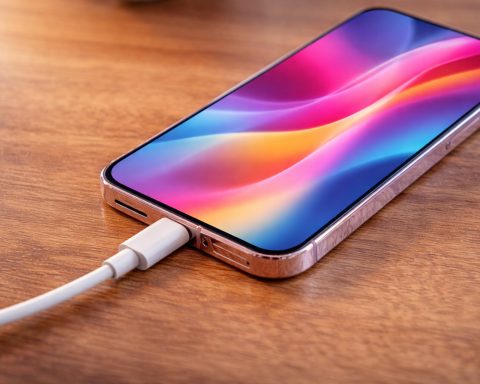
Apple’s foldable iPhone narrative is gaining momentum again—but Dec. 22 headlines on App Store regulation in Italy and China operations add new risks for AAPL investors.
Apple’s next “big thing” is back in the spotlight: a foldable iPhone that—if it arrives as widely expected—could kick off a new upgrade cycle and give Wall Street a fresh growth story to model. But today’s news flow isn’t only about product hype. Two separate developments out of Europe and China underline the non-product risks that still shape Apple’s outlook: regulators are escalating scrutiny of App Store practices, and China remains central to both sales and operations.
Below is what’s driving the conversation today, what reputable reports and analysts are saying about the “iPhone Fold,” and how investors are balancing upside versus execution and regulatory risk.
Key takeaways
- Foldable iPhone expectations are consolidating around 2H 2026, but manufacturing yields could constrain supply into 2027, according to supply-chain analyst commentary. [1]
- Apple’s latest reported quarter reinforced the “fundamentals” case—especially iPhone and Services momentum—helping explain why analysts are looking ahead to the next product cycle. [2]
- Italy’s antitrust regulator fined Apple €98.6 million tied to App Store-related concerns around the App Tracking Transparency (ATT) prompt—another reminder that privacy and competition policy remain a live battleground. [3]
- China’s vice commerce minister met with Apple COO Sabih Khan to discuss Apple’s business operations in China, underscoring the market’s ongoing strategic importance. [4]
Why the foldable iPhone story is resurfacing right now
Apple has never confirmed a foldable iPhone publicly, but analyst notes and supply-chain chatter have pushed the topic back into mainstream investor coverage. In a widely syndicated investor-focused piece, Apple’s foldable iPhone is described as a potential fall 2026 product moment—one that could reset the narrative after years of incremental smartphone updates. [5]
The key detail investors keep coming back to is not just when the device might be unveiled—but how many Apple could ship early on.
One set of expectations cites analyst Ming-Chi Kuo projecting limited first-year volume—on the order of only a few million units in 2026—followed by a potentially steep ramp in 2027 if production stabilizes. [6]
Separately, Kuo’s more recent commentary—summarized by multiple tech outlets—warns that while Apple may still be on track to announce in 2H 2026, the combination of yield challenges and ramp complexity could mean “smooth shipments” don’t arrive until 2027, creating potential shortages into the first full year. [7]
That mix—big demand expectations, uncertain early supply—is exactly the kind of setup that can move a mega-cap stock conversation: it creates both a “new cycle” bull case and an “execution risk” bear case.
What the rumored “iPhone Fold” could look like
Most current reporting converges around a book-style foldable (like the Galaxy Z Fold form factor), not a clamshell “flip” design.
Commonly cited rumored features include:
- Two-screen layout: roughly 7.8-inch inner display and ~5.5-inch outer display [8]
- Biometrics: some reports point to Touch ID (instead of Face ID) on a foldable form factor [9]
- Hinge and durability focus: discussion includes premium hinge materials and aggressive goals around reducing the visibility of the crease [10]
- Premium pricing: investor coverage and rumor reporting repeatedly place the device north of $2,000, with some ranges even higher [11]
One reason this matters for AAPL as a stock: a foldable iPhone isn’t just a new SKU—it potentially expands Apple’s top-end price ladder. That can lift revenue per unit, but it also raises the bar for quality. Investor commentary has flagged ultra-thin glass as a particularly sensitive point, both for breakage risk and for cost pressure versus standard smartphone glass. [12]
The bull case: Apple’s recent financial performance supports “next cycle” optimism
Even though the foldable device itself is speculative, the market tends to price Apple on credible future cycles + the strength of the current ecosystem. Recent official results gave bulls fresh ammunition.
In its fiscal 2025 fourth quarter (ended Sept. 27, 2025), Apple reported $102.5 billion in revenue and $1.85 diluted EPS, with leadership highlighting record September-quarter performance and an all-time revenue record for Services. [13]
The accompanying financial statements show the underlying category mix clearly:
- iPhone:$49.025 billion (quarter)
- Services:$28.750 billion (quarter)
- Mac:$8.726 billion (quarter) [14]
For investors, this matters because a foldable iPhone is easiest to underwrite when:
- the core iPhone business is stable-to-growing, and
- Services is compounding, cushioning hardware cyclicality.
It also explains why “next product cycle” language keeps resurfacing in analyst framing.
What analysts are saying about AAPL heading into 2026
One example frequently cited in recent coverage: Morgan Stanley’s Erik Woodring raised his price target to $315 while maintaining a Buy/Overweight stance (as syndicated in investor media). [15]
That same coverage notes Apple holds a “Moderate Buy” consensus rating, with a wide spread between average and high-end price targets—suggesting ongoing disagreement about how much upside Apple’s next cycle can unlock. [16]
The reality check: Dec. 22 headlines underline regulatory and geopolitical risk
If the foldable iPhone narrative represents upside optionality, today’s non-product headlines represent the counterweight: Apple’s platform power—especially the App Store—remains a regulatory magnet, and China remains a strategic variable.
1) Italy fines Apple €98.6 million over App Store-related allegations
On Dec. 22, Reuters reported that Italy’s competition authority (AGCM) fined Apple and two divisions 98.6 million euros over alleged abuse of a dominant position in the mobile app market, tied to concerns around Apple’s App Store practices. [17]
The regulator’s focus, according to Reuters, centers on Apple’s App Tracking Transparency (ATT) prompt and whether third-party developers faced stricter requirements than Apple itself—an issue that sits at the intersection of privacy policy and competition law. [18]
Why investors care: even if the fine is financially manageable for Apple, the bigger risk is precedent—regulators can push for behavioral remedies that affect App Store economics, developer workflows, and Apple’s control over ad attribution and measurement.
2) China meets Apple’s COO as Apple’s China footprint stays pivotal
A separate Dec. 22 Reuters report said China’s Vice Commerce Minister Li Chenggang met Apple COO Sabih Khan to discuss Apple’s business operations in China. [19]
China’s importance to Apple spans:
- demand (consumer market),
- production (manufacturing ecosystem),
- and supplier relationships.
Why investors care: meetings like this are often read as signals about the environment for foreign firms, especially as global trade policy and industrial strategy continue evolving.
3) The broader App Store opening trend continues (Japan as a recent example)
While not dated today, one of the most important current arcs for Apple’s services business is global pressure to open iOS distribution and payments. Apple recently announced changes in Japan to comply with the country’s Mobile Software Competition Act, including options for alternative app marketplaces and payment processing outside Apple’s In‑App Purchase system—while emphasizing new security steps like notarization and marketplace authorization requirements. [20]
Tech coverage adds detail on fee structures and user warnings as Apple implements these Japan changes. [21]
Why it matters today: Italy’s move reinforces that App Store scrutiny isn’t isolated. It’s part of a multi-jurisdiction trend that can reshape Apple’s “platform” margins over time.
So… should you buy AAPL before the foldable iPhone?
No one can responsibly answer that as a one-size-fits-all “yes” or “no.” But you can map the decision to a few realistic scenarios—especially if you’re looking at AAPL around today’s headlines.
The “buy ahead of the cycle” argument
A bullish investor would say:
- A foldable iPhone could expand Apple’s premium tier and refresh the iPhone narrative heading into 2026–2027. [22]
- Even if foldable volumes start small, Apple’s installed base + Services engine can keep earnings resilient. [23]
- If Apple solves crease durability and hinge reliability better than early foldables, it could enter at a moment when the category is more mature—and price accordingly. [24]
The “wait for clarity” argument
A more cautious investor would point out:
- The foldable iPhone’s biggest near-term risk is manufacturing scale—if supply is constrained into 2027, the product may generate buzz without moving the needle fast enough for the stock. [25]
- Regulatory pressure is intensifying. Italy’s fine highlights that Apple’s privacy framing doesn’t automatically shield it from competition-law scrutiny. [26]
- China remains strategically important, and headlines can swing sentiment quickly even without immediate financial impact. [27]
A practical framework for investors
If you’re evaluating AAPL specifically because of a foldable iPhone, consider separating:
- Long-term thesis (2–5 years): ecosystem stickiness, Services growth, and the probability that Apple eventually ships a foldable at scale. [28]
- Near-term risk (weeks–quarters): regulation headlines, China-related uncertainty, and whether 2026 expectations are already priced in.
Reminder: This is general information, not personal investment advice. If you want, tell me your time horizon (weeks vs. years) and risk tolerance (low/medium/high), and I can rewrite the “buy vs. wait” section as a tighter decision guide without making it personal-financial advice.
FAQ: Foldable iPhone and AAPL stock
When could Apple release a foldable iPhone?
Reporting and analyst commentary most commonly points to an announcement in 2H 2026, with potential supply constraints extending into 2027. [29]
How much might it cost?
Multiple reports put it above $2,000, reflecting both premium positioning and higher component costs. [30]
What’s the biggest risk to the foldable thesis?
Manufacturing yields and ramp complexity—early shortages are a repeated theme in analyst commentary. [31]
What’s the biggest “non-product” risk today?
Regulatory scrutiny of the App Store and related policies—Italy’s AGCM fine is the most immediate Dec. 22 headline. [32]

References
1. www.macrumors.com, 2. www.apple.com, 3. www.reuters.com, 4. www.reuters.com, 5. www.barchart.com, 6. www.barchart.com, 7. www.macrumors.com, 8. www.barchart.com, 9. www.barchart.com, 10. www.tomsguide.com, 11. www.barchart.com, 12. www.barchart.com, 13. www.apple.com, 14. www.apple.com, 15. www.barchart.com, 16. www.barchart.com, 17. www.reuters.com, 18. www.reuters.com, 19. www.reuters.com, 20. www.apple.com, 21. www.theverge.com, 22. www.barchart.com, 23. www.apple.com, 24. www.tomsguide.com, 25. www.macrumors.com, 26. www.reuters.com, 27. www.reuters.com, 28. www.apple.com, 29. www.macrumors.com, 30. www.barchart.com, 31. www.macrumors.com, 32. www.reuters.com