Fresh leaks suggest Apple is still testing uneven‑thickness ultra‑thin glass to minimize the iPhone Fold’s crease, while new CAD details hint at a shorter, wider design—and Samsung is rumored to counter with a similar 4:3 “Wide Fold” in 2026.
Apple’s long-rumored foldable iPhone (often called the “iPhone Fold”) is back in the spotlight today, with multiple reports converging on two big themes: Apple is still wrestling with the hardest part of foldables—the display crease—and the device may adopt a wider, iPad-like shape that rivals are already preparing to copy. [1]
That combination matters because it helps explain why Apple has waited so long to enter the foldable category—and why competitors like Samsung appear determined to meet Apple at launch with a near look-alike form factor.
What’s new in today’s foldable iPhone news cycle (Dec 23, 2025)
Here are the most notable updates circulating today:
- Apple’s “crease-free” goal may still be unsettled. A widely shared leak says Apple is still experimenting with ultra-thin flexible glass (UFG) of varying (or uneven) thickness and still has technical challenges to solve. [2]
- A shorter, wider iPhone Fold design is gaining traction. Leaked CAD-based dimensions point to a device that’s notably less tall than typical phones, with an unfolded shape that could favor landscape use and possibly iPad-style workflows. [3]
- Samsung is rumored to launch a “Wide Fold” aimed directly at Apple’s first foldable. Reporting tied to Korea’s ET News claims Samsung is developing a foldable with a similar 4:3 “passport-style” unfolded aspect ratio and comparable display sizes, targeting Fall 2026. [4]
- The competitive clock is ticking. Some coverage suggests Chinese manufacturers are also evaluating similar crease-reduction approaches—raising the possibility that “wrinkle-free” displays could appear before Apple’s model reaches meaningful scale. [5]
The biggest question: can Apple really ship a “visually crease-free” iPhone Fold?
For years, the foldable phone industry has treated the crease as an unavoidable trade-off: bend the screen thousands of times and you’ll almost always see something down the fold line under certain lighting.
But Apple reportedly wants a foldable screen that looks flat enough to be “visually crease-free.” According to a leak cited by 9to5Mac, Apple is still testing ultra-thin flexible glass (UFG) solutions “of varying thicknesses,” and there are still “technical challenges” to overcome—despite a rumored target of September next year (i.e., 2026). [6]
TechRadar’s recap of the same leak frames it as a reminder that, even if Apple is aiming for a 2026 debut, the company may still be in the “hard engineering” phase—trying to eliminate the fold line rather than simply minimizing it. [7]
Why “uneven thickness” glass keeps coming up
One of the most repeated technical ideas in the current rumor cycle is uneven-thickness foldable glass: keep the glass thinner where it needs to bend (near the hinge), while maintaining thicker sections elsewhere for rigidity and durability.
MacRumors explains the logic this way: compared with typical ultra-thin glass approaches that deform along the hinge over time, UFG is intended to distribute bending stress more evenly, potentially reducing the crease to something that’s hard to notice in daily use. [8]
AppleInsider adds an important nuance: if Apple is still validating this approach late in the process, it could mean tight supply early on, because display yield and long-term reliability testing are exactly where foldables tend to stumble. [9]
Leaked CAD dimensions hint at a bold iPhone Fold shape—shorter, wider, and more “tablet-like”
While the crease is the headline challenge, today’s design chatter is being fueled by leaked CAD dimensions discussed by Creative Bloq. The reported measurements suggest a device that’s unusually “short” compared with modern tall phones:
- Folded: ~120.6 × 83.8 × 9.6 mm
- Unfolded: ~120.6 × 167.6 × 4.8 mm [10]
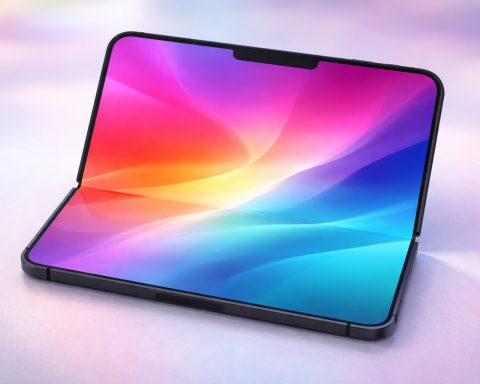
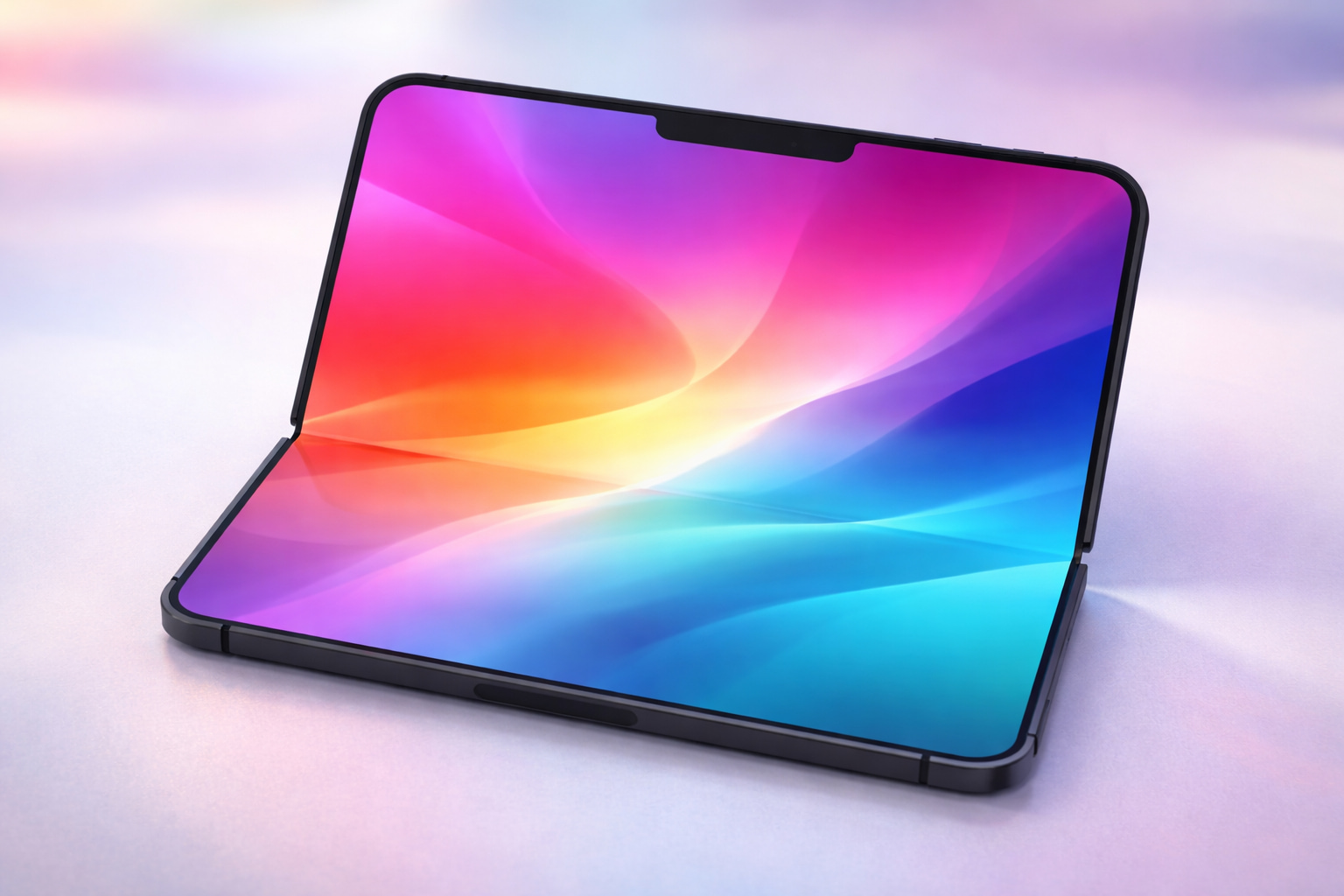
That footprint points to a foldable that becomes wide and landscape-friendly when opened—rather than unfolding into a near-square like some current book-style foldables. Creative Bloq notes speculation that Apple may prefer an inner display that’s landscape-oriented, possibly to better support iPad-style apps and workflows. [11]
If that’s the direction Apple takes, it could also explain why multiple reports now circle around a 4:3-ish aspect ratio when unfolded: it’s closer to the proportions many people associate with reading, writing, drawing, photo review, and document work—areas where a “phone that becomes a small tablet” has a clearer purpose.
Samsung’s rumored “Wide Fold” signals a direct copycat strategy for 2026
If Apple’s first foldable really does go wide, Samsung may not wait for Apple’s announcement to respond.
A report summarized by The Verge—citing Korea’s ET News—claims Samsung is working on a foldable referred to as the “Wide Fold” designed to closely mirror Apple’s rumored form factor. In that account, the Wide Fold could feature:
- ~5.4-inch display when folded
- ~7.6-inch display when unfolded
- A 4:3 “passport-style” unfolded aspect ratio [12]
TrendForce’s write-up echoes the same core idea: both Samsung and Apple are rumored to be adopting a 4:3-style format, with Samsung’s Wide Fold positioned as a head-to-head rival timed for Fall 2026. [13]
Even mainstream outlets outside the dedicated gadget press have started carrying the same storyline today, including The Indian Express, which frames the Wide Fold rumor as a move to ensure Samsung doesn’t surrender its early lead in foldables once Apple enters. [14]
Why 4:3 could be a win—and a headache
A 4:3-ish unfolded screen is great for:
- Reading ebooks and long articles
- Viewing photos with less cropping
- Split-screen productivity and “two apps side by side” layouts
But it can be awkward for:
- Video, where standard widescreen content may show prominent black bars
The Verge highlights that trade-off directly: the same 4:3 ratio that helps reading and creative work can make traditional video look less immersive compared with a more cinematic display. [15]
The foldable iPhone timeline: still pointing to Fall 2026, but with early supply caveats
Across today’s coverage, the center of gravity still sits around a Fall 2026 unveiling window for Apple’s first foldable iPhone, often described as launching alongside the iPhone 18 generation. [16]
However, the more today’s leaks emphasize display experimentation, the more the market conversation shifts to availability:
- 9to5Mac notes that if the crease-free approach is still being finalized, that could compound concerns that the iPhone Fold launches in short supply. [17]
- AppleInsider goes further, suggesting Apple could either launch with limited availability and ramp later—or delay if production readiness isn’t there. [18]
What else is being reported today: Apple’s broader 2026 roadmap and the foldable’s “premium” positioning
Outside the technical debate, today’s broader Apple roadmap chatter reinforces that a foldable iPhone—if it arrives—will likely be positioned as a premium halo product, not a mass-market iPhone replacement.
India Today’s overview of rumored 2026 launches explicitly calls out a foldable iPhone—often dubbed “iPhone Fold” or “iPhone Ultra” in rumor coverage—and describes it as a book-style foldable with a wide display and an emphasis on being crease-free. [19]
Meanwhile, MacRumors’ foldable coverage continues to point to a high-end price bracket (often cited in the $2,000–$2,500 range) and a book-style design, with advanced hinge engineering frequently mentioned as a key part of achieving a near crease-free look. [20]
The takeaway: Apple’s foldable is starting to look real—but the “no crease” dream may decide everything
Put all of today’s reporting together and a clear picture emerges:
- Apple’s foldable iPhone looks increasingly locked to a wider, “mini-tablet” concept rather than a tall, narrow phone that simply opens bigger. [21]
- The crease is still the defining technical hurdle, and Apple appears to be testing uneven-thickness UFG to get closer to a “visually crease-free” finish. [22]
- Samsung and others are preparing to compete on Apple’s chosen battlefield—potentially matching screen proportions and timing to blunt Apple’s impact. [23]
If Apple can deliver a foldable that feels iPhone-simple when closed and iPad-capable when open—without the crease distractions that have defined the category so far—it could reset expectations for foldables in 2026. If it can’t, the iPhone Fold risks becoming a niche prestige device in a market that’s already crowded with experienced foldable makers.
Next things to watch: additional supply-chain confirmations around the display stack (glass + hinge), whether Apple’s UI plans signal “iPad-like” multitasking on iPhone, and whether Samsung’s rumored Wide Fold becomes more than a preemptive rumor in the first half of 2026. [24]

References
1. 9to5mac.com, 2. 9to5mac.com, 3. www.creativebloq.com, 4. www.theverge.com, 5. 9to5mac.com, 6. 9to5mac.com, 7. www.techradar.com, 8. www.macrumors.com, 9. appleinsider.com, 10. www.creativebloq.com, 11. www.creativebloq.com, 12. www.theverge.com, 13. www.trendforce.com, 14. indianexpress.com, 15. www.theverge.com, 16. www.macrumors.com, 17. 9to5mac.com, 18. appleinsider.com, 19. www.indiatoday.in, 20. www.macrumors.com, 21. www.creativebloq.com, 22. 9to5mac.com, 23. www.theverge.com, 24. www.trendforce.com