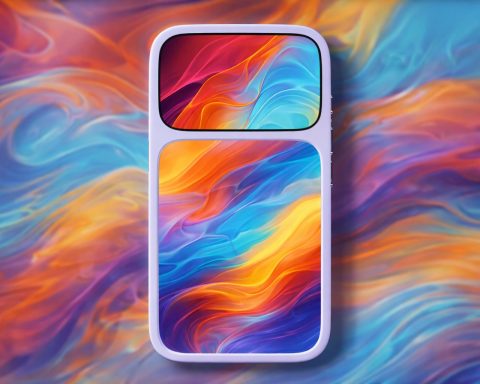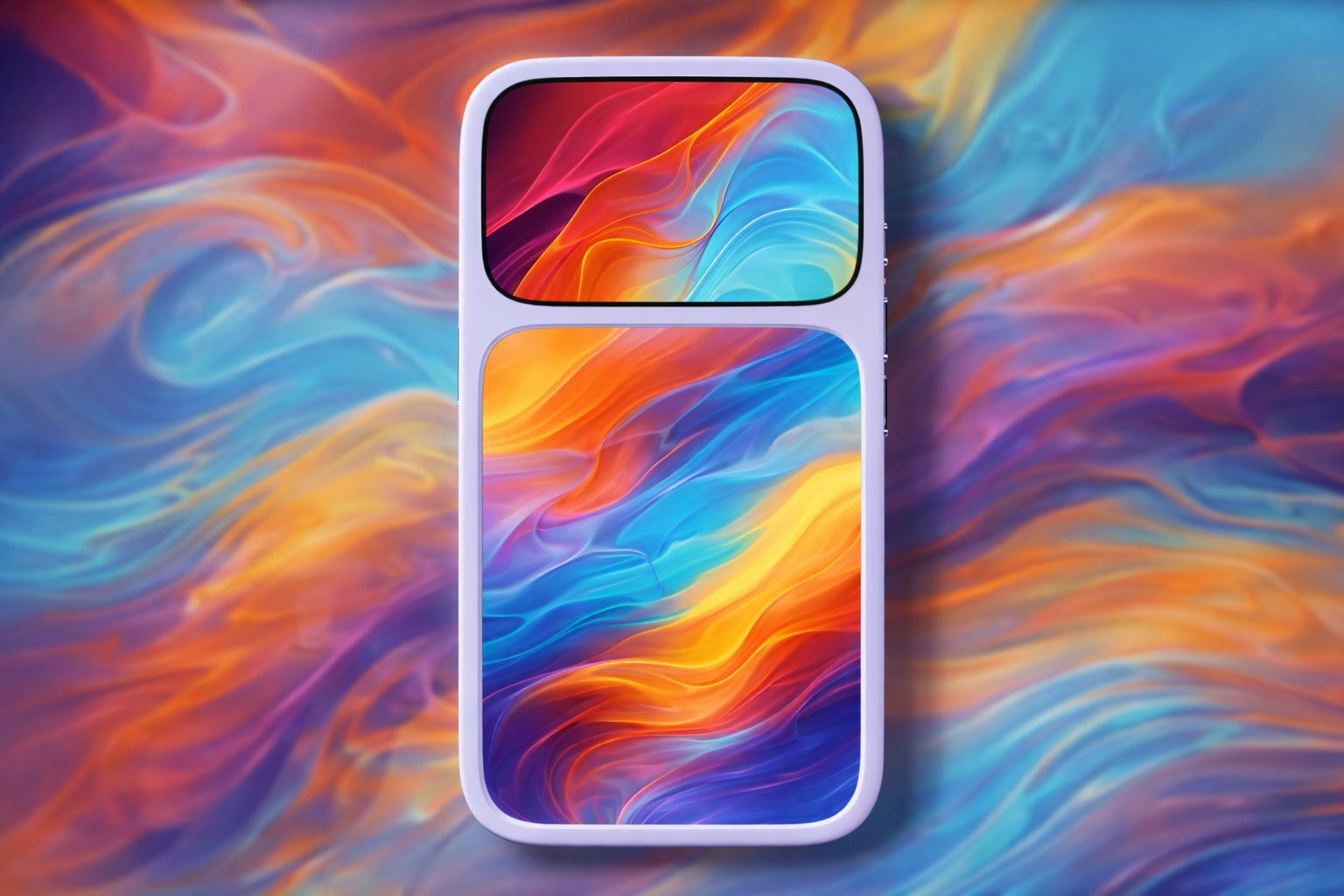
December 23, 2025 — A new smartphone concept called Pixel Duo is making the rounds across tech sites today, and it’s built around a simple idea that feels oddly refreshing in 2025: stop trying to make one screen do everything. Instead, the design places two very different displays on the front—a small, fast 120Hz IPS screen for color and motion, and a larger E‑Ink panel for reading and low-power, low-distraction use. [1]
It’s important to be clear up front: this is not an official Google Pixel product. Multiple reports describe Pixel Duo as a concept (often credited to “Mechanical Pixel”) with no announced plan for commercial release—but the “what if” is compelling enough that it’s spreading quickly across international tech media today. [2]
What is the Pixel Duo concept?
Most phones still follow the same formula: one large OLED/LCD panel, tuned for everything from TikTok to spreadsheets. Pixel Duo imagines a different tradeoff—split the phone’s “attention economy” into two zones:
- Top screen: small, bright, smooth, and fast for quick interactions and anything that needs color or responsive motion.
- Bottom screen: bigger, calmer, grayscale E‑Ink for long-form text, static information, and “default mode” usage. [3]
Several outlets frame the concept as a response to two modern pain points: battery drain from high-brightness smartphone displays and eye strain during long reading sessions on conventional screens. [4]
Pixel Duo display specs (as described in today’s reports)
Across today’s coverage, the proposed screen setup is remarkably consistent:
1) The top “fast” display
A 3.5-inch IPS panel intended for smooth UI and quick tasks:
- Resolution: 1280 × 800
- Refresh rate: 120Hz [5]
2) The bottom “calm” display
A 5.2-inch E‑Ink display designed primarily for text-based use:
- Resolution: 1300 × 838
- Pixel density: 300 PPI
- Color: grayscale (typical for many E‑Ink implementations) [6]
NotebookCheck’s coverage specifically highlights the idea that the E‑Ink panel is well-suited to e‑book reading and other text-heavy tasks, while the smaller IPS panel handles smoother interactions. [7]
Why this dual-front-screen design is different from most “dual display” phones
Plenty of devices have played with multiple screens—foldables with cover displays, flip phones, and older experiments that placed a secondary display on the back.
What makes Pixel Duo unusual is that both screens live on the front, stacked vertically. Gizmochina calls out this layout as a major departure from the common “main screen + secondary rear/outer screen” approach. [8]
Romanian outlet Connect.ro even references older dual-screen thinking like the YotaPhone 2 era—highlighting that experiments with E‑Ink on phones have existed before, but Pixel Duo shifts the concept into a front-first, always-visible interface. [9]
How you’d actually use Pixel Duo day to day
The most interesting part of Pixel Duo isn’t the novelty of “two screens.” It’s the behavior the hardware encourages.
Reading without turning your phone into a flashlight
E‑Ink is commonly associated with e-readers for a reason: it’s typically more comfortable for long reading than conventional phone screens, especially for text-heavy content. Multiple reports position the lower panel as an always-ready space for books, articles, or documents. [10]
Multitasking that’s actually easy to understand
Instead of split-screen juggling on a single panel, Pixel Duo proposes a simpler mental model: one screen for the “main focus” task (E‑Ink) and one screen for quick controls (IPS).
NotebookCheck gives an example: music controls on the IPS panel while reading on the E‑Ink display. Poland’s Instalki echoes a similar scenario—reading below, notifications or controls above. [11]
Always-on essentials without the always-on battery hit (in theory)
Reports suggest the small IPS screen could serve as a compact zone for the time and widgets, while the larger E‑Ink display handles most “static” usage. NotebookCheck argues this could translate into exceptionally long battery life if most activity stays on E‑Ink. [12]
Indonesian outlet Pemmzchannel leans into the same point, describing E‑Ink’s power advantage (often discussed as using minimal energy for static content, with power primarily needed when the image changes). [13]
The big challenge: software, not screens
If Pixel Duo were ever built as a real product, the hardest part likely wouldn’t be sourcing panels—it would be making apps behave intelligently across two very different display types.
Today’s coverage repeatedly suggests that the experience depends on:
- Smart screen switching
- Clear rules for which apps belong where
- A UX that prevents the E‑Ink panel from feeling sluggish or awkward for common smartphone behaviors [14]
This is where the concept becomes more than a render: it’s a prompt for platform designers. If the operating system treats E‑Ink as a first-class “mode,” the device could feel purposeful. If not, it risks becoming a niche curiosity.
Why Pixel Duo is trending today, December 23, 2025
The concept has effectively become a mini global story in tech media today, with multiple outlets repeating the same core specs and use cases while framing it through different lenses:
- Gizmochina emphasizes the unusual “two front screens” setup and the practical split between LCD tasks and E‑Ink reading. [15]
- iXBT (Russia) highlights the specs and underscores that it’s still only a concept with no confirmed production plan. [16]
- Instalki (Poland) frames it as a “phone of the future” that can act like both a smartphone and an e‑book reader, with multitasking benefits. [17]
- Bao Nghe An (Vietnam, English edition) focuses on battery and eye comfort motivations and the practical division of screen roles. [18]
- Fanáticos del Hardware (Spanish) presents it as a dual-display answer to the “not every task needs a bright, high-refresh screen” reality. [19]
Meanwhile, NotebookCheck’s original write-up (published Dec. 22 but still circulating today) provides the clearest “spec sheet style” breakdown and the example use cases that many other reports echo. [20]
Bottom line: a concept that asks a real 2025 question
Pixel Duo isn’t going to replace mainstream slab phones overnight—especially when much of the industry is racing toward bigger foldables, brighter OLEDs, and more immersive displays.
But that’s exactly why this concept is resonating today: it imagines a smartphone that defaults to calm, using E‑Ink for the moments that make up a huge percentage of real usage (reading, messages, lists, schedules), while still keeping a high-refresh color screen available for the moments you truly need it. [21]
Whether or not Pixel Duo ever becomes a shipping product, the idea lands as a strong reminder: in a world of screen time overload, the next “killer feature” might be a phone design that helps you look away more often. [22]

References
1. www.gizmochina.com, 2. www.gizmochina.com, 3. www.notebookcheck.net, 4. baonghean.vn, 5. www.notebookcheck.net, 6. www.notebookcheck.net, 7. www.notebookcheck.net, 8. www.gizmochina.com, 9. www.connect.ro, 10. www.notebookcheck.net, 11. www.notebookcheck.net, 12. www.notebookcheck.net, 13. pemmzchannel.com, 14. baonghean.vn, 15. www.gizmochina.com, 16. www.ixbt.com, 17. www.instalki.pl, 18. baonghean.vn, 19. fanaticosdelhardware.com, 20. www.notebookcheck.net, 21. www.notebookcheck.net, 22. www.trendhunter.com