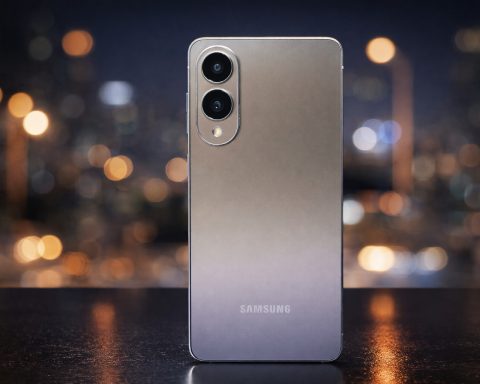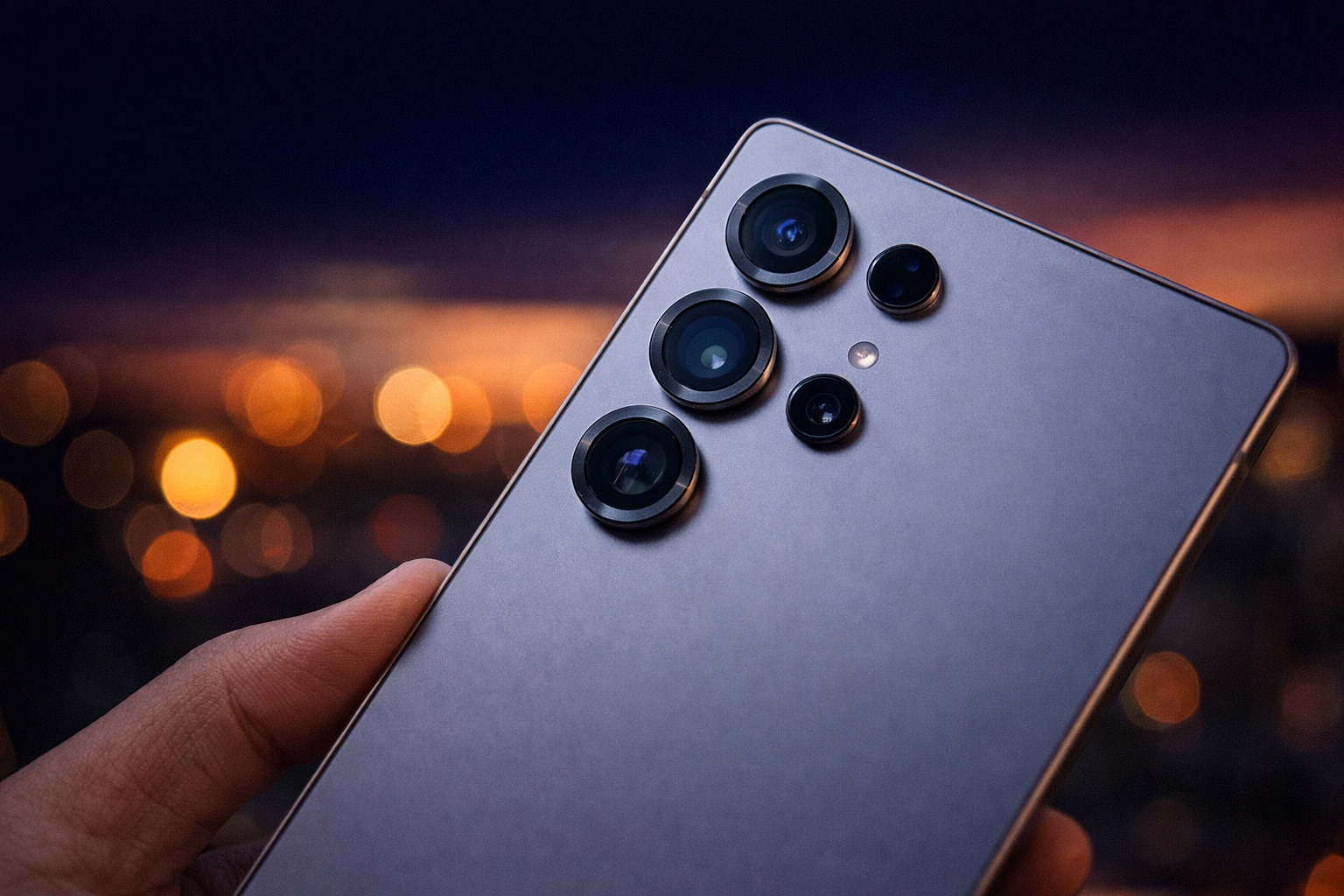
Samsung’s Galaxy S26 leaks point to satellite voice calls via the Exynos Modem 5410, potential gaming gains from Exynos 2600, and a price decision still in flux.
Samsung’s next flagship cycle is starting to take shape — and it’s a rare mix of one confirmed hardware building block and a pile of credible (but still unconfirmed) Galaxy S26 rumors. The headline: Samsung’s newly announced Exynos Modem 5410 brings multi-standard satellite connectivity that could enable satellite voice calls, while separate reports suggest the Exynos 2600 configuration may deliver meaningful gaming performance improvements. The biggest unknown, as of today, is what Samsung will actually charge for the Galaxy S26 lineup. [1]
Below is a full, up-to-date roundup of what’s been reported through December 28, 2025 — what’s real, what’s rumored, and what still needs confirmation.
What’s new today (Dec 28): Galaxy S26 pricing is “in limbo,” report says
The freshest update on December 28, 2025 centers on pricing — not features. According to Android Central, Samsung reportedly still hasn’t locked in Galaxy S26 pricing, with rising component costs singled out as a key pressure point (including memory, camera modules, and OLED panels). The report adds that Samsung may rely more on Exynos chips in some models/markets as a cost-control lever, while Snapdragon remains part of the plan for key regions like the U.S. [2]
This reinforces a theme that’s been building across multiple outlets this week: the S26 generation may arrive with bigger connectivity and performance ambitions — but the bill of materials (and market competition) is making final pricing harder than usual. [3]
The confirmed piece: Samsung’s Exynos Modem 5410 adds “Direct-to-Cell” satellite support
While the Galaxy S26 itself hasn’t been officially revealed, Samsung has publicly detailed the Exynos Modem 5410, and the specs are where the satellite story gets serious.
On Samsung’s product page, the modem is positioned as a high-end 5G solution with:
- 3GPP Release 17 support
- 5G NR dual connectivity across sub‑6 (FR1) and mmWave (FR2)
- Peak theoretical speeds including up to 14.79Gbps downlink and up to 4.92Gbps uplink (under specific configurations)
- A security stack that includes Root of Trust and Hybrid PQC (post-quantum cryptography) support [4]
But the attention-grabber is satellite. Samsung lists three satellite connectivity modes integrated into the modem:
- LTE DTC (Direct-to-Cell)
- NB‑IoT NTN
- NR‑NTN [5]
Samsung also notes Skylo certification for the NB‑IoT NTN satellite capability — a detail that matters because satellite features often live or die by ecosystem readiness (satellite operators, carriers, certification, and regulatory approvals). [6]
Why “satellite voice calls” is the big Galaxy S26 hook
Historically, “satellite on phones” has largely meant emergency messaging, not normal calling. What makes the Exynos Modem 5410 story different is the presence of LTE DTC, which multiple reports interpret as the bridge from SOS-style texting to voice and potentially video off-grid scenarios. [7]
PhoneArena summarizes the three satellite modes this way:
- LTE DTC for voice calls
- NB‑IoT NTN for lower-bandwidth tasks like basic messaging and location sharing
- NR‑NTN for higher-quality connections that could enable higher bandwidth use cases (often discussed in the context of video) [8]
Samsung’s own modem page similarly frames the three satellite standards as serving different needs — from sparse data transmission to higher-bandwidth NTN capabilities. [9]
Important nuance: none of this guarantees Samsung will enable “anywhere calling” at launch. Hardware support is only step one — real-world satellite calling depends on carrier partnerships, satellite network agreements, software enablement, and regional regulations.
A key detail many outlets agree on: Exynos 2600 may require an external modem
Multiple reports say the Exynos 2600 does not include an integrated modem, meaning Samsung would pair it with a separate modem chip — which is where the Exynos Modem 5410 naturally fits. [10]
That architectural shift matters for three reasons:
- It helps explain why the modem is a headline this early in the S26 rumor cycle.
- It may create space on the main SoC for CPU/GPU/NPU changes (one explanation circulating in reporting). [11]
- It raises the classic tradeoff question: external modem vs. integrated modem on power and thermals.
Android Central highlights the concern directly: an external modem approach could lead to efficiency and heat challenges compared to an integrated design (though it stresses nothing is confirmed). [12]
Phandroid goes further, reporting “early reports” that a separated modem could increase power draw in heavy use — but this remains speculative until real devices are tested. [13]
Will satellite calling be available everywhere — or only in some Galaxy S26 variants?
Even if Samsung enables satellite voice calling, availability could vary by region and model.
SamMobile reports the Exynos Modem 5410 is likely to be paired with the Exynos 2600 for Galaxy S26 / S26+ in select countries, which implies satellite features could differ depending on which chip configuration a region gets. [14]
That regional split lines up with broader reporting that Samsung may use different chipsets across markets, with Snapdragon expected to remain important in places like the U.S. [15]
What this means for buyers: the phrase “Galaxy S26 satellite calling” could end up meaning:
- “Supported by some models”
- “Supported in some countries”
- “Supported only with certain carriers / satellite partners”
…even if the hardware is technically capable.
Exynos Modem 5410 vs the previous generation: what’s actually upgraded?
SamMobile notes that Samsung’s previous Exynos modem generation supported fewer satellite standards, and that adding LTE DTC is what opens the door to “more than messaging.” It specifically says the addition of LTE DTC can enable voice and video calls, alongside satellite messaging and location sharing, without relying on conventional cell networks. [16]
That’s one of the cleanest explanations for why the S26 rumor narrative has shifted from “satellite SOS” to “satellite calling.”
Gaming boosts: why the Exynos 2600 rumors matter to players
The second big theme in the Galaxy S26 coverage is gaming.
TechRadar reports that Galaxy S26 models using the Exynos 2600 are expected to see a more powerful AMD GPU, positioning the S26 generation for smoother high-end mobile gaming — though the story is framed as a combination of leaks and reporting rather than confirmed specs. [17]
Android Central similarly describes the Exynos 2600 as bringing significant performance upgrades, including a sizable CPU improvement and double the GPU capability (as reported in its coverage of Exynos 2600-related news and rumors). [18]
The bigger picture: if Samsung is indeed banking on an AMD-powered graphics step-up, it would make sense strategically. Satellite calling is a “safety story,” but gaming performance is a daily-use differentiator — especially as phones continue to chase console-like experiences.
Pricing: why Samsung may be struggling to decide what the Galaxy S26 should cost
The core pricing narrative now looks like this:
- Component costs are rising (with memory repeatedly flagged as a major factor). [19]
- Samsung faces a hard choice: raise prices and risk demand, or hold prices and accept lower margins. [20]
- Using more Exynos silicon in some models/regions could be part of a cost-balancing strategy. [21]
Tom’s Guide adds additional context by pointing to a report from Korea (The Bell) and discussing how memory demand dynamics can influence smartphone pricing pressure, while also citing recent Galaxy S-series pricing baselines (for example, the Galaxy S25 starting at $799). [22]
TechRadar echoes that same uncertainty: it says the Galaxy S26 lineup’s price remains “very much up in the air,” even as feature leaks pile up. [23]
Expected launch timing: what the late-2025 reports suggest
Most reporting still points to an early 2026 unveiling window for the Galaxy S26 family, often referenced as February — with some reports suggesting sales could slip later than the past couple of generations.
T3 summarizes one rumor track as: an Unpacked event in February 2026, with devices potentially reaching customers in March 2026. [24]
TechRadar also frames the S26 as expected in the “first couple of months” of 2026. [25]
What to watch next
If you’re tracking the Galaxy S26 specifically for satellite calling, gaming, or pricing, these are the next “signal moments” to monitor:
- Carrier + satellite partner announcements (the difference between “hardware-ready” and “usable”).
- Region-by-region chipset confirmation (Exynos vs Snapdragon splits can change feature availability). [26]
- Samsung’s first pricing leaks with numbers (today’s reports focus on indecision, not final figures). [27]
- Battery/thermal testing once early units appear — especially if external modem designs are used. [28]
FAQ: Galaxy S26 satellite calling and pricing
Will the Galaxy S26 definitely support satellite voice calls?
Not confirmed yet. What is confirmed is that Samsung’s Exynos Modem 5410 supports satellite standards including LTE DTC, which is widely associated with enabling voice-capable satellite links. Whether Samsung ships and enables that as a consumer feature in the S26 is still a report/rumor. [29]
Is this different from current Galaxy satellite features?
Yes — at least in capability on paper. Multiple reports describe current Galaxy satellite support as more limited, whereas the modem’s LTE DTC support is tied to voice (and potentially higher-bandwidth) use cases. [30]
Could satellite features differ by country?
Very possibly. Reporting suggests Exynos + Exynos Modem 5410 combinations may appear in select markets, while other regions may use Snapdragon configurations — and availability could vary accordingly. [31]
Why is Galaxy S26 pricing uncertain right now?
Today’s reporting points to rising component costs — especially memory, plus other expensive parts like camera modules and OLED panels — making it harder for Samsung to finalize pricing without sacrificing either demand or margins. [32]
When will we know more?
Likely closer to Samsung’s next major launch event in early 2026. Current reports cluster around a February unveiling window, with some suggesting March availability. [33]
Bottom line (Dec 28, 2025)
If the current reporting holds, the Galaxy S26 story is shaping up around three pillars:
- Connectivity leap: Exynos Modem 5410 makes satellite voice calling technically plausible. [34]
- Performance push: Exynos 2600 + AMD GPU rumors point toward tangible gaming gains. [35]
- Price anxiety: On Dec 28, the most “new” development is that Samsung may still be wrestling with what the S26 lineup should cost as component prices rise. [36]

References
1. semiconductor.samsung.com, 2. www.androidcentral.com, 3. www.techradar.com, 4. semiconductor.samsung.com, 5. semiconductor.samsung.com, 6. semiconductor.samsung.com, 7. www.phonearena.com, 8. www.phonearena.com, 9. semiconductor.samsung.com, 10. www.phonearena.com, 11. www.androidcentral.com, 12. www.androidcentral.com, 13. phandroid.com, 14. www.sammobile.com, 15. www.androidcentral.com, 16. www.sammobile.com, 17. www.techradar.com, 18. www.androidcentral.com, 19. www.androidcentral.com, 20. www.phonearena.com, 21. www.androidcentral.com, 22. www.tomsguide.com, 23. www.techradar.com, 24. www.t3.com, 25. www.techradar.com, 26. www.sammobile.com, 27. www.androidcentral.com, 28. www.androidcentral.com, 29. semiconductor.samsung.com, 30. www.techradar.com, 31. www.sammobile.com, 32. www.androidcentral.com, 33. www.t3.com, 34. semiconductor.samsung.com, 35. www.techradar.com, 36. www.androidcentral.com