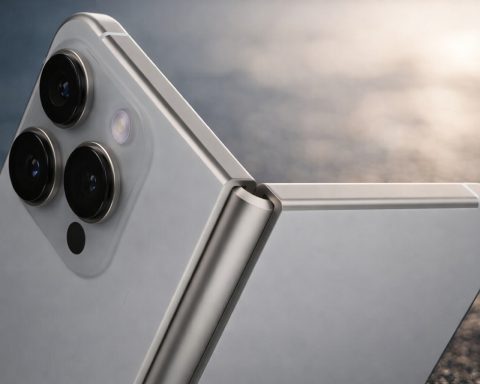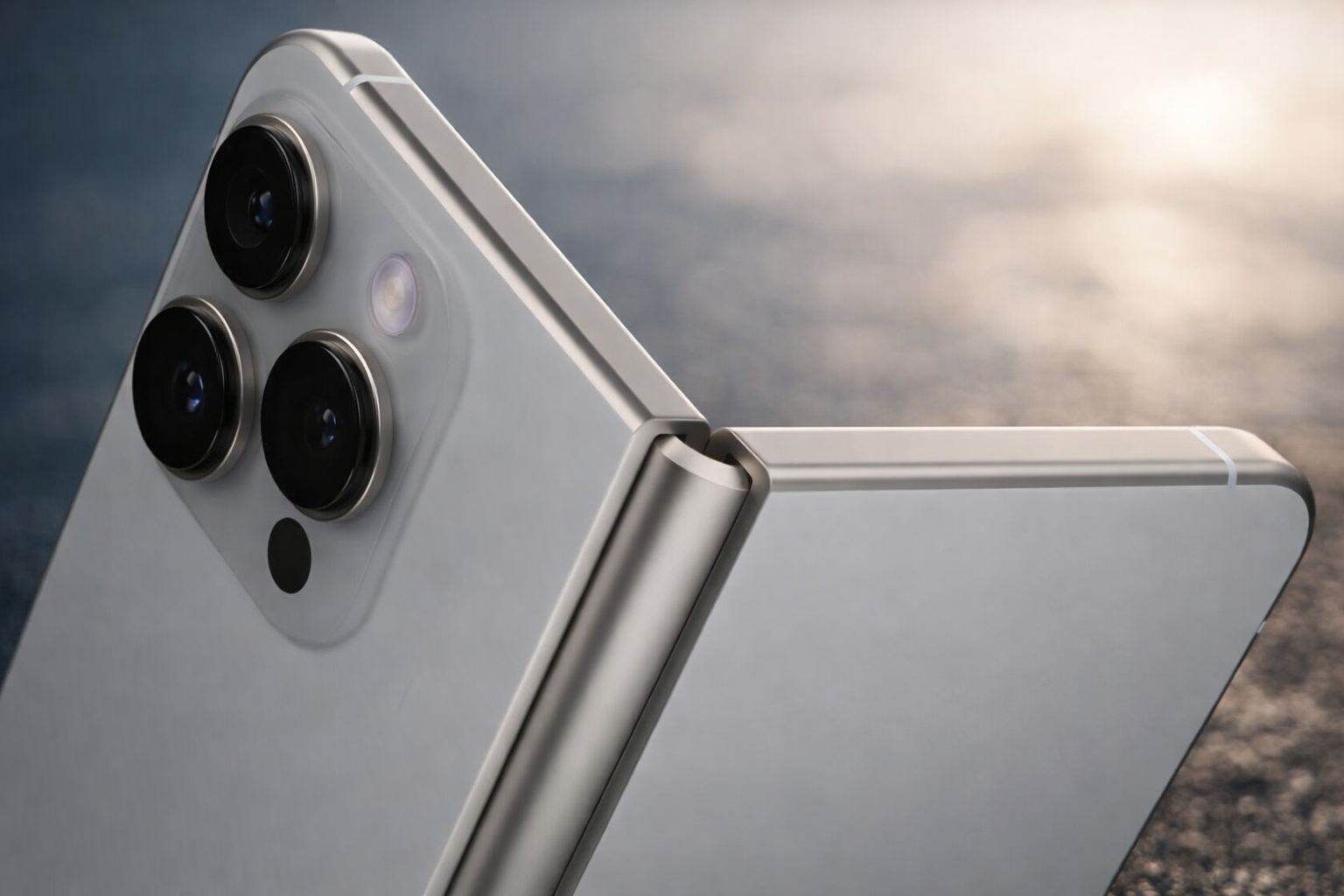
A fresh iPhone Fold leak points to a book‑style foldable with a 7.8‑inch inner display, a 5.5‑inch cover screen, a liquid‑metal hinge to reduce the crease, and Touch ID returning in 2026.
December 30, 2025 — Apple’s long-rumored foldable iPhone is back in the headlines today, after a new wave of coverage around YouTuber Jon Prosser’s claimed “iPhone Fold” renders—alongside renewed attention on Apple’s lawsuit against him and fresh market forecasts suggesting Apple’s entry could reshape the foldable phone category in 2026. [1]
Multiple reports circulating in the past 24 hours say Prosser’s leak depicts a book-style foldable iPhone that opens into an “iPad-like” inner display, aims for a virtually crease-free screen, and could reintroduce Touch ID via the power button—an unusual pivot in a Face ID era. None of this is confirmed by Apple, but the rumor is now being weighed not just as gadget gossip—investors and analysts are also framing foldables as a potential new upgrade catalyst for Apple’s iPhone business. [2]
What’s in the latest foldable iPhone leak
According to Prosser’s reported details (summarized by multiple outlets), Apple’s first foldable is expected to use a book-style fold—more like Samsung’s Galaxy Z Fold line than a compact flip phone. [3]
Rumored iPhone Fold specs at a glance
Here’s what today’s reporting most consistently repeats—again, all unofficial:
- Display sizes: about 7.8 inches inside when unfolded, and about 5.5 inches on the outside “cover” display [4]
- Thickness: roughly 4.5mm when open and 9mm when closed [5]
- Crease reduction: a “metal plate” plus liquid metal in the hinge to help avoid a visible crease [6]
- Biometrics:Touch ID is rumored to return, built into the power button [7]
- Price (estimated): early talk clusters around $2,000–$2,500 [8]
- Launch window (rumored):September 2026, alongside the iPhone 18 Pro series [9]
One reason this leak is getting extra attention: it’s not just “a foldable iPhone exists,” but a claim of industrial-design specifics—including thickness figures and a crease solution, two of the biggest pain points for foldables. [10]
The crease problem: Apple’s rumored “liquid metal” hinge strategy
Nearly every foldable phone today has some level of crease visibility, and consumers notice it. The latest leak claims Apple has tackled that head-on with a mechanical approach: Prosser says the iPhone Fold uses a “metal plate that disperses the pressure” of bending, paired with liquid metal in the hinge. [11]
That claim lines up with broader reporting that Apple has been testing different display materials and techniques to reduce or eliminate the crease. Earlier this month, MacRumors reported Apple is still testing ultra-thin glass solutions as part of its push to make the crease far less noticeable. [12]
Even so, some reporting remains cautious on whether Apple has truly “solved” the crease—suggesting this may still be an engineering work in progress, not a locked final design. [13]
Cameras: two rear cameras or four total? Reports don’t fully agree
One of the clearest areas of disagreement in today’s coverage is camera count.
- Some write-ups characterize the device as having two rear cameras. [14]
- Others describe a four-camera total (for example: cover-camera, two rear cameras, and one inside). [15]
It’s possible different sources are counting “total cameras” in different ways—or the prototype details are still shifting. Until supply-chain reporting and multiple independent leakers converge on the same configuration, treat camera specifics as fluid.
Why Touch ID might come back on a foldable iPhone
Touch ID returning to iPhone would be a headline by itself—and foldables are one of the few designs where it could make practical sense.
The current rumor says Touch ID would be integrated into the power button, a placement that can save internal space (important in ultra-thin foldables) and avoid stacking complex Face ID hardware into an already crowded hinge-and-display design. [16]
Whether that means no Face ID on the iPhone Fold—or Face ID reserved for other models—remains unclear. But the recurring thread is that Apple may prioritize thinness and hinge engineering over adding every flagship component on day one. [17]
The lawsuit backdrop: why Prosser’s leak is drawing extra scrutiny
This foldable iPhone leak is also getting amplified because of a separate, high-profile legal fight.
In July 2025, Reuters reported Apple sued Jon Prosser and Michael Ramacciotti, alleging trade-secret theft tied to unreleased information about iOS 26. Apple’s complaint alleges Ramacciotti used an Apple employee’s phone to send details to Prosser, who then shared them publicly via his Front Page Tech channel. [18]
Prosser denied wrongdoing to Reuters, saying he did not “plot” to steal information and that he did not know how the information was originally obtained. [19]
Today’s foldable-phone leak isn’t part of that Reuters lawsuit story—but the lawsuit changes how the public reads any new Prosser claims: it puts a spotlight on methods, sourcing, and credibility, and it raises the stakes for what Apple will tolerate as “leaks” going forward. [20]
The bigger story: Apple’s foldable could reshape a market that’s still niche
Foldables have made technical leaps in 2025, but they remain a relatively small slice of the smartphone market. That’s why Apple’s potential entry—if and when it happens—is being treated as a possible category reset.
A Dec. 2025 IDC forecast (reported by TelecomTV) projected foldable smartphone shipments would grow 30% year-over-year in 2026, with Apple’s foldable iPhone expected to be a major catalyst. The same IDC commentary projected Apple could capture over 22% unit share and 34% of foldables market value in its first year, thanks partly to an expected ~$2,400 average price point. [21]
MacRumors also highlighted those IDC expectations—reinforcing the idea that even if foldables remain niche by volume, they could be disproportionately important by revenue and profit, because they sell at much higher average prices than standard smartphones. [22]
Tom’s Guide’s year-end foldables roundup published today echoes the same theme: foldables matured significantly in 2025, and 2026 could be “bigger” as the category adds more mainstream pressure—from Apple’s rumored entry to competitors preparing direct responses. [23]
Investor angle: “revival catalyst,” not another AI hype cycle?
One reason this leak is traveling beyond tech circles is the narrative investors are starting to build around it.
A Seeking Alpha analysis published this week argues a foldable iPhone could help drive a multi-year iPhone upgrade cycle, framing the foldable as a more tangible product catalyst than pure AI narrative. The same piece suggests Apple could expand its iPhone lineup to seven models by 2027, but still maintains a cautious stance on valuation and near-term expectations. [24]
Whether you agree with that thesis or not, it reflects a broader shift in how “iPhone Fold” rumors are being interpreted: not just what it looks like, but what it could do to Apple’s product mix and upgrade momentum. [25]
What to watch next
If this story continues to build into early 2026, here are the next signals that typically separate “rumor season” from something closer to real:
- Supply chain confirmations (display suppliers, hinge components, ultra-thin glass, etc.) from multiple independent sources [26]
- Consistency across leaks—especially around cameras, biometrics, and the crease solution [27]
- Timelines that match Apple’s cycle—with most reporting pointing to a September 2026 reveal window [28]
Until then, the safest conclusion is also the most boring one: Apple’s foldable iPhone appears increasingly plausible, but renders are not products—and even accurate prototypes can change before launch.

References
1. www.techspot.com, 2. www.techspot.com, 3. www.techspot.com, 4. www.tomsguide.com, 5. www.tomsguide.com, 6. www.tomsguide.com, 7. www.tomsguide.com, 8. www.tomsguide.com, 9. www.tomsguide.com, 10. www.techspot.com, 11. www.tomsguide.com, 12. www.macrumors.com, 13. www.techspot.com, 14. www.techspot.com, 15. www.tomsguide.com, 16. www.tomsguide.com, 17. www.tomsguide.com, 18. www.reuters.com, 19. www.reuters.com, 20. www.reuters.com, 21. www.telecomtv.com, 22. www.macrumors.com, 23. www.tomsguide.com, 24. seekingalpha.com, 25. seekingalpha.com, 26. www.macrumors.com, 27. www.techspot.com, 28. www.tomsguide.com