Φαρμακολογία

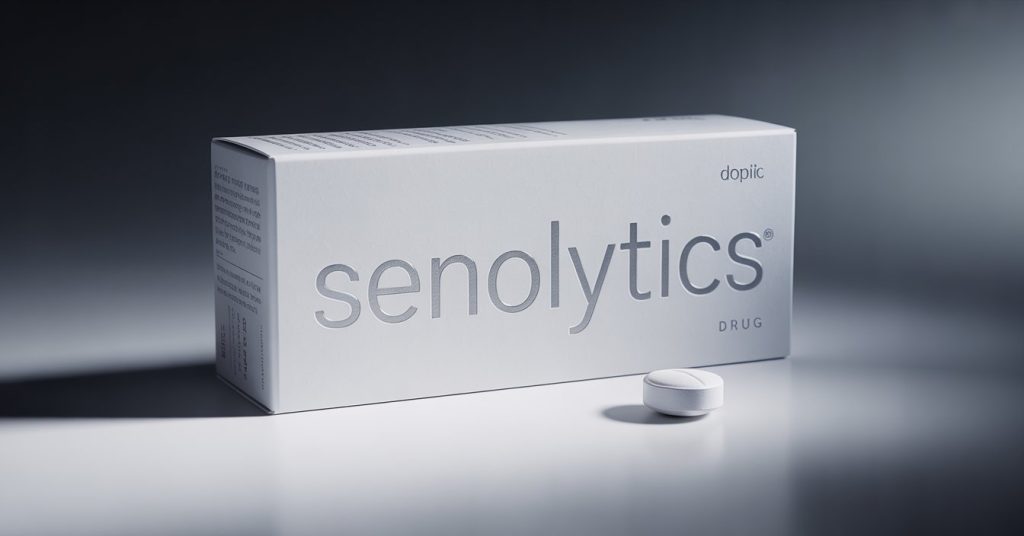
The Secret “Zombie Cell” Killers: Niche Senolytic Drugs Fighting Aging’s Clock

Οι Μυστικοί Εξολοθρευτές «Ζόμπι Κυττάρων»: Εξειδικευμένα Σενολυτικά Φάρμακα που Πολεμούν το Ρολόι της Γήρανσης

Το 2015, μια ομάδα της Mayo Clinic και του Scripps Research έδειξε ότι ένας συνδυασμός dasatinib και quercetin σκοτώνει επιλεκτικά τα γηρασμένα κύτταρα σε ηλικιωμένα ποντίκια, βελτιώνοντας τη φυσική αδυναμία και τη λειτουργία της καρδιάς. Τα πρώτης γενιάς senolytics περιλαμβάνουν τα dasatinib
1 Σεπτεμβρίου, 2025

Technology News

  • Linux GPIB drivers graduate from staging to mainline in Linux 6.19
    December 8, 2025, 12:32 AM EST. The GPIB (General Purpose Interface Bus) drivers have moved from the kernel's staging area into the mainline kernel with Linux 6.19. After a year of cleanup, this 8 MB/s parallel bus now has stable support for vintage lab instruments, ending years of out-of-tree maintenance. The change marks a milestone for hardware enthusiasts and for Raspberry Pi users, since the VC04/VCHIQ code can now be upstreamed as part of the kernel. As Greg Kroah-Hartman noted, the bulk of the release is cleanups, with the standout items being the graduation of gpib and vc04. The staging area remains a proving ground, but these subsystems are now part of the official kernel tree.
  • Is the AI Boom a Bubble? 2 Key Watchpoints for Investors
    December 8, 2025, 12:28 AM EST. Amid a frothy AI market, investors should focus on profitable leaders with durable market positions. The article flags two indicators: profitability and how the bubble could unfold. First, monitor profitability or a credible path to it, even in AI-heavy firms where losses are common. Notable examples like Nvidia, Taiwan Semiconductor, and Alphabet show strong earnings and strategic AI leadership. Nvidia commands a dominant data-center GPU share, TSM leads advanced processors, and Alphabet integrates AI across Search, ads, and services, underscoring that not all AI stocks are fleeting. Second, even a vocal acknowledgment of a bubble (OpenAI's Sam Altman) suggests caution, but there may be a gradual deflation rather than a sudden crash. Investors should weigh earnings momentum, moat, and the pace of AI adoption rather than betting solely on hype.
  • Tesla Optimus tumbles in Miami demo, highlights teleoperation and headset-mimicry
    December 8, 2025, 12:26 AM EST. New footage from Tesla's Miami 'Autonomy Visualized' event shows the Optimus humanoid robot taking a backward fall after its hands shoot up as if removing a VR headset. The clip fuels long-running questions about how much of Tesla's demonstrations rely on remote teleoperation rather than true autonomy. Critics note that previous events, including the "We, Robot" demos, suggested a gap between software and hardware, with operators guiding the robot from behind the scenes. Tesla fans debate whether the fall reveals limitations in perception, balance, or control. While Elon Musk has framed Optimus as a trillion-dollar product powered by AI and generalized intelligence, the incident underscores ongoing concerns about teleoperation and the gap to fully autonomous humanoids.
  • Lumen CTO Dave Ward Heralds 'Cloud 2.0': A New Cloud Core and Network Fabric
    December 8, 2025, 12:24 AM EST. Lumen Technology's CTO Dave Ward argues that current internet infrastructure can't keep up with AI workloads and growing data traffic, spurring a shift he calls Cloud 2.0. The coming era combines a deeper cloud core with a redesigned network fabric to connect workloads more efficiently. Ward stresses enterprises are constrained by where and how they connect to the cloud, and outlines a cloud economy driven by multi-cloud use, edge computing to process data near its source, and the integration of AI/ML into cloud operations. He predicts fiber-enabled networks and data-center densification will form the backbone, with more capacity in Tier 1 markets and new cloud regions in suburban and rural areas. CIOs must rethink their WAN and cloud architectures to deliver low-latency, high-bandwidth experiences.
  • Surge AI CEO warns companies are chasing 'AI slop' over curing cancer
    December 8, 2025, 12:22 AM EST. Surge AI's CEO expresses concern that firms are optimizing for surface-level AI gains-what he calls AI slop-instead of pursuing transformative breakthroughs like curing cancer. He argues that hype-driven metrics, short planning horizons, and misaligned incentives push teams to showcase gadgets rather than meaningful health outcomes. The interview urges a longer-term view, better collaboration between startups, researchers, and policymakers, and more rigorous benchmarks that prioritize patient impact and safety. If the industry chases flashy demos over evidence-based progress, funding and trust in AI-enabled healthcare may suffer. The piece also calls for transparent data practices, responsible deployment, and incentives that reward real-world value, not just novelty, to steer AI toward durable innovation and societal benefits.