Year-end discounts are pushing the Poco F8 Pro and F8 Ultra far below launch pricing, but new stress-test data raises questions about sustained gaming. Here’s what to know today.
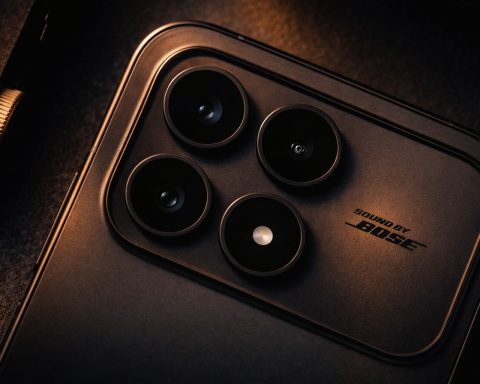
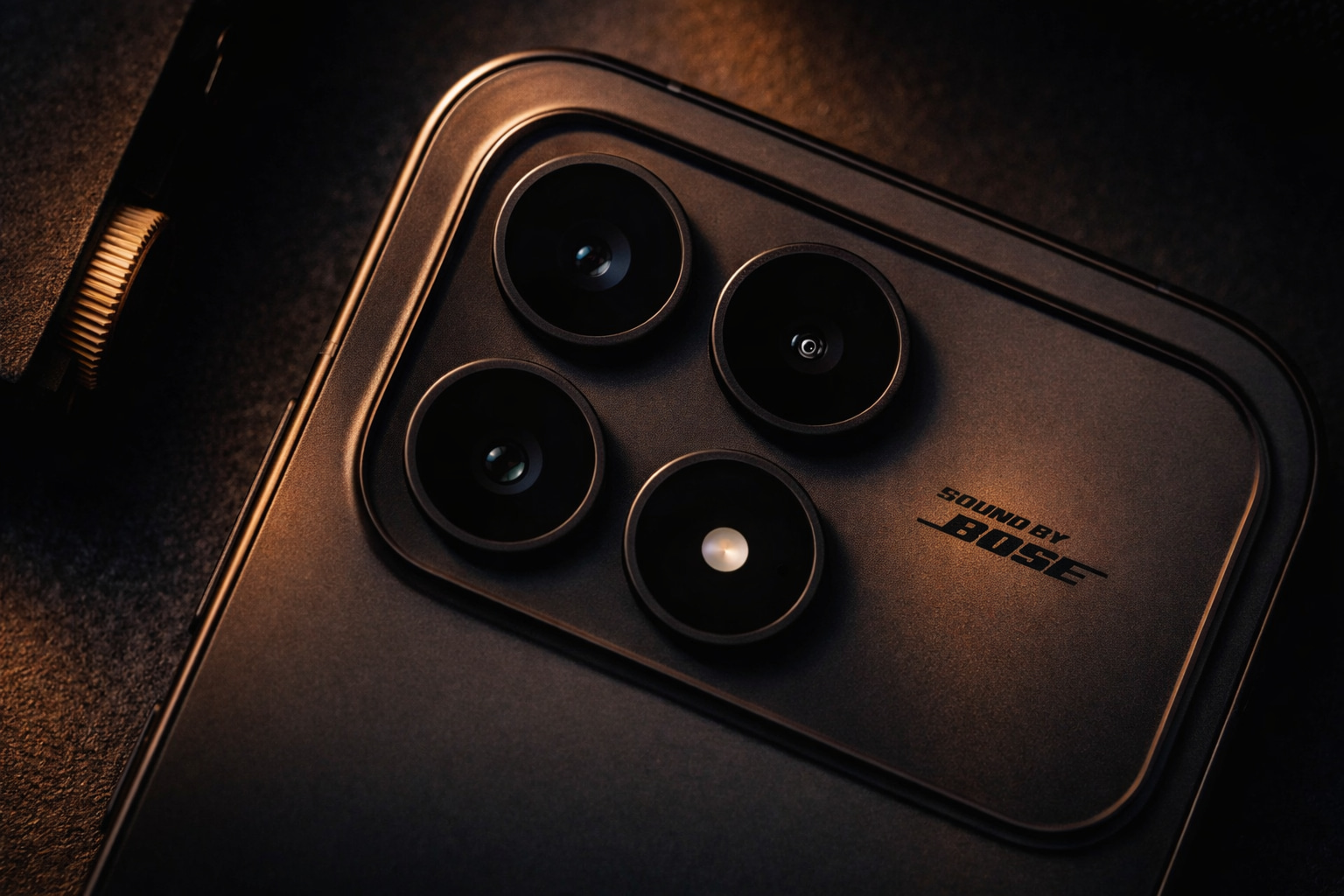
As 2025 winds down, Poco’s new “flagship killer” duo is getting the kind of attention that usually follows two things: a sharp price drop and a controversy. The Poco F8 Pro is being positioned as the “sweet spot” value pick, while the Poco F8 Ultra is the headline-grabber thanks to its Bose-tuned 2.1 speaker setup — and a stress-test story that looks scary at first glance.
If you’re shopping right now (or just trying to decide whether to wait), the big questions are simple:
- Is the Poco F8 Pro actually a good deal at current prices — or are there better phones for the money? [1]
- Did the Poco F8 Ultra “fail” stress tests in a way that should worry gamers — or is it mostly a synthetic benchmark problem? [2]
Here’s a detailed breakdown of what the latest reviews and pricing information say as of today, Dec 29, 2025, plus the wider gaming-phone context from today’s biggest rival launches.
Today’s pricing snapshot: Poco F8 Pro and F8 Ultra discounts are still aggressive
Year-end promos haven’t fully disappeared. On Xiaomi UK’s current POCO F8 Series campaign page, pricing is listed from £349 for the Poco F8 Pro and from £499 for the Poco F8 Ultra after using a POCO F8 Series coupon, with additional trade-in savings and “early bird” style discounts referenced on the page. [3]
That matters because launch messaging positioned the F8 series at much higher “flagship-adjacent” pricing in many regions — for example, $579 (F8 Pro) and $729 (F8 Ultra) were widely reported starting points around launch, along with early-bird incentives. [4]
Bottom line: if you’re in a market where the F8 Pro is landing in the mid-range price band and the F8 Ultra is dipping into “upper mid-range” territory, you’re no longer judging these phones as “expensive for Poco.” You’re judging them as value flagships with a few deliberate compromises.
Poco F8 Pro: why the “good deal” question is real (and not just clickbait)
Notebookcheck’s current take is essentially: the Poco F8 Pro does a lot right, but there are enough trade-offs that you should check the alternatives at the same price. [5]
What the Poco F8 Pro gets very right
The F8 Pro’s core appeal is that it hits the specs most people feel every day:
- Snapdragon 8 Elite performance (with a high-end feel in real-world use) [6]
- A massive 6,210mAh battery paired with 100W wired fast charging [7]
- 120Hz AMOLED display in a relatively manageable size (6.59-inch class) [8]
- IP68 water/dust resistance [9]
- Bose-tuned stereo speakers (the Bose partnership is one of the F8 series’ big differentiators) [10]
The camera story is also stronger than some older “value flagships,” because the F8 Pro includes a telephoto camera (rather than relying purely on main-sensor cropping), which is highlighted in Notebookcheck’s coverage. [11]
The compromises you need to be okay with
This is where “Is it really a good deal?” becomes a fair question instead of a rhetorical one.
Across Notebookcheck’s F8 Pro coverage, the repeat compromises are:
- No wireless charging [12]
- USB 2.0 (a real drawback if you frequently move large video files, use accessories, or expect flagship-level wired speeds) [13]
- Telephoto lens without OIS, and an ultra-wide camera that’s not class-leading [14]
- Wi‑Fi 7 support is present, but Notebookcheck notes the lack of 6GHz Wi‑Fi support in this tier [15]
And there’s a more subjective point that still matters for a Google Discover audience: software experience. Notebookcheck flags software ads/bloat as part of the package, depending on region and configuration. [16]
The competitive pressure is the real “deal test”
Notebookcheck explicitly calls out that in the same price segment, buyers may be cross-shopping devices like Xiaomi’s own lineup and Samsung alternatives. [17]
So the F8 Pro’s “deal” isn’t just about the sticker price — it’s about whether you’re willing to trade things like wireless charging and faster USB for battery life + performance + a polished screen + Bose audio at a lower cost.
Poco F8 Ultra: the stress-test “failure” is real — but the gaming reality is more nuanced
If you’ve seen the headline about the Poco F8 Ultra “overheating almost continuously,” it’s not exaggeration — but it’s also not the whole story.
What happened in the stress tests
In Notebookcheck’s reporting, the F8 Ultra showed very high surface temperatures and most 3DMark stress tests ended prematurely due to overheating risk. The article mentions peak surface temperatures reaching around 49.8°C in places. [18]
Notebookcheck’s full review also summarizes that the phone shows significant heat development under sustained stress, and flags this as a drawback alongside missing LTPO and missing 6GHz Wi‑Fi. [19]
Android Central’s testing aligns with the same general theme: synthetic stress tests triggered overheating behavior, but this didn’t necessarily translate to regular gaming in the same way. [20]
What happened in real gaming
Notebookcheck then did the most important thing for buyers: they checked a demanding real game. Using Genshin Impact at maximum quality settings, they saw stable performance around ~40fps across the test run — with the key point being stability. [21]
Even more importantly, the surface temperature during gaming was far lower than the synthetic stress scenario, peaking around 34.7°C in that test. [22]
What it means for gamers
This kind of split result usually points to a design choice:
- Under extreme, sustained synthetic loads, the phone reaches thermal limits quickly.
- Under real gaming, the system appears to manage heat by reducing peak performance enough to keep temperatures comfortable and frame pacing stable.
So yes, the Poco F8 Ultra may not behave like a “no compromises gaming phone” if your goal is maximum frame rates at maximum settings for long sessions. But it may still be a very playable gaming device if you prefer consistent performance without your phone turning into a hand warmer.
Specs and positioning: why the F8 Ultra is still the “headline phone” in the F8 family
The F8 Ultra isn’t just a slightly faster F8 Pro. It’s a different product tier.
Across Poco’s official product materials and review coverage, the Ultra’s headline upgrades include:
- Snapdragon 8 Elite Gen 5 plus VisionBoost D8 (positioned as a graphics/visual enhancement stack) [23]
- 6.9-inch 120Hz AMOLED (bigger device overall) [24]
- 6,500mAh battery with 100W wired and 50W wireless charging (wireless charging is a key “Ultra” differentiator) [25]
- A triple 50MP camera system that includes a 5x periscope telephoto [26]
- Bose-tuned audio plus an additional subwoofer (this is the signature feature that separates it from almost every mainstream flagship) [27]
- Faster connectivity on paper via USB 3.2 (Notebookcheck explicitly contrasts Ultra’s USB 3.2 vs Pro’s USB 2.0) [28]
In Europe, reported MSRP pricing has sat firmly in the flagship tier (for example, Spanish press coverage listed €829.99–€899.99 for the Ultra depending on configuration). [29]
That’s why the year-end discounts matter so much: they can move the Ultra from “premium flagship” to “high-end bargain” — if you can accept the thermal behavior under extreme loads.
Poco F8 Pro vs Poco F8 Ultra: which one is the smarter buy today?
Notebookcheck’s side-by-side summary captures the most practical buying differences:
- Size/weight: F8 Pro is more compact and lighter; F8 Ultra is bigger and heavier [30]
- Performance: Ultra has the newer Snapdragon generation; Pro is still very fast [31]
- Cameras: Ultra’s zoom is more ambitious (5x periscope) and its selfie camera spec is higher; Pro’s camera system is strong for the price but not Ultra-level [32]
- Charging: Ultra includes wireless charging; Pro does not [33]
- USB: Ultra is faster (USB 3.2); Pro is stuck on USB 2.0 [34]
- Audio: Ultra’s Bose 2.1 setup is the standout if you care about speakers [35]
Interestingly, Notebookcheck’s battery testing summary has one twist: despite the Ultra’s bigger battery, the F8 Pro tested slightly longer in their battery test (22.8 hours vs 21.9 hours, as summarized in their comparison piece). [36]
That doesn’t mean the Pro is always the battery king in every scenario — but it does mean you shouldn’t assume “bigger battery = longer runtime” without checking reviews.
Quick buyer guide
Pick the Poco F8 Pro if you want:
- The best “flagship feel per dollar/pound”
- A more manageable phone size
- Top-tier battery life + 100W wired charging
…and you don’t care about wireless charging or fast USB transfers. [37]
Pick the Poco F8 Ultra if you want:
- Wireless charging, faster USB, and the best camera/zoom in the lineup
- The Bose 2.1 speaker experience (yes, it’s a niche — but it’s genuinely unique)
- Higher-end performance headroom
…and you’re okay with the fact that extreme stress tests expose thermal limits, even if real gaming is generally stable. [38]
Today’s broader context: gaming phones are going “bigger battery + active cooling”
One reason the Poco F8 Ultra’s thermal story is getting attention is that gaming-focused rivals are leaning hard into thermal management right now.
Today (Dec 29, 2025), Honor officially launched the Honor Win and Win RT in China — explicitly gaming-oriented phones with standout specs like:
- Up to a 10,000mAh battery
- An active cooling fan (Honor even claims a 25,000 RPM mode)
- A very high refresh-rate OLED (reported at 185Hz) [39]
That’s not a direct “Poco vs Honor” comparison in every region — but it shows where the market is heading: bigger batteries, more aggressive cooling, and sustained performance as differentiators.
Gizmochina also reports Honor is lining up the Honor Power 2 for early January 2026 with a 10,080mAh battery, reinforcing the same “battery arms race” trend going into 2026. [40]
The takeaway for Poco shoppers: if your number one priority is maximum sustained gaming performance, devices built around active cooling may be worth watching — but they may not match Poco’s pricing or availability outside China.
The Dec 29 takeaway: the F8 Pro is the safer value play, the F8 Ultra is the bolder bet
At today’s discounted pricing (where available), Poco’s F8 series is doing what “flagship killers” are supposed to do: delivering premium highlights at lower prices. [41]
- The Poco F8 Pro makes the strongest argument as a high-performance daily driver with standout battery + charging + display, as long as you accept the missing premium extras like wireless charging and USB 3 speeds. [42]
- The Poco F8 Ultra is the more exciting device — better cameras, more features, wild speaker hardware — but its stress-test overheating story is a reminder that cutting flagship prices sometimes comes with real engineering trade-offs. The good news is that real gaming results look far less alarming than synthetic benchmarks suggest. [43]

References
1. www.notebookcheck.net, 2. www.notebookcheck.net, 3. www.mi.com, 4. www.theverge.com, 5. www.notebookcheck.net, 6. www.notebookcheck.net, 7. www.notebookcheck.net, 8. www.notebookcheck.net, 9. www.notebookcheck.net, 10. www.notebookcheck.net, 11. www.notebookcheck.net, 12. www.notebookcheck.net, 13. www.notebookcheck.net, 14. www.notebookcheck.net, 15. www.notebookcheck.net, 16. www.notebookcheck.net, 17. www.notebookcheck.net, 18. www.notebookcheck.net, 19. www.notebookcheck.net, 20. www.androidcentral.com, 21. www.notebookcheck.net, 22. www.notebookcheck.net, 23. www.mi.com, 24. www.mi.com, 25. www.mi.com, 26. www.mi.com, 27. www.notebookcheck.net, 28. www.notebookcheck.net, 29. cincodias.elpais.com, 30. www.notebookcheck.net, 31. www.notebookcheck.net, 32. www.notebookcheck.net, 33. www.notebookcheck.net, 34. www.notebookcheck.net, 35. www.notebookcheck.net, 36. www.notebookcheck.net, 37. www.notebookcheck.net, 38. www.notebookcheck.net, 39. www.lowyat.net, 40. www.gizmochina.com, 41. www.mi.com, 42. www.notebookcheck.net, 43. www.notebookcheck.net