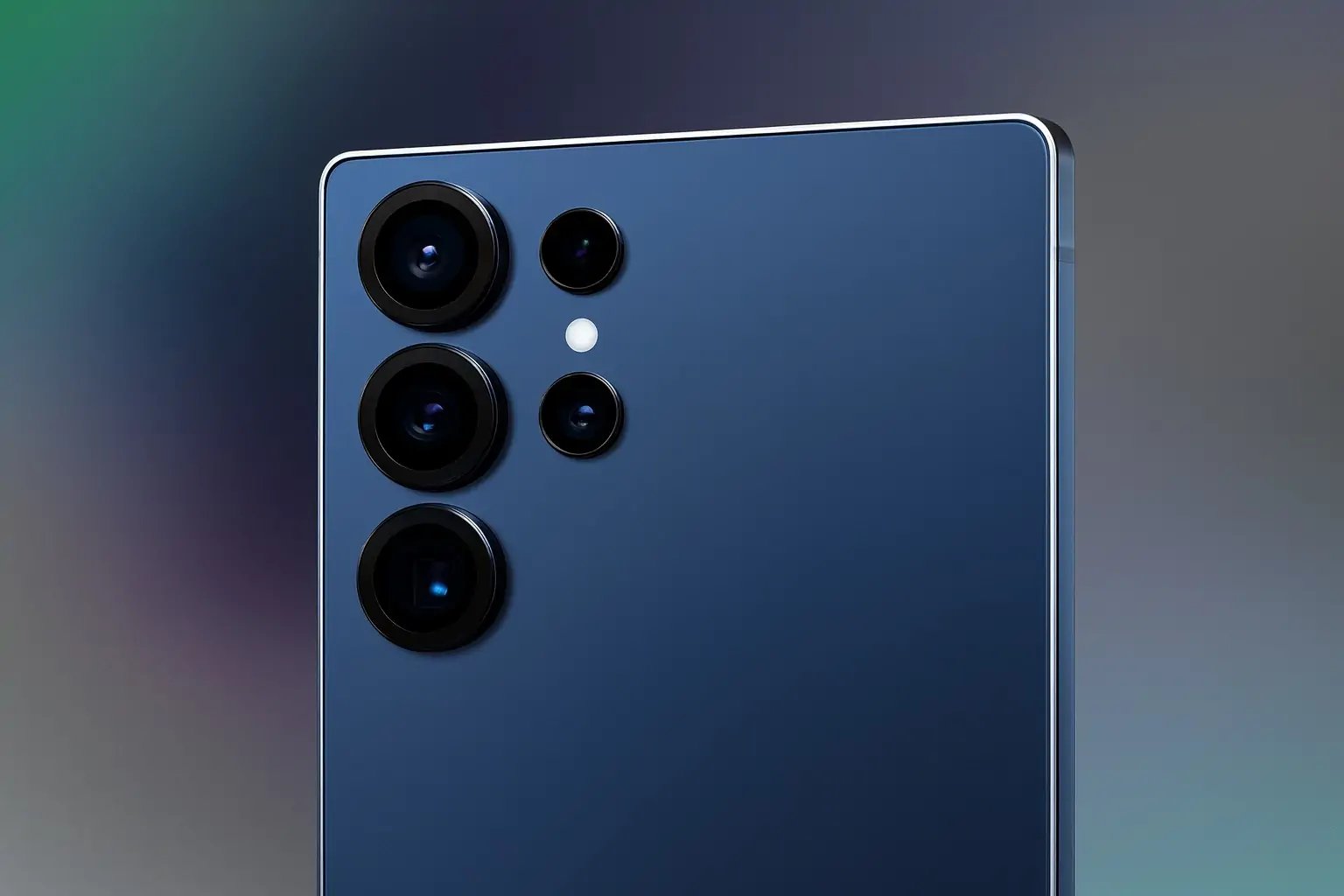
New reports dated December 15, 2025 say the Galaxy S26 Ultra has surfaced in FCC filings with Snapdragon 8 Elite Gen 5, while Qi2 magnetic charging and a new Samsung battery pack leak—yet the base S26 faces harsh criticism.
Samsung’s next flagship cycle is coming into focus fast, and today (December 15, 2025) delivered the clearest “paper trail” yet: multiple reports point to the Galaxy S26 Ultra appearing in U.S. FCC documentation, with model identifiers that align with Samsung’s typical naming—and a chipset code that maps to Qualcomm’s Snapdragon 8 Elite Gen 5. 1
At the same time, leaks around Qi2 magnetic wireless charging are no longer just wishful thinking. A Samsung “Magnet Wireless Battery Pack” has shown up in certification databases and reporting, with a design that appears to address a very Samsung-specific problem: camera bumps that interfere with magnetic chargers sitting flush. 2
But not all the buzz is positive. One of the loudest narratives emerging this week is that the regular Galaxy S26 and S26 Plus could be dangerously underwhelming, to the point that Android Authority argues they’re “already the worst phone of 2026” in a relative sense—because the rumored upgrades look minimal while competitors push harder on cameras, charging, batteries, and materials. 3
Below is a detailed, publication-ready breakdown of everything “current” around these stories as of Dec. 15, 2025, what appears most credible, and what to watch next.
What’s new today (Dec. 15, 2025): Galaxy S26 Ultra reportedly appears in FCC filings
The most consequential development dated Dec. 15 is renewed reporting that the Galaxy S26 Ultra has surfaced on the U.S. FCC database, a typical pre-launch waypoint for major devices. Business Standard reports that the listing references two variants—SM‑S948B and SM‑S948U—consistent with Samsung’s global vs. U.S. model patterns, and that both point to chipset code SM8850, which corresponds to Snapdragon 8 Elite Gen 5. 1
Gadgets360 similarly describes FCC entries tied to identifiers understood to represent U.S. and international versions, and notes connectivity features the filings typically reveal—such as 5G, Wi‑Fi 7 (triple-band), NFC, UWB, and more—along with the same chipset code reference. 4
Why this matters
For years, Samsung’s flagship chip strategy has been a recurring controversy, especially when different regions get different silicon. The S26 Ultra’s chipset being consistent across variants (if these reports hold) would be a big deal for buyers who don’t want to “play the region lottery,” and it also shapes how we should interpret the rest of the S26 rumors—especially features tied to on-device AI and thermals.
SamMobile’s reporting reinforces the idea that both U.S. and international Ultra variants in the FCC context point to Snapdragon, framing it as a meaningful confirmation moment rather than “just another leak.” 5
The other big story: Samsung’s Qi2 magnetic push looks real now—battery pack leak included
The “Magnet Wireless Battery Pack” leak, explained
A key part of the Qi2 narrative comes from a certified accessory: Samsung’s “Magnet Wireless Battery Pack.” 9to5Google reports that the product surfaced in the Wireless Power Consortium database and is listed with Qi 2.1.0 support and 15W output. 2
Importantly, the design is not just cosmetic. According to 9to5Google’s write-up, the battery pack’s shape appears designed as a workaround for camera-module interference, effectively creating space so the pack can align properly on phones where the camera bump sits close to the wireless coil area. 2
Android Central’s coverage echoes the same core points: the accessory is positioned as Samsung’s first-party magnetic portable charger, identified as EB‑U2500, with Qi2.1 support and up to 15W wireless charging—while calling out the unusual cutouts as a practical fix for fit and alignment issues. 6
Qi2 magnets: from “maybe” to ecosystem strategy
Leaks increasingly suggest Samsung isn’t just dabbling—it may be preparing a full magnetic ecosystem aligned with Qi2. In a separate report, 9to5Google says leaked accessory listings (attributed to WinFuture) include multiple magnetic cases and a Dual Magnetic Ring Holder, and notes Samsung may simply label these products “magnetic” rather than giving them a proprietary brand name. 7
Tom’s Guide also summarizes a similar accessory lineup story: magnetic cases, a 5,000mAh magnetic battery pack, and claims of faster wireless charging—particularly the idea that the S26 Ultra could hit 25W while other models may land around 20W. 8
Taken together, the accessories leak + the battery pack certification leak paints a consistent picture: Samsung is building the “stuff around the phone,” not just the phone, which is exactly what you do when you expect magnets and Qi2 alignment to be a headline feature.
Galaxy S26 Ultra upgrades: charging jump, battery bump, and a privacy display narrative
One of the strongest “Ultra-only” themes across multiple reports is charging.
An ABP Live report (updated today, Dec. 15) frames the Galaxy S26 Ultra as potentially regaining “wow factor” through a stack of upgrades—most notably battery moving from 5,000mAh to 5,200mAh, 60W wired charging, and 25W wireless charging. It also highlights an AI-powered privacy display concept: the phone could hide screen content from nearby onlookers while remaining visible to the user, with triggers for sensitive apps. 9
This “privacy display” idea also tracks with the broader leak cycle around One UI 8.5-era features, and it’s increasingly being treated as one of the Ultra’s potential differentiators—especially if Samsung is leaning into on-device intelligence and context-aware display behavior. 9
Separately, Android Authority’s critique of the base models still acknowledges that the Ultra is expected to get meaningful updates such as 60W wired charging, 25W wireless charging (Qi2), and Private Display mode, even while the rest of the lineup is framed as stagnating. 3
The controversy: “The Samsung Galaxy S26 is already the worst phone of 2026”
Android Authority’s argument is blunt: based on the direction of leaks so far, the Galaxy S26 and S26 Plus may be “repackaged” upgrades, with only minor spec changes that don’t match what other brands are doing—making them “worst” in a relative value/innovation sense, not because they’re unusable. 3
What the criticism is really about (in practical terms)
According to the piece, the expected differences between S25 and S26-series base models look small: a slightly larger display, Snapdragon 8 Elite Gen 5, a modest battery increase, 256GB becoming base storage, and maybe a wireless charging bump (e.g., 15W to ~20W). The author argues that this doesn’t feel like a flagship leap—especially against competitors improving brightness, zoom cameras, battery tech, and fast charging. 3
The article is particularly harsh on the Plus model, implying it has little reason to exist if it’s essentially last year’s phone with a new chip and name. 3
Whether you agree with the tone or not, this critique is important for one reason: it captures what could become the dominant consumer narrative if Samsung’s launch messaging doesn’t clearly differentiate the base devices.
The Qi2 “fix” that could matter more than specs: alignment and accessory reliability
Qi2 isn’t just about speed numbers—it’s about user experience. The biggest everyday benefit of magnets is that they remove the “did it actually charge overnight?” anxiety.
That’s why the battery pack leak is more significant than it sounds. If Samsung is redesigning a first-party battery pack to address camera-bump alignment issues, it’s effectively admitting a hard truth: magnetic alignment must be engineered end-to-end—phone layout, coil placement, camera housing, and accessory geometry. 2
And if Samsung really does bring built-in magnetic support to the S26 line (as multiple reports suggest), it would reduce reliance on “magnetic cases” as a workaround, which has been a common frustration point in the current Galaxy generation. 2
What’s still unconfirmed (and what to watch next)
Even with FCC/certification-style signals, plenty remains uncertain:
- Launch timing: Some reporting suggests Samsung could target late February 2026 for the S26 series rather than January, though this is not official and may shift. 8
- How Qi2 is implemented: There’s a major difference between “Qi2 accessory support” and true built-in magnetic alignment in the phone chassis. Leaks point toward deeper integration, but it’s still not a Samsung-confirmed spec. 2
- S26/S26 Plus strategy: The Ultra narrative is getting clearer; the base models remain the biggest question mark—and the biggest reputational risk if they ship with minimal changes. 3
Bottom line for readers (and for Samsung)
As of Dec. 15, 2025, the Galaxy S26 Ultra storyline is shaping up around three pillars:
- Performance certainty: FCC-driven reporting strongly points to Snapdragon 8 Elite Gen 5 for the Ultra, potentially across regions. 1
- Charging credibility: The Ultra is widely expected to finally move beyond Samsung’s long-standing charging plateau, with claims of 60W wired and 25W wireless. 9
- Qi2 magnetic ecosystem: Samsung appears to be preparing a real lineup of magnetic accessories—including a Magnet Wireless Battery Pack that’s explicitly designed around Samsung’s hardware quirks. 2
Meanwhile, the risk is obvious: if the Galaxy S26 and S26 Plus launch without clear, meaningful upgrades beyond incremental spec bumps, the “stagnation” narrative may stick—especially with rivals using bigger batteries, faster charging, and more aggressive camera packages as headline features. 3