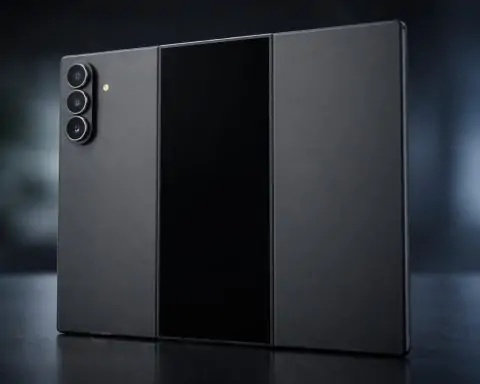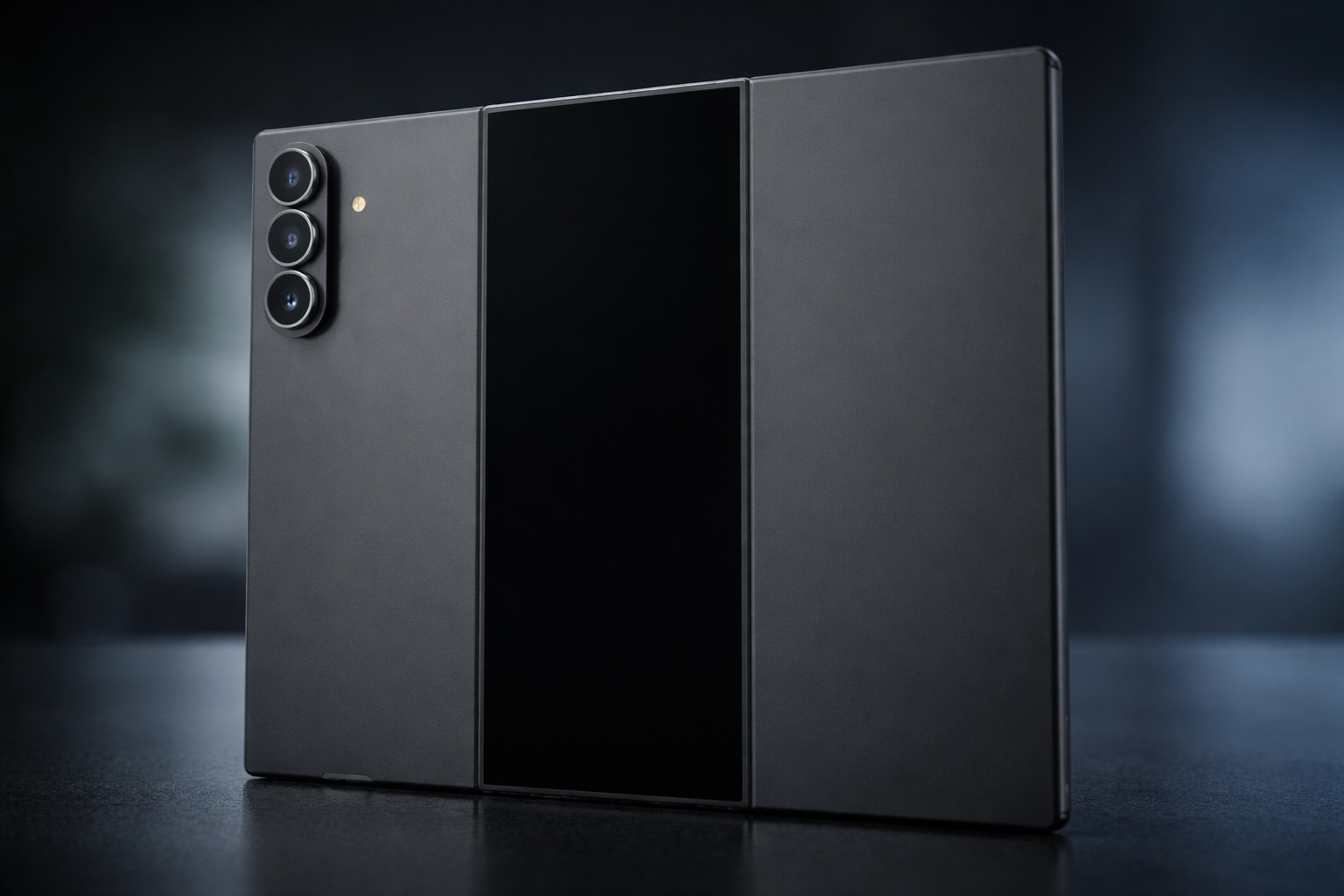
On Dec. 27, 2025, new reports break down JerryRigEverything’s Galaxy Z TriFold durability test, plus a hinge torture test—what broke, what held, and why.
Samsung’s first triple‑folding phone, the Galaxy Z TriFold, is getting its first real stress test in the wild—before most buyers can even get their hands on it. The biggest takeaway from today’s news cycle: extreme thinness comes with extreme constraints.
A widely shared durability video from YouTuber Zack Nelson (JerryRigEverything) has been picked up across tech outlets today, focusing on how the TriFold handles scratches, heat, grit, and bending—then ends with a dramatic failure when the device is bent in the opposite direction of its intended fold. [1]
At the same time, earlier coverage this week around a multi‑day “hinge torture test” adds a second angle to the durability debate: even if the phone survives normal folding for years, hinge feel and stability can degrade long before the screen outright dies. [2]
Below is what’s driving the headlines on 27.12.2025, and what it means for anyone watching the next phase of foldables.
What’s new today: the durability test that’s dominating Dec. 27 coverage
Multiple outlets publishing today frame the same core storyline: the Galaxy Z TriFold survives the “usual” durability gauntlet better than expected—until a wrong‑direction bend effectively kills the display. [3]
That’s a particularly big deal because Samsung’s foldables have steadily improved their reputation for surviving abuse tests. But the TriFold is a different class of engineering problem: two hinges, three panels, and a chassis designed around being incredibly thin.
Samsung itself lists the device’s thickness as approximately 3.9mm at the thinnest point, with other sections around 4.0–4.2mm (excluding camera and protective film). [4]
That thinness is a major selling point—and, as these tests show, also the source of several weak spots.
The JerryRigEverything test: scratches, heat, dust, then a bend‑test blackout
1) Scratch test: outer glass behaves like typical flagship glass; inner screen is still “soft”
According to coverage of the durability video, the outer display begins showing visible scratches at Mohs level 6 with deeper marks at level 7—consistent with many modern smartphone glass designs. [5]
The inner flexible screen is the bigger concern: it reportedly shows light scratching at level 2 with deeper grooves at level 3, reinforcing the ongoing foldable reality that flexible display layers are far easier to mark than traditional glass. [6]
Samsung’s own materials list helps explain the split: the company specifies Corning Gorilla Glass Ceramic 2 on the front, while the rest of the structure relies on lightweight materials to hit the thin profile. [7]
2) Heat test: both displays show permanent damage (inner screen faster)
The fire portion of the test is also making headlines. Reporting on the video says the outer OLED shows permanent damage after around 17 seconds, while the inner display shows visible damage after about 10 seconds, with neither recovering afterward. [8]
3) Dirt and dust: “crunching” sounds and magnets collecting debris
Today’s write‑ups repeatedly highlight the dust segment because it’s the type of risk that can happen in real life—pockets, bags, beaches, construction sites.
Coverage describes loose debris being moved across the unfolded display, producing audible crunching from the hinge area, with dust also appearing to collect around internal magnets. [9]
Samsung’s own specs are notably cautious here: the TriFold is rated IP48, and Samsung explicitly notes it is not dust- or sand-resistant. [10]
So, while it has meaningful water resistance, fine particulate exposure is still a known vulnerability—especially for a multi‑hinge design with more seams and moving parts.
4) Bend test: the moment everything turns
This is the clip that sparked the Dec. 27 wave.
Reporting describes the phone warping under pressure, then cracking when bent the opposite direction, followed by the display going black. [11]
Design-focused coverage points to the trade-off: the hinges hold, but the ultra-thin aluminum frame gives way, with the “central spine” described as around 3.9mm at its thinnest, making it extremely unforgiving under reverse bending. [12]
The Verge’s summary of the situation is blunt: the TriFold’s thin frame (with different thickness across the three sections) doesn’t deal well with being bent the wrong way—even if the hinge tech looks resilient. [13]
The hinge torture test: why “it didn’t break” isn’t the full story
Separate from the bend-test failure, a different durability conversation has been circulating all week: how many folds the TriFold can take before the hinge behavior changes.
In a livestreamed test cited by 9to5Google, a Korea-based channel repeatedly folded and unfolded the device over several days. The report says:
- slight creaking started around 61,000 folds
- creaking extended to the second hinge around 121,000 folds
- around 144,000 folds, “hinge elasticity” gave way—meaning the device reportedly wouldn’t stay fully open without being forced, and became harder to operate (even though the display still worked) [14]
Samsung has stated the TriFold has gone through a 200,000 fold test, framed as 100 folds per day for 5 years. [15]
If you apply Samsung’s “100 folds/day” yardstick, 144,000 folds is roughly 3.9 years of use—though the real-world meaning depends heavily on whether the folding in the test matches everyday speed, force, and environmental exposure.
Also crucial: the report notes the test ran intensely for eight days in a row, which is not how humans use phones, and may accelerate wear due to heat, repetitive motion, and lack of rest cycles. [16]
Why the TriFold is so thin—and why that matters for durability
Samsung’s official spec sheet reveals just how aggressively optimized the TriFold is for portability:
- ~3.9–4.2mm thickness depending on section [17]
- 5,600 mAhthree‑cell battery system (one battery per segment) [18]
- Titanium hinge housing and Advanced Armor Aluminum frame [19]
- IP48 water/particle rating with explicit warning: not dust- or sand-resistant [20]
The teardown-focused commentary from design coverage underscores the engineering compromise: three separate batteries spread across the three segments, packaged so thinly that even battery removal could involve bending risk. [21]
That’s not an everyday user scenario—but it illustrates how tight the internal tolerances are when you’re chasing sub‑5mm panels.
In other words: this isn’t just “a foldable with an extra hinge.” It’s a device built close to the limits of current materials, which makes it more sensitive to non-standard loads—like twisting or bending against the intended folding geometry.
What consumers should take away from today’s reports
Even if you never plan to “bend test” a $2,000+ device, the Dec. 27 coverage highlights a few practical implications:
The TriFold appears to demand “correct handling” more than normal phones
The failure mode being discussed is tied to reverse bending / wrong-way force, not normal folding. That could map to real-life accidents like:
- sitting down with the device in a back pocket or tight bag,
- torsion stress in a backpack,
- grabbing one segment and pulling while another segment catches.
Dust risk remains a real concern—especially for a multi-hinge device
Both the video coverage and Samsung’s own IP notes converge on the same idea: avoid dusty/sandy environments if you want the hinge to stay smooth. [22]
Long-term durability isn’t only about “screen still turns on”
The hinge torture test coverage suggests that “survives X folds” can hide a more important quality-of-life issue: does it still open flat, smoothly, and confidently after years? [23]
For foldables—especially tri-folds—“feel” matters because it determines whether the device remains pleasant to use, safe to close, and stable when open.
Release timing: why the US is still waiting
Samsung’s TriFold has launched in South Korea, but multiple reports emphasize that the US won’t get the device until 2026, even as durability videos rack up views now. [24]
That delay matters because Samsung has a window to:
- clarify durability expectations,
- refine future production runs,
- and potentially adjust accessories (cases, hinge protection, service policies) based on early feedback.
The bottom line on Dec. 27, 2025
Today’s news doesn’t “prove” the Galaxy Z TriFold is fragile in normal use—but it does show that Samsung’s ultra-thin tri-fold design has less margin for error than a traditional phone or even a standard book-style foldable.

References
1. www.livemint.com, 2. 9to5google.com, 3. www.livemint.com, 4. news.samsung.com, 5. www.livemint.com, 6. www.livemint.com, 7. news.samsung.com, 8. www.livemint.com, 9. www.livemint.com, 10. news.samsung.com, 11. www.livemint.com, 12. www.yankodesign.com, 13. www.theverge.com, 14. 9to5google.com, 15. 9to5google.com, 16. 9to5google.com, 17. news.samsung.com, 18. news.samsung.com, 19. news.samsung.com, 20. news.samsung.com, 21. www.yankodesign.com, 22. www.livemint.com, 23. 9to5google.com, 24. www.theverge.com