Xiaomi’s 17 Ultra by Leica introduces a mechanical “Master Zoom Ring” and 200MP continuous optical zoom—now squaring off against Huawei’s Mate 80 Pro Max XMAGE quad-camera system.
The smartphone camera arms race just took a sharp turn back toward tactile photography. As of December 28, 2025, fresh explainers and comparisons are spotlighting Xiaomi’s newly unveiled Xiaomi 17 Ultra—especially the Xiaomi 17 Ultra by Leica / Leica Edition—because it does something almost no modern phone dares to do: it adds a physical control ring around the rear camera module for manual-style shooting. [1]
That move lands right as Huawei’s Mate 80 Pro Max continues to set the pace on the “computational + sensor stack” side with a packed XMAGE camera system, including dual telephoto options and a multispectral color sensor—plus a headline-grabbing dual-layer OLED screen. [2]
Below is the full picture of what’s making headlines today, what the specs say, and why this is shaping up as one of the most interesting camera-phone matchups heading into 2026.
What’s new on Dec 28: the Leica Edition is being framed as a “real camera” moment
Today’s coverage is leaning into one central idea: Xiaomi isn’t just upgrading megapixels—it’s changing how you use the camera. In Dec 28 explainers, the Xiaomi 17 Ultra is described as a photography-first flagship, with the Leica Edition positioned as a more “analog-inspired” experience thanks to the Master Zoom Ring and Leica-styled design cues. [3]
Alongside that, Dec 28 comparisons are pushing the “buyer decision” narrative: if you want a creator-centric phone built around zoom and manual-style control, Xiaomi is the obvious pitch; if you want a more conventional premium flagship experience, rivals may offer better value. [4]
Xiaomi 17 Ultra by Leica: the headline feature is the mechanical zoom ring
A ring you can actually shoot with—not just a gimmick
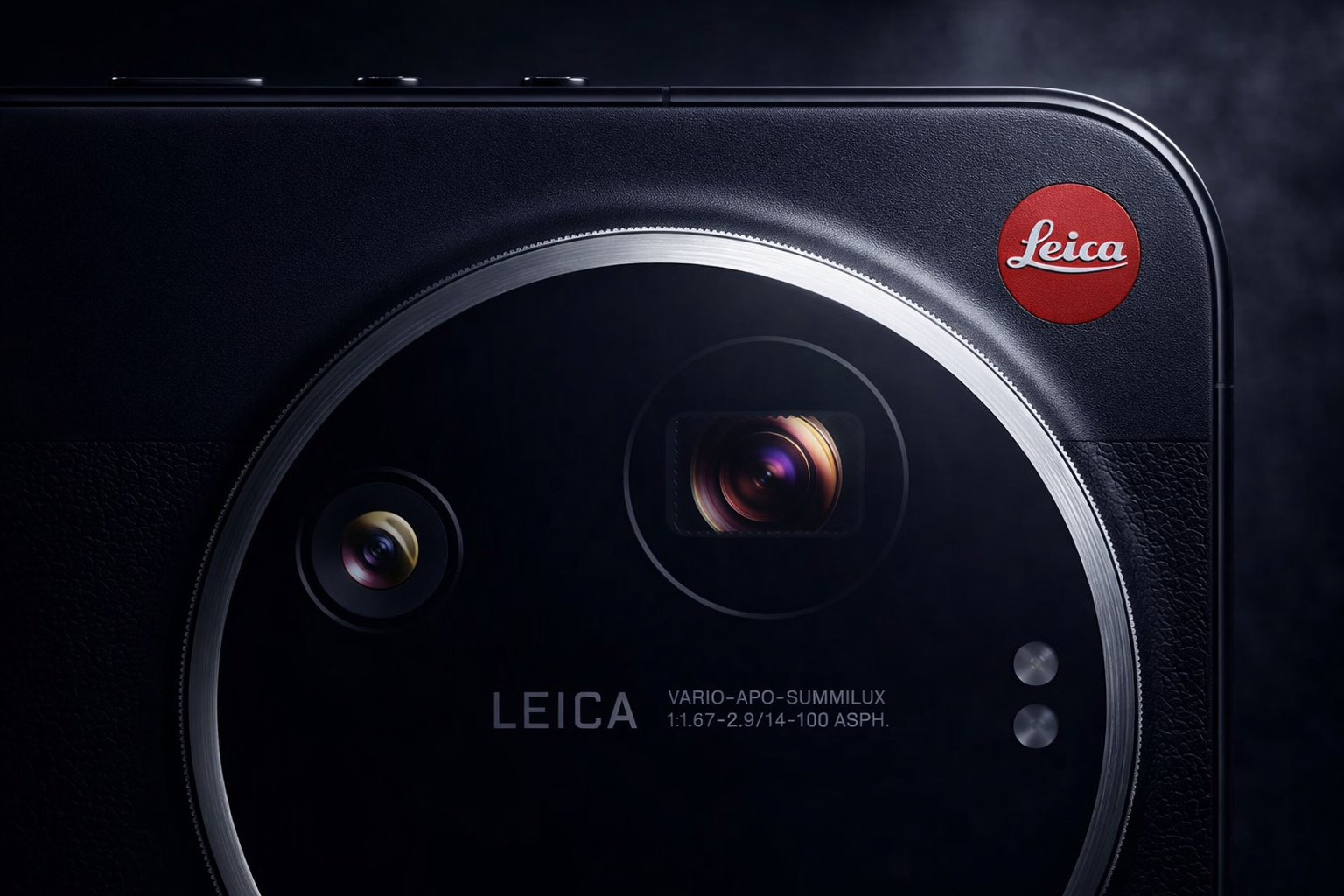
The Xiaomi 17 Ultra by Leica’s signature hardware feature is a manual lens zoom ring built into the circular rear camera island. Xiaomi’s pitch: rotate the ring instead of tapping the screen—more like using a dedicated camera. [5]
According to reporting, rotating the ring can:
- Automatically open the camera app
- Switch between rear cameras
- Control zoom (including continuous zoom on the telephoto)
- Double as manual focus and exposure compensation control [6]
And other coverage describes additional ring controls such as white balance adjustments. [7]
The core camera stack: 50MP + 50MP + 200MP, tuned with Leica
At the center of the Xiaomi 17 Ultra by Leica system:
- 50MP main camera using a 1-inch “Light Fusion 1050L” sensor with LOFIC tech aimed at improving dynamic range [8]
- 50MP ultra-wide with a 115° field of view (reported as a 14mm equivalent) [9]
- 200MP periscope telephoto delivering continuous optical zoom across 75–100mm equivalent (roughly 3.2× to 4.3×) and designed to avoid relying on digital cropping within that range [10]
A particularly notable badge: the telephoto optics are described as Leica APO and the phone is reported as the first Xiaomi flagship to receive Leica’s APO certification, aimed at reducing chromatic aberrations. [11]
The rest of the flagship package (because this is still an “Ultra”)
Beyond the cameras, key reported highlights include:
- Snapdragon 8 Elite Gen 5
- 6,800mAh silicon‑carbon battery
- 6.9-inch LTPO AMOLED display reported around 3,500 nits peak brightness
- HyperOS 3 based on Android 16
- Premium durability including IP66/IP68/IP69 ratings (as reported by multiple outlets) [12]
Pricing and availability (China first)
Across multiple reports, the release plan is consistent:
- Announced in China first; sales starting Dec 27
- Standard model starting at CNY 6,999
- Leica Edition starting at CNY 7,999 [13]
Global timing is not fully confirmed, but expectations in coverage point toward early 2026 for wider availability. [14]
Huawei Mate 80 Pro Max: XMAGE leans on sensors, zoom options, and color science
If Xiaomi’s pitch is “make the phone feel like a camera,” Huawei’s approach is “make the camera system smarter and deeper.”
Official camera specs: five rear modules including a multispectral color camera
Huawei’s official specs list the Mate 80 Pro Max rear cameras as:
- 50MP ultra-high dynamic range camera with variable aperture (F1.4–F4.0), OIS, and RYYB sensor
- 40MP ultra-wide (also listed with RYYB)
- 50MP macro telephoto with OIS and RYYB
- 50MP super telephoto with OIS and RYYB
- Second‑generation “Red Maple” (multispectral) original color camera [15]
Huawei also spells out zoom modes:
- 4× and 6.2× optical zoom
- 12.4× “optical quality zoom”
- Up to 100× digital zoom [16]
Display headline: dual-layer OLED and extreme peak brightness
The Mate 80 Pro Max’s display has been widely covered as a standout feature: a 6.9-inch dual-layer OLED that Huawei says can reach 8,000 nits peak brightness (with the important caveat that peak brightness numbers don’t equal typical full-screen brightness). [17]
Battery and charging: big numbers, aggressively fast
On the official spec sheet:
- 6000mAh battery (typical)
- Up to 100W wired
- Up to 80W wireless
- Water/dust resistance including IP68 (6m) and IP69 [18]
The real fight: “tactile shooting” vs “sensor-stack photography”
This isn’t just Xiaomi vs Huawei—it’s two different philosophies colliding.
1) Zoom: continuous optical range vs multi-step zoom strategy
- Xiaomi is making a very specific promise: a continuous optical zoom band between 75–100mm equivalent driven by a 200MP periscope, with the ring acting like a control interface. [19]
- Huawei counters with a broader zoom framework: optical options at 4× and 6.2×, plus 12.4× “optical quality” zoom (and the usual 100× digital ceiling). [20]
What it means in practice: Xiaomi is optimizing for smooth framing changes inside a photographer-friendly focal range; Huawei is optimizing for more zoom stages and computational assistance, backed by multiple telephoto modules.
2) Color and realism: Leica APO + LOFIC vs RYYB + multispectral color capture
Xiaomi’s camera narrative today centers on:
- LOFIC dynamic range improvements on a 1‑inch main sensor [21]
- Leica APO optics to reduce color fringing [22]
Huawei’s camera narrative centers on:
- Multiple RYYB sensors for light capture
- A dedicated multispectral “original color” camera module meant to improve color accuracy [23]
3) Video: Xiaomi’s “8K creator” messaging vs Huawei’s official 4K cap
Dec 28 coverage frames Xiaomi 17 Ultra as a creator-first device and reports video capture up to 8K. [24]
Huawei’s official spec sheet lists rear video recording up to 4K (3840×2160). [25]
If you’re prioritizing top-end resolution for capture flexibility, Xiaomi’s reported positioning is stronger; if you’re prioritizing Huawei’s color pipeline and XMAGE features, specs alone won’t tell the whole story.
Why the zoom ring matters (even if you never shoot manual)
This isn’t only about nostalgia. The physical ring is being positioned as a way to:
- Reduce screen taps and on-screen UI friction
- Make zooming feel more deliberate and stable
- Encourage photographers to treat the phone as a tool rather than an app [26]
In other words: Xiaomi is betting that the next leap in mobile photography isn’t just computational—it’s interaction design.
Buying outlook: what’s available now, and what’s next
Xiaomi 17 Ultra / Leica Edition
- China launch complete; sales reported from Dec 27
- Pricing widely reported starting CNY 6,999, Leica Edition CNY 7,999
- International rollout is anticipated in 2026, but dates vary by market and are not fully confirmed [27]
Huawei Mate 80 Pro Max
- Officially launched in China earlier in the cycle; global availability remains limited in many regions
- Official specs confirm the camera stack, zoom modes, charging, and durability ratings [28]
Key takeaways for Google Discover readers
- Xiaomi’s big bet: a mechanical zoom ring + 200MP continuous optical zoom makes the 17 Ultra by Leica feel closer to a dedicated camera. [29]
- Huawei’s big counter: a deep XMAGE hardware stack, including a multispectral color camera and multiple RYYB sensors, aims for accuracy and versatility. [30]
- The real question: do you want the phone that shoots like a camera, or the phone that computes like one?
FAQ
Does the Xiaomi 17 Ultra by Leica ring only control zoom?
No. Coverage says the ring also triggers the Leica camera app and can be used for functions like switching cameras and manual-style controls such as focus and exposure compensation (and in other reporting, white balance). [31]
Is Xiaomi’s zoom actually “optical,” or is it digital?
Reports describe continuous optical zoom from 75–100mm equivalent, roughly 3.2× to 4.3×, using a periscope structure and a mechanical movement approach that avoids relying on digital cropping inside that band. [32]
What’s Huawei’s strongest camera advantage on paper?
Officially, the Mate 80 Pro Max combines multiple RYYB sensors with a second‑generation multispectral color camera and zoom support including 4× / 6.2× optical and 12.4× optical-quality zoom. [33]
Which phone is more “photographer-friendly”?
If you want a camera-like workflow and tactile control, Xiaomi is clearly targeting that audience with the Leica Edition’s ring and Leica-style experience. [34]
If you want a more traditional flagship experience with Huawei’s color pipeline and sensor stack, the Mate 80 Pro Max is built around that approach. [35]

References
1. www.gizmochina.com, 2. consumer.huawei.com, 3. www.gizmochina.com, 4. www.gizmochina.com, 5. petapixel.com, 6. petapixel.com, 7. www.androidheadlines.com, 8. petapixel.com, 9. petapixel.com, 10. petapixel.com, 11. petapixel.com, 12. www.androidheadlines.com, 13. www.androidheadlines.com, 14. www.androidheadlines.com, 15. consumer.huawei.com, 16. consumer.huawei.com, 17. www.theverge.com, 18. consumer.huawei.com, 19. petapixel.com, 20. consumer.huawei.com, 21. petapixel.com, 22. petapixel.com, 23. consumer.huawei.com, 24. www.gizmochina.com, 25. consumer.huawei.com, 26. petapixel.com, 27. www.androidheadlines.com, 28. consumer.huawei.com, 29. petapixel.com, 30. consumer.huawei.com, 31. petapixel.com, 32. petapixel.com, 33. consumer.huawei.com, 34. petapixel.com, 35. consumer.huawei.com