New York, February 18, 2026, 13:24 EST — Regular session
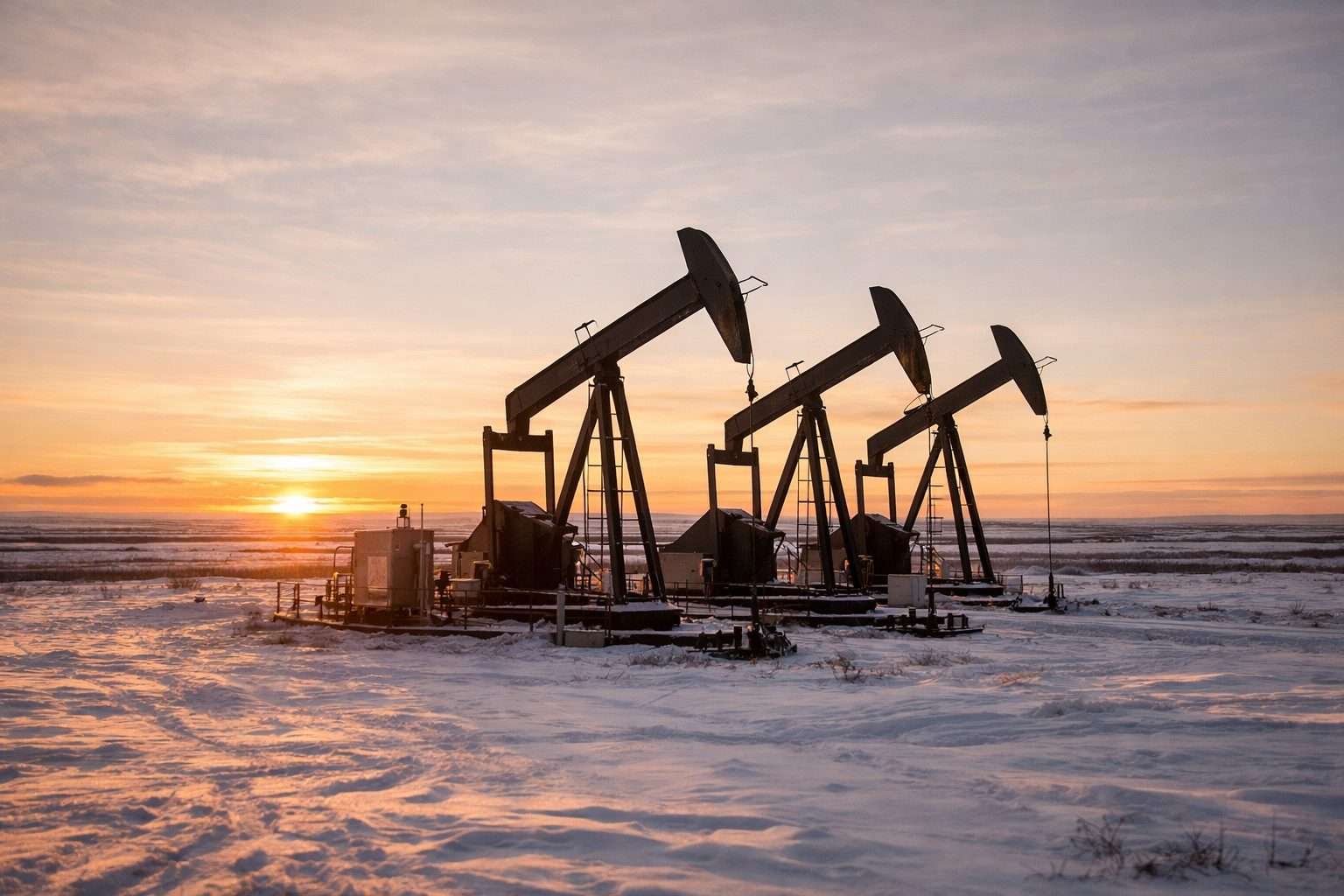
Oil climbed over 3% Wednesday, with traders reacting to renewed supply concerns tied to U.S.-Iran tensions and the situation around the Strait of Hormuz. Brent crude, the global gauge, was up $2.38, or 3.5%, at $69.80 a barrel. U.S. West Texas Intermediate (WTI) added $2.39, or 3.8%, hitting $64.72 by midday. “The big moves … are being solely driven by geopolitics,” Lipow Oil Associates president Andrew Lipow said. 1
Oil prices snapped back after Tuesday’s tumble, which saw crude touch two-week lows amid renewed hopes for movement in U.S.-Iran nuclear negotiations. Brent wrapped up at $67.42 a barrel, WTI at $62.33, Reuters market data showed. The back-and-forth highlighted how quickly those geopolitical risk premiums — the extra dollars traders tack on over supply concerns — can vanish, only to reappear. 2
The U.S. and Iran announced they’ve come to terms on the main “guiding principles” in nuclear talks, though Iranian Foreign Minister Abbas Araqchi made clear that doesn’t signal a deal is close. As negotiations got underway, Iranian state media reported Tehran had temporarily closed parts of the Strait of Hormuz for Revolutionary Guards exercises; later, it said the waterway was shut for several hours, though details on a full reopening were left vague. Tehran has repeatedly warned it could block the strait if attacked, a threat that would disrupt roughly a fifth of the world’s oil shipments. 3
Iran called the closure a safety precaution tied to its live-fire drills, but analysts read it as a pointed signal to Washington as the U.S. ramps up its military presence nearby. “Clearly on the day that they’re negotiating with the Americans I don’t think it’s a coincidence,” said Sina Azodi, director of the Middle East Studies program at George Washington University. U.S. Vice President JD Vance told Fox News the negotiations were positive “in some ways,” though America’s “red lines” stayed firmly in place. 4
Iran and Russia will stage joint naval exercises Thursday in the Gulf of Oman and the northern Indian Ocean, according to Iran’s semi-official Fars news agency, keeping markets focused on the vital shipping corridor near Hormuz. Earlier Iranian drills prompted brief partial closures in parts of the strait, The National said, though Iran has stopped short of a full shutdown despite making threats in the past. 5
Oil traders faced added volatility out of Europe, as peace discussions led by the U.S. between Ukraine and Russia wrapped up with no progress. Ukrainian President Volodymyr Zelenskiy charged that Moscow was deliberately stalling the talks. Both sides indicated plans to reconvene, but left the next meeting unscheduled. 6
Still, there’s a clear risk to the rally if diplomatic efforts pick up and shipping lanes stay open. OPEC+ — that’s the Organization of the Petroleum Exporting Countries plus Russia and others — is looking at bringing back output hikes as soon as April after pausing for three months, according to sources who spoke with Reuters. That could put a ceiling on how far geopolitics can push crude. SEB analysts see a big spread: Brent could climb toward $80 on more Iran tensions, or slip back near $60 if things de-escalate. 7
The appetite isn’t letting up. According to Kpler data, Asia is set to receive a record 28.51 million barrels per day of seaborne crude in February, despite geopolitical shifts that are changing which suppliers are filling those cargoes. 8
The next key data point: U.S. inventory numbers. The Energy Information Administration will put out its weekly petroleum status report for the week ending Feb. 13 at 12 p.m. ET on Thursday, Feb. 19, following a one-day Presidents Day delay. Any unexpected build or draw drops straight into a market already reacting sharply to Iran-related headlines. 9