
London, June 6, 2026, 17:12 (BST)
- Prudential fell 2.48% on Friday to £9.51, while the FTSE 100 edged up 0.07%.
- The stock’s two-day slide followed reports of tighter China/Hong Kong checks on offshore investment accounts.
- Investors next week will look for any regulatory clarification, not company earnings.
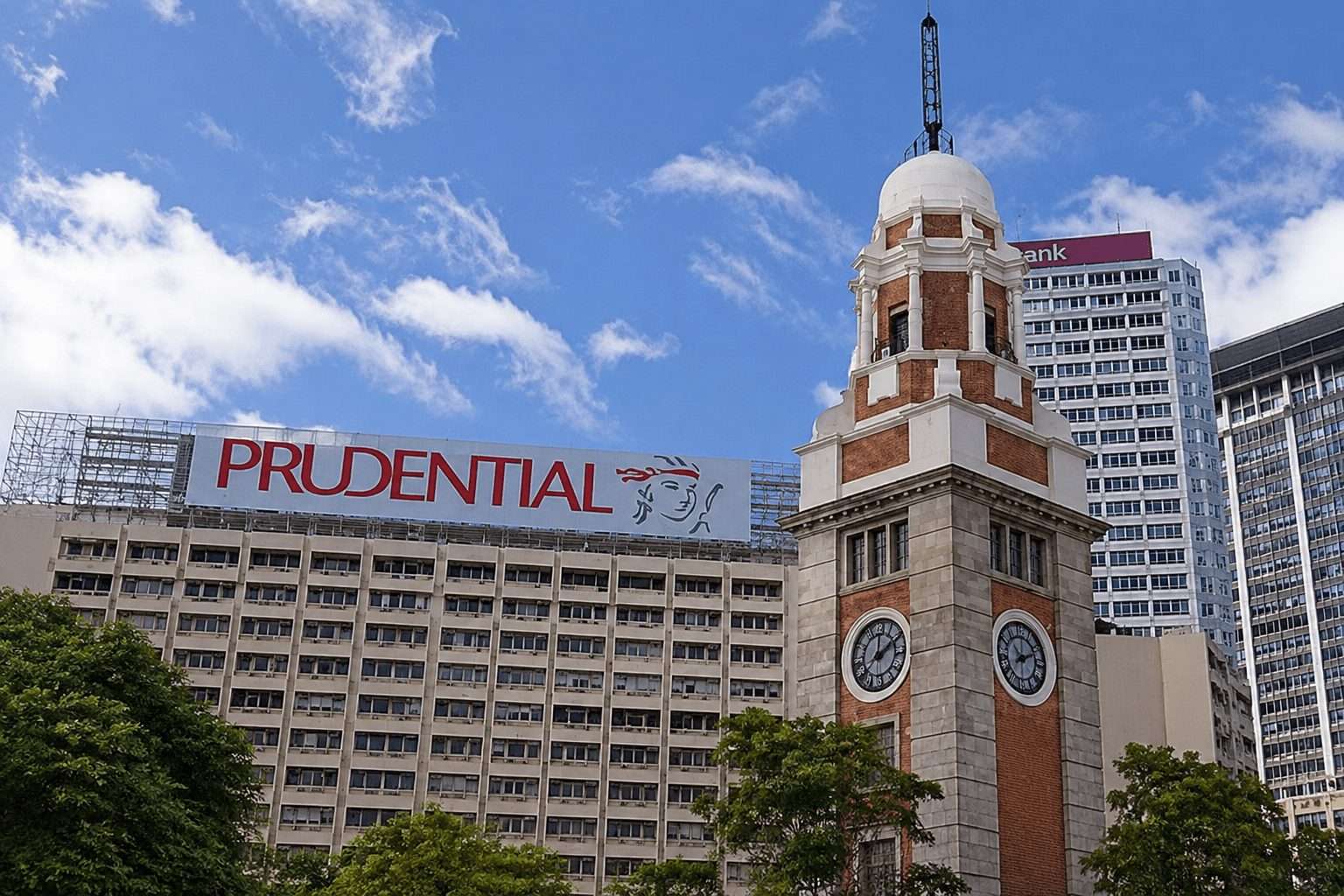
With the London market shut for the weekend, Prudential plc ended a rough week under pressure from China-related selling, closing Friday down 2.48% at £9.51 even as the FTSE 100 index, the main London blue-chip benchmark, rose 0.07%. Trading volume reached 9.1 million shares, above its 50-day average, and the stock sat 23.21% below its Feb. 4 high of £12.38.
The timing matters. Prudential is no longer a UK savings-and-pensions story; its growth case is built around Asia and Africa, with Hong Kong and mainland China closely watched by investors. The stock had already dropped 7.60% on Thursday to £9.75, so Friday’s fall left it almost 10% below Wednesday’s close of £10.55.
The pressure came after Reuters reported that Hong Kong-listed AIA, HSBC and Standard Chartered fell on Friday as investors worried that Beijing’s tighter capital controls could hit global financial firms exposed to mainland China. Capital controls are rules that limit how money moves across borders. Reuters said banks had been tightening scrutiny of cross-border investment after China tightened controls on May 22 and regulators in Hong Kong urged banks to check investors’ sources of funds.
That is the plain risk for Prudential: not a balance-sheet shock, at least not from what has been confirmed, but more friction for mainland customers using Hong Kong for insurance and wealth products. Less friction has long been part of Hong Kong’s appeal.
Peers moved the same way. Reuters reported on Thursday that HSBC, Standard Chartered and Prudential fell 5% to 6.3% in London after the South China Morning Post said mainland residents faced tighter constraints opening offshore accounts at major Hong Kong banks; AIA dropped 6.8% in Hong Kong. The companies were not immediately available for comment to Reuters.
There was a counterpoint. Jefferies analyst Philip Kett said the changes were unlikely to significantly disrupt the financial system or severely damage the life insurance sector, the Wall Street Journal reported, even as it noted Prudential had slid to an eight-month low during Thursday’s sell-off.
The company’s own recent numbers give bulls something to stand on. Prudential said on April 29 that first-quarter new business profit, a measure of expected profit from newly sold policies, rose 10% to $686 million on a constant exchange-rate basis. APE sales, or annual premium equivalent sales, a standardised measure of new premium income, rose 6% to $1.82 billion. Chief Executive Anil Wadhwani said the company had shown “continued delivery of double digit new business profit growth.” Prudential
For the full year 2025, Prudential posted a 12% rise in new business profit to $2.78 billion and said it expected to return more than $7 billion to shareholders over 2024-2027, including a $1.3 billion capital return in 2027. Reuters also quoted Wadhwani then as saying the group carried 2025 momentum into 2026 and remained confident in a double-digit growth path across key metrics.
But the downside scenario is not small. If regulators broaden checks, banks slow onboarding, or mainland clients hesitate to use Hong Kong channels, Prudential’s Hong Kong-linked sales could face a slower grind rather than a one-day hit. If the rules are clarified as narrow compliance measures, the sell-off may look too blunt.
The week ahead is therefore more about policy signals than company results. Prudential’s financial calendar lists its next major scheduled event as 2026 half-year results on Aug. 27 Hong Kong time, or late Aug. 26 in the UK and U.S., leaving investors to trade next week on any fresh comment from Chinese or Hong Kong regulators and on whether AIA, HSBC and Standard Chartered stabilise.