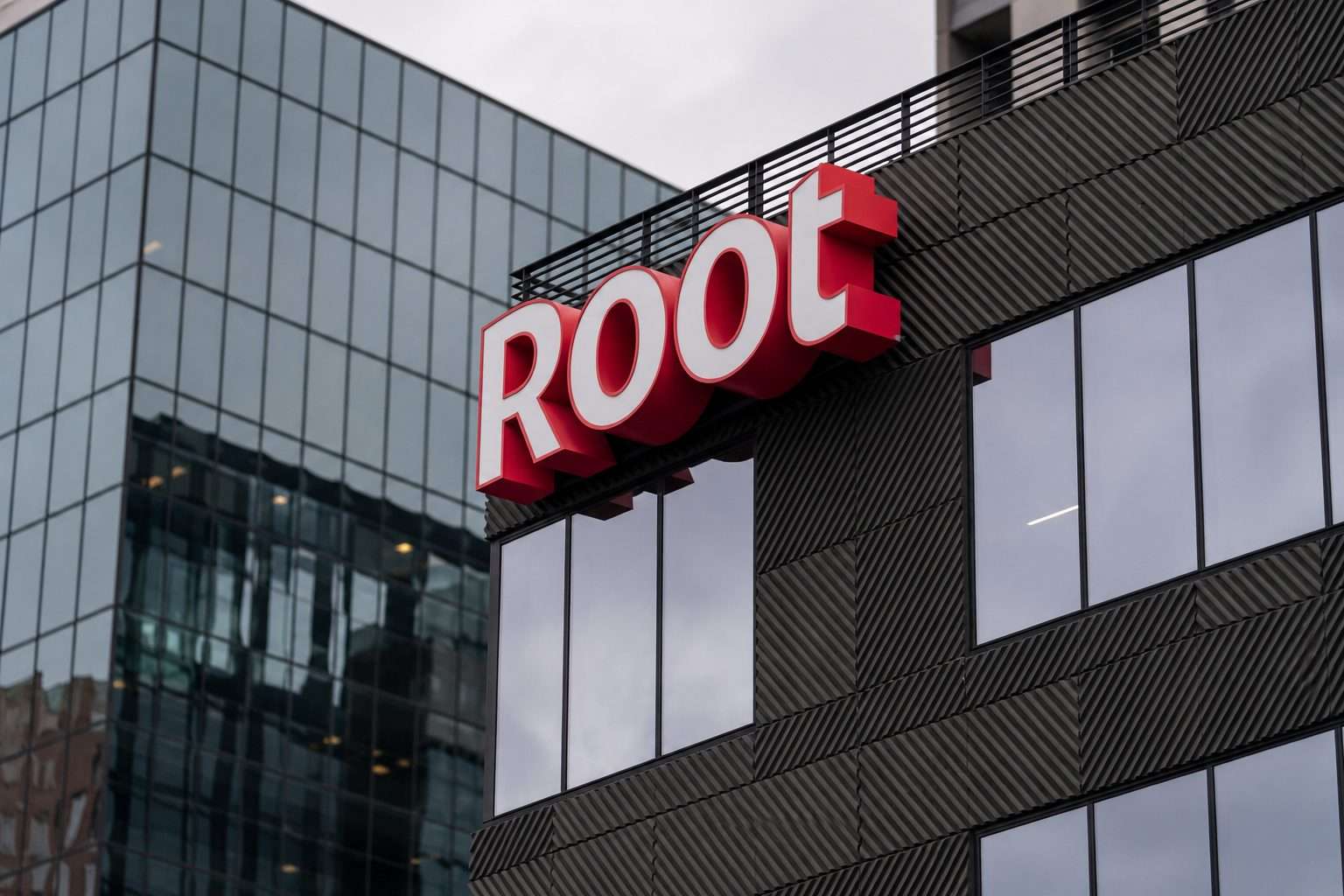

New York, June 5, 2026, 11:06 (EDT)
Root, Inc. shares rose 1.4% to $53.38 in late-morning trading Friday, holding up against a weaker U.S. tape after the car insurer announced a new distribution deal with Hugo. The Nasdaq-listed stock opened at $52.64 and traded between $52.51 and $53.90.
The move matters now because Root’s story has become less about whether it can sell auto policies online, and more about whether it can do so cheaply and profitably through partners. Root said Hugo customers looking for full coverage would be routed to Root’s instant, personalized offering through Hugo’s digital experience; Hugo operates in 16 states. Liability insurance covers damage or injury a driver causes to others, while full coverage generally adds protection for the driver’s own vehicle. Jason Shapiro, Root’s senior vice president of business development, said the deal meets customers “where they are,” while Seth Rediger, Hugo’s head of distribution, described the target market as “underserved by traditional insurance” and able to “pay at their own pace.” Root, Inc.
This is an embedded-insurance bet. Embedded insurance means selling coverage inside another company’s app, website or purchase flow, just when a customer is already shopping. Root’s recent investor presentation shows why the company cares about that route: it lists Carvana, Experian, Goosehead Insurance and First Connect among its partnership channels, and says Root’s technology lets partners quote and bind policies inside existing platforms.
Root came into the news with a stronger earnings backdrop than it had a few years ago. Its first-quarter filing showed net income of $35.9 million, up from $18.4 million a year earlier, and policies in force of 495,429, up from 453,800. Its net combined ratio improved to 91.4% from 95.6%; in plain terms, that ratio measures claims and expenses as a share of premiums, and a level below 100% points to underwriting profit.
That makes the Hugo deal more than a small channel announcement. If it brings in drivers at a low acquisition cost and Root prices them well, it can support growth without heavy ad spending. If the customers prove riskier than expected, the benefit could fade quickly.
The competitive backdrop is still harsh. Progressive and State Farm together accounted for 37.2% of U.S. private auto premium volume in 2025, according to S&P Global Market Intelligence estimates, a reminder that Root remains a much smaller player in a market dominated by incumbents with far larger data pools, ad budgets and agency networks.
Root’s gain also came on a day when the broader market was under pressure. Reuters reported that the S&P 500 and Nasdaq fell after stronger-than-expected U.S. jobs data stirred concern about a more hawkish Federal Reserve. Mark Malek, chief investment officer at Siebert Financial, told Reuters the labor market was not “completely crumbling,” but said it was healthy for the market to “slow down.” Reuters
But the downside case is clear enough. Root’s own risk language points to the need to underwrite accurately, keep capital and reinsurance in place, compete with larger carriers, and manage laws around artificial intelligence and telematics — driving data gathered from phones or connected cars. A change in claim severity, regulation or partner performance could turn a promising channel into a drag on margins.
For now, investors treated the Hugo announcement as incremental, not transformational. The next harder proof will come in policies in force, new writings and loss trends — the places where a partnership either shows up, or it doesn’t.