
New York, May 26, 2026, 09:07 EDT
- Rush Enterprises Class A shares ended at $68.89 on May 22, off roughly 0.6% for the day. The U.S. market will be closed for Memorial Day on May 25.
- Rush Enterprises (Nasdaq-listed) posted Q1 revenue of $1.68 billion and diluted EPS at 77 cents. The company set a quarterly dividend of 19 cents a share, payable June 10.
- MarketBeat data showed analysts kept a “Hold” consensus on RUSHA, with the average 12-month price target at $83.67 as of a page refresh Tuesday morning. MarketBeat
Rush Enterprises Inc. shares were on track to trade again after the long U.S. holiday, as investors kept asking if the commercial-truck slowdown has found a floor or if Friday’s weak finish means nerves remain.
Rush Enterprises, Inc.’s Class A shares closed at $68.89 on May 22, slipping from $69.31 the day before and near the May 18 finish of $68.73. Friday volume hit 297,816 shares, trailing the previous two days seen on the company’s LSEG stock table.
The regular Nasdaq session was still closed at the dateline. Nasdaq says May 25 is a market holiday for Memorial Day, and usual trading runs from 9:30 a.m. to 4:00 p.m. Eastern.
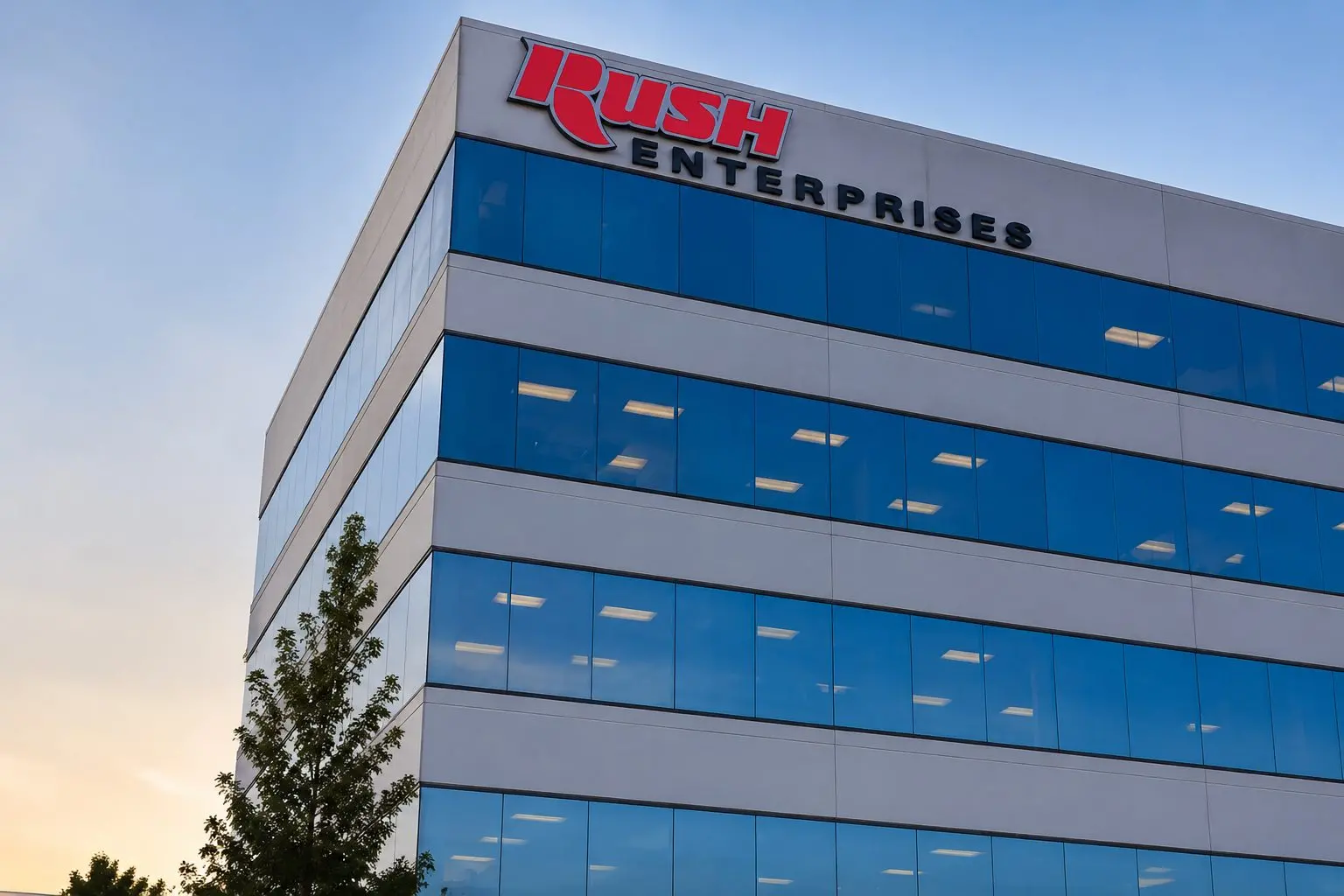
Rush, out of New Braunfels, Texas, isn’t a momentum play. The stock tends to track fleets, freight rates, and replacement cycles. The company operates what it says is the biggest network of commercial-vehicle dealerships in North America. Rush sells new and used trucks, and also offers parts, service, collision repair, finance, insurance, leasing, and rentals.
Rush Enterprises, Inc. posted mixed first-quarter numbers. Revenue dropped 9.2% to $1.68 billion from $1.85 billion last year, but net income inched up to $61.5 million. Diluted EPS rose, landing at 77 cents from 73 cents a year ago. The board set a 19-cent dividend for both Class A and Class B shares.
W.M. “Rusty” Rush, who chairs Rush Enterprises and serves as CEO and president, said the first quarter looks like “the trough of this current downcycle” with “early indicators of gradual improvement.” On the earnings call, Rush noted “freight rates improved a bit” and said customer sentiment is “a little more optimistic.” Rush Enterprises, Inc.
Truck sales are still lagging. Rush said U.S. Class 8 retail sales dropped 21% in the first quarter from the same period last year. Class 8 covers the biggest commercial trucks like tractor-trailers. Rush moved 2,964 new Class 8 trucks in the U.S. and claimed a 7.2% market share. Medium-duty Class 4-7 sales declined across the board, too.
Parts and service drove results for Rush. Aftermarket brought in about 66.1% of gross profit in the quarter. Revenue from that side rose 1.3% to $627.2 million. The company posted an absorption ratio of 126.9%. That shows parts, service and collision-center gross profit covered all dealership overhead before any profit from selling new or used trucks.
Competitive comps are messy here. Penske Automotive Group is probably the best public match with real commercial-truck business, calling itself a top seller of commercial trucks in North America. Most other listed dealers lean much more on consumer car sales. So Rush’s results move more with trucking demand and spending by fleets than with the broader auto retail trade.
Analyst calls on RUSHA are mixed. MarketBeat tallied five analysts: three rate it buy, one is at hold, one at sell. That works out to a consensus “Hold” on the stock. Names in the latest batch include Brady Lierz from Stephens, Avinatan Jaroslawicz at UBS, and Scott Group at Wolfe Research. Price targets run from $78 up to $88. MarketBeat
Rush Enterprises may need more time for a recovery than management hopes. A lot could go wrong—freight rates could stop rising, fuel could get more expensive, emissions rules remain up in the air, or fleets keep pushing off maintenance. In that case, Rush’s extra aftermarket business might not be enough to cover light truck sales. Management’s caution language lists economic shifts, trade policy, fuel prices, emissions rules, and market weakness as risks.
$68-$69 is the main level to watch Tuesday, with volume as an early tell. Buyers used that spot as support during last week’s narrow trade. Next date on the corporate calendar is June 10 for the dividend. The bigger question is if orders keep rising after what Rush called the bottom in Q1.