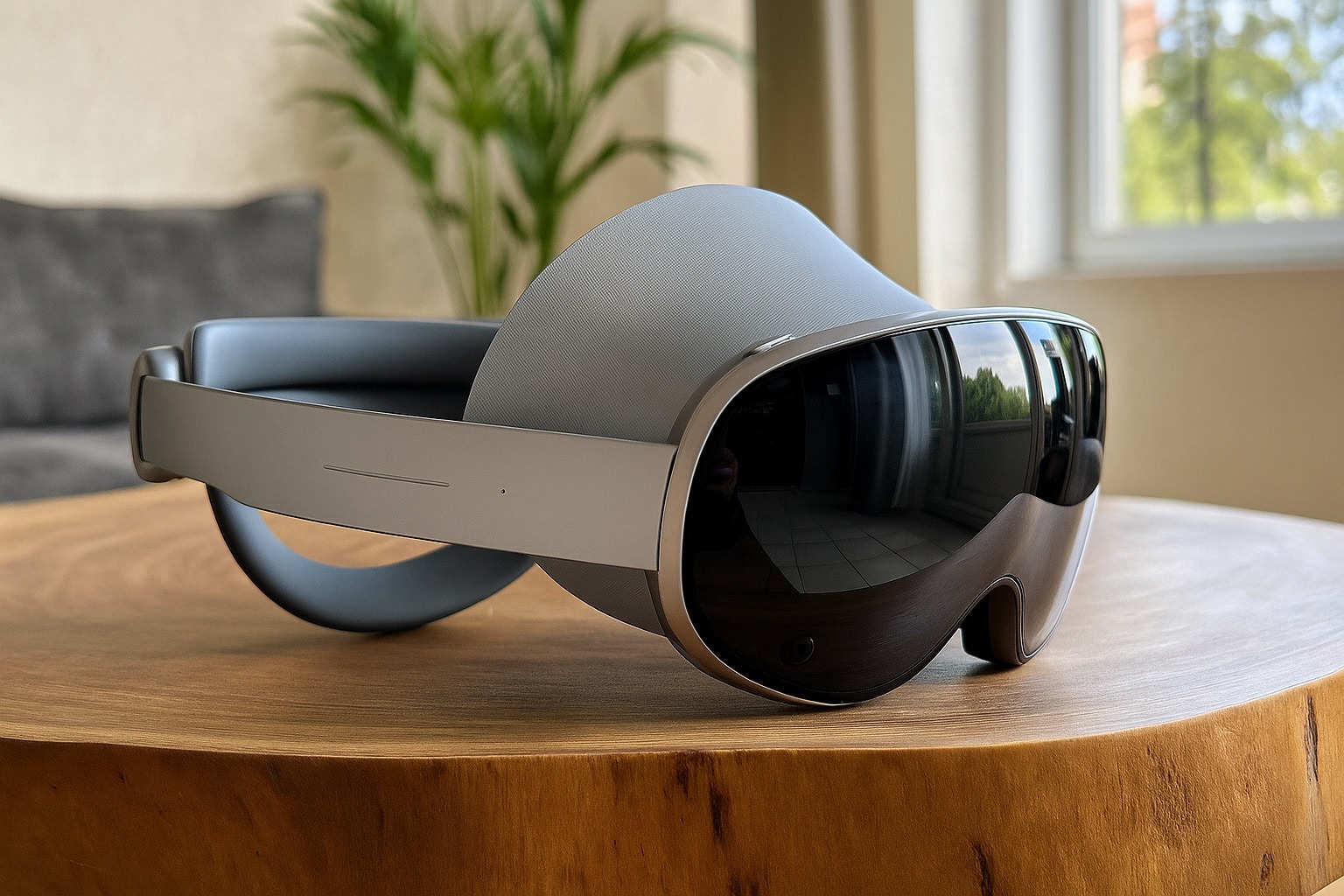
- Samsung Display has started mass‑producing OLEDoS (Micro‑OLED) panels for the Galaxy XR headset, joining Sony in the supply chain. 미래를 보는 창 – 전자신문
- The 1.3‑inch 4K‑per‑eye panels deliver 4,032 PPI and 95% DCI‑P3 coverage; 72 Hz is the base refresh rate. 미래를 보는 창 – 전자신문
- More suppliers should push prices down: Omdia projects continued OLEDoS cost declines through 2026—good news for XR affordability. 미래를 보는 창 – 전자신문
- Galaxy XR’s launch specs (Android XR + Snapdragon XR2+ Gen 2) remain unchanged; Samsung still lists 60/72/90 Hz support, with 72 Hz default. Samsung Global Newsroom
The news: Samsung’s display arm is in production
Samsung Display has begun mass production of OLEDoS (OLED‑on‑Silicon) micro‑OLED panels destined for Samsung’s Galaxy XR mixed‑reality headset. The move, first reported by Korea’s ETNews on November 9 and picked up by multiple outlets today, expands supply beyond Sony—the sole source for the initial Galaxy XR batches. 미래를 보는 창 – 전자신문
Today’s coverage includes Gizchina (published 01:48 on Nov 11) and Sammy Fans (published five hours prior to this article), both attributing the shift to the ETNews report and confirming Samsung Display’s entry alongside Sony. Gizchina
Why it matters
More suppliers = more volume and, eventually, better prices. Industry trackers cited by ETNews expect OLEDoS panel pricing to keep falling (e.g., sub‑inch OLEDoS moving from $25 to ~$17 by 2026), a trend that could make premium XR devices more accessible. Samsung Display, already the world’s top OLED maker, also aims to broaden its OLEDoS customer roster—Apple is explicitly mentioned as a target. 미래를 보는 창 – 전자신문
What Samsung is building (and what ships today)
According to ETNews, the Galaxy XR’s OLEDoS modules are 1.3 inches with 3,552 × 3,840 pixels per eye, delivering ~4,032 PPI and 95% DCI‑P3 color. The base refresh rate is 72 Hz. Those figures match Samsung’s publicly listed Galaxy XR display specs (Samsung also cites 60/72/90 Hz support, with 72 Hz default). 미래를 보는 창 – 전자신문
Display cheat sheet (per eye)
- Size: 1.3 inches
- Resolution: 3,552 × 3,840 (4K class)
- Pixel density: ~4,032 PPI
- Color: 95% DCI‑P3
- Refresh: 72 Hz base (up to 90 Hz supported) 미래를 보는 창 – 전자신문
Samsung Display has been investing in next‑gen OLEDoS as well, including RGB OLEDoS prototypes (no color filter) and very high‑brightness demos (reportedly up to 20,000 nits), plus its 2023 acquisition of eMagin to accelerate RGB‑on‑silicon development. While these are not yet commercial in Galaxy XR, they signal a fast‑moving roadmap. 미래를 보는 창 – 전자신문
Supply chain context: Sony remains in, Samsung joins
The first Galaxy XR production run used Sony OLEDoS exclusively; with today’s development, Samsung Display joins the supply chain after passing reliability tests and receiving delivery approval, according to industry sources. This is Samsung Display’s first OLEDoS mass‑production run. SamMobile
The competitive field is widening: Sony supplies Apple’s Vision Pro; China’s Sitan and BOE/BMOT are linked to DJI and Meta (from 2026). With Samsung Display now onboard, OLEDoS competition and capacity are set to increase. 미래를 보는 창 – 전자신문
What this could change for buyers
- Availability: Reports last week pointed to international expansion in 2026 beyond the initial US and Korea launch, including the UK, Germany, France, and Canada. More panel capacity should help. Digital Trends
- Pricing pressure: As OLEDoS costs fall and yields improve, XR headset ASPs should trend down, opening the door to more mainstream adoption. 미래를 보는 창 – 전자신문
- Image quality headroom: The current panels already deliver 4K per eye at extremely high PPI; Samsung’s RGB OLEDoS R&D hints at further gains in color efficiency and brightness over time. 미래를 보는 창 – 전자신문
State of play: Galaxy XR fundamentals
Samsung’s Galaxy XR launched in October with Android XR (co‑developed by Google and Qualcomm) and the Snapdragon XR2+ Gen 2 platform. Samsung lists 72 Hz as default refresh, with up to 90 Hz supported, and a 109° × 100° field of view. Pricing at launch was $1,799.99 in the US. Samsung Global Newsroom
Timeline of today’s coverage (Nov 11, 2025)
- 01:48 – Gizchina: “Samsung Display Begins Manufacturing micro‑OLED displays for Galaxy XR,” summarizing the ETNews scoop and reiterating panel specs. Gizchina
- ~5 hours ago – Sammy Fans: Confirms Samsung Display’s mass production and joint supply with Sony, citing ETNews. Sammy Fans
(Additional detailed write‑ups appeared yesterday from SamMobile and SammyGuru as the story broke globally.) SamMobile
The bottom line
Samsung Display entering mass production for Galaxy XR’s OLEDoS screens is a pivotal supply‑chain milestone. It should boost production capacity, apply downward pressure on XR component pricing, and accelerate Samsung’s 2026 international rollout plans—all while keeping image quality at the bleeding edge with 4K‑per‑eye, ultra‑dense micro‑OLED. 미래를 보는 창 – 전자신문
Sources
- ETNews (Korea): Samsung Display begins OLEDoS mass production for Galaxy XR; specs, pricing outlook, and roadmap. 미래를 보는 창 – 전자신문
- Gizchina: Same‑day confirmation and summary of ETNews report. Gizchina
- Sammy Fans: Same‑day confirmation with key spec recap and supplier notes. Sammy Fans
- SamMobile: Earlier report on Samsung Display joining Sony in Galaxy XR supply. SamMobile
- SammyGuru: Earlier analysis with spec details and market context. SammyGuru
- Samsung Newsroom / Samsung Mobile Press: Official Galaxy XR spec sheet and platform details. Samsung Global Newsroom
- DigitalTrends / Gadgets360: Reporting on 2026 expansion to more countries. Digital Trends