
Mumbai, May 12, 2026, 15:38 IST
- Selling swept through Indian stocks, sending the Sensex down 1,456 points and pulling the Nifty below 23,400 by the close.
- Crude oil moved higher on concerns the U.S.-Iran ceasefire might unravel, pushing the rupee to a fresh record low.
- Losses were heaviest in IT, realty, and consumer durables. Oil-linked shares, on the other hand, outpaced the rest in a divided session.
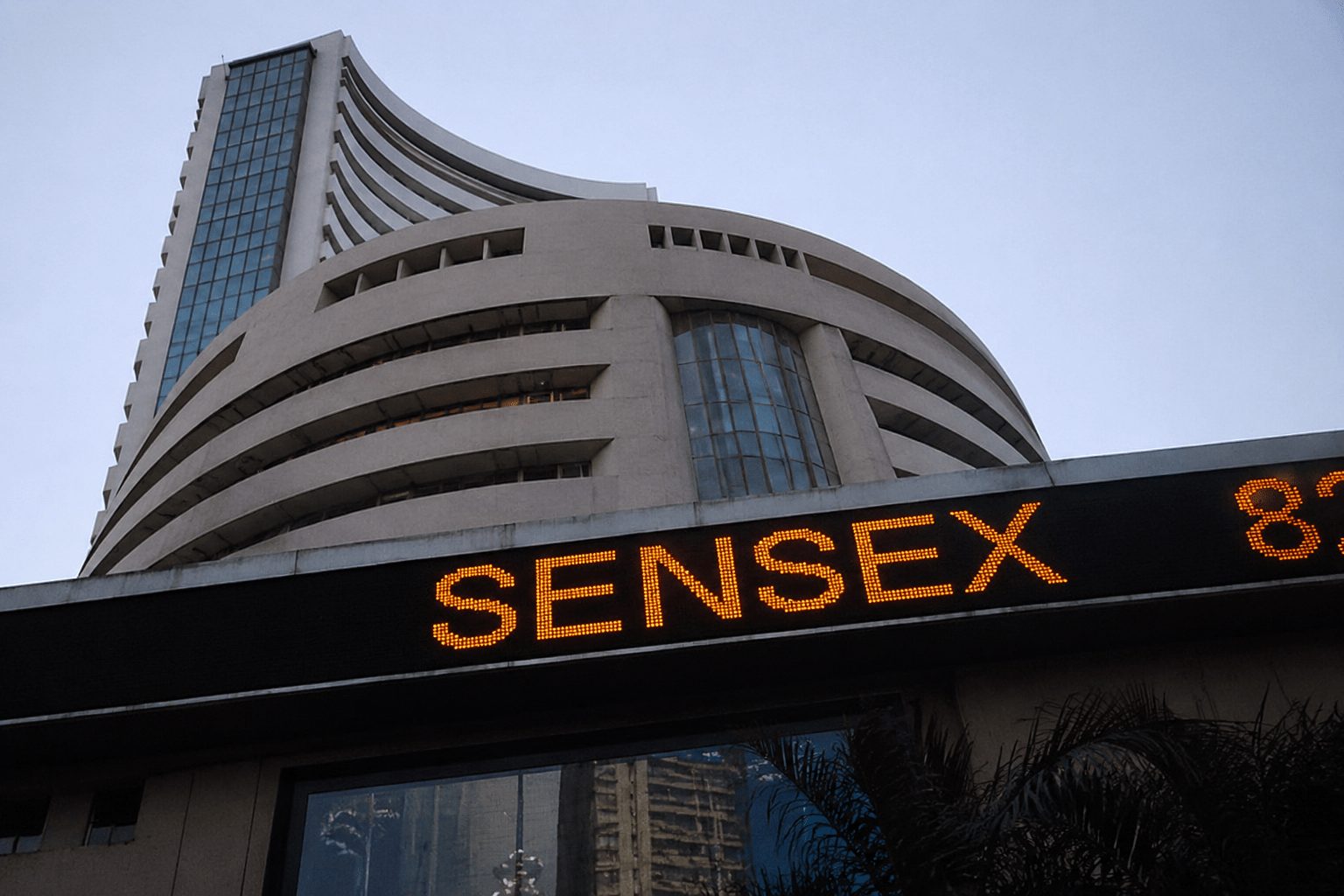
Indian equities tumbled on Tuesday. The BSE Sensex dropped 1,456.04 points, or 1.92%, ending at 74,559.24, while the NSE Nifty 50 slid 436.30 points, or 1.83%, to close at 23,379.55. Pressure came from climbing crude prices, the rupee touching a record low, and a wave of foreign selling that sapped risk appetite. According to NSE data, the Nifty’s indicative close was 23,379.55 at 15:30 IST.
The selloff is significant because it links up three big stress points: oil, the rupee, and capital flows. Brent crude hovered near $107.23 a barrel late in Indian trading, according to Business Standard, with investors bracing for a prolonged disruption through the Strait of Hormuz, a crucial energy corridor.
The rupee dropped to a record 95.6250 per dollar after starting the day at 95.50, Reuters said, putting its losses since the Iran war kicked off at 5.2%. India’s central bank intervened to steady the currency, but with oil staying expensive, the strain on the rupee lingered.
Market value took a sharp blow. According to The Economic Times, BSE-listed firms lost around 10 lakh crore rupees in market capitalisation, dropping the total to about 458 lakh crore rupees. India VIX, the volatility index, jumped 4%, landing at 19.31.
Fresh pressure arrived out of West Asia. According to Reuters, U.S. President Donald Trump declared the ceasefire with Iran “on life support” after turning down Tehran’s counterproposal—remarks that rattled traders, as they worried about a drawn-out conflict and tighter oil supplies. Reuters
India, ranked as the third-biggest oil importer globally, faces pressure from higher crude—raising the threat of faster inflation, a softer rupee, and shrinking profits for companies. Investors kept an eye on April’s retail inflation numbers, seeking any signal that fuel prices were making their way into local costs.
Foreign institutional investors kept unloading Indian stocks, marking their fifth consecutive session of selling, according to NSE figures reported by The Times of India. On Monday, overseas funds offloaded shares worth 8,438 crore rupees.
Investor sentiment stayed cautious, Vikram Kasat, head of advisory at PL Capital, pointed out, citing ongoing foreign selling, a sliding rupee, and persistent global macro worries. Domestic liquidity, he noted, still provides some support. The next direction? That hinges on “crude oil trends, global risk sentiment and institutional participation,” Kasat said. The Economic Times
The selloff cut across the board. According to Business Standard, every sectoral index finished lower, with IT and realty taking some of the heaviest losses; consumer durables faltered too. Nifty MidCap fell 2.54%, Nifty SmallCap slid 3.17%.
TCS, Infosys, HCLTech and Wipro all slid between 2.5% and 4%, according to Reuters, dragging the Nifty IT index down 3.3% with U.S. inflation numbers looming. ONGC and Oil India bucked the trend, up 6% and 6.6% respectively, after CLSA described the government’s royalty reductions for crude oil and gas as a meaningful boost for both firms.
Before markets wrapped up, Vatsal Bhuva, technical analyst at LKP Securities, noted resistance for Nifty just under 23,800, sticking to a “sell on rise” stance. The index ended below the support zone he’d mentioned earlier, which left the short-term chart looking even softer for traders. The Economic Times
Investors face the risk that selling won’t be limited to just one day. Any further breakdown in the U.S.-Iran ceasefire, another spike in crude prices, or persistent foreign outflows could keep the rupee and local equities under strain. On the flip side, softer inflation numbers or convincing policy backing for the currency might ease the slide. ANZ has revised its rupee target for December down to 97.5. BMI, part of Fitch Ratings, has flagged a potential fall to 100 if the Iran conflict escalates, according to Reuters.