
New York, June 2, 2026, 17:03 (EDT)
- Sify Technologies’ ADRs on Nasdaq ended at $17.24, up 2 cents. The stock traded from $16.81 to $17.61 over the session.
- The Nasdaq Composite eked out a gain, finishing up 0.03% at 27,093.90. AI-infrastructure names gave support as the rest of the market lagged.
- Sify reported revenue up 13% for the year and EBITDA up by 31%, but the company posted a bigger net loss for the full year.
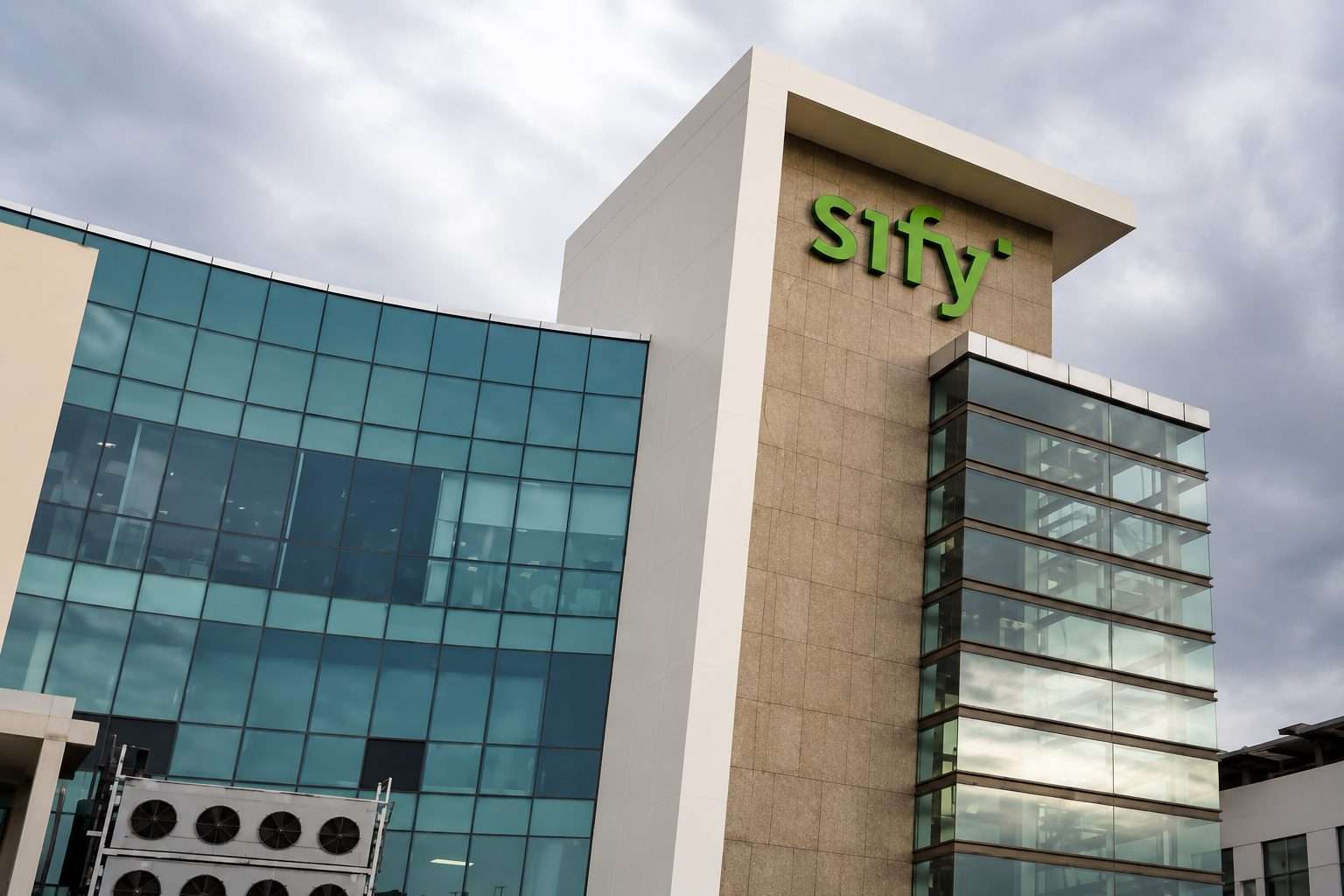
Sify Technologies Limited’s American depositary receipts trading in the U.S. ended Tuesday mostly unchanged. The stock stalled after choppy moves, as investors considered the Indian digital infrastructure group’s ongoing data-center expansion against bigger losses and rising debt.
Sify ADRs were last at $17.24, up 0.12%, trading 82,064 shares, market data showed. An ADR, or American depositary receipt, is a certificate traded in the U.S. that stands for shares of a foreign company.
Sify is getting new attention, with investors seeing it less as just another connectivity stock and more as an India data-center and cloud-infrastructure bet. That’s put the shares into the wider AI trade, even without any new earnings out from the company.
Nasdaq Composite ended Tuesday up 7.09 points, or 0.03%. The index, weighted by market value, saw larger names move the needle. U.S. stocks held gains as AI demand stayed strong, according to Reuters. “Massive dispersion” is playing out across the AI infrastructure ecosystem, said Mike Dickson at Horizon Investments. Reuters
Peer action was mixed. Equinix gained 2.0% and Digital Realty added 1.2%. Infosys’ U.S. ADR, while a closer India tech comp but not a data-center player, dropped 2.6%. Sify’s business is structured differently, combining networks, data centers, and digital services.
Sify’s April figures left bulls and bears both plenty to debate. For the year ended March 2026, revenue moved up 13% to 44.88 billion rupees, and EBITDA climbed 31% to 9.87 billion rupees. Post-tax loss got wider at 1.37 billion rupees. Capital spending hit 13.28 billion rupees.
Sify’s data-center business remains the big draw for investors. The company said data-center services made up 39% of annual revenue, matching the share from network services, and data-center revenue climbed 23%. For the year, the unit sold 17 megawatts of capacity and booked contracts for another 81 megawatts that are set for delivery in fiscal 2026-27. One megawatt is the standard power-capacity metric for sizing up server load at data centers.
Management is calling the spending a long-term play. Chairman Raju Vegesna said in April that “India’s digital journey continues to accelerate.” Group CFO M.P. Vijay Kumar said Sify remains focused on “cost competitiveness, cash flow optimization, and fiscal discipline.” GlobeNewswire
Sify Infinit Spaces, which is Sify’s data-center arm, is also in focus. Reuters said in December the unit filed draft documents for a 37 billion rupee IPO. In April, Sify said it had gotten the final SEBI observations on the DRHP, or draft red herring prospectus, which is needed for Indian IPO filings.
Sify Infinit CEO Sharad Agarwal told Reuters the company plans to keep expansion “responsible and calculated.” That wording matters for investors right now. AI demand might fill up capacity quickly, but if operators move too fast and overbuild floor space and power, returns can get hit.
Still, risk isn’t small here. Sify’s net debt climbed to 33.53 billion rupees from 28.71 billion, and finance costs also went up, company data show. If data-center demand slips, the IPO gets pushed back, or interest rates stay high, investors may care less about capacity figures and more about how fast those projects turn into cash.
Sify shares were quiet Tuesday. The company still has to show it can turn its data-center deals into higher revenue, not just let debt and depreciation drive the story.