Cape Canaveral, Florida, Feb 13, 2026, 09:25 (EST)
- At 5:15 a.m., SpaceX’s Falcon 9 rocket launched, carrying four astronauts headed to the International Space Station.
- Crew Dragon “Freedom” is expected to dock Saturday afternoon, bringing the station’s crew count back to the typical seven.
- NASA’s aiming for about eight months on this mission, zeroing in on medical and tech research with an eye toward upcoming trips to the Moon and Mars.
Early Friday, SpaceX’s Falcon 9 lifted off from Florida, taking four astronauts—NASA’s Crew-12—on their way to the International Space Station for an eight-month stint focused on science. “Thank you team, that was quite a ride,” commander Jessica Meir said over the radio after the Crew Dragon capsule “Freedom” broke away in orbit. 1
This flight comes on the heels of an odd stretch for the station. NASA had to end the last crew rotation early due to a medical issue, which meant fewer crew members stuck around and a handful of tasks, like spacewalks, got bumped down the list. “But there are a lot of things that are just not practical and so that’s when you need to bring astronauts home from space,” deputy program manager Dina Contella said. Upgrades to space medicine help, she added, but have their limits. 2
The capsule’s autonomous docking is scheduled for around 3:15 p.m. Saturday, NASA said, bringing the orbiting lab back to its usual crew of seven after Crew-11 left on Jan. 14. NASA Administrator Jared Isaacman pointed to the launch as another example of the “professionalism, preparation, and teamwork required for human spaceflight,” and said the onboard research both “advances critical technologies for deep space exploration” and delivers benefits on Earth. 3
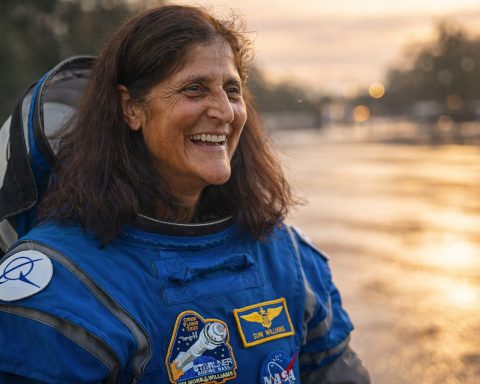
Meir, 48, a marine biologist returning for her second stint on the space station, is heading up Crew-12. Alongside her: Jack Hathaway, 43, a NASA pilot making his first trip into orbit.
Europe and Russia pick up the remaining two spots. France’s Sophie Adenot, 43, will represent the European Space Agency, while Roscosmos sends Andrey Fedyaev, the ex-military pilot heading back for his second trip to the ISS.
Freedom is slated to reach the station after about 34 hours, targeting an automated link-up at the Harmony module. Once docked, the crew will spend their days and nights roughly 250 miles (420 km) above Earth, working and living in microgravity—those almost weightless conditions that come from being in unending orbital free-fall.
NASA outlined a lineup that features research into pneumonia-causing bacteria, efforts to make intravenous fluids as needed, and automated monitoring of plant health. There’s also a batch of experiments focused on how plants interact with nitrogen-fixing microbes—a key area for food production during extended missions.
SpaceX will manage the capsule’s automated flight from its Hawthorne, California mission control, while NASA keeps watch over the station from Houston. Following launch, Falcon 9’s reusable first-stage booster made its return, touching down at Cape Canaveral—a now-standard move that’s key to SpaceX’s regular launch tempo.
A smooth launch isn’t a guarantee for the schedule ahead. Docking plans can end up changing if controllers note a spacecraft issue or if contingency splashdown options get narrowed by weather. NASA, for its part, has shared little on the medical issue that led to the earlier crew’s return.
Crew-12’s arrival means Meir and her team will be greeted by the trio holding down the fort: NASA’s Chris Williams, plus Roscosmos cosmonauts Sergey Kud‑Sverchkov and Sergei Mikaev, who’ve kept the station up and running during the interim.
The International Space Station runs under a partnership led by the U.S. and Russia, with Canada, Japan, and 11 European countries also onboard. NASA says it’s sticking with the station through 2030, marking over 25 years with humans living and working in orbit.
Crew-12 touches down just as NASA keeps pressing to maintain two American crew-transport lines. The agency, working with Boeing, has adjusted the Starliner contract, now eyeing an uncrewed Starliner-1 flight no sooner than April 2026, with propulsion system tests still underway. 4
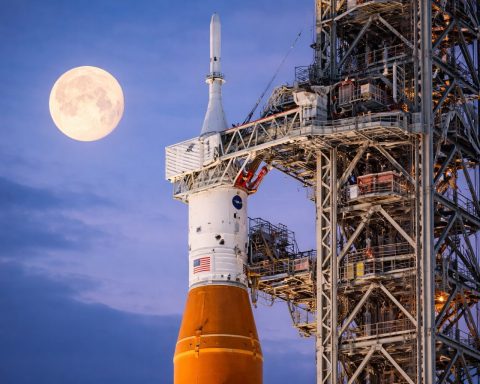
A lot of the crew’s tasks are tied to Artemis, NASA’s Moon-to-Mars effort. With Artemis II, a piloted lunar flyby, possibly heading up as soon as next month, station research into health and life support gets a sharper edge—it’s not just theory anymore.