
SYDNEY, June 17, 2026, 06:26 AEST
- Stockland last traded at A$4.26 on Tuesday, down 2.5%; the ASX cash market had not yet opened at the Sydney dateline.
- The company finalised a Morgan Stanley Real Estate Investing-backed convenience retail partnership initially valued at about A$250 million.
- The Reserve Bank of Australia held the cash rate at 4.35%, but left open the risk of another increase, a live issue for property stocks.
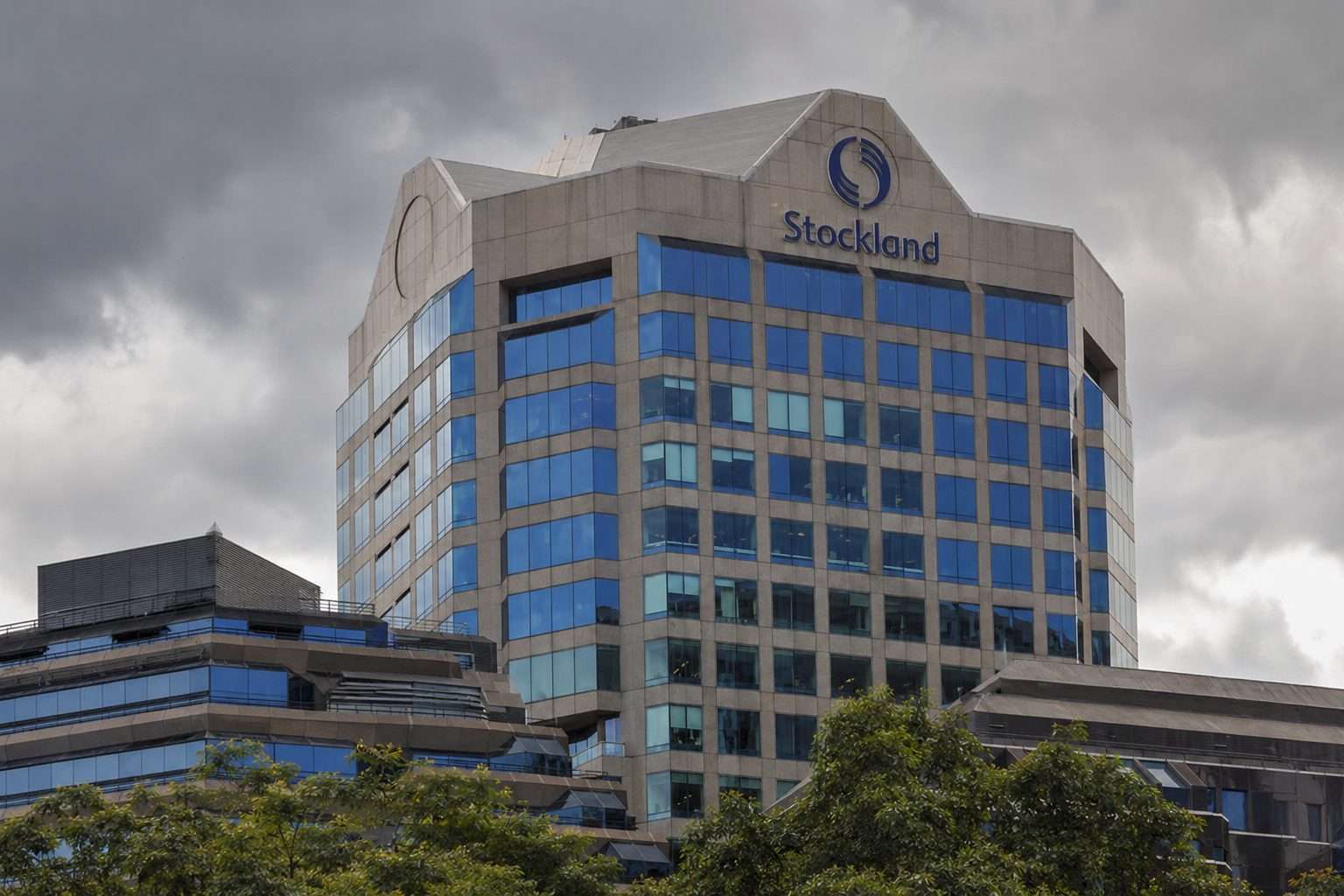
Stockland shares head into Wednesday’s session lower after a Tuesday pullback, as investors weighed a new Morgan Stanley-backed retail partnership against fresh caution from Australia’s central bank on inflation and rates.
The diversified property group last traded at A$4.26, down A$0.11, or 2.5%, according to market data. Normal trading on the ASX cash market starts just before 10 a.m. Sydney time and runs to 4 p.m., meaning the stock had not reopened at the dateline.
The move matters now because Stockland sits at the crossing point of two market themes: capital-hungry property development and high interest rates. Higher rates raise borrowing costs and can lower property valuations, while also making it harder for home buyers to settle land and housing purchases.
Stockland said on June 15 it had finalised the Stockland Convenience Retail Partnership with an investment vehicle managed by Morgan Stanley Real Estate Investing. The partnership will start with three newly developed town centres — Gables in New South Wales, Providence in Queensland and Sienna Wood in Western Australia — with a combined value of about A$250 million. The Morgan Stanley vehicle will hold a majority interest, while Stockland will keep a significant stake and continue managing the assets.
Justin Louis, Stockland’s chief investment officer, said the partnership brought together Stockland’s town-centre development capability with MSREI’s “global investment expertise” and backed a retail platform focused on “everyday convenience and essential services.”
That sort of capital-light structure — using outside investors to fund assets while the developer keeps management exposure — is important for Stockland because it can free up money for new projects without carrying the whole asset load on its balance sheet. It also gives the company more recurring exposure to neighbourhood retail, an area seen as steadier than discretionary shopping when household budgets are tight.
The rate backdrop is less friendly. The RBA held its cash rate, the benchmark overnight interest rate, at 4.35% on Tuesday, but said inflation remained too high and that it could raise rates again if required. The central bank also noted that housing prices had fallen in some capital cities and that consumer spending was slowing.
Stockland’s last operational update gave investors some offsetting support. The company maintained FY26 funds from operations guidance of 36.0 to 37.0 cents per security and distribution guidance of 25.2 cents per security. Funds from operations, or FFO, is a property-sector measure of recurring earnings. Stockland also reported masterplanned community sales up 43% from a year earlier and land lease community sales up 162%.
Retail is becoming a busier battleground. GPT Group’s wholesale shopping centre fund has agreed to buy 50% stakes in Sunshine Plaza and Macarthur Square in a A$1.2 billion deal with a Lendlease-managed fund, underlining broader institutional demand for Australian shopping-centre assets. Stockland’s deal is smaller, but it points in the same direction: investors are still prepared to back retail property when the assets are close to housing growth corridors and daily-needs spending.
The risk is that the macro side wins. If the RBA lifts rates again, Stockland could face more pressure on asset values, development margins and housing settlements. The company itself said its FY26 guidance remains subject to no material change in market conditions and that it is watching geopolitical and macro volatility, supply chains and consumer behaviour.
The next scheduled company test is Stockland’s FY26 results on Aug. 19. Investors will look for settlement numbers, the economics of the Morgan Stanley retail partnership, progress on data centres, and whether the 25.2-cent distribution guidance still holds.