
NEW YORK, May 31, 2026, 14:12 (EDT)
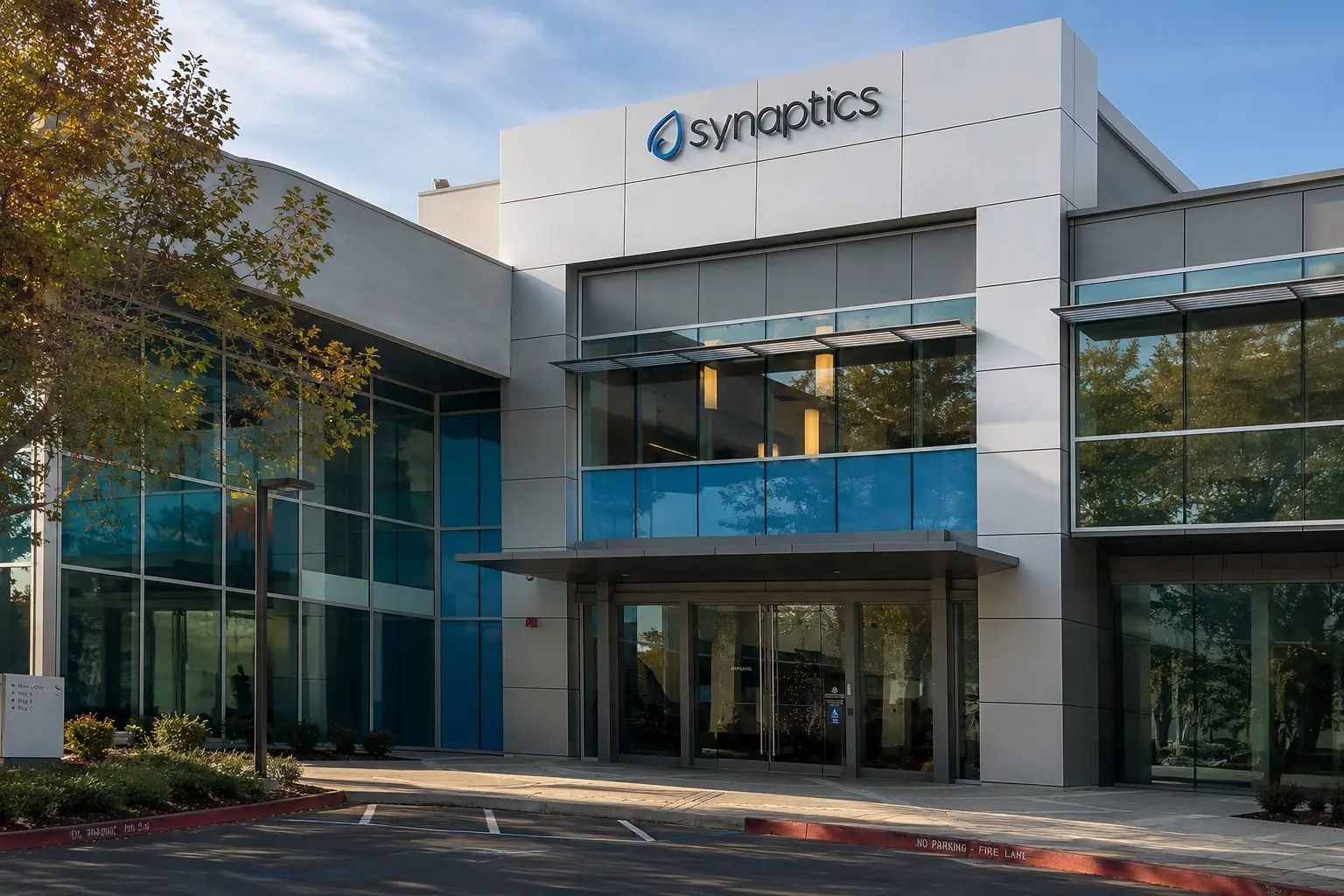
Synaptics Incorporated ended a holiday-shortened week under pressure, closing Friday at $137.28, down 4.2% on the day and about 4.5% from its May 22 close, while regular Nasdaq trading was set to resume Monday after the weekend. Nasdaq was closed for Memorial Day on May 25 and lists normal equity trading hours as 9:30 a.m. to 4 p.m. Eastern, Monday through Friday.
That was the stock story. The reason it matters now is larger: Synaptics has become a more visible edge-AI name, and investors are trying to decide how much of that promise is already in the price.
The broader tape gave the stock little excuse. Wall Street’s main indexes hit record closing highs Friday, Reuters reported, with the Nasdaq up 2.39% for the week as tech strength and AI demand kept pulling buyers into growth stocks. Ohsung Kwon, chief equity strategist at Wells Fargo, told Reuters there was “euphoric” AI sentiment, but said the rally was still “driven by earnings.” Reuters
Synaptics’ own earnings gave bulls something to work with earlier in May. The company reported fiscal third-quarter revenue of $294.2 million, up 10% from a year earlier, and said Core IoT product sales rose 31%. Non-GAAP earnings — company-adjusted profit figures that exclude items such as stock compensation and acquisition-related costs — were $1.09 a share. CEO Rahul Patel called it a “solid third quarter,” while CFO Ken Rizvi said backlog was “healthy.” Synaptics Incorporated
The company’s June-quarter outlook also stayed constructive. Synaptics forecast fourth-quarter revenue of $305 million, plus or minus $10 million, with non-GAAP earnings of $1.20 a share, plus or minus 15 cents. That forecast is why the stock’s pullback looked more like a test of valuation and timing than a clean break in the business case.
Next week brings a product-stage test. Synaptics is scheduled to show edge-AI compute, wireless connectivity and sensing systems at COMPUTEX Taipei from June 2 to June 5, including uses in smart home, industrial automation, physical AI and robotics. Edge AI means AI work done on or near a device, rather than sending every task to a remote cloud server.
Google Research added to that setup last week, saying it launched the first Coralboard from Synaptics at Google I/O and that the board would be generally available later this summer. Coralboard is aimed at developers building efficient edge applications; Google’s post said it includes camera and display support, microphone inputs and optional Wi-Fi and Bluetooth connectivity.
Executives around the project were careful, but not shy. Yossi Matias, vice president and head of Google Research, called Edge AI a “frontier for innovation.” Billy Rutledge, director at Google Research, said Coralboard made advanced AI at the edge “dramatically easier,” while Synaptics executive Vikram Gupta said AI was at a “tipping point” as it moved into everyday devices. Synaptics
Competitive trading was uneven, which matters for a stock now tied to both AI and connected-device demand. Qualcomm rose 3.2% Friday, Silicon Labs slipped 0.4%, and Ambarella fell 21.5%, a reminder that investors were not buying every edge or chip story at once.
The risk is that demos and design wins do not turn into revenue fast enough. Patel told analysts there “could be headwinds” in PC markets in the second half of 2026 and said Synaptics “may not be immune” if that pressure arrives. He also flagged uncertainty around memory supply for China smartphone makers, a possible drag on mobile touch products. The Motley Fool
The macro calendar could cut the other way too. Reuters said investors will watch the May nonfarm payrolls report due June 5, with Broadcom’s results also serving as a test for the AI trade. Liz Ann Sonders of the Schwab Center for Financial Research said a hot jobs number alongside rising inflation could shift expectations for Fed policy; higher Treasury yields, or returns on government bonds, can make expensive growth stocks harder to hold.
For Synaptics, the week ahead is simple but not small. The stock has run hard on edge-AI hopes, then gave back ground into the weekend. Now the market wants proof that the company’s AI hardware story can move from conference floors and developer boards into orders.