
Space Force gains new satellite to train for orbital warfare maneuvers
March 2, 2026, 11:50 PM EST. Space Force officials announced a new satellite deployed with the USSF-87 mission to expand orbital training ahead of orbital warfare doctrine. Launch from Cape Canaveral on Feb. 12 included two GSSAP satellites; a third, undisclosed unit, will let guardians practice maneuvering a spacecraft in orbit to position for offense or avoidance, according to Lt. Gen. Gregory Gagnon. Space Delta 9 will operate the asset, alongside the X-37B space plane already in orbit. The service has signaled a broader plan for an orbital opposing force to simulate space-based conflicts, and has hinted at protective measures for American satellites, though specifics remain vague.
Anthropic's Claude reports 'elevated errors' as it tops Apple's free apps after Pentagon clash
March 2, 2026, 11:46 PM EST. Anthropic's Claude reported elevated errors on Monday but remained the top free app on Apple's App Store. Claude Opus 4.6 showed degraded performance, with a fix in progress after an identified issue. Anthropic later said Claude was back up across claude.ai, its console and Claude code, noting strong demand. CNBC reported that Anthropic told the outlet the issues had been resolved and users should expect normal service. The disruption followed a clash with the Defense Department over use restrictions; Anthropic had a $200 million Pentagon contract in July and urged limits to avoid fully autonomous weapons and mass domestic surveillance. The Pentagon countered, seeking broad rights for lawful use, and Defense Secretary Pete Hegseth labeled the company a supply-chain risk to national security. OpenAI reportedly sealed a DoD deal hours after the tension.
US Supreme Court declines to hear AI-generated art copyright case
March 2, 2026, 11:44 PM EST. The US Supreme Court declined to hear Stephen Thaler's bid to copyright AI-generated art, leaving a lower-court ruling intact. The 2018 case centers on A Recent Entrance to Paradise, created by Thaler's AI system, not a human author. The Copyright Office rejected the application in 2022 for lack of human authorship; two lower courts followed suit, prompting the Supreme Court denial. Thaler's lawyers say the decision will harm the creative industry during critical years, even if the Court later overturns the Office's test in another case. Thaler also sought patents and trademarks for AI-generated inventions, rejected for similar reasons. A related case could arise later, but the high court's action ends this path for now.
Moltbook signals rise of the machine-to-machine internet
March 2, 2026, 11:40 PM EST. Moltbook, a platform created by Matt Schlicht of OpenClaw, enables AI Agents to interact with one another without human input. It embodies the growing machine-to-machine internet and has hosted more than a million AI agents since January 2026. Proponents say it could speed transactions, improve data exchange and reduce human bottlenecks, arguing that AI agents already search, negotiate and transact on users' behalf. Critics call it spooky – spaces built for other AI systems, and conversations about people conducted in invisible machine channels, could raise questions about control and oversight. Both views are valid. The bigger takeaway: the shift to an agent-driven economy is accelerating faster than many expected, catching small businesses off guard. Brands should ensure websites, policies, and reputation are machine-readable and ready for AI-native workflows.
Nvidia develops secret AI inference chip for GTC debut
March 2, 2026, 11:38 PM EST. Nvidia Corp. is reportedly developing a dedicated AI inference processor for OpenAI and other clients to run trained models more efficiently. Inference means executing trained models in production. The chip is expected to debut at GTC conference in San Jose later this month and will incorporate Groq technology Nvidia licensed for about $20 billion in December. OpenAI has had early access and could be among the first adopters, a win for Nvidia as rivals such as Google and AWS push their own inference chips. Nvidia's GPUs have faced scrutiny over energy use in inference tasks. Separately, OpenAI signed a multibillion-dollar deal with Cerebras for its large inference-focused chips, highlighting a broader shift toward dedicated silicon. If confirmed, the chip would mark a notable strategic pivot from a year ago.
US blacklists Anthropic, reportedly uses its AI in Iran operation
March 2, 2026, 11:36 PM EST. The United States blacklisted the AI company Anthropic a day before it conducted an operation against Iran, according to reports. It later emerged that officials reportedly used Anthropic's technology in the same military action, complicating sanctions policy and raising questions about what AI tools can be employed in warfare. Al Jazeera's Linh Nguyen outlines the dispute between the Pentagon and Anthropic over governance, safety review processes, and how to balance rapid military needs with export controls. The episode highlights tensions between sanctions and deployment of AI in combat, and it underscores broader debates about accountability, transparency, and the rules governing advanced systems in modern warfare.
Pebblebee Clip 5 vs AirTag: Is it a superior tracker?
March 2, 2026, 11:34 PM EST. After a month with the Pebblebee Clip 5, the author sees appeal but stops short of declaring it superior to the AirTag. Both trackers ride on the Apple Find My network, but only the AirTag offers true Precision Finding that guides you to the exact location. The Clip 5 adds a replaceable CR2032 battery (about a year), easy setup, and Android compatibility, but it lacks 2-way tracking, a built-in QR code scan, and ships without a case or clip. The AirTag, while sometimes discounted in bundles and lacking extra features, benefits from tighter iPhone integration and centimeter-level guidance. In short, the Clip 5 is a credible alternative, but not clearly superior-at least not yet, according to the author and colleague Rick Broida.
Samsung Galaxy S26 trio reviewed: S26, S26+ and S26 Ultra face off
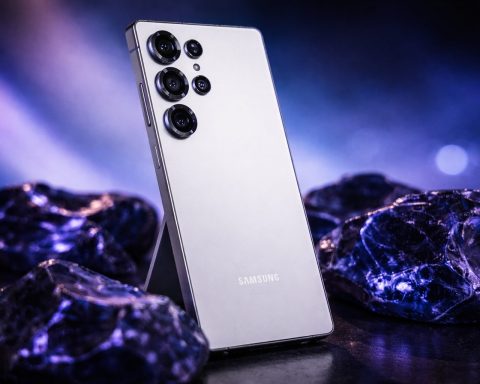
March 2, 2026, 11:32 PM EST. Samsung's Galaxy S26 lineup arrives with three models that share core features but target different users. The S26, S26+, and S26 Ultra differ mainly in display size, camera system, battery capacity, and price. The base S26 emphasizes compact handling and efficiency; the S26+ slots between for a larger screen and stronger multimedia performance; the S26 Ultra tops the line with the most advanced camera hardware and longest endurance. All three run the same software and chipset family, but storage tiers and launch prices vary, shaping value for different budgets. The verdict hinges on camera needs, screen size, and how much premium you're willing to pay for the Ultra's capabilities.
Samsung's One UI 8.5 beta trims Android recovery tools on Galaxy phones
March 2, 2026, 11:30 PM EST. Samsung's One UI 8.5 beta trims the Android recovery menu on Galaxy devices. The updated menu now shows only three options: Reboot system now, Wipe data/factory reset, and Power off. Options such as Apply update from ADB, Apply update from SD card, Wipe cache partition, View recovery logs, Run graphics test and Run locale test have reportedly vanished. The move, not officially announced by Samsung, could affect developers and power users who rely on manual recovery or sideloading updates. Reports from GalaxyClub and TechLeaksZone (via translated Dutch source) and coverage by 9to5Google suggest the change accompanies a February 2026 security patch and may roll out to all Galaxy devices. Samsung has not commented; observers link it to heightened security, drawing parallels with recent changes from OnePlus' ColorOS protections.
OpenAI's DoD deal triggers backlash as ChatGPT users migrate to Claude
March 2, 2026, 11:26 PM EST. OpenAI CEO Sam Altman announced a DoD deployment agreement for AI systems, aligning with restrictions Anthropic sought, drawing swift online backlash. Critics argued OpenAI was capitulating to a controversial administration, while Anthropic refused to allow unrestricted military use of Claude. Online chatter included a Reddit thread urging users to quit ChatGPT; within days Claude rose to the top of the App Store, briefly surpassing ChatGPT. The backlash spans tech enthusiasts and public figures, including a post quoting 'You're now training a war machine.' The article notes the timing amid broader geopolitical tensions, and counters that OpenAI says the deal parallels Anthropic's safeguards. Altman hosted an X AMA as the debate intensified.
Apple CarPlay adds video playback with iOS 26, but FaceTime video remains blocked
March 2, 2026, 11:24 PM EST. Apple's iOS 26 updates bring video playback to CarPlay when the car is parked, letting users watch apps such as Apple TV on the dashboard. FaceTime video remains blocked during driving; only audio is available for calls. Some users on Reddit reported brief FaceTime video before launch, but Apple maintains that CarPlay video and FaceTime are not universally supported. Apple cites safety concerns with driver distraction; NHTSA data shows 3,275 roadway fatalities in 2023 related to distracted driving. State laws also limit in-car video use. The company defers to automakers for final feature implementation in some car models. The future of CarPlay video will depend on safety rules and how manufacturers enable or restrict behavior.
Five custom Android ROMs that defined the early modding era
March 2, 2026, 11:20 PM EST. Once, Android users chased ROMs as a hobby. CyanogenMod was a leading option, replacing official updates on devices like the Galaxy Europa. It offered deep customization: change system font, icons, quick settings tiles, boot animations, status and navigation bars, and even overclocking. It stood for freedom with no bloatware. CyanogenMod faded about a decade ago, but its fork LineageOS continues as the largest active ROM project. Paranoid Android pushed multitasking forward with features like hover that let users interact with notifications without leaving apps. The era is remembered fondly by enthusiasts, even as modern Android remains mainstream. The nostalgia signals how modding helped expand user control and pushed OEMs to innovate.
UNICEF launches continent-wide procurement drive to expand internet connectivity in Africa
March 2, 2026, 11:18 PM EST. UNICEF announced a continent-wide procurement drive to deliver managed internet connectivity for 54 African countries, targeting up to 500,000 schools and other child-serving facilities. The first phase, a public Request for Expression of Interest (REoI), seeks providers able to deliver turnkey connectivity-terrestrial, wireless, satellite or hybrid-at scale. A competitive Request for Proposals (RFP) is planned for Q2 2026. By pooling government demand and standardising service levels, UNICEF aims to build a procurement vehicle capable of continental reach, with clearer demand signals for suppliers. UNICEF will act as procurement agent, working with the World Bank, Smart Africa and UNECA to align funding and support. UNICEF's vaccine procurement experience, worth about US$5.2 billion annually across 162 countries, underpins credibility. REoI open until 27 March 2026.
Jolla pitches European phone with Sailfish OS to challenge Big Tech
March 2, 2026, 11:16 PM EST. Jolla, the Finnish maker of Sailfish OS, is reviving hardware with a new Jolla Phone marketed as the European phone. Priced at 649 euros, it has more than 10,000 preorders since its December preview and ships by late June after a showing at Mobile World Congress 2026 in Barcelona. The device evokes the original Jolla Phone and is assembled in Salo, Finland. CEO Sami Pienimäki argues it advances sovereign tech and reduces reliance on US platforms-a theme sharpened by the company's Russia licensing pivot and a 2024 restructuring into Jollyboys Ltd. Sailfish OS is Linux-based, with no ties to Google or the Android ecosystem, and components come from Taiwan, Sony, SK Hynix, and others.
Southeast Neighbors For Quantum backs Illinois Quantum and Microelectronics Park
March 2, 2026, 11:14 PM EST. About 20 businesses and residents formed Southeast Neighbors For Quantum to back the 128-acre Illinois Quantum and Microelectronics Park, part of the broader Quantum Shore development that includes a 52-bed Advocate Health Care hospital. In a news conference, members said the coalition gives South Chicago and South Shore residents a voice, contrasting with protests from neighbors in Logan Square and Humboldt Park who they say do not represent the community. Jorge Perez, owner of Chico's Oven, called the project a "once in a lifetime opportunity" and warned against outsiders speaking for locals. Construction began in October 2025 at PsiQuantum's facility, with the quantum campus aiming to accelerate investment and jobs for the neighborhood.
Stripe aims to turn AI costs into profits with automatic token-markup feature
March 2, 2026, 11:08 PM EST. Stripe on Monday previewed a tool that passes through AI model costs and adds a markup on token usage, letting startups target a margin. The system tracks API prices from chosen models, records customer token usage, and applies the markup automatically. Stripe also rolled out an AI gateway that can route across multiple models and work with third-party gateways such as Vercel and OpenRouter. The feature is in waitlist mode; Stripe did not specify general availability. Analysts note some firms already use tiered pricing with overage fees, while others rely on fixed charges. If adopted, the approach could turn token costs into a profit lever for early-stage AI apps.
Tesla faces Europe slump in 2025 as Robotaxi stalls and China demand remains mixed
March 2, 2026, 11:06 PM EST. Tesla ended 2025 with a second straight year of lower deliveries, even after a slow roll-out of its Robotaxi program that now numbers only a few dozen vehicles on the road. Europe remained a weak spot amid political headwinds around CEO Elon Musk and a steep decline in registrations. From January to April, European sales fell nearly 40%, with further declines in June and a 44% first-half drop per ACEA; December UK registrations also slid, according to Reuters. By contrast, pockets of growth appeared: France up 55%, Spain up 74%, Norway up 32%, and Portugal up 112% year over year. Tesla's market share in the EU, Britain, and EFTA stood at 0.8% in January, versus roughly 1.8% in 2024 and 2.9% a year earlier. In China and other markets, demand remained mixed.
Deutsche Telekom unveils Magenta AI Call Assistant with ElevenLabs at MWC 2026
March 2, 2026, 11:04 PM EST. Deutsche Telekom and ElevenLabs unveiled Magenta AI Call Assistant at Mobile World Congress 2026 in Barcelona. The feature will be available in Germany only, requires no app, and is embedded in ordinary phone calls. Triggered by the wake word Hey Magenta, it can perform live language translation, pull calendar information to check availability, and use maps to locate nearby places during a call. DT officials say the assistant listens only to the question asked and must be reactivated for new queries. The service aims to be hardware- and software-agnostic, but privacy experts warn about AI in non-encrypted calls and data-collection risks. Some observers question the UX and actual usefulness of an always-listening assistant mid-conversation. Competitors offer translations on devices, yet Magenta seeks seamless call integration.
TCL to pair NXTPAPER with AMOLED for brighter, eye-friendly displays
March 2, 2026, 11:00 PM EST. TCL is upgrading its glare-free NXTPAPER screens with AMOLED, aiming to merge eye comfort with flagship visuals. NXTPAPER was designed as an in-between of e-ink and tablets, reducing eye strain. At CES 2026, TCL showcased Note A1 NXTPAPER and NXTPAPER 70 Pro. At MWC, it signaled a major leap: a redesigned architecture for an AMOLED NXTPAPER. The new panel targets brighter outdoor performance and richer colors-promising up to 3,200 nits brightness, 120Hz refresh, and full color gamut. It also reduces blue light to as low as 2.9%, about 15% less than current NXTPAPER. TCL expects to launch an AMOLED NXTPAPER smartphone before year-end. No device announced yet, but demos show a premium anti-glare feel.
Quantum Computing Inc. reports Q4 2025 results; Fab 1 opens, Luminar Semiconductor deal advances manufacturing plan
March 2, 2026, 10:56 PM EST. Quantum Computing Inc. reported Q4 2025 revenue of about $198,000, up from $62,000 a year earlier, driven by Fab 1 hardware sales and related services. Fourth-quarter operating expenses rose to $22.1 million from $8.9 million due to growth hiring and M&A costs. The company narrowed its net loss to $1.6 million, or $0.01 per basic share, from $51.2 million a year ago, aided by a $7.0 million non-cash derivative gain and $13.6 million in interest income. For the full year, assets climbed to $1.6 billion from $153.6 million, while cash and equivalents rose to $737.9 million. QCi completed Fab 1, expanded its foundry services, and agreed to acquire Luminar Semiconductor, accelerating scalable manufacturing in lasers, detectors and packaging to support growth.
Samsung Galaxy S26 series debuts with AI optimization; Ultra adds Privacy Display; prices rise, release March 11
March 2, 2026, 10:54 PM EST. Samsung unveiled the Galaxy S26 lineup at Galaxy Unpacked in San Francisco, touting AI-driven performance gains. The three phones share a common design, but the S26 Ultra adds a hardware-based Privacy Display that narrows visibility from the sides and can be toggled for the whole screen, apps, or specific notifications, even via routines. Preorders are underway, with official sales starting March 11; the S26 and S26+ rise to $900 and $1,100 respectively, while the Ultra stays at $1,300. Samsung also introduced the Buds4 and Buds4 Pro. The feature relies on two OLED pixel types and is designed to reduce over-the-shoulder peeking without major brightness loss. AI features are emphasized as a core optimization across the range.
SpaceX expands Starlink Mobile as it targets a $1.75 trillion IPO valuation
March 2, 2026, 10:52 PM EST. At the Mobile World Congress keynote, SpaceX president Gwynne Shotwell and Starlink engineering chief Michael Nicolls outlined Starlink Mobile, a direct-to-cell service branded Starlink Mobile that aims to deliver broadband-level cellular coverage. The company seeks to lift active monthly users from 10 million to 25 million by end-2026. The service targets high-speed internet and video calls on unmodified smartphones, with Nicolls saying it should feel like a high-performing 5G network. SpaceX stressed the service will not replace terrestrial networks; it cannot match data density but can augment coverage where land networks fall short, including remote areas and emergencies. T-Mobile remains the sole US carrier partner. Bloomberg reports IPO paperwork could come as soon as March, valuing SpaceX at up to $1.75 trillion; the merger valued the group at about $1.25 trillion, signaling Starlink as a growth driver beyond rockets.
Apple foldable iPhone leak claims ultra-thin crease and 7.8-inch display
March 2, 2026, 10:50 PM EST. Leak claims reveal ultra-thin crease on a 7.8-inch inner display for an anticipated foldable iPhone. A Weibo account named Fixed Focus Digital says Apple has sent production orders, suggesting the device is nearing mass production. Reported crease depth is under 0.15 mm with a crease angle under 2.5 degrees, implying a flat look when opened. The leak also says Apple may use a Samsung-developed panel not yet seen in other foldables. The design reportedly pairs a 7.8-inch main display with a 5.5-inch cover screen in a clamshell/book-style form. Thickness is pegged at about 4.5 mm open and 9-9.5 mm closed. Ming-Chi Kuo has floated a dual rear camera, front camera, and Touch ID in the power button, with a September reveal possible alongside iPhone 18 Pro models.
SpaceX's Starship could launch in March as revamped version nears liftoff
March 2, 2026, 10:48 PM EST. SpaceX could launch Starship in March from Starbase in Texas, but no official date has been set. The mega-rocket has not flown since October 2025, marking an unusually long gap between flight tests. Elon Musk suggested a March liftoff for flight 12, the 12th test and first of 2026, as SpaceX works on a revamped Starship designed for lunar missions and potentially Mars. The new iteration follows years of testing that began with the April 2023 maiden flight, which ended in failure, then a survivable (but destructive) second test in November 2023. Standing more than 400 feet tall when stacked, Starship remains the largest and most powerful launch vehicle in development. A launch date has not been announced as of March 2.
Gotion begins testing 1,000-km solid-state EV batteries in VW vehicles
March 2, 2026, 10:46 PM EST. Gotion High Tech has begun testing all-solid-state EV batteries with a CLTC range of 1,000 km in Volkswagen Group vehicles, the company said. The milestone comes after a 0.2 GWh pilot line completed last May as Gotion scales toward a 2 GWh production line built in-house with domestic equipment. VW invested about €1 billion in 2020 for a 26% stake, making Gotion High Tech the group's largest shareholder outside VW and a supplier for Audi. The GEMSTONE solid-state cells delivered roughly 350 Wh/kg energy density and 70 Ah per cell in tests, with 2025 improvements in conductivity, capacity and stacking pressure. IT Home has said the 2 GWh line design work is essentially finished. Mass production targets remain for the late 2020s to 2030, with testing in extreme weather from -40°C to 80°C.
Nothing Phone 4a colorways revealed at MWC 2026 ahead of London launch
March 2, 2026, 10:44 PM EST. Nothing previewed all four Phone 4a colorways at MWC 2026 ahead of its London launch in March. The lineup includes black, blue, pink and white, with blue described as deep and pink as pastel. The design keeps Nothing's transparent window and a pill-shaped camera bump near the top, plus a color-matched coil ring around the main sensor. The Glyph Bar, with six squares and a red recording light that remains visible even when off, remains a focal point, and the Glyph interface is said to be 40% lighter than the Phone 3a. White, blue and pink models use a silver rear camera housing; the black variant uses a black housing and black side buttons, while the Essential Key stays silver for visibility. Nothing plans a Built Different event in London on March 5.
Xiaomi's AirTag rival hits international markets with early release and cheaper 4-pack
March 2, 2026, 10:40 PM EST. Xiaomi launches its Bluetooth tracker, the Xiaomi Tag, in an early international release for Malaysia and Thailand. Single units are MYR 79 (~$20) and THB 599 (~$20), with launch discounts at MYR 59 (~$15) and THB 429 (~$14). Four-pack bundles are offered at MYR 299 (~$77) and THB 1,990 (~$64), discounted to MYR 199 (~$51) and THB 1,490 (~$48). The device is over 50% cheaper as a 4-pack than Apple's AirTag. Xiaomi Malaysia and Xiaomi Thailand confirm the availability ahead of a broader rollout, building on the company's prior Bluetooth tracker coverage.
How Strategic Sourcing Built Google's Repairable Pixel Watch 4
March 2, 2026, 10:38 PM EST. Google's Pixel Watch 4 shows how strategic sourcing can redefine product life cycles. Kate Brandt, Google's Chief Sustainability Officer, says the effort required seamless collaboration across industrial design, engineering, operations, sourcing and sustainability teams to move from disposable tech to lasting design. The watch uses a dual-gasket system to replace adhesive at service interfaces, maintaining 5 ATM and IP68 protection after repairs. To preserve clearance, the internal stack was miniaturised around a compact PCB with hot bar connectors. Haptics shift to a custom linear resonant actuator, 10% smaller by volume yet delivering 15% more strength at the same power. These sourcing moves support longer lifecycles through faster, cleaner and more consistent repairs.
Pokémon Pokopia reimagines the world as a sprawling life-sim adventure
March 2, 2026, 10:36 PM EST. In a new Pokémon spin-off, Nintendo invites players to rebuild and beautify a ruined world. Playing as an unusual Ditto who mimics a missing trainer, you meet a Tangrowth who acts like a quirky professor. The game blends life-sim mechanics (games centered on relationships and town-building) with light adventure, drawing on Animal Crossing, Minecraft, and Stardew Valley for pacing and systems. Rather than focusing on catching, you catalog and befriend Pokémon, restore towns, and customize your character's appearance. The world is built-out but initially ruined, offering a slow burn that evolves into a sprawling, player-driven journey. Pokopia emphasizes restoration, creative expression, and new Pokémon lore within a shared universe.
Apple's M4 iPad Air gains Pro-like power with internal revamp
March 2, 2026, 10:32 PM EST. Apple moves the iPad Air forward with the M4 chip, delivering up to 30% faster performance and 12GB of memory. Exterior design remains nearly unchanged from the prior model, even as Apple imports internal specs from the M5 iPad Pro, including Wi-Fi 7 and Apple's N1 wireless chip and C1X modem. Storage starts at 128GB, while RAM rises to 12GB with 120GB/s memory bandwidth, boosting multitasking on iPadOS 26. Apple bills the update as fantastic value for creators and workers, though the iPad Pro remains the better option for more storage. Acknowledged by Apple executive Bob Borchers, the M4 iPad Air aims to blend pro power at a lower price.
Arri brings cinema-grade image science to Honor smartphones
March 2, 2026, 10:28 PM EST. Arri has teamed with Honor to bring its cinema-grade Image Science to mobile devices, starting with the upcoming Honor Robot Phone. The partnership embeds Arri's core imaging principles into Honor's mobile imaging architecture, signaling a closer tie between cinema workflows and smartphone cameras. Executives say the move will empower the next generation of content creators and storytelling on mobile. The tie follows Arri's pivot toward consumer-oriented products, such as the Film Lab plugin that mimics popular film stocks for RGB footage, broadening access to Arri's processing. Honor frames the collaboration as extending Hollywood standards to smartphones, with AI-driven motion and 'cinematic imaging capabilities'. The announcement came at MWC 2026, noting a phone arriving later this year.
Apple's C1X 5G modem debuts on iPhone 17e and iPad Air M4 with faster speeds, privacy feature and battery gains
March 2, 2026, 10:26 PM EST. Apple unveils two devices, the iPhone 17e and the M4 iPad Air, both equipped with the C1X 5G modem. Apple says the C1X delivers up to 50% faster cellular data on the M4 iPad Air versus the M3 with Qualcomm, and up to twice the speed of the prior C1. Reuters noted that the processor can signal which traffic is time sensitive to the modem, helping responsiveness. A new privacy feature, Limit Precise Location, works only on devices with an Apple-designed modem, reducing location precision shared with cellular networks. In power terms, Apple claims up to 30% lower modem energy usage on the M4 iPad Air for active cellular users. The gains build on Apple's earlier modem-led improvements in iPhone lines.
Megillah app built by Shluchim in 10 days showcases AI-powered collaboration
March 2, 2026, 10:22 PM EST. Less than two weeks before Purim, nearly 700 Shluchim in the AI for Shluchim group helped build megillah.app in ten days. The project began with a link shared by Rabbi Mendy Elishevitz and quickly drew requests for translations in English, Russian, French and Spanish, a shorter default reading time, and an interactive grogger button. One idea: share code on GitHub to coordinate work. The core feature is live synchronized reading-one person controls the scroll for every screen so no one loses place. AI-generated illustrations from TorahApp.org accompany the text, while nine-language translations and reading-time estimates aid planning. Built by Shluchim, for Shluchim, the project shows AI-enabled, community-driven collaboration.
Smartwatch Battery Market to Reach USD 9.00 Billion by 2035 at 23.85% CAGR
March 2, 2026, 10:18 PM EST. Global smartwatch battery revenue is projected to hit USD 9.00 billion by 2035, up from USD 1.06 billion in 2025. The forecast, covering voltages of 3.7V and 4.2V (and others), and split by operating ecosystems, shows the market expanding as more wearables enter both iOS System Smartwatch and Android System Smartwatch segments. The report pegs the compound annual growth rate at 23.85% from 2026 to 2035. Figures are drawn from the latest market study updated on 03 Mar 2026 (Report Code 7967) in the Semiconductor and Electronic category. Analysts attribute demand to longer device lifespans, faster charging, and greater integration of health sensors, with manufacturers pursuing higher energy density while maintaining safety standards.
Motorola Edge 70 Fusion debuts with quad-curved 6.78-inch 144Hz display and Sony camera sensor
March 2, 2026, 10:16 PM EST. Motorola unveils the Edge 70 Fusion, a mid-range model built around a quad-curved 6.78-inch AMOLED display with a 144Hz refresh rate, Pantone-validated color accuracy and peak brightness. It uses a Sony Lytia 710 sensor for a 50MP main camera with OIS and f/1.8, plus a 13MP ultra-wide macro and a 32MP selfie camera with 4K recording. Power comes from Snapdragon 7s Gen 3 with Cortex-A720/A520 cores and an Adreno 810 GPU, delivering roughly a 15% performance boost over its predecessor. The device supports 68W wired charging, carries a 5,200mAh battery, and carries IP68/IP69 dust and water resistance plus MIL-STD-810H durability. Europe pricing starts at $430, with Pantone Orient Blue, Country Air and Sporting Green; US availability is not indicated.
Motorola launches Razr Fold at MWC as first book-style foldable with 16GB RAM and 1TB storage
March 2, 2026, 10:12 PM EST. Motorola unveiled the Razr Fold at MWC, its first book-style foldable. Powered by the Snapdragon 8 Gen 5, it pairs 16GB RAM with up to 1TB storage and a 6,000mAh silicon-carbon battery with 80W fast charging. The device features a 6.6-inch external 165Hz pOLED display and an 8.1-inch internal 120Hz LTPO panel, both with 10-bit color and HDR support. It weighs about 244g and is 4.6mm thick open, 9.9mm closed. The triple rear camera array centers on a 50MP main, 50MP ultrawide, and 50MP periscope telephoto with 8K video; a 32MP cover and 20MP internal selfie cameras complete the setup. It carries IP48/IP49 dust and water ratings and supports the Moto Pen Ultra. It ships with Android 16 and promises seven years of updates.
DJI Osmo Mobile 7P gimbal drops to $99, lowest price yet
March 2, 2026, 10:10 PM EST. The DJI Osmo Mobile 7P is now $99 at Amazon, down from $129.99 and the lowest price tracked. This foldable three-axis gimbal supports large phones such as the iPhone 16 Pro Max and Galaxy S25 Ultra. Setup is quick: unfold, clamp, and balance itself in seconds. A joystick, a rear trigger for portrait or landscape, a built-in extension rod, and a small tripod in the base round out basic use. The magnetic multifunction module enables gesture control and subject tracking in third-party apps beyond DJI's. In practice, the tracking makes solo filming feel less awkward by staying centered. Battery life runs up to 10 hours without tracking, ~4.5 hours with tracking, ~3 hours with a fill light; long shoots may need a power bank. For desk work, a tripod can suffice; for movement, the 7P shines.
NASA revamps Artemis 3; Starship could sit out as Blue Origin competition rises
March 2, 2026, 10:08 PM EST. NASA on Feb. 27 unveiled a revamped Artemis architecture that shifts Artemis 3 from a Moon landing to a low Earth orbit (LEO) demonstration. The plan targets a 2027 launch and keeps the mission in LEO, aiming to demonstrate rendezvous and docking between the Orion crew capsule and one or both commercial landers from SpaceX and Blue Origin, rather than a direct Starship lunar touchdown. The approach widens competition for a Moon landing and reduces reliance on a single contractor. Blue Origin has signaled intensified lunar work, while SpaceX's Starship has not yet reached Earth orbit after 11 test flights. The policy emphasizes tech demos in LEO before a crewed Moon landing.
Qualcomm unveils FastConnect 8800, bringing Wi-Fi 8 and Bluetooth 7 to mobile
March 2, 2026, 10:06 PM EST. Qualcomm unveiled the FastConnect 8800, the first mobile connectivity chip to fuse Wi-Fi 8 and Bluetooth 7 with UWB 802.15.4ab and Thread 1.5 in a 6nm design. The 4×4 radio setup doubles PHY throughput versus 2×2 rivals, with peak speeds up to 11.6 Gbps and up to three times the range. Real-world speeds will vary; the figures reflect maximum PHY rate. The chip adds ELR, XPAN, LE Audio and Snapdragon Sound features, including aptX Lossless/Adaptive/Voice. Qualcomm notes FastConnect 8800 and Dragonwing AI connectivity chips with Wi-Fi 8 should reach consumer products starting late 2026, potentially powering Snapdragon 8 Elite Gen 6 devices.
Motorola Razr Fold debuts at MWC with Snapdragon 8 Gen 5, 6000mAh battery and 1TB storage
March 2, 2026, 9:58 PM EST. Motorola has detailed the Razr Fold at MWC 2026, after the device was unveiled at CES. The foldable runs on Qualcomm's Snapdragon 8 Gen 5, with up to 1TB of storage and 16GB RAM for flagship performance. Motorola also touts a 6000mAh battery and a rapid-charge claim of 12 hours of use from 12 minutes of charging. The company markets on-device AI features branded as moto ai to handle camera and software tasks. Official pricing and release timing remain to be confirmed, but the device will face a foldable market that now demands power and battery life. The launch positions the Razr Fold as a high-end option, backed by strong specs.
Apple updates Pro and Air, leaving the base iPad behind
March 2, 2026, 9:56 PM EST. Apple has prioritized updates to the high end of the iPad lineup while the base iPad remains unchanged. The iPad Pro got the M5 last fall, delivering faster performance at a $999 starting price that rivals a MacBook Air. The new iPad Air brings an M4 chip and faster wireless, from $599, but trims pro features and lacks an OLED screen. By contrast, the regular iPad keeps using the A16 chip, the same one from the iPhone 14 Pro, which cannot run Apple Intelligence. Apple says a Google deal will integrate Gemini into Siri, potentially boosting AI on Apple devices, but the entry iPad may still be left out. Storage remains modest; the basic model feels pricier and less compelling as a family option. The author waits for a refreshed base model.
Apple to hold March 4 Apple Experience event with iPhone 17e, iPad Air (M4) and MacBook updates
March 2, 2026, 9:50 PM EST. Apple has scheduled a March 4 Apple Experience event in NYC, London and Shanghai. The company is expected to unveil hardware across the range in 2026, though details remain speculative. A cheaper MacBook allegedly uses an A18 Pro processor and 8GB RAM, targeting sub-$800 pricing; analysts note this would clash with Apple's RAM strategy and highlight AI memory demands. Tech outlets anticipate a MacBook Pro refresh with M5 Pro and M5 Max chips, featuring redesigned chiplets for better heat management and more CPU/GPU cores; shipments could follow later in the year. New iPads are also rumored, including updates to the base model and iPad Air, upgrading from A16 to A18 and possibly adding Apple Intelligence tools. Editor's Note: Apple has officially announced the iPhone 17e and iPad Air (M4) on March 2.
Nvidia fixes fan-control bug with GeForce 595.71 driver for RTX 30, 40, 50-series GPUs
March 2, 2026, 9:44 PM EST. Nvidia issued the GeForce 595.71 driver to fix a fan-control bug tied to the earlier 595.59 release that could prevent RTX 30-, 40-, and 50-series fans from spinning or being detected. The update comes after Nvidia advised users to roll back to 591.86 following a recall. The driver adds game-ready support for Marathon and includes DLSS Super Resolution and Nvidia Reflex. Nvidia notes stability fixes and other game-facing improvements. The company has previously recalled drivers and faced issues after Windows 11 updates, as well as March 2025 disruptions after the RTX 50-series launch that prompted rollbacks for older cards.
Huawei pushes 5G-A x AI to unlock agentic Internet at MWC Barcelona 2026
March 2, 2026, 9:42 PM EST. At MWC Barcelona 2026, Huawei Senior Vice President Li Peng outlined a plan to fuse 5G-A with AI to usher in an agentic Internet era. He said networks will not only connect people but hundreds of billions of agents, creating a market worth ten trillion dollars as carriers shift from merely moving traffic to delivering high-value AI services. Since 5G began, roughly 300 carriers have rolled out traffic-monetization packages; with 5G SA and 5G-A, more than 30 leaders have launched experience-based offers that promise deterministic performance via dynamic resource scheduling. The strategy also calls for convergence of connectivity and AI services across consumer, home and enterprise segments, enabling new features and potentially stronger brand loyalty. Li cited AI as a tool to augment traditional calling services, noting 5.4 billion calling users today.
iPhone 17E vs pricier iPhone 17 models: what you gain and what you give up
March 2, 2026, 9:40 PM EST. Apple's iPhone 17E debuts as the budget option, starting at $599 with preorders March 4 and store date March 11. It sits with the iPhone 17 ($799), Pro ($1,099), Pro Max ($1,199), and Air ($999). The 17E uses the A19 chip, ships with 256GB base storage, MagSafe and Qi2 charging, and a 6.1-inch, 60Hz display up to 1,200 nits. It features a 48-megapixel main sensor and a 12-megapixel front camera, but omits always-on display, Dynamic Island, and the Camera Control button. Charging tops at 15W wireless, vs 25W on higher models, and battery life is rated up to 26 hours of video. Some premium camera and design features remain exclusive to the higher-end iPhones.
Apple updates trade-in values for iPhone, iPad, Mac and Apple Watch
March 2, 2026, 9:38 PM EST. Apple updated trade-in values for select iPhone, iPad, Mac and Apple Watch models, available on its site or at Apple Stores. Some estimates rose, others fell. Highlights include iPhone 16 Pro Max up to $685 (from $670), iPhone 16 Plus up to $455 (from $450) and iPhone 16 up to $435 (from $420). Several older models declined, such as iPhone 14 Pro Max to $350 (from $370) and iPad Pro to $670 (from $685). Mac values shifted too: MacBook Pro up to $685 (from $710) and Mac Studio to $975 (from $1,030). Apple Watch values mostly fell, led by Apple Watch Ultra 2 at $295 (from $335) and Series 10 at $150 (from $160). Apple's program remains available online and in stores.
Freddy del Barrio's Companion AI builds connections to combat isolation
March 2, 2026, 9:36 PM EST. Loneliness is a public health challenge in modern America. Freddy del Barrio's Companion AI is a longitudinal platform that evolves with users, detects behavioral patterns, flags potential cognitive decline, and provides 24/7, intelligent engagement. It's more than a chatbot: it's mental health support that learns with you and adapts to shifts in routine, day or night. The founder's motivation comes from aging, veteran grandparents and a belief that many rely on trusted help. The WHO links loneliness to stroke, heart disease and premature death, underscoring the goal of social cohesion. Freddy frames the venture as durable and commercially viable, noting older Americans hold a large share of national wealth and seek reliable technology partners.
Apple's iPad Air goes M4, ships March 11
March 2, 2026, 9:34 PM EST. Apple updates its midrange iPad Air with an M4 chip, shipping March 11 after preorders open March 4. The price stays the same: $599 for the 11-inch and $799 for the 13-inch, still with 128GB of storage at that level. Inside, the cellular model gains Apple's C1X modem, while the N1 chip provides Wi-Fi 7, Bluetooth 6 and Threads support. If you want OLED and Pro performance, the iPad Pro still tops the field, but the Air's upgrade narrows the gap for most buyers. The entry-level iPad remains the cheaper option, though rumors of updates to that line did not materialize. Apple appears to push buyers toward a step-up, not toward turning iPads into full Macs.
SharePoint at 25: Knowledge backbone for AI in the workplace
March 2, 2026, 9:32 PM EST. Twenty-five years in, SharePoint scales to power AI workflows across Microsoft 365 Copilot. The platform grounds Copilot and Work IQ, enabling AI to understand work context and your company. Global firms like Takeda, Amey, Mars, Hertz embed SharePoint in their AI strategies, activating knowledge rather than letting it sit idle. The next chapter shifts from expert-built apps to intent-driven, AI-assisted solutions. Teams plan, build, and iterate end-to-end, from contract repositories to IT helpdesks, all within governed, secure Microsoft 365. Custom AI skills tailor AI to organizational standards, ensuring relevant, compliant guidance. Publishing knowledge remains central as AI amplifies expertise while preserving trusted controls and standards.
K-State, international partners develop AI-driven Smart Scout to aid soybean farmers
March 2, 2026, 9:24 PM EST. Kansas State University and researchers from Japan, India and Australia are building Smart Scout, an AI-driven computer-vision system to detect soybean yield, lodging and pest damage. The tool uses advanced cameras to flag Dectes texanus infestations, crop damage and yield estimates, and to offer farmers season-long management options. Flexible deployment lets growers use it by hand or mounted on sprayers and vehicles, with in-field visual insights. The NSF funds the project with a three-year, $2.4 million grant; total contributions for six international agriculture initiatives total about $6.4 million. The effort may adapt Smart Scout to other crops and farming contexts.
SpaceX to pay HughesNet for referring customers to Starlink under referral deal
March 2, 2026, 9:22 PM EST. HughesNet has struck a deal with SpaceX to receive payments for each customer it refers to Starlink, as the satellite broadband market shifts to monetize referrals. Amid steep customer losses, HughesNet will be paid for referrals, with the terms outlining how a lead becomes billable and when payments are issued. The arrangement highlights SpaceX's drive to expand Starlink's footprint and HughesNet's effort to offset declines by leveraging its customer funnel. Details released today describe the mechanics of counting referrals and disbursing payments, while both sides declined further comment beyond the disclosed terms.
Musk's xAI to buy back $3B debt ahead of IPO
March 2, 2026, 9:20 PM EST. X and its AI unit xAI plan to redeem about $3 billion of high-yield bonds early, as part of a broader move to consolidate assets ahead of an IPO drive. The total debt tied to X and xAI stands at roughly $17.5 billion, with X having about $12.5 billion from Musk's buyout and xAI about $5 billion in bonds and loans. Morgan Stanley has been informing lenders of the repayment. In January, xAI raised $20 billion in new equity, and SpaceX quietly bought xAI last month, folding the AI arm into a SpaceX-led subsidiary as data-center ambitions grow. The notes trade near 117 cents on the dollar, and penalties may apply for early repayment.
SpaceX bitcoin stash slides to about $545 million ahead of confidential IPO filing
March 2, 2026, 9:18 PM EST. SpaceX holds about 8,285 bitcoin, worth roughly $545 million as of early February, down from about $780 million in December. Arkham Intelligence shows the holdings across 43 Coinbase Prime addresses. The company is pursuing a confidential SEC filing for a potential IPO, targeting a June listing with a valuation above $1.75 trillion and up to $50 billion in proceeds, per Bloomberg. The S-1 will reveal the bitcoin stake; paper losses reflect declines in BTC rather than trading. Tesla offers a precedent: it booked paper losses during price drops while holding, a dynamic SpaceX may face. SpaceX's BTC portfolio peaked near $2 billion in 2021 and has hovered between $400 million and $800 million since, with no indication of planned liquidation.
6G moves from hype to study phase as 2030 commercialization looms
March 2, 2026, 9:16 PM EST. The next generation of wireless, branded 6G, is moving from hype to study phase ahead of planned 2030 commercialization. At Mobile World Congress 2026, industry players outline visions beyond 5G: satellite-smartphone seamless connectivity, network sensing, and AI to run and augment the network. The summit underlines a decade-scale cycle for telecom progress, with hard definitions still under discussion by a UN agency. Executives frame the LA 2028 Olympics as a proving ground, with Qualcomm pledging heavy presence and CCS Insight noting pre-commercial activity will ramp up in anticipation. Skeptics warn the 5G hype cycle may repeat, and critics press researchers for clear capabilities. In short, 6G remains evolving, and readiness hinges on how quickly use cases can be defined and demonstrated.
Apple taps Google cloud for Gemini-powered Siri, reports say
March 2, 2026, 9:06 PM EST. Apple is asking Google to explore setting up servers for a Gemini-powered Siri, The Information reports, signaling a deeper cloud tie as it accelerates AI work. Apple had already said Gemini models would power an upgraded Siri under its Apple Intelligence initiative, but the new talks suggest Google cloud involvement could extend beyond the earlier plan. The Information notes the next generation of Apple Foundation Models would be based on Google Gemini and cloud tech, potentially powering features like a more personalized Siri. Apple says Apple Intelligence will run on devices and Private Cloud Compute, but it has not detailed where the new Siri will run. Apple has been cautious on infrastructure spend, lagging rivals like Google, Microsoft and Amazon; Siri's initial uptake remains limited, with about 10% of Private Cloud Compute capacity in use on average.
Anthropic's Claude surges after Pentagon clash, tops US app charts
March 2, 2026, 9:04 PM EST. Claude, Anthropic's AI model, rose to No. 1 on Apple's top free apps in the United States on Saturday, edging out OpenAI's ChatGPT a day after the Pentagon tapped OpenAI to supply AI for classified networks. The app also climbed in the UK, while Android charts saw Claude rise in both the US and UK, though ChatGPT remained dominant. Anthropic blamed unprecedented demand for outages on Monday, with Downdetector reporting more than 1,400 user reports before the issue was resolved by 11 a.m. ET. The feud with the Pentagon intensified as defense officials questioned supply-chain risk and red lines on mass surveillance and autonomous weapons. Separately, OpenAI said a federal deal would exclude such weapons responsibilities, amid skepticism about safeguards.
AI Tools Accelerate Cybercrime, Enabling Faster, Larger-Scale Breaches
March 2, 2026, 9:02 PM EST. AI tools are accelerating cybercrime, enabling attackers to scale breaches and steal data. A jailbroken Claude helped a hacker locate vulnerabilities in Mexican government networks and automate the theft of 150 GB of data tied to 195 million taxpayers. Gambit Security notes at least 20 specific vulnerabilities were exploited. Amazon researchers said attackers breached more than 600 firewall systems across dozens of countries using commercially available AI tools to harvest credentials and stage ransomware deployments. IBM reports a 44% YoY rise in the exploitation of public-facing software and nearly a 50% uptick in active ransomware groups. Google warns threat actors using the same AI models may change the landscape as these tools proliferate.
Japan to launch Kairos on Falcon 9 during Starlink missions, NASASpaceFlight preview
March 2, 2026, 9:00 PM EST. NASASpaceFlight previews a Japan-launched mission named Kairos riding a SpaceX Falcon 9 booster as part of a Starlink deployment cadence. Details such as the exact launch window, target orbit and payload specifications remain unconfirmed. The report notes the mission would involve a dual-use boost pattern common in Falcon 9 flights, where Starlink satellites typically launch alongside other payloads. Officials from Japan's space agency and SpaceX have not publicly disclosed operational timelines. If confirmed, Kairos would reflect growing collaboration in the commercial space ecosystem and Japan's expanding orbital ambitions. Expect updates as the launch window narrows and regulators complete approvals.
iOS 26 quietly blurs Always On Display wallpaper, adds revert toggle
March 2, 2026, 8:58 PM EST. Apple's Always On Display keeps its core idea but changes in iOS 26. When the screen dims, the wallpaper now blurred by default, nudging the clock and widgets into sharper focus. Some users may dislike the altered lock screen look, especially if a photo is part of the setup. Apple provides a fix: a toggle in Settings > Display & Brightness > Always On Display to revert to full, non-blurred wallpaper. The change mirrors a behavior seen in iOS 18, where a dimmed lock screen remains visible while certain conditions turn the display off. The debate remains: blur for legibility and privacy, or preserve the wallpaper's original appearance.
RayNeo Air 4 Pro AR glasses plug into DJI Mini 5 Pro RC2 controller, offer $249 alternative to Goggles 3
March 2, 2026, 8:56 PM EST. RayNeo's Air 4 Pro AR glasses can pull a live DJI Mini 5 Pro feed through a simple USB-C link to the RC2 controller, delivering a heads-up display without a separate battery or app. At $249, it positions itself as a cheaper alternative to DJI Goggles 3, which sells for about $499. The setup is straightforward: plug the USB-C from the glasses into the RC2, no pairing or extra hardware. Importantly, this is not full FPV; pilots still see the controller and rely on the phone-based DJI Fly app for some views. For Avata 2 or other drones using the O4 Air Unit, a dedicated goggle remains necessary. The glasses boast a HDR10 panel with 10-bit color, and a virtual 201-inch screen at distance.
Apple taps Google Cloud to run Siri as Private Cloud Compute underperforms
March 2, 2026, 8:54 PM EST. Apple is reportedly shifting Siri workloads to Google Cloud as its in-house Private Cloud Compute unit underperforms. The Information says Apple has asked Google to run Siri servers in Google data centers, while upholding Apple's privacy standards. Private Cloud Compute is described as underpowered and underutilized, averaging roughly 10% capacity, with some Apple servers sitting idle in warehouses. Apple's cloud remains fragmented, with teams running separate stacks rather than a centralized pool, driving inefficiencies and higher costs. Efforts to unify the infrastructure have stalled for years, and software updates on the system are slow. Chips-likely modified M2 Ultra processors-cannot power the latest frontier models like Gemini. With demand for Siri expected to rise, Apple weighs longer-term in-house investments while contracting with Google for now. Full story at The Information.
Second SpaceX Falcon 9 launch along U.S. East Coast from Cape Canaveral Space Force Station on Wednesday
March 2, 2026, 8:52 PM EST. SpaceX plans a second Falcon 9 mission up the U.S. East Coast this week, launching from Cape Canaveral Space Force Station on Wednesday, March 4, within a four-hour launch window from 1:58 a.m. to 5:58 a.m. ET. The rocket will deploy 29 Starlink satellites into low-Earth orbit, following Sunday's northeast ascent that drew spectators from Florida to the Northeast. The first stage will aim to land on the drone ship A Shortfall of Gravitas off the South Carolina coast about eight minutes after liftoff, its 25th flight. Forecasters expect partly cloudy skies, a low around 63°F, and a 30% chance of showers before liftoff. This marks the 16th orbital launch from Cape Canaveral and Kennedy Space Center in 2026. Florida Today will provide live coverage.
Supreme Court declines AI copyright case, preserving human-authorship rule
March 2, 2026, 8:50 PM EST. The U.S. Supreme Court declined to hear Thaler v. Perlmutter, preserving lower-court rulings that copyright protection requires a human author. Stephen Thaler's AI, DABUS, autonomously produced 'A Recent Entrance to Paradise' and sought protection for the image. The Copyright Office rejected the application in 2022, and courts have upheld that standard. Brian Fyre, a University of Kentucky law professor, said that human authorship is required, and AI doesn't have it. The decision leaves unresolved broader questions about AI-generated works and the balance between technological progress and copyright policy.
Apple's cheapest AirPods drop to $89, ANC at $119
March 2, 2026, 8:48 PM EST. Apple's AirPods 4 see price cuts. The base AirPods 4 start at $89 at Walmart, about $30 off. The noise-canceling version is down to $119, $60 off, at Amazon and Walmart. Apple's entry-level earbuds gain IP54 water/dust resistance and improved bass and call quality, with features like automatic switching, hands-free Siri, and Apple TV support. The ANC model adds active noise cancellation and a natural Transparency mode, plus Find My tracking, a wireless charging case, and live translation via an iOS 26 update. The Verge notes the deals benefit budget-minded Apple fans amid a broader product refresh.
Rigetti vs. D-Wave: Edge Hinges on Runway and Dilution
March 2, 2026, 8:44 PM EST. Rigetti Computing (RGTI) and D-Wave Quantum (QBTS) are among the few pure-play quantum stocks. Rigetti channels revenue into R&D, with earnings that are sporadic, while D-Wave has moved to hybrid quantum-classical systems, delivering steadier income by design. In current figures, D-Wave posts higher trailing revenue and larger cash cushions, but Rigetti offers longer-term upside. Morningstar sees early quantum commercialization at 5-10 years, with general-use quantum computing potentially 20 years out. Both burn cash and have raised capital before, risking further shareholder dilution as they scale. For quantum exposure, consider Alphabet, which funds quantum R&D at scale and has the balance sheet to weather longer timelines while Rigetti and D-Wave compete for capital.
Pico Unveils OS 6, Teases Project Swan XR Headset Ahead of GDC 2026
March 2, 2026, 8:42 PM EST. Pico unveils Pico OS 6 as its most significant update to date and teases Project Swan, its upcoming flagship XR headset, due globally in late 2026. No price or final specs yet beyond a features list. OS 6 includes a new Spatial Engine designed to let Android apps run inside immersive space, with users able to position multiple windows around them in a 360-degree interface called PanoScreen. Pico also highlights a dual-chip XR architecture with perception and imaging silicon offering roughly 12 ms latency and a flagship SoC delivering more than 2× CPU and GPU performance vs XR2 Gen 2. The company opened a Global Early Access Program at picoxr.com. Details from GDC 2026 demos will cover Spatial SDK (Kotlin) and the developer toolchain. GDC runs March 9-13 in San Francisco.
Apple iPhone 17e debuts with MagSafe, USB-C, 6.1-inch OLED at $599
March 2, 2026, 8:40 PM EST. Apple announced the iPhone 17e in an online press release ahead of its New York event. The budget model keeps a 6.1-inch OLED display at 60 Hz and uses Aluminum and Ceramic Shield 2 chassis. It runs the A19 with 8 GB RAM, offering 256 GB or 512 GB storage. The camera setup includes a 48-MP main sensor and a 12-MP selfie camera. Notable upgrades include MagSafe (Qi2) with up to 15 W wireless charging, and USB-C for charging and data. Colors: Soft Pink, Black, White. Price remains $599, with preorder starting today and wide availability on March 11. Notable omissions: no ProMotion 120 Hz and no always-on display.
Samsung Galaxy S26 Ultra ships early for one customer ahead of launch
March 2, 2026, 8:38 PM EST. One Reddit user says they received the Galaxy S26 Ultra ahead of the official shipping window, in a Cobalt Violet finish that appears nearly black in some lighting. Samsung's devices typically ship next week, with most pre-orders set to arrive around March 6; this instance looks like a shipping error rather than a policy change. Tech sites, including 9to5Google, have already covered hands-on details, leaving this story to a single early delivery rather than a broader shift. For most buyers, the standard cadence remains intact. The pre-order period continues to feature trade-in offers, which tend to lose value after the window closes. It is a reminder that logistics glitches still punctuate every launch season.
Chicago Emerges as Quantum Hub as IQMP and DOE Centers Drive Innovation
March 2, 2026, 8:30 PM EST. Newmark finds Chicago rapidly rising as a national quantum computing leader. The city is a 2023 Regional Innovation and Technology Hub recipient with about $1 billion in federal and state support, including $500 million for the Illinois Quantum & Microelectronics Park (IQMP), a 128-acre campus on the former U.S. Steel South Works site set to open in 2027. Illinois hosts two DOE National Quantum Centers-Q-NEXT and SQMS-and operates a 124-mile quantum network testbed linking Argonne, Fermilab, and the University of Chicago. IQMP will add cryogenic and lab infrastructure to accelerate startups, scale-ups, and large enterprises, fueling demand for space and attracting international investment. Prologis Chief Operating Officer Carter Andrus will speak at Connect Industrial Midwest on Mar 10, 2026 in Rosemont.
U.S. Space Force pauses Vulcan rocket use after anomaly during USSF-87 launch
March 2, 2026, 8:28 PM EST. The U.S. Space Force said it will pause use of United Launch Alliance's Vulcan rocket after an anomaly was detected during the USSF-87 mission on Feb. 12. ULA reported that the booster and Centaur performed nominally and delivered the payload to its geosynchronous orbit (an orbit that keeps a satellite over the same point on Earth as the planet spins), but one of the four solid rocket motors showed a significant issue early in flight. Space Systems Command said the investigation will be data-driven and take time. Col. Eric Zarybnisky said the force will not launch national security satellites aboard Vulcan until the cause is identified and corrective actions are in place. ULA will review flight data, video and debris with the Space Force to determine what happened. No alternate launch plan was announced.
DJI Romo robot vacuum cameras hacked in authentication slip-up security scare
March 2, 2026, 8:26 PM EST. DJI's Romo robot vacuums and their live cameras were reportedly hacked worldwide, according to reports linked to The Verge. A software engineer, Sammy Azdoufal, said he wasn't targeting others' devices; he used his own Romo to show how easy it was to access a home camera after a flawed authentication slip-up. He told The Verge he alerted DJI to the vulnerability, calling it a massive authentication slip-up. The incident, which affected thousands of devices, underscores the broader risk posed by home devices with live cameras when security gaps exist, regardless of brand.
Europe's answer to Starship: DLR outlines 70-tonne RLV C5 concept
March 2, 2026, 8:24 PM EST. European researchers from the German Aerospace Center (DLR) have published a rigorous independent analysis of SpaceX's Starship, using second-to-second telemetry from its first four flight tests. They conclude that a fully reusable Starship currently delivers about 59 tonnes to low Earth orbit (LEO). To put that in perspective, Falcon Heavy can reach similar payloads without refurbishing boosters. The paper also sketches a European alternative, the RLV C5, pairing a winged, reusable SpaceLiner booster with an expendable upper stage. It uses liquid hydrogen and liquid oxygen and relies on a mid-air booster capture by a large aircraft instead of a propulsive landing. The study argues the design could launch over 70 tonnes to orbit and highlights efficiency gains from different propulsion choices.
Qualcomm unveils Snapdragon Wear Elite for wearables with AI and a 3nm chip
March 2, 2026, 8:22 PM EST. Qualcomm unveiled the Snapdragon Wear Elite for wearables, expanding the Elite line beyond phones and laptops. Built on a 3nm process, the smartwatch chip packs five cores (one big at 2.1 GHz and four small at 1.9 GHz) and promises up to five times faster single-thread performance and up to seven times faster GPU runs. It includes a new NPU with a dedicated Hexagon engine that can handle AI models with up to two billion parameters, enabling context-aware recommendations, natural voice interactions, life logging and AI agents that orchestrate tasks. Wear OS devices using the chip target up to 30% longer battery life, with charging speeds up to 50% quicker in ten minutes. Connectivity expands to 5G reduced capability, micro-power Wi-Fi, NB-NTN, Bluetooth 6.0, GNSS and UWB. First devices ship in the coming months with Google, Motorola and Samsung aboard.
BMW accidentally reveals 2027 EV lineup, pitting Neue Klasse against Tesla
March 2, 2026, 8:14 PM EST. An internal page by BMW briefly published a full U.S. plan for a 2027 EV lineup, later taken down. The centerpiece is the iX3 50 xDrive, a luxury SUV with 463 hp, 476 lb-ft of torque, and an EPA-estimated range of 400 miles. It accelerates from 0-60 mph in about 4.7 seconds, and uses an 800V architecture to enable 10-80% charging in roughly 21 minutes. The lineup, built on the Neue Klasse platform, also includes the i3 electric sedan, the iX4, and the iX5, with multiple trims. BMW claims up to 30% more range, 30% faster charging, and 40% less energy loss versus current EVs, plus a new central computer dubbed Heart of Joy with 20x processing power. The leak signals a strategy to challenge Tesla's dominance as 2027 showroom dates approach.
Motorola signs long-term GrapheneOS partnership for future phone and security features
March 2, 2026, 8:10 PM EST. Motorola announced a long-term partnership with the GrapheneOS Foundation at MWC 2026, aiming to ship a future Motorola device with GrapheneOS pre-installed and to bring GrapheneOS-style security features to other devices. In a briefing and press release, Motorola described the collaboration as a push to strengthen smartphone security and to develop devices engineered for GrapheneOS compatibility. Details on the specific features to be ported and the timing remain scarce. Motorola cautioned that a GrapheneOS-equipped handset is a future release; the company did not name a model. GrapheneOS currently runs only on Google Pixel devices due to hardware requirements, and the announcement notes that existing Motorola devices do not yet meet those hardware requirements. The move signals a shift toward de-Googled options in Motorola's roadmap.
Qualcomm debuts Snapdragon Wear Elite for AI wearables like pins and pendants
March 2, 2026, 8:08 PM EST. Qualcomm unveiled the Snapdragon Wear Elite, a 3nm AI chip aimed at wearables such as pins, pendants, and display-free glasses. It runs alongside the W5 Plus, adding an eNPU and a Hexagon NPU for on-device AI. The Hexagon handles heavier tasks, supporting up to two billion parameters and as many as 10 tokens per second. The Elite improves power efficiency, with GPS consuming about 40% less power, and enables 9V fast charging for roughly 50% in 10 minutes, with about 30% more overall days of use. It adds satellite, 5G, UWB, and Bluetooth 6.0, plus a five-fold CPU gain and 1080p60 GPU. It supports Android, Wear OS, and Linux, helping startups build AI pins and pendants.
Nvidia to invest $4 billion in Lumentum and Coherent for co-packaged optics
March 2, 2026, 8:00 PM EST. Nvidia Corp. plans to invest $4 billion, giving Lumentum and Coherent each $2 billion in a combination of a multibillion-dollar purchase commitment and future access to laser components for co-packaged optics (CPO). Nvidia's move follows the rollout of its data-center switches that embed CPO, reducing the need for standalone pluggable transceivers and trimming power use. Lumentum and Coherent supply the laser modules and related optics for CPO systems; Lumentum already ships 1311-nanometer emitters with built-in temperature management. The funds will support R&D and U.S. manufacturing expansion. Nvidia notes the deal will bolster its AI data-center fabric. Shares in both suppliers rose on the news, underscoring investor interest in co-packaged optics as data traffic climbs.
Pentagon pressure on AI firms tests ethics of military tech amid Iran strikes
March 2, 2026, 7:58 PM EST. Under pressure ahead of weekend strikes on Iran, the Pentagon pressed Anthropic to limit how its Claude tools could be used, including no domestic surveillance and no autonomous weapons without human oversight. Trump then ordered federal agencies to stop using Anthropic tech, arguing against what he called a 'radical left, woke' influence. Rival OpenAI then announced a DoD deal, reportedly permitting all lawful uses without explicit ethical limits. The episodes spotlight a broader debate on AI in warfare and the fate of ethical AI. Critics warn that private firms shaping military capability risk weaponizing software; defenders say private partners accelerate safety and reliability. The discussion also echoes international norms on lethal autonomous weapons systems (LAWS), explaining that LAWS are weapons that can select targets and attack without human input.
SpaceX, Firefly plan liftoffs as California hosts March rocket schedule
March 2, 2026, 7:56 PM EST. SpaceX plans two Falcon 9 launches from Vandenberg Space Force Base in March to deploy Starlink satellites. On March 4, Starlink 17-18 is scheduled with a 1-5 p.m. PT window; on March 8, Starlink 17-31 is set for a morning slot. A SpaceX booster would land on the Pacific drone ship "Of Course I Still Love You" if the mission proceeds. Firefly Aerospace targets its long-delayed Alpha return-to-flight, with launch opportunities listed as TBA after earlier scrubs caused by high upper winds. Watchers in California, and possibly Arizona, should monitor updates from VC Star, as delays remain common. The week highlights California's ongoing role in rapid Starlink deployments.
Tesla Robotaxis lag behind human drivers as data and secrecy clash
March 2, 2026, 7:50 PM EST. Tesla's Robotaxis in Austin posted five additional crashes in its latest safety report, including a 17 mph crash into a fixed object. The company redacts most crash details, citing an NHTSA confidentiality provision, a point highlighted by Fortune's Catherina Gioino and Electrek. Even with limited data, Tesla's own metrics show humans are four times safer than its autonomous cars, the article notes. The rollout, announced by Elon Musk last year, began with about 10 vehicles and aimed to scale rapidly, but has faced scrutiny over performance and transparency.
Germany tests quantum internet over 30-km urban fiber, signaling scalable quantum links
March 2, 2026, 7:48 PM EST. In plain terms, quantum teleportation moves a quantum state, not the particle, via entanglement. Berlin researchers used the T-Labs-Qunnect Carina platform on a 30-km loop of commercial fiber, sending quantum data while ordinary internet traffic rode the same line with no detectable crosstalk. Fidelity reached 95% at 795 nanometers, showing the system can survive city vibration and temperature drift and coexist with legacy networks. The result translates lab physics into practical networking, enabling unbreakable cryptography and distributed quantum computing as networks scale across more nodes. Importantly, the setup works with standard racks and carrier infrastructure, supporting Europe's push for secure, sovereign digital infrastructure.
Smart Spatial to showcase enterprise digital twin deployments at NVIDIA GTC 2026
March 2, 2026, 7:44 PM EST. Smart Spatial will showcase enterprise digital twin deployments at NVIDIA GTC 2026 (March 16-19) in San Francisco. Built on Unreal Engine and NVIDIA Omniverse, the projects put products, systems, and infrastructure into interactive, real-time 3D for visualization and operations. Partners include Schneider Electric, Hewlett Packard Enterprise, Motivair, ZutaCore, and DDC Solutions. A digital twin is a virtual model that lets teams simulate changes, evaluate performance, and identify issues before real-world decisions. McKinsey says digital twins can cut development time by up to 50% and raise operational performance by 20-30% in complex settings. At GTC, deployments span marketing and go-to-market, simulation and planning, and operations and training. Arthur Alter, CRO of Smart Spatial, calls for a repeatable pipeline across assets via the Digital Twin OS.
BMW M2 gains Track Kit with aero upgrades and adjustable suspension
March 2, 2026, 7:38 PM EST. BMW is rolling out the M Performance Track Kit for the M2, available on new cars or as a retrofit. The package adds a manually adjustable front splitter and rear wing, with Street Mode and Race Mode for track use. The rear wing is adapted from the M4 GT4/M3 GT3 and includes an integrated third brake light. Suspension gains a motorsport-spec damper setup with four-way adjustable rebound and compression, plus adjustable support bearings; ride height can drop up to 20 mm. Price in Germany is €23,500 before taxes, with installation extra, and launches in July. An optional exhaust for the M2 CS weighs about 8 kg and costs €8,343. A companion M2 Racing variant starts at €98,000 but isn't road legal, using a 2.0-liter B48 instead of the S58.
BMW M2 gains Track Kit with aero upgrades, dampers and CS exhaust option
March 2, 2026, 7:30 PM EST. BMW elevates the M2 with the M Performance Track Kit, a non-engine upgrade available for new cars or as a retrofit. It adds a manually adjustable front splitter and a swan-neck rear wing, with Street Mode and Race Mode to tailor aero for road or track. The wing, from the M4 GT4 and M3 GT3 line, includes an integrated third brake light relocated to maintain visibility. The package includes a motorsport-spec damper setup, four-way rebound and compression adjustability, adjustable bearings, and a ride height drop up to 20 mm. In Germany, it costs €23,500 before taxes, plus installation, and launches in July; wheel-arch diffusers and a lower-oil-cooler scoop are included. An optional M2 CS exhaust adds sound and ~8 kg of weight reduction for €8,343. The M2 Racing at €98,000 uses a 2.0L B48 engine and is not road legal.
BMW M2 gains track speed with M Performance Track Kit, no engine change
March 2, 2026, 7:28 PM EST. BMW's M2 gains track capability via a new M Performance Track Kit that adds a manually adjustable front splitter and rear wing, available for new cars or as a retrofit. On public roads, the aero bits aren't fully deployed; on track, the splitter merges with the diffuser, while the rear wing offers Street Mode and Race Mode, the latter moving the element rearward by 50 mm for more downforce. The wing is derived from the M4 GT4 and M3 GT3, now with an integrated third brake light. BMW also revises the suspension with motorsport-spec dampers, four-way rebound and compression, and adjustable support bearings, with a ride-height drop up to 20 mm. Germany pricing starts at €23,500 before taxes, plus installation, with a July launch. An optional exhaust for the M2 CS weighs about 8 kg and costs €8,343. The M2 Racing starts at €98,000 and uses a 2.0-liter B48 engine.
BMW M2 gains track-focused aero and suspension with M Performance Track Kit
March 2, 2026, 7:24 PM EST. BMW rolls out the M Performance Track Kit for the M2, a go-faster package that adds aero and suspension upgrades without touching the 3.0-liter inline-six. The kit includes a manually adjustable front splitter and a swan-neck rear wing; on track, the splitter blends with the diffuser and the wing moves to maximize downforce, while a Street Mode keeps it tucked for road use and Race Mode shifts the wing back for more grip. The wing is sourced from the M4 GT4/M3 GT3, now with an integrated brake light. Suspension gains four-way adjustable damping and a lower ride height by up to 20 mm. Priced in Germany at €23,500 before taxes, plus installation, with a July launch. An optional exhaust for the M2 CS adds weight loss and a louder note.
Apple releases third betas of iOS 26.4 and iPadOS 26.4 to developers
March 2, 2026, 7:22 PM EST. Apple has seeded the third betas of iOS 26.4 and iPadOS 26.4 to developers for testing. Registered developers can download via Settings > General > Software Update. The release adds several features: a Playlist Playground in Apple Music to generate songs from text prompts, a Concerts Near You feature, and a redesigned album/playlist view with full-page artwork. Podcasts gains native video podcasting for creation, distribution, and monetization, with video episodes integrating into existing recommendations. Apple is testing end-to-end encryption for RCS to secure cross-platform messages. New emoji ideas appear in code, including trombone, treasure chest, orca, landslide, and Bigfoot; and other updates include Stolen Device Protection by default, an ambient music widget, and updated sleep metrics. A beta features guide covers all additions.
Apple seeds third betas of iOS 26.4 and iPadOS 26.4 to developers
March 2, 2026, 7:20 PM EST. Apple seeded the third betas of iOS 26.4 and iPadOS 26.4 to registered developers for testing, a week after the second beta. The updates include features across Music, Podcasts, and system security. In Apple Music, a Playlist Playground generates songs from text prompts and a Concerts Near You tool helps locate local shows, along with a redesigned album and playlist view with full-page artwork. Apple Podcasts gains native video podcasting to streamline creation, distribution, and monetization. Apple is testing end-to-end encryption for RCS to extend secure messaging between iPhone and Android users. The beta hints at new emojis (trombone, treasure chest, orca, landslide, Bigfoot), Stolen Device Protection on by default, an ambient music widget, and new bedtime metrics in Sleep. More in the beta features guide.
Apple seeds third betas of iOS 26.4 and iPadOS 26.4 to developers
March 2, 2026, 7:18 PM EST. Apple has seeded the third betas of iOS 26.4 and iPadOS 26.4 to developers, a week after the second beta. Registered developers can download via Settings > General > Software Update. The update introduces features such as Playlist Playground in Apple Music, which generates songs from text prompts; Concerts Near You for finding local shows; and a redesigned look for albums and playlists with full-page artwork. Apple Podcasts gains native video podcasting for easier creation, distribution and monetization, with integration into personalized recommendations. The company is testing end-to-end encryption for RCS to extend cross-platform privacy between Android and iPhone. Other changes include Stolen Device Protection by default, an ambient music widget, and new bedtime metrics in Sleep. A beta features guide is available.
Quantum Computing Inc. reports Q4 2025 results; Fab 1 opens, Luminar acquisition advances
March 2, 2026, 7:10 PM EST. Quantum Computing Inc. (Nasdaq: QUBT) released Q4 and full-year 2025 results, outlining progress toward a vertically integrated photonics and quantum optics platform. The company opened Fab 1, a TFLN chip manufacturing facility in Tempe, and expanded its foundry services, with early revenue from the program. It also announced the post-quarter acquisition of Luminar Semiconductor, boosting capabilities in lasers, detectors, advanced packaging and manufacturing, accelerating scalable production. Q4 revenue was about $198,000, up 219% year over year, while Q4 operating expenses rose to $22.1 million. Net loss narrowed to $1.6 million from $51.2 million, aided by a $7.0 million non-cash derivative gain and $13.6 million in interest income. Total assets rose to $1.6 billion; cash and equivalents stood at $737.9 million.
Quantum Computing Inc. reports Q4 2025 results; Fab 1 launch, Luminar Semiconductor acquisition, and cash growth
March 2, 2026, 7:08 PM EST. Quantum Computing Inc. reported fourth quarter 2025 results with a revenue uptick but ongoing losses as it scales its photonics platform. Q4 revenue was about $198,000, up from $62,000 a year earlier, driven by the Fab 1 facility. Q4 operating expenses rose to $22.1 million from $8.9 million, reflecting hiring and M&A costs. The company posted a net loss of $1.6 million, versus $51.2 million a year earlier, aided by a $7.0 million non-cash gain on a derivative liability and $13.6 million in interest income. Total assets reached $1.6 billion; cash and cash equivalents rose to $737.9 million. Post-quarter, it closed the Luminar Semiconductor acquisition, expanding lasers, detectors and packaging capabilities and accelerating scalable manufacturing. For 2026, management emphasizes partnerships, scale and talent.
Quantum Computing Inc. reports Q4 2025 revenue rise; opens Fab 1 and completes Luminar Semiconductor acquisition
March 2, 2026, 7:06 PM EST. Quantum Computing Inc. reported Q4 2025 revenue of about $198,000, up 219% year over year from $62,000, as Fab 1 began contributing hardware sales and services. Full-year results showed operating expenses of $22.1 million, up from $8.9 million, and a net loss of $1.6 million for the quarter. The company cited non-cash gains from a derivative liability mark-to-market of $7.0 million and $13.6 million in interest income that helped limit losses. For the year, total assets rose to $1.6 billion from $153.6 million a year earlier, with cash and equivalents at $737.9 million, up $658.9 million. Subsequent to Q4, QCi closed the acquisition of Luminar Semiconductor to accelerate manufacturing and packaging capabilities and said it raised more than $1.5 billion to fund growth. Huang said the team is expanding talent and partnerships as it scales.
Xiaomi Watch 5 unboxing: Wear OS 6, 930mAh battery, premium design
March 2, 2026, 7:04 PM EST. Xiaomi's Watch 5 arrives with Wear OS 6, powered by the Snapdragon W5 Gen 1 and a secondary BES2800 chip for low-power tasks. The 47mm stainless steel body houses a 1.54-inch AMOLED display protected by flat sapphire glass, and weighs about 56 grams without the strap. Xiaomi emphasizes a massive 930mAh battery-claimed to deliver up to six days of use, a step above rivals like the OnePlus Watch 3's 648mAh. The charger sticks to a two-pin magnetic design ending in USB-A, which the reviewer notes is less convenient than USB-C or universal magnetic solutions. Design cues include a rotating crown and a side workout button, with a timeless silver/black look and dual lugs. A full review is forthcoming.
Nvidia stock remains undervalued in March on margins, innovation and buybacks
March 2, 2026, 7:02 PM EST. Nvidia (NVDA) remains undervalued in March thanks to high-margin growth, a relentless data center expansion, and big stock buybacks. Fiscal 2026 revenue reached $215.9 billion, with data center sales of $193.7 billion, up from $15 billion in fiscal 2023. The company posted 71% gross margins, 60.6% operating margins, and 55.6% net margins, yielding about $120.1 billion in net income. Nvidia's innovation cycle underpins pricing power: Blackwell Ultra delivers up to 50x performance and 35x lower costs versus Hopper, and Rubin uses multiple chips for further efficiency. The roadmap targets agentic AI and autonomous systems, supporting durable margins even as capex remains. Plus, excess cash flow funds ongoing buybacks, refining per-share value while the stock trades near its all-time high in March.
Nintendo to host Indie World showcase for Switch 2 and Switch, streaming this week
March 2, 2026, 7:00 PM EST. Nintendo has announced an Indie World showcase focused on games for the Nintendo Switch 2 and Switch. The stream is set for March 3 and will run about 15 minutes of updates, with timing at 6am PT / 9am ET / 2pm GMT. No first-party titles are promised, though a small collaboration with an indie studio is possible. Viewers can watch on YouTube and Twitch or through select media outlets. Penciled candidates include Yacht Club Games' Mina the Hollower and other 2026 indie releases without fixed dates. Past showcases highlighted titles such as UFO 50, Ball x Pit, Tiny Bookshop, and Cadence of Hyrule. The event could also push near-release indies like Mouse: P.I. For Hire or Starship Troopers: Ultimate Bug War! ahead of launch days.
Xiaomi Watch 5 unboxing: Wear OS 6, 930mAh battery, 47mm steel case
March 2, 2026, 6:58 PM EST. Xiaomi's latest wearable arrives with a formidable battery and premium build. The Xiaomi Watch 5 runs Wear OS 6 on a Snapdragon W5 Gen 1 SoC, supplemented by a BES2800 low-power chip for simpler tasks. It ships in a 47mm stainless-steel case with a flat sapphire glass over a 1.54-inch AMOLED display and weighs about 56 grams without the strap. The charger remains the two-pin magnetic dock, ending in USB-A, a target for criticism in 2026 as the market shifts toward USB-C. Battery capacity is 930mAh, with a claimed 6 days endurance, notable in the Wear OS space. Design emphasizes a classic look with dual lugs, a rotating crown and a workout button. A full review is coming.
iPad Air M4 vs M3: modest gains at the same prices, little else changes
March 2, 2026, 6:54 PM EST. Apple's iPad Air M4 brings a faster M4 chip with 12GB RAM and mentions a ~30% performance bump over the iPad Air M3. The upgrade benefits creatives and professionals but leaves the design, display, audio and cameras largely unchanged. Pricing stays the same: $599 for the 11-inch and $799 for the 13-inch. Pre-orders kick off March 4 at 9:15 AM ET, with deliveries about a week later and full reviews anticipated soon. The new model uses Apple's N1 chip to enable Wi-Fi 7 and Bluetooth 6, though typical speeds may be overkill for most users. Battery life remains up to 10 hours on Wi-Fi or video. Color options continue in blue, purple, beige and gray. For users with older iPads, the M4 is a compelling upgrade.
Nintendo sets Indie World showcase for Switch 2 and Switch 1 this week
March 2, 2026, 6:52 PM EST. Nintendo has scheduled an Indie World showcase to preview indie titles for the Nintendo Switch line, including a supposed Switch 2. The roughly 15-minute stream is set for tomorrow, March 3, at 6 a.m. PT / 9 a.m. ET / 2 p.m. GMT, with coverage on YouTube and Twitch. The focus will be on indie games rather than first-party updates, though a small collaboration with an indie studio cannot be ruled out. Past showcases featured titles such as UFO 50, Ball x Pit and Cadence of Hyrule, the latter a rare Nintendo partnership. Potential highlights could include near-release indies like Mina the Hollower or Starship Troopers: Ultimate Bug War, or Mouse: P.I. For Hire, which may get a promotional push ahead of launch.
Pico unveils Project Swan with 4K micro-OLED panels, dual-chip design and Pico OS 6
March 2, 2026, 6:50 PM EST. Pico unveiled Project Swan, boasting 4000 PPI micro-OLED panels and a dual-chip system. The displays offer an average 40 PPD and peak 45 PPD, suggesting roughly 4K per eye depending on the field of view. A dedicated coprocessor handles computer vision and image processing with about 12 ms latency, similar to Apple Vision Pro's R1 timing. The main processor is said to double the CPU and GPU performance of Snapdragon XR2 Gen 2-equipped headsets such as Pico 4 Ultra and Meta Quest 3. Pico hasn't named the primary chipset. The company also introduced Pico OS 6, a revamped XR OS that lets primary experiences run alongside companion apps in a shared space. Form-factor details remain undisclosed.
Apple's iPad Air M4 brings faster performance, more RAM, at the same price as M3
March 2, 2026, 6:48 PM EST. Apple's iPad Air M4 arrives with the M4 chip and 12GB of RAM, up from 8GB in the M3. Apple says performance is up to 30% faster, a boon for creators and power users. The M4 also includes an N1 chip enabling Wi-Fi 7 and Bluetooth 6. Despite the hardware bump, battery life remains up to 10 hours of web use or video, and there are no changes to design, display, audio or cameras. Pricing stays the same: starting at $599 for the 11-inch and $799 for the 13-inch, with pre-orders beginning March 4 at 9:15 AM ET and delivery a week later. RAM and connectivity upgrades matter most for demanding workloads; casual users may not notice the difference yet.
Nvidia stock remains undervalued in March due to margins, innovation and buybacks
March 2, 2026, 6:44 PM EST. Nvidia has shown it can sustain high-margin growth even as it nears a record share price. The company reported about $215.9 billion in fiscal 2026 revenue, up from $27 billion in fiscal 2023, with data center sales driving the jump to $193.7 billion in 2026. Despite scale, gross margins sit around 71%, operating margins near 60%, and net margins above 55%, underscoring pricing power for high-performance AI chips. Nvidia also remains relentless about innovation. New platforms like Blackwell Ultra deliver up to 50x the performance and 35x lower costs for agentic AI compared with Hopper, while Rubin uses six chips in a single design for rack-scale data centers through extreme codesign. The company's cash flow supports aggressive stock buybacks, helping sustain its equity story.
Galaxy S26 Ultra dimmer than S25 Ultra in lab tests, even with Privacy Display off
March 2, 2026, 6:42 PM EST. Tom's Guide lab tests of the Galaxy S26 Ultra show a dimmer display than its predecessor, even with Privacy Display off. The 6.9-inch AMOLED panel is rated by Samsung up to 2,600 nits, but the lab measured 1,806 nits peak, just shy of the S25 Ultra's 1,860 nits. Auto brightness results were 1,209 nits (S26) vs 1,231 nits (S25). With SDR adaptive brightness off, 366 nits / 574 nits (S26) vs 428 nits / 760 nits (S25). When adaptive brightness is on, the S26 returns 1,209 nits to 1,231 nits. The team notes the privacy screen dims the panel in real-world use and wider-angle viewing looks noticeably dimmer. Samsung has not yet commented.
TCL blends Nxtpaper with AMOLED in new screen concept at MWC, unveils tablet
March 2, 2026, 6:32 PM EST. At Mobile World Congress, TCL unveiled a screen concept that merges its Nxtpaper technology with AMOLED for the first time. The company also introduced a new tablet offered with either Nxtpaper or standard AMOLED panels. The demonstration signals TCL's interest in blending paper-like readability with the color and responsiveness of AMOLED. Officials did not announce pricing or availability. The concept expands TCL's display portfolio as it seeks to diversify beyond conventional panels.
Apple AirTag (1st Gen) 41% Off at Walmart, $17 Deal of the Day
March 2, 2026, 6:26 PM EST. Walmart is offering a 41% discount on Apple's AirTag (1st Generation), bringing the price to $17. The Bluetooth tracker, roughly quarter-sized, works with the FindMy app to locate items within about 30 feet via an audible ping, or shows a general location on Apple Maps when farther away. The deal highlights a historic low for the original model, which is now priced lower than the newer AirTag (2nd Generation), launched with louder alerts and Precision Finding. The 1st Gen battery is a replaceable CR2032 coin cell, promising years of use. Retailers note volume may affect availability as inventory shifts toward the newer variant. For shoppers needing multiple trackers, the per-unit price drops to about $16 when bought in bulk; single units stay at the discounted price.
Anthropic's Claude outage disrupts login; API remains available
March 2, 2026, 6:16 PM EST. Anthropic reported widespread disruptions to Claude services on Monday morning as thousands of users faced login failures. The issues appear to affect Claude.ai and Claude Code, while the API remains functional, according to the company's status page which cited problems with login/logout paths. Anthropic said it had identified an issue and was implementing a fix, but did not disclose a root cause. The outage follows a surge in Claude usage after attention tied to the company's negotiations with the Pentagon. The app climbed to the top of App Store charts over the weekend. Separately, Donald Trump urged federal agencies to stop using Anthropic products amid a dispute over safeguards related to DoD use of AI. No formal notices have been received by Anthropic, the company says.
Samsung Wallet adds Digital Home Key to unlock compatible smart locks
March 2, 2026, 6:12 PM EST. Samsung is expanding its Wallet with a Digital Home Key that lets compatible smart locks open via a phone. Built with the Aliro standard from the Connectivity Standards Alliance (CSA), the feature uses a standardized protocol and requires biometrics or a PIN. Samsung says users can remotely manage access or revoke it through Find if the device is lost. Partners such as Nuki and Schlage will support the key as rollout begins in select regions, with broader availability as more brands join. Samsung frames the move as a natural extension of digital keys already available in Samsung Wallet and notes the system carries EAL6+ security certification.
Samsung Wallet adds Digital Home Key via Aliro 1.0, links with American Airlines boarding passes
March 2, 2026, 6:10 PM EST. Samsung Wallet is adding a Digital Home Key for compatible smart door locks, expanding beyond payments. The feature is built on Aliro 1.0, the unified access standard from the Connectivity Standards Alliance, the group behind Matter. It supports NFC or UWB for unlocking, with hands-free access on supported devices. If the phone is lost, Samsung can disable the key remotely via Find, and credentials stay protected by Samsung Knox and the device's secure element. Aliro aims to standardize cross-brand access and reduce fragmentation. Samsung says more lock makers will adopt Aliro. Separately, American Airlines becomes the first US carrier with direct Samsung Wallet boarding pass integration, with live updates, gate changes, and luggage tracking via Galaxy SmartTag. One UI 8.0+ shows travel details in Now Brief.
Apple kicks off pre-orders for iPhone 17e and iPad Air M4 on March 4
March 2, 2026, 6:00 PM EST. Apple announced updated devices, the iPhone 17e and iPad Air M4, with pre-orders opening on March 4. Customers can reserve through the Apple Store app or Apple.com, and through select retailers and carriers in initial markets. The company said orders will begin shipping in the days after launch, with various storage and color options unspecified in early materials. The move signals Apple's continued refresh cycle ahead of the spring season, as enthusiasts await new features and performance upgrades.
Intel targets Xeon 6+ for AI-edge computing and AI-native 6G networks
March 2, 2026, 5:56 PM EST. Intel is aiming its Xeon 6+ family at AI-edge computing, a move described as shaping future high-performance, energy-efficient compute architectures for AI for networks and Networks for AI. The effort envisions AI-native 6G that blends intelligent and programmable networks with advanced compute and real-time sensing, shrinking the gap between sensing and compute across the network. The scope targets connectivity, cloud, security and compute for the RAN and packet core, not a single segment. The architecture should underpin more responsive, efficient services and closer integration between sensing and compute. Intel says the Xeon 6+ series is planned for launch in the first half of 2026.
Motorola Razr Fold hands-on: seven-year updates, Snapdragon 8 Gen 5, rival to Galaxy Z Fold 7
March 2, 2026, 5:54 PM EST. Motorola unveiled the Razr Fold, its first book-style foldable, at CES 2026 and revealed full specs at MWC 2026. In a hands-on with a Galaxy Z Fold 7 comparison, the Razr Fold feels polished and gains in several areas without using the top-tier components. Motorola commits to seven years of Android OS upgrades and security updates, addressing longevity concerns. The device runs a current-gen Snapdragon 8 Gen 5, paired with up to 16GB of memory and up to 1TB of storage, and rides a large battery. It uses Gorilla Glass Ceramic 3 cover glass for improved drop protection, though Motorola opted for the non-Elite chipset. That choice may impact peak performance vs. Galaxy, but pricing pressure could compensate. If Motorola can undercut Samsung and offer strong software longevity, the Razr Fold could carve out market share.
Apple refreshes iPad Air with M4 chip, 12GB RAM, Wi-Fi 7 and Bluetooth 6
March 2, 2026, 5:50 PM EST. Apple refreshes the iPad Air with an M4 chip and 12GB RAM, boosting multitasking without a price increase. The update also adds a faster modem and extends wireless support to Wi-Fi 7 and Bluetooth 6. Apple did not raise prices in the revision, according to the company. The move comes as tablets demand shifts toward higher RAM and faster connectivity. The March 2, 2026 launch underscores Apple's ongoing refresh cadence for the iPad lineup.
Health AI chatbots: 5 things to consider before seeking medical advice
March 2, 2026, 5:48 PM EST. AI programs using large language models (LLMs) can summarize results and tailor explanations using your medical history, but they are not a substitute for professional care. They may be more personalized than a Google search, yet they can hallucinate or give questionable advice. Use them to prepare for a visit or spot trends, not to diagnose. Provide as much relevant context as possible to improve accuracy, but treat them with healthy skepticism. Seek urgent care for emergencies (shortness of breath, chest pain, severe headache). Experts advise relying on clinicians for major or even modest health decisions.
AI actor Tilly Norwood launches the Tillyverse as Xicoia expands
March 2, 2026, 5:40 PM EST. AI actor Tilly Norwood's digital world is expanding. London-based AI talent studio Xicoia has unveiled a rapid expansion plan, including a digital universe dubbed the Tillyverse where Tilly and a new generation of AI characters will live, collaborate and build careers. The company says it will develop its own IP and reshape how talent is created, developed and experienced in the AI era. "Tilly Norwood isn't just an AI character – she's a personality, a brand, and a future global superstar," said Xicoia CEO Eline van der Velden. Norwood's debut last fall drew criticism from Hollywood actors, fueling concerns about bots replacing performers. Xicoia hired former Amazon Prime Video executive Mark Whelan to lead the expansion and oversee third-party AI talent. The Tillyverse is slated to launch later this year.
Galaxy S26 Ultra deals: exclusive credits push savings to up to $1,120 this week
March 2, 2026, 5:32 PM EST. Samsung's Galaxy S26 lineup goes on pre-order, with instant savings on the Galaxy S26, S26+, and S26 Ultra. The official site offers the largest cuts: up to $900 on Ultra, $700 on S26+, and $500 on S26, all at checkout. Our links add an exclusive $30 store credit plus a $50 code (PAYPAL50) to drop totals. For non-traders, an extra $150 Samsung credit can be applied at pre-order, potentially unlocking free accessories like Buds 4/Pro. With a trade-in, total savings rise: $980 for non-students, or $1,120 for students (adds $90 for students). Bonus credits stack with the trade-in, yielding up to $280 in extra value before discounts.
Mindful AI: A practical path to responsible use
March 2, 2026, 5:28 PM EST. AI's promise comes with risks. The article argues for mindful AI-a path focusing on purpose, governance, and oversight. Experts say mindful AI starts with clear objectives and guardrails, documented data use, and bias checks. Companies should audit inputs and models, test for safety failure modes, and limit automation where errors matter. A human-in-the-loop (ongoing human oversight) is advised for high-stakes decisions. Transparency around data sources, model limits, and decision criteria helps accountability. Regulators push for responsible use while teams balance privacy protections and explainability. The piece emphasizes iterative testing, diverse viewpoints, and continuous monitoring to adapt to new uses and risks.
Mindful AI gains momentum as calls for guardrails grow
March 2, 2026, 5:26 PM EST. Executives, researchers and policymakers are pushing for a mindful approach to AI, arguing that guardrails, transparency and human oversight can curb misuse and danger. Industry groups advocate clear data-use rules, independent audits and measurable safety tests before large models reach the market. Analysts say privacy by design and strong access controls should accompany deployment, while toolmakers should publish model cards that describe capabilities and limits. Regulators are weighing standardized risk assessments and accountability frameworks. In practice, mindfulness means setting boundaries on automation, preserving human judgment for critical decisions, and inviting scrutiny from independent researchers. The goal: unlock productivity gains while minimizing bias, misinformation and privacy harms that accompany fast-moving AI development.
Ford CEO Farley says EVs were designed wrong after tearing into a Tesla, prompting overhaul
March 2, 2026, 5:24 PM EST. Ford CEO Jim Farley says the automaker realized it had designed EVs wrong after disassembling a Tesla Model 3. In Car and Driver, he said Ford's early design carried an internal-combustion-engine prejudice that left the vehicles heavier and more expensive. He cited a teardown showing the Mach-E's wiring harness weighed about 70 pounds more and ran 1.6 km longer than Tesla's, adding about $200 per vehicle for battery weight. Ford later split its EV operations into a separate unit. Farley noted lessons from Chinese brands BYD and Xiaomi; he added the Mach-E and E-Transit were well received but cost remained a hurdle, as customers wouldn't pay the price Ford initially required.
Ford's Farley: Tesla teardown spurred rethink of Ford EV design
March 2, 2026, 5:22 PM EST. Ford CEO Jim Farley says he realized Ford had been designing EVs the wrong way after tearing apart a Tesla Model 3. In a Car and Driver interview, he cited an internal-combustion-engine prejudice that made Ford's EVs heavier and less efficient. The Mach-E's wiring harness weighed about 70 pounds and was 1.6 kilometers longer than Tesla's, adding roughly $200 per vehicle in battery costs. Farley notes Tesla engineers had no prejudice, while Ford did. The pivot followed the COVID-era rethink, and Ford later separated its EV operations into a dedicated unit. He also points to lessons from BYD and Xiaomi. The takeaway: reduce weight and cost to make EVs more compelling.
Apple iPad Air gets M4 chip, Wi-Fi 7 and 12GB RAM
March 2, 2026, 5:12 PM EST. Apple kicks off a new round of product announcements with an updated iPad Air powered by the M4 chip. The tablet largely mirrors the 2023-24 model but uses the in-house N1 and C1X networking chips, enabling Wi-Fi 7 for the first time. It now ships with 12GB of RAM, up from 8GB, while the display options and brightness remain the same. Storage stays 128GB to 1TB; cameras and speakers are unchanged. The update follows a redesign less than two years ago that added a 13-inch M2 model. iPadOS 26 comes preinstalled, bringing a stronger multitasking system. Pre-orders begin March 4; full availability March 11. Prices start at $599 for 11-inch and $799 for 13-inch models.
Samsung Galaxy S26 Ultra deals: up to $1,120 off with exclusive credit and promo codes
March 2, 2026, 5:10 PM EST. Samsung's site leads instant savings on the Galaxy S26 lineup: up to $900 off the S26 Ultra, $700 off the S26+, and $500 off the S26, applied at checkout. Our exclusive links add a $30 store credit plus a $50 promo code (PAYPAL50), stacking with official discounts. Trade-ins, i.e., exchanging your current device for credit toward the new model, drive bigger cuts: non-students with trade-in save about $980; students with trade-in save up to $1,120 (and an extra $90 for students). No trade-in yields about $230 in savings (including $150 Samsung credit, $30 exclusive credit, and $50 PAYPAL50). If you skip trades, the $150 Samsung credit can unlock freebies like Galaxy Buds 4/4 Pro. Bundle deals exist; when all credits stack, customers may see roughly $280 in added value.
Apple updates iPad Air to M4 chip with Wi-Fi 7 and 12GB RAM
March 2, 2026, 5:08 PM EST. Apple unveils a new iPad Air powered by the M4 chip, refreshing the model first released a year earlier. The tablet includes Apple's internal N1 and C1X networking silicon to support Wi-Fi 7, Bluetooth, Thread and cellular connectivity. It now ships with 12GB RAM by default, up from 8GB, while the display options remain the same: 11- or 13-inch LCD panels at up to 500 nits and 60Hz. Storage stays 128GB-1TB; the stereo speakers and cameras are unchanged. The move follows a sub-two-year refresh cycle for the Air, including an earlier M2 update. It runs iPadOS 26. Pre-orders begin March 4; ships March 11. Prices start at $599 for the 11-inch and $799 for the 13-inch.
Mindful AI: A practical framework for responsible use of artificial intelligence
March 2, 2026, 5:06 PM EST. A technology writer argues that amid a drumbeat of critique, a mindful framework can curb risk while preserving value from AI. The piece lays out practical steps: define concrete use cases, install guardrails, test for bias and safety, demand transparency, and enforce human oversight. It warns against hype, overreach and opaque systems. Regulators are weighing guardrails; businesses already test responsible AI in real apps. Jargon is explained on first use: bias means systematic data errors; human-in-the-loop means people review decisions; guardrails are safeguards. The article calls for governance, ethics reviews and continuous monitoring to avoid surveillance creep and uncontrolled automation. In short, treat AI as a tool with limits and responsibilities-one that benefits society only when paired with vigilance, accountability and clear standards.
Samsung's Digital Home Key unlocks doors with Galaxy phones via Aliro standard
March 2, 2026, 5:04 PM EST. Samsung is rolling out Digital Home Key, a tap-to-unlock feature for Galaxy phones powered by the Aliro smart home standard. The key sits in Samsung Wallet and uses NFC and UWB to unlock compatible smart locks as you approach or tap. The rollout follows Aliro's February debut and aims to let users unlock doors without pulling out their phone. Availability is limited to select regions this month, with broader UWB support planned in April. Aqara's U400 lock is listed as "Aliro-ready," potentially the first lock to work with Digital Home Key. To enable it, users pair a compatible lock via SmartThings and Matter. Supported devices include the Galaxy Z Fold 4 and newer, and the Galaxy S22 Ultra and newer.
Samsung rolls out Digital Home Key to unlock doors with Galaxy phones via Aliro
March 2, 2026, 5:02 PM EST. Samsung is rolling out Digital Home Key, a tap-to-unlock feature in Samsung Wallet powered by the Aliro smart-home standard. It uses NFC and, with UWB, unlocks as you approach. After a 2024 tease and a 2025 target, Aliro arrived in February. Availability starts in select regions this month, with UWB support in April. Few locks are compatible, but Aqara's U400 lock is Aliro-ready and already works with Apple Home Key hands-free unlocking. Setup requires a compatible smart lock via SmartThings using Matter. Supported Galaxy phones include models with NFC and UWB such as the Galaxy Z Fold 4 and newer, and the Galaxy S22 Ultra and newer. Samsung also added American Airlines boarding passes to Wallet.
Ford CEO Farley says tearing apart a Tesla revealed why Ford's EVs were heavier and more expensive
March 2, 2026, 5:00 PM EST. Ford CEO Jim Farley says the company misjudged EV design, realizing after tearing apart a Tesla Model 3 that Ford's wiring harness made the Mach-E heavier and pricier. He described feeling flabbergasted discovering the Mach-E's harness weighed 70 pounds more and stretched about 1.6 kilometers longer than Tesla's. Farley, in a Car and Driver interview, attributed the weight to an internal-combustion-engine prejudice that led Ford to overdesign. The revelation helped spur Ford to spin off its EV unit. Despite the Mustang Mach-E and E-Transit receiving some praise, Farley warned that costs were unsustainable. He also cited lessons from Chinese brands like BYD and Xiaomi, noting similar takeaways from dismantling other EVs.
Global EV Battery Testing and Diagnostic Services Market to Reach USD 9.22 Billion by 2032
March 2, 2026, 4:58 PM EST. New Delhi – A MarkNtel Advisors study projects the Global EV Battery Testing and Diagnostic Services market to grow at a CAGR of about 16.7% from 2026-2032, reaching USD 9.22 billion by 2032. The market was USD 3.18 billion in 2025 and USD 3.65 billion in 2026. Growth is driven by surging EV production, evolving battery safety standards, and rising demand for lifecycle diagnostics. Asia-Pacific accounts for roughly 55% of the market, led by China (CAGR ~19.19%) and India (≈20.11%). By service, Safety Testing held about 33.4% in 2026; by battery type, Lithium-Ion Batteries captured ~89.2%. High capital costs of testing infrastructure pose a barrier, even as gigafactory expansion and end-of-life diagnostics present opportunities.
Global EV Battery Testing and Diagnostic Services Market to Reach USD 9.22 Billion by 2032, MarkNtel Advisors
March 2, 2026, 4:56 PM EST. New Delhi, March 2, 2026 – MarkNtel Advisors projects the Global EV Battery Testing and Diagnostic Services Market will expand at a CAGR of about 16.7% through 2032, reaching USD 9.22 billion. Growth is fueled by surging EV production, tightening safety and performance standards, and rising demand for lifecycle diagnostics. Asia-Pacific accounts for roughly 55% of the market, led by China (CAGR ~19.2%) and India (≈20.1%). In 2026, Safety Testing comprises about 33.4% of demand; Lithium-Ion Batteries capture about 89.2% of the market. Opportunities exist in module- and pack-level testing amid new gigafactories. Regulatory scrutiny and end-of-life diagnostics further boost third-party testing adoption, even as capital intensity remains a barrier.
AI features increasingly appear in children's stories, study finds
March 2, 2026, 4:52 PM EST. Oxford University Press analyzed 46,500 BBC 500 Words entries by children aged five to 11 in 2025, noting a 50% year-on-year rise in mentions of AI. Children increasingly personify AI and raise concerns about screen time, with the term doomscrolling appearing for the first time and references to brainrot jumping to 210. The research follows global policy debates on teen social media use. ChatGPT appears as a character or narrator in several stories. Libraries and books are referenced more often, while mentions of Kindles fall sharply. NAHT's Sarah Hannafin says pupils and families need support to use digital tech safely and think critically about sources and data privacy. Separate surveys show near-universal AI use among youths, with 35% saying it reduces creativity.
AI increasingly mentioned in children's stories, Oxford analysis finds
March 2, 2026, 4:50 PM EST. Oxford University Press analysed 46,500 BBC 500 Words submissions from five- to 11-year-old readers in 2025, finding AI mentioned 50% more than the prior year. Children increasingly personify AI and flag concerns about phone use, with terms like doomscrolling appearing for the first time and brainrot rising to 210 mentions. ChatGPT appears as a character or narrator, and some stories frame AI versus humans. Mentions of libraries more than doubled over a decade, while references to books rose 25% since 2015 and Kindles fell by more than 70%. NAHT's Sarah Hannafin calls for guidance on safe digital use and data privacy and for critical thinking education. The dataset is analysed to understand language; football mentions fell, rugby rose 50%. A UK survey shows near universal AI use among 8-17-year-olds, with 35% saying it diminishes creativity.
Apple's budget MacBook seen as 'incredible value' as launch nears
March 2, 2026, 4:48 PM EST. Apple internally describes an upcoming budget MacBook as incredible value, according to Bloomberg's Mark Gurman. The device is expected to pull switchers from Windows and Chromebooks and could entice iPhone users to buy their first Mac. With no official price yet, estimates place it in the $599-$799 range, to stay above the iPad line and below the MacBook Air. Leaks outline compromises: a dimmer display, no True Tone, storage limited to 256GB-512GB (perhaps 128GB for education), and no 1TB/2TB options. Other cuts may include no fast charging, no backlit keyboard, and no support for high-impedance headphones. Connectivity may rely on a MediaTek solution instead of Apple's N1 chip. A launch could arrive around Apple's March 4 Special Experience, with color options like yellow, green, blue, pink, silver, and gray.
Apple launches budget iPhone 17e, seen as positive for investors
March 2, 2026, 4:46 PM EST. Apple unveiled the budget model iPhone 17e at $599-$200 cheaper than the standard model. Preorders begin Wednesday; in-store availability follows a week later as the company tees up several product announcements ahead of a March 4 hands-on event in London, New York and Shanghai. The iPhone 17e broadens the lineup and could pull price-sensitive buyers into Apple's ecosystem, exposing them to high-margin services such as Apple Music. The 17 series has supported a strong upgrade cycle, with overall iPhone sales up about 23% in the holiday quarter and Apple giving a robust current-quarter revenue guide. Apple also announced new iPad Air models with an M4 chip, with more products expected this week.
Tesla's 'sub-$60k' Cybertruck now costs $72,235; sales outlook cools
March 2, 2026, 4:44 PM EST. Tesla pitched a cheaper sub-$60,000 Cybertruck last month, but the price with the destination charge is now $72,235. The earlier $62,235 figure replaced the promised cap, and the vehicle is not offered at the former price. Elon Musk had said the discount would last 10 days, a pledge viewed with skepticism given his track record on consumer-tech promises. The company has offered little clarity on demand; the communications team was reportedly disbanded in 2020. February numbers suggest a sales drift: about 39,000 in 2024 to just over 20,000 in 2025. Delivery estimates stretch into 2027 according to the site. Analysts may raise questions on the next earnings call, but a turnaround for the Cybertruck remains uncertain.
Samsung rolls out Digital Home Key to Galaxy phones via Aliro standard
March 2, 2026, 4:36 PM EST. Samsung is rolling out Digital Home Key, a tap-to-unlock feature for Galaxy phones, via the Aliro smart home standard inside Samsung Wallet. The system uses NFC for tap-to-unlock and adds ultra-wideband (UWB) for hands-free access as users approach. The rollout begins in select regions this month, with UWB support arriving in April. Compatible devices include Galaxy Z Fold 4 and newer, and Galaxy S22 Ultra and newer; a full list is on Samsung's site. The feature requires a compatible smart lock set up in SmartThings using Matter. Aqara's U400 lock is described as Aliro-ready and could be the first to support Digital Home Key, echoing Apple Home Key hands-free unlock. Samsung also added American Airlines boarding passes to Samsung Wallet.
Global EV Battery Testing and Diagnostic Services Market to Reach $9.22 Billion by 2032 on EV Expansion and Safety Compliance
March 2, 2026, 4:34 PM EST. Global demand for EV battery testing and diagnostic services is set to reach about $9.22 billion by 2032, from roughly $3.18 billion in 2025, with a CAGR of ~16.7% (2026-2032). Asia-Pacific accounts for about 55% of the market, led by China (CAGR ~19.2%) and India (~20.1%). By service, Safety Testing controls about a third of market share; by battery type, Lithium-Ion batteries dominate (~89%). Growth is driven by surging EV production, tighter safety and certification standards, and expansion of gigafactories. Second-life and end-of-life diagnostics are emerging as critical services. Key barriers include the high capital cost of testing infrastructure and the need for advanced laboratory capabilities.
Qualcomm unveils Snapdragon Wear Elite as Samsung weighs Exynos for Galaxy Watch 9/Ultra 2
March 2, 2026, 4:10 PM EST. Qualcomm unveils the Snapdragon Wear Elite platform for flagship Wear OS watches, with first devices due in H2 2026. Samsung's Galaxy Watch 9 and Watch Ultra 2 could adopt the chip, continuing a long Exynos tradition. Built on a 3nm process, Wear Elite mirrors Samsung's Exynos W1000 node and uses a 5-core CPU (one prime at 2.1GHz, four at 1.9GHz) delivering claimed gains of up to 5x single-threaded and 7x GPU over the prior generation. Qualcomm promises about 30% longer battery life and 50% faster charging, plus support for silicon-carbon batteries. Features include 5G RedCap, Wi-Fi 6, Bluetooth 6.0, and satellite connectivity via NB NTN. A dedicated Hexagon NPU enables on-device AI up to 2 billion parameters. Samsung could stick with Exynos or reserve Snapdragon for a future Ultra model.
Bay Area space startup Aetherflux expands to Seattle with solar-powered satellite data center hub
March 2, 2026, 3:44 PM EST. Aetherflux, the Bay Area space startup founded in 2024 by Baiju Bhatt, plans a Seattle hub described as a core center for satellite development. The company is hiring across disciplines as it advances its orbital data center satellite program, the so-called Galactic Brain, designed to use in-space solar power to meet growing AI compute needs. The first commercial data center node is targeted for 2027. Seattle's aerospace cluster includes Blue Origin, Stoke Space, Aerojet Rocketdyne, Starfish Space and more; SpaceX and Amazon also operate nearby satellite initiatives. Aetherflux has raised about $60 million to date, including a $50 million Series A led by Index Ventures and Interlagos, with backers such as Breakthrough Energy Ventures, Andreessen Horowitz and NEA. The DoD's OECIF has funded related work in space solar power.
Nintendo Indie World Showcase Set for March 3, 2026
March 2, 2026, 3:40 PM EST. Nintendo has announced an Indie World showcase for tomorrow, March 3, 2026, starting at 2:00 PM GMT. The 15-minute presentation will offer updates on indie titles heading to Nintendo Switch in the coming months. Regional start times are listed: North America 6:00 AM PST / 7:00 AM MST / 8:00 AM CST / 9:00 AM EST; UK and Ireland 2:00 PM; Europe 3:00 PM CET / 4:00 PM EET; Asia and Oceania 11:00 PM JST / 10:00 PM AWST / 1:00 AM AEDT (Wed). The schedule keeps Switch fans engaged as new indies approach. Nintendo did not disclose specific titles in advance. Viewers are encouraged to share reactions in the comments.
SpaceX's Starship could launch in March with a moon-focused redesign
March 2, 2026, 3:38 PM EST. SpaceX could return Starship to the launch pad as early as March, but no official date has been set. The next flight would feature a revamped, Moon-focused version of the 400-foot rocket developed for crewed and cargo missions to the Moon and possibly Mars. Since its fifth test in 2025 ended on a high note, SpaceX has not launched since October, marking an unusually long gap between flights. Elon Musk hinted the next flight, billed as Flight 12, could come in early spring after months of work on the vehicle at Starbase in Texas. The company has not published a formal schedule, and the launch date remains unconfirmed. Standing taller than most rockets, Starship is designed to carry heavy payloads and return to Earth after missions.
Apple previews iPhone 17e and M4 iPad Air ahead of March 4 press event
March 2, 2026, 3:36 PM EST. Apple kicked off several days of product announcements ahead of a March 4 press experience, signaling a new wave of devices. The lineup centers on the iPhone 17e and the M4 iPad Air, with executives courting developers and media before the official launch. Details remain sparse, but the company is expected to roll out typical mid-cycle updates-camera tweaks, improved performance, and tweaks to display or battery life-while preserving its ecosystem cadence. Analysts will watch for pricing, availability windows, and any software or hardware integration tied to the new hardware. Reuters will report official specifications and dates as Apple confirms them.
SpaceX lines up Starship launch next year as Musk targets $1.5 trillion IPO
March 2, 2026, 3:34 PM EST. SpaceX is lining up a Starship launch for next year as founder Elon Musk signals a push toward a potential IPO valued around $1.5 trillion. The private rocket maker has been advancing its Starship program, aiming for high-altitude tests and operational flights. Musk has described SpaceX as a long-shot to go public but has floated a private-market path if growth continues. Investors have weighed the possibility against SpaceX's plan to fund further spacecraft development through private capital. No definitive timeline for a public listing has been announced, and SpaceX remains a private company under Musk's leadership, with a focus on deep-space missions and commercial launches.
Study links broadband access to teen suicide risk via natural experiment
March 2, 2026, 3:30 PM EST. A National Bureau of Economic Research study finds that the spread of broadband in the 2010s coincided with longer online time and worsened teen mental health, including higher rates of suicidal thoughts and attempts. The authors say the effects extend to both genders, though girls report stronger impacts on self-image and bullying. Lead author Brandyn Churchill of American University describes the work as a natural experiment that compares states or counties with varying broadband rollout, helping address causality. Using FCC deployment data from 2009-2019, the team tracks coverage rising from about 70% to 90% nationwide, with large state gaps (Mississippi under 50% vs Massachusetts near 90%). The findings align with international studies linking high-speed internet to psychological distress, though critics warn correlation is not causation.
Experts say Iran internet blackout is tool of desperate regime to isolate Iranians
March 2, 2026, 3:24 PM EST. Four hours after the initial strikes on Iran, the country again faced a near-total internet blackout, curtailing information flow and internal communication. Some outages may reflect infrastructure damage, such as a fibre cut, according to Doug Madory of Kentik, but researchers from Project Ainita and the Outline Foundation say the blackout is largely an intentional move by a regime determined to maintain control. Mobile networks inside Iran remain operational, but international access is severed for most users, amplifying confusion and potentially deterring street protests. The episode echoes Iran's January shutdown, which lasted nearly three weeks and helped authorities conceal a crackdown that killed tens of thousands, according to researchers. Experts warn the regime uses digital censorship to block channels, while some residents seek alternatives like satellite networks to stay connected.
Fei-Fei Li raises $1B to push AI into 3D at World Labs
March 2, 2026, 3:22 PM EST. Fei-Fei Li, cofounder of World Labs, raised $1 billion to push AI into three dimensions-what she calls spatial intelligence. The funding, announced Feb. 18, positions the company to give robots everyday capabilities, from dishes to sorting socks, by teaching AI with 3D context. Li, named one of USA TODAY's 2026 Women of the Year, describes a hard-won return after AI winter and a push toward human-centered design. Her early work championed openness; she helped launch the ImageNet challenge to democratize progress. World Labs aims to keep humans at the core as it scales from benchmark vision to embodied intelligence, a move Li says is essential for broad, responsible adoption.
Researchers map a hierarchy of quantum cryptographic primitives to bolster privacy
March 2, 2026, 3:12 PM EST. At UCSB, Ananth-UCLA Ph.D. and former MIT postdoc-pivoted to quantum cryptography to explore cryptography at the quantum edge. Classical cryptography rests on hard mathematical problems called cryptographic primitives that underwrite privacy. Researchers are proposing quantum cryptographic primitives based on quantum mechanics to build secure systems. Ananth and co-PI Henry Yuen of Columbia plan to map a hierarchy of these primitives, compare their strength, and gauge their running times. They also aim to uncover tools that exploit the no-cloning principle (quantum information cannot be copied) to strengthen security. NSF has funded this work: a 2023 grant of $300,000 for quantum pseudorandomness primitives and a 2024 five-year grant of $665,000 for unclonable cryptography. The project blends theory with questions about real-world security.
Best Apple deal: Save 20% on the iPad mini (A17 Pro)
March 2, 2026, 3:10 PM EST. Mashable reports the Apple iPad mini with the A17 Pro is on sale at Amazon for $399, down from $499, a 20% discount. The price cut was noted on March 2, 2026. Deal pricing and availability are subject to change after publication.
Particle6 expands AI actor Tilly Norwood into 'Tillyverse' with Xicoia hire
March 2, 2026, 3:04 PM EST. In a press release, Particle6 says it will rapidly expand Tilly Norwood, an AI character, into a dynamic digital universe called the Tillyverse. CEO Eline van der Velden announced the addition of Mark Whelan, formerly at Amazon Prime Video, as Head of Strategy and Operations for the AI talent studio Xicoia, part of Particle6. Whelan will help shape Norwood's world-from humor and daily life to cross-platform fan interaction-and push the project toward becoming a global IP. The roll-out is slated for later this year, even as SAG-AFTRA protests call the project a threat to human actors. A History Channel collaboration with Particle6 showed its prior use of AI-generated storytelling. The release framed Whelan's hire as part of a period of rapid acceleration.
SpaceX previews Starlink Mobile V2 to bring 5G-like connectivity to phones
March 2, 2026, 2:46 PM EST. SpaceX previewed Starlink Mobile V2, aiming to deliver full cellular coverage and 5G-level connectivity to phones. The company says V2 satellites will deliver up to 100x the data density of the first generation and roughly 20x higher throughput, powered by custom silicon, phased-array antennas and laser interlinks. The upgrade accompanies Starlink's rebrand of Direct-to-Cell to Starlink Mobile and a push to partner with global operators for roaming-like integration across nations. Today, Starlink Mobile operates about 650 satellites in low Earth orbit, serving 32+ countries and more than 1.7 billion people, with a network described as cell towers in space linking to LTE phones where the sky is visible.
14.ai, a YC-backed AI-native agency by a married duo, aims to replace startup support teams
March 2, 2026, 2:44 PM EST. A YC-backed seed of $3 million backs 14.ai, an AI-native customer-service agency that blends software and services. Founders Marie Schneegans and Michael Fester are a married duo who left separate ventures after meeting in Paris. 14.ai replaces legacy support teams at startups, integrates in a day, and monitors tickets across email, calls, chat, TikTok, Facebook, Telegram and WhatsApp. A six-person team provides 24/7 coverage, with plans to hire more over the next six months. The company trains its own AI to learn support workflows and automate tasks, including elements of sales and revenue growth. Investors include Y Combinator, General Catalyst, Base Case Capital, SV Angel, and founders of Dropbox, Slack, Replit and Vercel.
Apple Watch Series 11 discounted to $299 on Amazon, $100 off GPS and cellular models
March 2, 2026, 2:42 PM EST. Amazon is hosting all-time low prices on the Apple Watch Series 11, with $100 discounts on both GPS and cellular options. The 42mm GPS model drops to $299 from $399, while the 46mm GPS version falls to $329 from $429. Cellular variants also hit new lows: 42mm at $399 (was $499), and 46mm at $429 (was $529). The deals span multiple configurations on Amazon, including several 42mm and 46mm listings. The sale follows a week of tracking and is available for both aluminum models and cellular models across sizes. MacRumors notes affiliate links are in use. Shoppers can check the full Deals Roundup for more discounts and keep an eye on evolving offers through the week.
Keysight, Samsung and NVIDIA Demonstrate End-to-End AI-RAN Validation at MWC 2026
March 2, 2026, 2:38 PM EST. Keysight Technologies and Samsung Electronics, with NVIDIA, showcased an end-to-end AI-RAN testing and validation workflow at Mobile World Congress 2026 in Barcelona. The demonstration uses Keysight's AI-RAN Simulation Toolset integrated with the NVIDIA Aerial Testbed to automate data generation, AI/ML training, and benchmarking for AI-driven RAN modules, focusing on the PUSCH channel estimation use case. The workflow connects real and simulated assets – NVIDIA GH200 and DGX Spark platforms, the Aerial Omniverse Digital Twin, and Analog Devices' Titan O-RU – enabling repeatable testing and apples-to-apples comparisons ahead of field deployment. NVIDIA's Soma Velayutham emphasized the need to validate algorithms across real-world conditions as AI moves deeper into RAN. Samsung described the collaboration as advancing integrated AI-RAN validation and network deployment.
Researchers develop quantum-safe encryption to shield against quantum computer hacks
March 2, 2026, 2:34 PM EST. Researchers have developed a quantum-safe encryption system to shield digital content from evolving threats as quantum computing approaches practical use. The method blends quantum encryption with secure internet transmission to guard against both traditional hacks and future quantum-enabled attacks. FIU professor S.S. Iyengar led the team, funded by the U.S. Army Research Office and published in IEEE Transactions on Consumer Electronics. The system uses a digital 'lockbox' that scrambles data with cryptographic keys decodeable only by authorized users. In tests, the FIU approach delivered about 10-15% better performance than comparable techniques and reduced exploitable data patterns hackers rely on. The work, with QNU Labs, aims at commercial deployment and scaling to full-length video and real-time streams.
Apple unveils iPhone 17e at $599 with 256GB storage
March 2, 2026, 2:18 PM EST. Apple on Monday launched iPhone 17e, its most affordable model, starting at $599 for 256GB storage. With memory chip prices climbing globally, Apple appears willing to absorb some component cost pressure to boost appeal. By offering higher storage at the same price, the company positions the 17e as a stronger value option to defend market share amid rivals facing tighter supply. Some analysts see the higher storage at the same price as a de facto price cut, since customers previously paid extra for more capacity. The move highlights Apple's effort to attract new users while navigating a competitive global handset market.
Xiaomi Watch 5 debuts globally with Wear OS and up to 18-day battery life
March 2, 2026, 2:10 PM EST. Xiaomi launched the Watch 5 globally, powered by Google Wear OS. The smartwatch comes in Black or Juniper Green straps, priced at €299.99 (about $355). It uses a dual-chip setup: Snapdragon W5 Gen 1 + BES2800, with 2GB RAM and 32GB storage. A 930mAh battery delivers up to 6 days in smart mode and up to 18 days in power-saving mode. Health features cover all-day heart rate, SpO2, stress and sleep monitoring, plus 150 sports modes and offline maps. It supports Google apps (Maps, Calendar, Play Store, Wallet) and the Gemini AI assistant on the wrist, with gesture control and Google Pay. Compatibility extends to Xiaomi phones for remote shutter and Surge Connect; there is no eSIM version yet.
SpaceX launches Falcon 9 from Florida coast with 29 Starlink satellites
March 2, 2026, 2:08 PM EST. SpaceX blasted off a Falcon 9 rocket from Cape Canaveral's Space Launch Complex 40 (SLC-40) on the Space Coast, lifting 29 Starlink satellites into low-Earth orbit at 9:56 p.m. local time. The mission marks the 26th flight for the first-stage booster, which previously carried Crew-6, SES O3b mPOWER-B, USSF-124, Bluebird 1-5, Nusantara Lima and about 20 prior Starlink missions. After stage separation, the booster is slated to land on the Just Read the Instructions droneship in the Atlantic Ocean. The cadence underscores SpaceX's push to expand its satellite network. Viewers were invited to share launch photos.
Apple unveils M4 iPad Air with C1X 5G modem, N1 Wi-Fi 7 and iPadOS 26 features
March 2, 2026, 1:54 PM EST. Apple launches a new iPad Air powered by the M4 chip, a major update that also includes Apple's C1X 5G modem and N1 wireless chip. Apple says the M4 delivers up to 30% faster performance than the M3 and up to 2.3x faster than the M1, with 12GB of unified memory to power iPadOS 26 multitasking. The C1X modem reduces power use by about 30% for cellular users, while the N1 chip handles Wi-Fi 7, Bluetooth 6 and Thread, boosting features like Personal Hotspot and AirDrop reliability. The device comes in 11-inch and 13-inch sizes in Space Gray, Blue, Purple and Starlight, starting at $599 and $799, with cellular options. Pre-orders open March 4 at 6:15 a.m. PT; shipments begin March 11.
Pico teases Vision Pro-like headset and Pico OS 6 at developer event
March 2, 2026, 1:50 PM EST. Pico staged a Developer Special Event on YouTube as a pre-recorded premiere, lasting about 15 minutes. The event did not officially reveal a headset or the operating system. Instead, Pico teased Pico OS 6 and a headset codenamed Project Swan, positioning the device in the same category as Apple Vision Pro. The premiere aired at 3 am Central European Time, a choice the writer noted seemed to favor audiences in China and the United States over Europe. The coverage describes the event as a blog-style recap rather than a formal reveal. Pico has spent about two years building Pico OS 6 for XR headsets, guided by three principles; the provided material ends at the word 'Effici' in that section.
Apple unveils iPhone 17e with A19, 256GB base storage, and satellite features
March 2, 2026, 1:44 PM EST. Apple on March 2 announced iPhone 17e, a more affordable member of the iPhone 17 family featuring the new A19 processor and Apple's C1X cellular modem, claimed to be up to 2x faster than the previous generation. The device starts at 256GB storage for $599, doubling the entry storage from the prior model. It sports a 6.1-inch Super Retina XDR display with Ceramic Shield 2 for enhanced scratch resistance and glare reduction. The 48MP Fusion camera enables higher-quality photos, next-gen portraits, and 4K Dolby Vision video, with an optical-quality 2x Telephoto. MagSafe supports fast wireless charging and a broad accessories ecosystem. In regions with no cellular or Wi-Fi, satellite features include Emergency SOS, Roadside Assistance, Messages, and Find My. Available colors: black, white, and a new soft pink; pre-orders March 4, availability March 11.
Apple iPhone 17e debuts with MagSafe, 6.1-inch OLED, $599
March 2, 2026, 1:16 PM EST. Apple unveiled the iPhone 17e, launching a budget line with a press release ahead of a New York event. The handset keeps a 6.1-inch OLED display at 60 Hz and uses aluminum with Ceramic Shield 2, but it does not include the Dynamic Island. It comes in 256 GB and 512 GB options, with 8 GB of RAM and the A19 processor. The device reintroduces MagSafe charging, offering up to 15 watts, and adds USB-C alongside Face ID. Its camera setup remains a 48-MP main sensor and a 12-MP selfie shooter. Pricing stays at $599, with preorder now and official availability on March 11. The upgrade centers on MagSafe and the newer chip, while the screen remains 60 Hz and there is no always-on display.
Qoro launches Solo cloud platform for parallel quantum-classical simulation
March 2, 2026, 1:12 PM EST. Qoro launches Solo, a self-serve cloud platform that provides individual developers, enterprises and scientists with streamlined access to classical simulation of hybrid quantum-classical workloads. Solo enables users to design, test and scale workflows across CPUs, GPUs and QPUs without extensive custom integration, reducing infrastructure complexity and cutting benchmark times from more than a day for 9,000 jobs to under 10 minutes. The service sits alongside Dedicato and is built on Divi, Composer and Maestro to support hybrid workload development, orchestration and multilayered parallelized simulation across heterogeneous hardware. Dan Holme, CEO, says Solo shifts from queues to multilayered parallelisation. Solo, with Dedicato, acts as an access layer to core tools: Divi (open-source Python library), Composer (orchestration), and Maestro (multi-simulator intelligent simulation).
ZTE unveils full-stack AI innovations at MWC Barcelona 2026
March 2, 2026, 1:00 PM EST. ZTE previews a full-stack AI portfolio at MWC Barcelona 2026, under the theme 'Creating an Intelligent Future'. The company highlights four core areas-AI Agentic Connectivity, AI Cloud, AI Home, and Smart Personal Devices-and unveils eight breakthroughs across the value chain, from infrastructure to applications. It argues for an upgraded Connectivity + Computing approach and an All in AI, AI for All strategy with a focus on ultra-efficient networks, AI optical networks, and the HI-NET solution delivering 1.6 Tbps and built-in AI power. ZTE will participate in GSMA forums on Corporate Innovation, Intelligent Infrastructure, Connect AI, Tech4ALL and Game Changer, and will showcase at booth 3F30, Hall 3. Barcelona.
Apple debuts budget iPhone 17e at $599 with AI features and faster modem
March 2, 2026, 12:54 PM EST. Apple on Monday unveiled the latest budget iPhone. The iPhone 17e is priced at $599 and goes on sale March 11. It uses the A19 chip and supports Apple Intelligence. Base storage starts at 256 GB. The device adds MagSafe and Qi2 wireless charging up to 15W, and comes in black, white, and a new soft pink. A new C1X cellular modem is up to 2x faster than the iPhone 16e's C1 and uses 30% less energy. The 48-MP camera matches the 16e. IP68 rating, a 6.1-inch Super Retina XDR display protected by Ceramic Shield 2 with enhanced scratch resistance. It supports Emergency SOS via satellite, Roadside Assistance and Find My.
Vivo X300 Ultra hands-on video spotlights Zeiss zoom flagship
March 2, 2026, 12:50 PM EST. First hands-on video shows the Vivo X300 Ultra with a Zeiss-branded telephoto system. YouTuber Ben Sin is the first international reviewer to share impressions, though Vivo reportedly restricts detailed specs ahead of China's late-month release and a global launch in April 2026. In the clip, Sin demonstrates the Zeiss Telephoto Extender Gen 2 Ultra and confirms a 17x optical zoom, lifting the 85mm to 400mm. Paired with the teleconverter, the phone can reach 800mm with in-sensor cropping, a focal range not matched by current smartphones. It is unclear if additional samples or native photos will appear at Mobile World Congress. Vivo's messaging remains sparse as the company targets overseas markets ahead of the global rollout.
BostonGene to highlight AI foundation models in cancer immunotherapy at PMWC 2026
March 2, 2026, 12:46 PM EST. BostonGene will showcase how its AI foundation model for tumor and immune biology informs personalized oncology at the Precision Medicine World Conference 2026 in Santa Clara, California, March 4-6. Chief Medical Officer Nathan Fowler, MD, will present data on integrating multiomics and AI-driven analytics to navigate cancer complexity and guide drug discovery and development. The company will join academic and industry partners to discuss the tumor microenvironment and next-generation biomarkers as tools to tailor treatment. Fowler appears in a featured PMWC session on harnessing multi-modal AI for drug discovery, plus panels on combination therapies, resistance, and biomarker-guided strategies. PMWC convenes leaders across healthcare, biotech, and regulators to accelerate adoption of personalized medicine.
How to make iPhone and Pixel smartphones easier for seniors
March 2, 2026, 12:36 PM EST. Tech brands include tools to simplify smartphones for older users. On iPhone, you can enlarge text with Settings > Display & Brightness, enable Bold Text, and use Display Zoom. Accessibility features such as VoiceOver, Zoom, and Hearing Devices help users navigate. Assistive Access creates a simpler home screen with larger buttons and a reduced option set, with a dedicated passcode to exit the mode. On Google Pixel, users can adjust Display size and text, make text bold or outlined, and improve visibility with Color contrast. Together, these settings help seniors interact with menus, apps, and content more comfortably, reducing confusion and accidental taps.
Is Nvidia's AI-revenue concentration its biggest risk?
March 2, 2026, 12:34 PM EST. Nvidia has sustained rapid growth as AI demand expands. The company posted double-digit revenue gains and mid-70s gross margins in the fourth quarter and full-year 2026, building on its GPU heritage while expanding into chips, networking tools and software for AI workloads. Yet the shift has left Nvidia exposed to a single-portfolio risk: data center revenue now accounts for about 91% of sales, underscoring revenue concentration in one engine of growth. Nvidia hasn't abandoned gaming or other markets-automotive, robotics and telecom could broaden AI applications-but investors must watch reliance as AI spending ebbs and flows. The company has shown agility and leadership in a new industry, contributing to a roughly 1,300% stock gain over five years. The question remains: is this one number Nvidia's biggest risk?
Samsung shifts Galaxy Watch from Exynos to Qualcomm Snapdragon Wear Elite
March 2, 2026, 12:28 PM EST. Samsung will abandon its in-house Exynos chips for its next Galaxy Watch lineup, turning to Qualcomm's Snapdragon Wear Elite platform. Unveiled at MWC 2026, the Wear Elite marks a performance and efficiency leap for wearables, featuring a newer CPU design, an on-device NPU for AI tasks, and a faster GPU. Samsung confirmed the shift, noting the partnership extends its wearable ambitions. Qualcomm touts a 5x single-core CPU uplift and a 7x GPU boost, enabled by a big.LITTLE arrangement and a 3nm process. The Exynos W1000, launched in 2024, is already dated on connectivity. Other specs include 5G RedCap, Micro-Power Wi-Fi, Bluetooth 6.0, UWB, NB-NTN, and an on-chip Hexagon NPU for up to 2 billion-parameter AI models. Qualcomm says Wear Elite-equipped watches can reach 50% charge in 10 minutes, with up to 30% better battery life vs W5+.
What to know before asking an AI chatbot for health advice
March 2, 2026, 12:26 PM EST. Tech firms roll out health-focused chatbots that can analyze medical records, wellness apps and wearables. OpenAI's ChatGPT Health and Anthropic's Claude promise more personalized information than a simple web search. They are built on large language models (LLMs) and are not a substitute for professional care. They can summarize test results, explain terms and help prep for a doctor visit. They also access context from a patient's history, including prescriptions and notes. But experts warn they can hallucinate or give flawed advice and should be used with healthy skepticism. Privacy matters: sharing medical data with AI providers isn't protected by standard medical privacy rules. Use these tools to supplement medical care, not replace it, and seek urgent help for emergencies.
Amazon's AI spending drags stock; 2026 cash flow to turn negative
March 2, 2026, 12:18 PM EST. Amazon.com Inc. faced renewed investor skepticism as its aggressive AI spending weighed on the stock in February, the worst month since December 2022. Shares fell about 12%, underperforming the Magnificent Seven and the S&P 500. Analysts say returns on capex are slow as the company expands data centers, chips and other AWS equipment. Management signaled about $200 billion of annual capacity spending, pressuring free cash flow and prompting Bloomberg to project a negative -$524 million in 2026 after $7.7 billion in 2025. Valuation sits around 22x earnings, well below historical levels. Separately, Amazon said it would invest $50 billion in OpenAI, with OpenAI pledging $100 billion in additional spending over eight years under the AWS tie-up.
Motorola Razr Fold software sits between Pixel and Samsung Galaxy, hands-on at MWC 2026
March 2, 2026, 12:02 PM EST. At MWC 2026, Motorola's Razr Fold software shows a balance between two rival approaches. The hands-on reviewer says the experience is clean like a Pixel but feature-packed like Samsung Galaxy software. The inner display uses Android tablet foldable optimizations, including a taskbar that can stay visible with either navigation method, and quick app drop into split-screen multitasking. A laptop mode turns the lower half into a trackpad with a cursor on the upper half. Recents can be toggled between a 2-row grid, Pixel-like, or a 1-row list, Samsung-like. Desk display appears in tent mode. Motorola promises 7 years of updates; no firm release date yet.
Nvidia to invest $4 billion in Coherent and Lumentum to push silicon photonics
March 2, 2026, 11:56 AM EST. Nvidia will invest a combined $4 billion in two photonics companies, giving $2 billion to each partner. The deals with Lumentum and Coherent expand Nvidia's push into silicon photonics and AI infrastructure. Lumentum develops optical and photonic tech for networks powering AI, cloud, and next-gen communications. Coherent focuses on photonics for high-performance optical applications. Nvidia's chief executive Jensen Huang said the partnership aims to advance the world's most sophisticated silicon photonics to build the next generation of gigawatt-scale AI factories. The investments are part of Nvidia's strategy to embed photonics in AI hardware and data center workflows. Both companies are U.S.-based, and the arrangement signals a broader industry shift toward light-based computing for AI workloads.
Nvidia to invest $4 billion in photonics makers Lumentum and Coherent
March 2, 2026, 11:46 AM EST. Nvidia will invest $4 billion in photonics makers Lumentum and Coherent, providing $2 billion each to fund research, development and U.S. manufacturing. The step underlines Nvidia's push into photonic technology and supply-chain resilience. Lumentum and Coherent said the funds will support their U.S. operations. Both stocks rose more than 7% in premarket trading after the announcement. The deal was disclosed as Nvidia expands its photonics footprint with partners to advance optical networking and AI workloads. Reporting by Zaheer Kachwala in Bengaluru; Editing by Sriraj Kalluvila and Maju Samuel.
Nothing reveals Phone (4a) colors at MWC 2026; Pro model remains a mystery
March 2, 2026, 11:44 AM EST. Nothing unveiled new colorways for the Phone (4a) at MWC 2026, showing black and blue options alongside the already seen pink variant. The blue model appears to use tinted glass and tinted internals, creating a look similar to the pink edition. The company staged a brief, graffiti-covered event inside a shipping container to unveil the colors. Phone (4a) Pro remains under wraps, with no details disclosed as the full launch approaches in London later this week. Nothing plans live coverage from London, and readers are advised to stay tuned for the full reveal.
Galaxy S26 Ultra Horizon Lock Survives Drill-Test, Demonstrates Stabilization Edge
March 2, 2026, 11:08 AM EST. A Tecnonauta video tests the Galaxy S26 Ultra by taping it to a drill, pushing its Horizon Lock stabilization to the extreme. The test yields footage that remains usable despite rapid revolutions, a result noted as impressive relative to some competitors. In the same piece, MKBHD demonstrates typical-use stabilization, while the drill segment (ending around 33:00) is cited for limits. The report notes the phone's camera specs are, on paper, weaker than rivals such as the Vivo X300 Ultra. On Amazon, pre-orders include double storage at no extra charge and a $200 gift card; a second promo offers 15% off Galaxy Buds4 Pro with a $30 gift card for pre-orders.
Telefónica and Satellite Connect Europe explore direct-to-device satellite connectivity in Europe
March 2, 2026, 11:06 AM EST. Telefónica is partnering with Satellite Connect Europe to study direct-to-device (D2D) satellite connectivity for consumers, businesses and public services in Spain and Germany. The project will analyze how D2D satellite capabilities could integrate with Telefónica's 4G and 5G networks to supplement terrestrial coverage and boost resilience in remote or disrupted areas, while preserving an operator-managed experience. Telefónica says the effort will operate within European regulatory frameworks and spectrum usage rules, as it engages stakeholders on the future evolution of D2D satellite connectivity in Europe. Telefónica Global CTIO Andrea Folgueiras said the work aims to understand how satellite connectivity can complement mobile networks. Satellite Connect Europe Managing Director Meredith Sharples added the collaboration advances AST SpaceMobile's D2D services in Europe. More information: Telefónica at MWC 2026
SpaceX weighs June IPO at $1.75 trillion after xAI merger
March 2, 2026, 11:02 AM EST. SpaceX plans a confidential SEC filing for an IPO as early as March, aiming for a June listing and a valuation above $1.75 trillion after acquiring xAI, per Benzinga and Bloomberg. If realized, it would top Saudi Aramco's 2019 debut as the largest ever. Banks including Bank of America, Goldman Sachs, JPMorgan Chase and Morgan Stanley are said to be advising. A potential dual-class structure could give insiders, including Musk, greater voting control. Prediction markets show investor interest: Kalshi places roughly 47% odds on an announcement before June 1; Polymarket wagers imply a close to >$2 trillion valuation. The deal could foreshadow a wave of 2026 tech IPOs, with OpenAI and Anthropic mentioned as possible candidates.
Xiaomi Watch 5 wins over Wear OS with long battery life and refined software
March 2, 2026, 10:52 AM EST. An Android Central write-up argues the Xiaomi Watch 5 reshapes opinions on Wear OS. The four reasons are clear. First, Wear OS 6 runs on the Watch 5 with smooth performance and access to Maps, Spotify and Calendar. Second, a 930mAh battery paired with silicon-carbon tech delivers standout endurance among Wear OS watches. Third, a refreshed design improves aesthetics and comfort. Fourth, new input via gestures and broader health and fitness tools – including SpO2, heart rate and a barometer – extend monitoring and interaction. Occasional gesture-trigger issues exist, but the package makes the Watch 5 a strong travel companion and a compelling Android smartwatch for many users.
SEPTA deploys AI cameras on trolleys to stop blocking vehicles; warnings through March, tickets start April 1
March 2, 2026, 10:40 AM EST. SEPTA becomes the first U.S. transit agency to equip trolleys with AI-powered cameras to detect vehicles illegally blocking tracks and trolley zones. The system, already used on more than 150 buses, is active on 30 trolleys on lines T1-T5 from West Philadelphia and Southwest Philadelphia to Center City, plus route G1. Each violation is reviewed by a human at the Philadelphia Parking Authority; if verified, a warning or a $51 citation is mailed. Warnings run through March, with ticketing starting April 1. Violations include cars parked where a large X marks the loading area. Tickets can be paid or disputed online at PhilaPark.org. Officials say the aim is on-time service and safer boarding.
Personal AI will be the biggest AI theme this year, Intelligent Alpha CEO says
March 2, 2026, 10:36 AM EST. Intelligent Alpha founder and CEO Doug Clinton told CNBC's Squawk Box that personal AI will be the biggest theme in AI this year. He cited current market trends, and discussed how the Iran war could influence the tech sector, along with the state of the AI trade. The remarks underscore a shift from general AI hype to practical deployments and investment dynamics, with Clinton urging caution while noting growing investor interest in AI-enabled products and services.
Russia's Roskomnadzor, defense ministry hit by complex DDoS attack, briefly disrupts sites
March 2, 2026, 10:30 AM EST. Russia's internet regulator Roskomnadzor and the Defense Ministry reported a large DDoS attack that briefly disrupted access to several government sites late last week. The statement described the operation as complex and multi-vector, with traffic routed through servers and botnets primarily in Russia and also in the United States, China, the United Kingdom and the Netherlands. The incidents affected Roskomnadzor's portals, the Defense Ministry, and infrastructure run by the GRFC (Main Radio Frequency Center), which monitors networks and enforces restrictions. Roskomnadzor said it had contained the attack on Friday, though DownDetector showed continued access problems in some regions over the weekend and into Monday. No group had publicly claimed responsibility as of publication.
Tesla CEO Elon Musk predicts Moon factories in 20 years, urges investors to hold TSLA
March 2, 2026, 10:28 AM EST. Tesla CEO Elon Musk told investors to hold TSLA as he forecast factories on the Moon within two decades. In an interview with André Thierig, plant manager at Tesla's Berlin Gigafactory, Musk said Moon production sites could exist in 20 years and described the outlook as 'prosperous' and 'extremely bright.' He urged investors to 'hold on to your Tesla stock, because it's gonna be worth a lot.' Musk has floated satellite Moon factories and a Mass Driver propulsion concept. He linked the Optimus humanoid robot to space colonization, mentioning a von Neumann probe approach. Separately, Tesla posted a 17% YoY decline in European sales in January, trimming market share to 0.8%.
Apple reportedly developing gigantic foldable iPad, but launch uncertain
March 2, 2026, 10:20 AM EST. Bloomberg's Power On newsletter reiterates that Apple is exploring a foldable iPad dubbed the iPad Fold, but launch is uncertain and could slip beyond the end of the decade. The project faces design hurdles, including how a user would type on such a device. Reported sizes vary; while some talk of an 18-inch display, others describe a 'giant' Mac-sized screen that would fold to remain portable. Apple says the device would run iPadOS, not macOS, and would not be a Mac in disguise. Separately, there are whispers of a smaller folding iPad that could replace the iPad mini. Apple has long studied folding screens, dating back to a 2020 patent on hinge technology.
Space Force rethinks satellite ground stations, moves to electronic antennas under SCAR program
March 2, 2026, 10:10 AM EST. Space Force rethinks satellite ground stations as it moves away from cost-plus contracts. The Pentagon reopened a $1.4 billion program to build mobile terminals that track and command spacecraft, after initially naming a single contractor. The effort aims to diversify suppliers and reduce reliance on bespoke hardware. SCAR, started in 2022, targets the aging Satellite Control Network and its TT&C (tracking, telemetry, commanding) functions. The plan favors electronically steerable phased-array antennas to boost capacity for more satellites and tighter command links. Space RCO awarded BlueHalo a $1.4 billion contract in 2022 for about 12 terminals, dubbed BADGER (Broad Area Deployable Ground Terminal Enabling Resilient Communications), under an Other Transaction Agreement. The move underscores a broader shift toward modular, scalable space infrastructure.
TCL launches RayNeo Air 4 Pro AR glasses for $249, billed as head-mounted OLED TV
March 2, 2026, 10:04 AM EST. TCL has released the RayNeo Air 4 Pro AR glasses for $249. TCL markets the device as a head-mounted OLED TV that can overlay visuals in the wearer's field of view. Mashable's tech editor Timothy Beck Werth covers the launch with an unboxing, framing the product as a rare consumer entry at this price. The report notes the use of OLED panels and the emphasis on wearable display tech, with the price positioned to stand out in the AR glasses space. The Mashable article also includes the outlet's standard affiliate-disclosure language. Availability details are not included in the excerpt.
Analyst sees AI-driven upside for CrowdStrike, upgrades to overweight
March 2, 2026, 9:58 AM EST. Analyst Rob Owens at Piper Sandler upgraded CrowdStrike to overweight, arguing AI represents a growth opportunity rather than a disruption risk. He set a $520 price target, about 40% above Friday's close, as CrowdStrike has fallen about 21% this year amid broad software woes. Owens says the pullback is overdone for a best-in-class platform with a durable record of innovation and execution. He sees AI expanding the addressable market and notes consolidation in a fragmented security space as a tailwind, with CrowdStrike likely to gain share and expand platform breadth without sacrificing quality. A $1.4 billion wave of recent acquisitions could unlock an identity opportunity.
EU-backed E-CoRe project targets energy savings with reversible computing
March 2, 2026, 9:48 AM EST. The EU-funded E-CoRe project, led by the University of Bologna, seeks to curb digital energy use by reimagining computing from the ground up. The initiative ties seven core partners and eight associated partners across academia and industry, backed by the Marie Skłodowska-Curie Doctoral Networks programme. At its core is reversible computing, a method that lets operations be undone without discarding information, in contrast with standard computing tied to the Landauer limit. The aim is to move from theory to industrial application by examining the full computing stack-from circuit design and processor architectures to programming languages, compilers and algorithms-treating energy efficiency as foundational. It targets high-demand sectors such as machine learning, blockchain, and autonomous drones, and will train specialists in the field.
Apple's 'big week' promises many launches but few breakthroughs, Macworld says
March 2, 2026, 9:46 AM EST. Macworld argues Tim Cook's tease of a 'big week' will deliver several products but few breakthroughs. The last such promise in Oct 2024 lasted three days, not a full week. This cycle could bring about five new items across iPhone, iPad and Mac lines, plus software. The iPhone 17e is expected to fix its lack of MagSafe while keeping other compromises and price. The iPads are reported as chip-refresh only, with no redesign. The M5 versions of the MacBook Air and MacBook Pro are likely incremental. Bloomberg's Mark Gurman says the only truly new product may be a budget MacBook in bright colors. Whether color alone sells to budget buyers remains uncertain.
AMD brings Ryzen AI desktop CPUs to standard PCs for first time
March 2, 2026, 9:36 AM EST. AMD introduced six Ryzen AI 400-series desktop CPUs, split between 65 W and 35 W TDPs. None match the top Ryzen AI 9 HX 370 with 12 CPU cores and a 16-core Radeon 890M GPU. Like past G-series, these desktop chips reuse laptop silicon and resemble Ryzen AI 300 laptop processors, yet carry the Ryzen AI 400-series branding. The lineup tops out at 8 CPU cores and an integrated Radeon 860M with 8 RDNA 3.5 graphics cores. Higher-end options may come later, but AMD is not yet shipping desktop-grade laptop silicon such as the Radeon 880M/890M. The focus appears to be business desktops, given high DDR5 costs and RAM/storage shortages, plus limited TSMC capacity-and CES-era, iterative updates rather than bold leaps.
Tencent expands European cloud footprint with new Frankfurt data centre
March 2, 2026, 9:12 AM EST. Tencent Holdings' cloud unit will open a new availability zone in Frankfurt in the second quarter, expanding its European footprint with two existing Germany data centres. The move targets rising demand for AI services and 3D generation, powered by the HY model family (known as Hunyuan in China). Fred Sun, general manager of Tencent Cloud Europe, said momentum is strongest among European developers and fintechs adopting advanced 3D AI solutions. Regional clients include Germany's 3D AI Studio and Maxon, both using Tencent Cloud's 3D-generation systems.
Tencent expands European cloud footprint with new Germany data centres
March 2, 2026, 9:10 AM EST. Tencent Holdings plans to grow its cloud footprint in Europe by adding a new availability zone in Frankfurt in Q2, its cloud unit said Monday at MWC Barcelona. The move would expand Tencent Cloud's presence in Germany to three data centres, after two existing sites. Tencent says the expansion will meet rising demand for AI services, including its HY model family for 3D generation. Fred Sun, general manager of Tencent Cloud Europe, cited momentum as European developers adopt advanced 3D AI solutions and fintech workloads. Regional clients such as Germany's 3D AI Studio and Maxon are already leveraging Tencent Cloud's 3D generation systems powered by HY (Hunyuan) models.
Qualcomm's Wear Elite chipset could shift AI from phones to wearables
March 2, 2026, 9:08 AM EST. Qualcomm unveiled the Snapdragon Wear Elite at Mobile World Congress 2026 to power next-generation wearables-from smartwatches to smart glasses and AI pins. The chip couples Hexagon NPU for on-device AI with support for billion-parameter models at the edge and ultra-low power Micro-Power Wi-Fi for continuous data syncing. Qualcomm says the Wear Elite outpaces the previous W5+ Gen 2 platform, delivering about five-times stronger single-core CPU and seven-times faster app launches and rendering. The company highlights a roughly 30% longer battery life and 50% charge in about ten minutes. Framed as an ecosystem component, the chip enables wearables to be active participants in a distributed AI network across devices, not just smartphone extensions.
Tecno previews neon-lit concept phone and E Ink color-change model
March 2, 2026, 9:06 AM EST. Dominic Preston reports from Tech News that Tecno has unveiled two concept phones built around color-changing finishes. After teasing a magnetic, modular concept, the company showed a neon-lit device and a separate E Ink model. The Pova Neon uses genuine neon lighting-via ionized inert gas technology-for a glow rather than mere color. The AI E Ink phone embeds color electronic ink on the rear, letting users swap hues, with the camera used to select a color to match an outfit. As with most concepts, there's no guarantee of a commercial release, and the neon design seems unlikely to hit the market, though a color-changing E Ink phone could arrive sooner.
Vivo previews X300 Ultra at MWC; global launch outside China confirmed
March 2, 2026, 9:04 AM EST. Vivo unveiled its top-tier camera flagship, the X300 Ultra, at MWC in a non-official reveal. The company said the device will launch outside China, making it the first Vivo Ultra phone to reach global markets; pricing and exact markets were not disclosed. Vivo did not unveil the phone's design or core specs but showed its new camera toolkit. The ZEISS Telephoto Extender Gen2 Ultra offers a 400mm equivalent focal length, doubling the range of last year's X200 Ultra kit and delivering up to 17x optical zoom. With in-sensor zoom cropping (cropping the image from the sensor to magnify), total zoom can reach 800mm. Vivo claims 200MP optical output and pristine image quality even at a 1600mm digital crop. A Camera Cage adds mounting points, a cooling fan, tripod, and physical shutter buttons. Rumors peg a Sony LYT901 200MP main camera, a 200MP periscope (Samsung HPB), a 50MP Sony LYT828 ultrawide, and a multispectral sensor.
Tecno shows neon-lit concept and E Ink color-changing phones
March 2, 2026, 9:02 AM EST. Tecno unveiled two concept phones built around color-changing finishes. The Pova Neon uses genuine neon lighting-ionized inert gas technology-for a glowing effect, unlike mere bright colors. A second design, the AI E Ink phone, embeds color electronic ink on the rear and lets users switch hues on the fly. The color can be set via the camera, enabling outfits to match with a snap. Tecno hinted at other ideas, including a magnetic, modular concept, but there is no guarantee either device will reach market, and the neon model appears especially unlikely to ship. Still, the E Ink concept could come sooner than the neon. The demonstrations come ahead of broader product plans from the company in a crowded Android landscape.
Claude AI Tops Apple App Store, Dethrones ChatGPT
March 2, 2026, 8:56 AM EST. Anthropic's Claude AI has surged to the top of the Apple App Store rankings, overtaking OpenAI's ChatGPT in consumer AI apps, according to trackers. The move comes as interest in Claude grows after Anthropic's public dispute with the Pentagon over how its models are used. The top spot offers a rare glimpse into how AI assistants are competing for mainstream users, not just enterprise clients. Anthropic declined to comment; OpenAI did not immediately respond. Analysts say the shift underscores growing consumer demand for standalone AI assistants and the volatility of app-store rankings in a fast-changing field.
Vivo X300 Ultra teased at MWC, to launch outside China with new camera kit
March 2, 2026, 8:54 AM EST. Vivo used MWC to preview its top-tier flagship, the X300 Ultra, confirming it will launch outside China. The reveal was not official, but practical details emerged: a new ZEISS Telephoto Extender Gen2 Ultra and a dedicated Camera Cage to turn the phone into a portable video rig. The teleconverter spans a 400mm equivalent focal length, delivering up to 17x optical zoom, with in-sensor zoom cropping lifting total reach to about 800mm. Vivo claims support for full 200MP optical output and pristine quality even at a 1600mm digital crop. Specs remain unconfirmed, but rumors point to a 200MP main Sony LYT901 sensor, a 200MP periscope with Samsung HPB, a 50MP Sony LYT828 ultrawide, and a multispectral sensor. Official price and release dates pending.
Can AI Be Pro-Worker? Wall Street debates shaping tech-driven disruption
March 2, 2026, 8:50 AM EST. On The Financial Page, John Cassidy notes that AI surges and new tools have sparked steep losses in value for major Wall Street names as investors fear disruption to workers. Hundreds of billions were wiped out across software, cybersecurity, and wealth management after Citrini Research framed a scenario where rising white-collar unemployment by 2028 would curb consumer spending and trigger a recession. The market briefly retreated, then recovered, underscoring two persistent beliefs: that AI will redefine the economy and that its progress is unstoppable. MIT economists Daron Acemoglu and Simon Johnson say you can't halt technological change, but you can shape it. History offers lessons-from early factories to labor unions-that productivity gains can lift wages when policy keeps pace.
Can AI Be Pro-Worker? Economists say tech can be steered
March 2, 2026, 8:48 AM EST. AI rollouts have pummeled shares of enterprise software, cybersecurity and wealth managers as investors fear disruption to business models and jobs. Citrini Research's 2028 unemployment scenario briefly shook markets before analysts questioned the premise and shares recovered. The piece argues two assumptions-AI's overwhelming power and its self-directed progress-are widely accepted yet not immutable. MIT economists Daron Acemoglu and Simon Johnson say technology change can be shaped, not simply endured. The historical parallels run from 19th-century Britain to U.S. labor unions gains, where policy and collective action redirected productivity into higher wages and employment. The bottom line: shaping AI's trajectory, through policy and institutions, can make it pro-worker rather than pro-displacement.
Tech advances cut EV battery lifetime losses from climate warming, study finds
March 2, 2026, 8:34 AM EST. Researchers combine bottom-up EV simulations and battery degradation models with high-resolution climate projections for 300 cities to test how warming shapes battery life. They find technology advances have largely reduced climate-driven lifetime losses. Under a 2°C warming scenario, older batteries from 2010-2018 would see average lifetime declines of about 8% and a maximum drop of 30%; newer cells from 2019-2023 would fall by roughly 3% on average and 10% at most. New chemistries also narrow regional gaps in vulnerability. Temperature rise inside the cell is the main driver of degradation. The work underlines climate-adaptation benefits from continued battery research and higher thermal resilience in next-gen designs.
Xicoia hires ex-Amazon exec Mark Whelan to lead strategy for Tilly Norwood AI studio
March 2, 2026, 8:30 AM EST. Xicoia, the world's first AI talent studio and creator of the AI performer Tilly Norwood, has hired former Amazon Prime Video leader Mark Whelan as head of strategy and operations. He will work with CEO and creative lead Eline van der Velden of Particle6 to scale the studio's ambitious vision, beginning with the rapid expansion of Tilly Norwood and the launch of the Tillyverse, a dynamic digital universe where Tilly and new AI characters will live, collaborate and build careers. The Tillyverse is set to launch later this year. Whelan joins from Amazon, where he led social expansion and EU-wide strategy for The Grand Tour and Clarkson's Farm. He will also oversee creation of new proprietary AI characters and bespoke AI talent for third parties.
Anthropic's Claude AI Tops Apple App Store, Dethrones ChatGPT
March 2, 2026, 8:28 AM EST. Anthropic says its Claude AI has topped the Apple App Store charts, overtaking ChatGPT in the race for consumer AI tools. The ranking signals user interest rather than a formal performance metric. Analysts say Claude benefited from recent feature updates and a broad consumer push. OpenAI did not comment on the standings. The development underscores growing demand for AI assistants beyond incumbents, even as buyers weigh privacy, pricing, and data handling. Apple's chart tracks download popularity, not enterprise deployments, but it can influence developer and advertiser attention.
Qualcomm's Snapdragon Wear Elite to power on-device AI for next-gen wearables
March 2, 2026, 8:26 AM EST. Qualcomm unveils Snapdragon Wear Elite, a wearable platform designed for on-device AI in watches, glasses, and new form factors. Debuting at MWC 2026, the chips aim to run advanced AI without heavy cloud reliance, thanks to a dedicated NPU and a redesign focused on four priorities: on-device AI, battery life, connectivity, and performance. The platform enables always-on, context-aware features across devices, from smartwatches to AI pins, with an emphasis on running large language models locally. It supports broad connectivity options-low-power Wi-Fi, Bluetooth, L1/L5 GPS, UWB, 5G, and GNSS-to conserve battery while syncing data. Qualcomm claims power efficiency gains and faster charging, with first devices from Samsung, Motorola, and Google arriving in the coming months. Potentially, the Pixel Watch 5 could be among early adopters.
Pixel hotword fails on Android 17 Beta as Gemini prompt bug surfaces
March 2, 2026, 8:20 AM EST. Pixel 6 Pro users lost the Gemini prompt after Android 17 Beta 1 and 2, as the 'Hey Google' hotword stopped opening Gemini by default. The issue, tied to beta releases, is being tracked in Google's Issue Tracker with a fix expected in a future Android 17 beta. A Reddit poster and others note the problem across Pixel devices, including the Pixel 8 Pro. In the meantime, users can still summon Gemini by long-pressing the power button to bring up the Gemini prompt, or say 'Hey Google, let's chat' to open Gemini Live. Google continues to use 'Hey Google' as the standard hotword. Some report cache-clearing helps only for a minority. The disruption is a beta nuisance rather than a systemic fault.
Nvidia earnings beat tightens grip on AI infrastructure amid trade tensions
March 2, 2026, 8:16 AM EST. Nvidia posted another strong earnings beat in Q4 of its fiscal 2026, underscoring that global demand for AI computing remains resilient even as trade tensions weigh on sentiment. The company framed its position as central to the AI infrastructure stack, with continued growth in AI GPUs, data-center deployments and software ecosystems that connect hardware to cloud services. The results also reflect the industry's reliance on TSMC's leading foundry capabilities, highlighting the strategic importance of the Taiwan-based producer in the supply chain. Analysts noted caution around macro headwinds and geopolitical risk, but most expect continued investment in AI infrastructure. Nvidia and TSMC appear to be strengthening their leverage as customers scale AI workloads.
Orange adds AST SpaceMobile to growing roster of satellite-to-mobile partners
March 2, 2026, 7:42 AM EST. Orange said it will partner with AST SpaceMobile and Satellite Connect Europe, a joint venture of AST and Vodafone, to boost direct-to-cell connectivity. The arrangement lets standard smartphones connect to satellites without specialized hardware, a boon in markets with patchy terrestrial networks. Demonstrations covering voice, SMS and data are planned in Romania for late 2026. The deal expands Orange's roster to include Eutelsat, SES, Starlink and Telesat, reflecting a deliberate multi-vendor strategy. Orange intends to roll out satellite-to-smartphone services across Europe and its African markets, selecting partners per market based on satellite coverage, ground gateway availability and smartphone penetration. The approach also aims to improve resilience during emergencies. Europe's operators are racing to offer satellite connectivity; Satellite Connect Europe seeks a Europe-based constellation with a German hub.
OnePlus 15T to feature upgraded LUMA periscope camera and larger battery
March 2, 2026, 7:38 AM EST. OnePlus China President Li Jie said on Weibo the OnePlus 15T will use an upgraded LUMA periscope lens, improving portrait and zoom shots. The company is teasing a launch in China later this month, with no fixed date yet. The phone is expected to add a larger battery and better cooling while maintaining a slim, low-protrusion profile. A recent leak pins the camera system to a 50MP Sony Lytia 700 main sensor and a 50MP periscope telephoto using a Samsung ISOCELL JN5 sensor, plus a Snapdragon 8 Elite Gen 5 SoC. A 6.32-inch AMOLED display at around 1.5K resolution rounds out the spec list. Official confirmation awaits, but the narrative is taking shape.
Lenovo Legion Tab Gen 5 debuts at $849 with 8.8-inch display, 9,000 mAh battery
March 2, 2026, 7:36 AM EST. The Lenovo Legion Tab Gen 5 restages the 8.8-inch form factor with a higher-resolution 3040×1904 display and the Snapdragon 8 Elite Gen 5 processor. It ships with 12GB or up to 16GB RAM. The update adds an RGB back accent and two new colors-white and Surge green (a FIFA edition). It carries a 9,000 mAh battery and is priced at $849, up from $549 for the prior model. Lenovo did not specify reasons for the hike, but RAM and chipset costs are likely factors. Availability is set for May. Review notes say biometrics are missing and the display is not OLED; otherwise the device serves the same audience as the previous Legion Tab.
Qualcomm unveils FastConnect 8800 with Wi-Fi 8 and Bluetooth 7
March 2, 2026, 7:34 AM EST. Qualcomm announced the FastConnect 8800 at MWC 2026, the first mobile connectivity chip to support Wi-Fi 8, Bluetooth 7, Ultra Wideband 802.15.4ab and Thread 1.5 in a single device. Built on a 6nm process with a 4×4 radio configuration, the chip promises double-digit throughput and up to three times the range versus previous FastConnect models. Qualcomm says peak PHY speeds reach 11.6 Gbps, though real-world results will vary. The platform also brings Bluetooth High Data Throughput and improved XPAN compatibility, with features such as BLE Audio and Snapdragon Sound. The company indicates FastConnect 8800 could power future Snapdragon chips, with consumer products expected late 2026.
Block layoffs linked to AI tools spark debate on AI's impact on jobs
March 2, 2026, 7:00 AM EST. New York – Block said it would cut nearly half its staff, linking the move to AI tools that have changed how it builds and runs the company. The decision followed a viral warning about an AI-driven jobs crisis and fed into a debate over whether automation destroys jobs or boosts growth. Block's shares jumped more than 15% after the news. Analysts note some roles-especially low-level coding-face pressure from smarter software, but the episode does not prove an economy-wide downturn. History shows technology tends to raise productivity and employment over time: banking automation and the rise of the internet lifted output and jobs, even as tasks shifted. January unemployment was 4.3%, higher than late 2023, but not a signal of a looming collapse.
Huawei launches Intelligent Computing Platform Service for global enterprises at MWC 2026
March 2, 2026, 6:56 AM EST. Huawei rolled out the Intelligent Computing Platform Service Solution at MWC 2026, targeting global enterprises building AI infrastructure. The service aims to shorten data-center build times and run more AI workloads by combining design work with on-site construction support and simulation tools for power efficiency, liquid cooling and cabling. Huawei says typical data-center renovations could stretch seven to nine months; the platform could compress this to four to six months. After hardware arrives, deployment for a large cluster can take about 15 days, with tools for performance tuning to improve efficiency and stability. The offering also covers model adaptation, with Huawei saying it has adapted more than 150 mainstream AI models, addressing roughly 90% of common enterprise use cases.
EV batteries last longer than expected, data shows aging follows an S-curve
March 2, 2026, 6:52 AM EST. Data from tens of thousands of EVs show lithium-ion packs endure longer than early forecasts. Batteries age in two ways: calendar aging-capacity fades with time regardless of use-and cyclical aging from charging cycles. The aging curve is not linear. Recurrent, which tracks more than 30,000 drivers, describes an S-curve: a rapid initial decline, a long leveling-off, and a final slower tumble. The early drop-off is milder than feared, and the late decline takes longer to appear. Warranties exist, but replacements can run roughly $5,000-$20,000. Auto auctions already show many healthy packs. In short, degradation is inevitable, but pace may be slower than earlier headlines suggested.
IoT explained: Matter, Thread and the smart home standard that ties it together
March 2, 2026, 6:50 AM EST. Smart-home tech is getting easier to set up and use as standards like Matter and protocols such as Thread improve interoperability. The article explains how a gadget connects to Wi-Fi or a hub and is controlled via a smartphone, display, or speaker, and why early fragmentation gave way to platform compatibility with Google Assistant, Amazon Alexa, and Apple HomeKit. It also notes how AI can optimize routines, energy use, and planning, while the broader ecosystem continues to evolve. Despite jargon, the core idea is simple: a common language for devices reduces setup headaches and expands choice for consumers in the smart-home space.
Motorola Razr Fold positioned as flagship foldable with big battery, premium camera
March 2, 2026, 6:36 AM EST. Motorola has detailed the Razr Fold, a premium folding phone priced at €1,999 (~$2,350) when bundled with the Moto Pen Ultra. It arrives with a 6,000mAh silicon-carbon battery, a Snapdragon 8 Gen 5 processor and IP48/49 dust- and water-resistance. The camera system centers on a 50-megapixel main sensor with a 3x optical zoom and optical image stabilization, plus a 50-megapixel ultrawide that doubles as a macro. Charging runs at 80W wired and 50W wireless. Motorola promises up to seven years of OS upgrades and security updates. The company sells the Razr Fold in Europe first, with a North America launch in the coming months. The device signals a shift toward stronger camera and battery specs for foldables, potentially pressuring rivals.
Qualcomm launches Snapdragon Wear Elite for wearables with 3nm process, AI engine and expanded connectivity
March 2, 2026, 6:32 AM EST. Qualcomm unveils the Snapdragon Wear Elite, the first Elite-branded chip for wearables. Built on a 3nm process, it ships with five cores (one high-power core at 2.1GHz and four efficiency cores at 1.9GHz) to deliver up to fivefold faster single-thread CPU performance and up to sevenfold faster GPU speeds. A new NPU and a dedicated Hexagon AI engine support models up to two billion parameters, enabling context-aware recommendations, natural voice interactions, life logging, and AI agents that orchestrate tasks. Wear OS devices may gain up to 30% better battery life; charging can reach 50% in ten minutes. Connectivity expands to 5G, micro-power Wi-Fi, NB-NTN satellites, Bluetooth 6.0, GNSS, and UWB; some variants omit select features. First devices ship in the coming months with partners like Google, Motorola, and Samsung.
Leitzphone vs Pixel 10 Pro XL: Leica's first smartphone tested in a 200-photo camera showdown
March 2, 2026, 6:28 AM EST. Photographer and reviewer Nikita Achanta pitted the Leica Leitzphone against the Google Pixel 10 Pro XL in a head-to-head camera test. The Leitzphone, unveiled February 28 and built on Xiaomi hardware, sports a four-camera setup: a 50MP main, 50MP ultra-wide, and a 200MP telephoto with up to 17.2x optical zoom, plus OIS and Leica color profiles you can apply while shooting. The Pixel 10 Pro XL features a 50MP main, 48MP ultra-wide, 48MP telephoto (5x) and a 42MP selfie cam; hi-res 50MP mode requires Pro settings. The tester captured 200 photos across varying scenes to compare main lenses, zoom, macro, and low light, and to weigh in-camera color processing against post-edit filters. Price tags: Leitzphone about $2,100; Pixel around $1,129.
Five Android productivity apps to organize work and get things done
March 2, 2026, 6:18 AM EST. Android users face plenty of productivity apps. The piece highlights five options for staying organized and getting work done, spanning to-do lists, research, documents, collaboration and backup. For AI-assisted research, Perplexity lets users pick from multiple AI models and cites sources for every answer. That source-citation is highlighted as a key check against errors. For document creation and teamwork, Google Docs enables real-time collaboration, comments, automatic cloud saves and offline edits. Notion functions as an all-in-one workspace, combining tasks, notes and documents, and adds AI tools to transcribe and summarize meeting notes and support collaborative workflows. The article cautions that no single app fits all needs and users should weigh offline access, citation, and multi-user editing when choosing.
SOLUM, Competera expand AI pricing-ESL integration across Europe
March 2, 2026, 6:12 AM EST. Samsung-owned SOLUM and US pricing software group Competera have expanded their partnership to bring AI-driven pricing directly to European retailers' shelves. The deal blends Competera's AI pricing platform with SOLUM's Newton ESL system, enabling synchronization of price-optimisation decisions with shelf-edge updates. Retailers can push machine-learning recommendations via API connections to the Newton Protocol and have them executed on ESLs in near real time, linking analytics with in-store display. Competera CEO Alex Halkin says the expansion extends AI pricing into physical stores at scale; SOLUM Europe CEO Daniel Lee stresses infrastructure that can execute at enterprise level. The press release notes ongoing collaboration with retailers and a separate EWQ tie-up to accelerate integrated in-store digital communications.
AMD inks Meta deal to supply up to 6GW of AI chips, positioning as Nvidia rival
March 2, 2026, 6:08 AM EST. AMD has struck a five-year deal with Meta Platforms to supply up to 6GW of AI chips, a program Meta says could be worth more than $100 billion. The agreement cements AMD as the leading alternative to Nvidia in large-scale AI compute, a shift observers say could reshape supply for hyperscalers and cloud providers. The pact expands AMD's footprint in data centers beyond CPUs, aligning with Meta's push to diversify its accelerator sourcing. The deal highlights growing demand for specialized chips as AI workloads scale, and it places AMD at the center of the industry's ongoing race to secure AI infrastructure.
Privacy expert warns against uploading tax returns or bank statements to AI tools
March 2, 2026, 6:06 AM EST. 7News' Adrianna Hopkins interviews Andy Sambandam, founder and CEO of a privacy tech firm, about handling financial data with AI. He warns: don't upload your tax return or full bank statements to AI tools; once provided, data is hard to remove and could be exposed. Use AI as a guiding tool, not a data repository-for example to assess future stock picks or mutual funds, not to store or analyze raw financial documents. For budgeting apps, ask who built the app, what access you grant, and whether the app could be compromised; if any answer is 'no,' pause and research. Such apps typically don't need access to contacts, photos, microphone, or camera. Also verify with your advisor whether they use AI to transcribe calls or summarize emails, which could expose sensitive conversations.
Qualcomm launches Snapdragon Wear Elite for wearables with 3nm tech and on-device AI
March 2, 2026, 6:04 AM EST. Qualcomm unveils the Snapdragon Wear Elite, its first Elite-branded processor for wearables. Built on a 3nm process, it promises a large jump in CPU performance (a five-core design with 2.1GHz big core and 1.9GHz little cores) and GPU throughput (up to seven times higher FPS) over prior Wear chips. The chip includes a dedicated Hexagon NPU for on-device AI with up to two-billion parameters and up to 10 tokens per second, enabling features like smart replies, text summaries, and fitness coaching. Battery life is touted to improve by up to 30% and charging can reach 50% in 10 minutes. Connectivity spans six options, including 5G RedCap, micro-power Wi-Fi, NB-NTN, Bluetooth 6.0, GNSS and UWB; OEMs can opt into fewer features. Availability: devices later this year.
HHS seeks industry input to accelerate clinical AI adoption under Trump-era policy
March 2, 2026, 6:00 AM EST. HHS issued a December request for information to spur the use of AI in clinical care, part of a broader push to ease regulation under President Trump. Health-tech firms flooded the docket with proposals aimed at AI training, data privacy and Medicare-related incentives, including reliable reimbursement. The department signaled a move to scale back transparency requirements for AI embedded in electronic health record (EHR) software and to reduce FDA oversight of clinician-facing AI tools. Only a fraction of roughly 7,000 comments were posted, but the responses collectively mapped a detailed industry wishlist: privacy reforms around AI training and clearer paths to reimbursement.
SpaceX launches Falcon 9 from Florida coast with 29 Starlink satellites
March 2, 2026, 5:52 AM EST. SpaceX lifted off a Falcon 9 rocket from the Space Launch Complex 40 at Cape Canaveral Space Force Station on Sunday evening, placing 29 Starlink satellites into low-Earth orbit. The countdown reached 9:56 p.m. local time. SpaceX said the mission marks the 26th flight for the first-stage booster, which previously launched Crew-6, SES O3b mPOWER-B, USSF-124, Bluebird 1-5, Nusantara Lima, and 20 Starlink missions. After stage separation, the booster is expected to land on the Just Read the Instructions droneship in the Atlantic Ocean, continuing SpaceX's cadence of deploying satellites.
Joint Investment in Satellite Data Services Co., Ltd. Accelerates Use of Satellite Data
March 2, 2026, 5:46 AM EST. Japan's SDS has become fully operational after a group of investors completed a February 27 stake-reinforcing round. Mitsubishi Electric Corporation, MUFG Bank, and Integrated Design & Engineering Holdings (ID&E) increased their holdings through a third-party allotment, while Kokusai Kogyo and ZENRIN joined SDS for the first time. The company, formed in June 2021 on a non-operating basis across the satellite data value chain, has tested and demonstrated applications in land and infrastructure management, rapid disaster assessment, and farmland and building management. Japan's government is promoting satellite data use in public sector operations, with a goal to establish a Disaster Management Agency by March 2027 and to strengthen resilience via satellite observations. SDS aims to grow a market for satellite data utilization.
Vivo tests smartphone with unprecedented silicon-carbon battery capacity, per leaks
March 2, 2026, 5:36 AM EST. Vivo is testing a smartphone that could redefine endurance, using a single-cell silicon-carbon battery rated at 4.53V. A leak puts its declared capacity at 10,000mAh, with typical real-world capacity ranging from 11,000mAh to 12,000mAh-unprecedented for a mainstream handset. The device is in rigorous testing, with no near-term launch on the calendar. Industry chatter suggests vivo would place this battery in mid-range models or the iQOO sub-brand, not flagships. The trend follows recent moves by Honor and Realme to exceed 10,000mAh in several models. The leak credit points to Walla System / Yinon Ben Shushan. If confirmed, the tech could shift expectations around battery life for future devices.
MSI unveils scalable AI-vRAN with NVIDIA Aerial at MWC 2026 to accelerate 5G networks
March 2, 2026, 5:28 AM EST. MSI unveiled scalable AI-vRAN solutions at MWC 2026, pairing GPU-accelerated servers with NVIDIA AI Aerial to push AI into 5G core networks and beyond. The vendor showcased a unified AI-vRAN platform designed for O-RAN, private 5G and virtual RAN deployments, enabling dynamic GPU allocation between 5G workloads and AI tasks. MSI cites flexible configurations from the CG480-S6053 and CG290-S3063 platforms, plus the 2U CX271-S4056, to address edge, metro, and core sites. The CG480-S6053 targets dense GPU deployments for AI inference; the CG290-S3063 emphasizes space- and power-efficiency in a 2U chassis. The company supports 2-8 GPUs, various NICs, DPUs, and storage, with Base Station and Edge AI functions running on the same infrastructure. Danny Hsu highlighted faster time-to-market for new services.
Sandisk stock jump amid AI chip shortage; Everpure could gain as memory prices stabilize
March 2, 2026, 5:22 AM EST. Sandisk has surged 1,290% over the past year as demand for AI infrastructure tightens memory supplies. The company benefits from NAND flash capacity via a joint venture (JV) with Japan's Kioxia, packaging wafers into products from external SSDs to OEMs. Yet the supply crunch hurts peers such as Everpure (formerly Pure Storage), which buys NAND memory for data-center storage. The International Data Corp. (IDC) forecasts shortages lasting into 2027, after which supply should catch up and prices could stabilize or fall. If that happens, Sandisk's pricing power could erode while Everpure, which builds storage for data centers, could benefit. Analysts view Everpure as the better buy, with a median target around $90 vs. Sandisk's about $725; both face volatile memory cycles and modest moat.
Tesla valuation hinges on AI robotaxi push as Cybertruck demand rebounds
March 2, 2026, 5:20 AM EST. Tesla's valuation is moving as Cybertruck demand rebounds and AI initiatives accelerate. The stock traded around $402.51, while a fair-value case pegs it near $588.18, implying an undervalued story by roughly 31.6%. The market still prices the company like a software-led platform, with a current P/S ratio of 15.9x vs Auto peers around 0.6x and a broader sector fair around 3.4x. In the near term, the 30-day return is 6.48% and year-to-date 8.12%, even as 1-year TSR hits 41.41% and 3-year TSR roughly doubles. Tesla's Q4 shows a transition: legacy volumes compress, efficiency improves ahead of a potential new product cycle-Robotaxi and Optimus. But risks in AI execution and regulatory approvals could trim the upside.
AI stocks to buy with $1,000: Microsoft, Broadcom and Nebius lead picks
March 2, 2026, 5:18 AM EST. AI investing has cooled as the market questions near-term returns from AI computing. The article argues that leaders must spend big now to avoid being left behind, a true table stake for major tech players. In the current sell-off, select names look like bargains. It highlights Microsoft as a relative value, noting strong results and profits from its cloud business, Azure, even as the stock sits well off its all-time high. Broadcom is also touted, with a growing custom AI chip unit that serves hyperscalers and could lift revenue in the next two years. The piece flags Nebius (NBIS) and rising demand for its computing services as evidence of AI infrastructure demand. Investors are urged to view the pullback as a buying opportunity rather than a signal to avoid AI leaders.
Electrician shortage threatens AI data center boom, creates Gen Z path
March 2, 2026, 5:16 AM EST. Young workers like 22-year-old Nicholas Bowman are rewiring perceptions of skilled trades as a path to stability. An electrical apprenticeship in Newport News pays about $42,000 in year one and could reach roughly $71,000 as Bowman becomes a journeyman, a contrast to rising student-debt anxiety. The shift mirrors a broader Gen Z pivot away from some white-collar tracks toward the skilled trades-a trend linked to student debt and changing views of wages. But the surge in demand for data centers to support AI-driven demand has created a life-or-death staffing crunch, with the IBEW and tech employers racing to recruit and train hundreds of thousands of electricians. Analysts say 300,000 more are needed over the next decade, even as retirements accelerate.
Investors beware: AI disruption risk hits large stocks, Jefferies study shows
March 2, 2026, 5:08 AM EST. Jefferies analysts released an 'AI risk' basket of about 150 large stocks to flag AI disruption threats across sectors. The list uses asset repricing, demand substitution, labor substitution, moat decay and pricing pressure as risk levers. The move comes as AI fears help drive a pullback in software, insurance services, logistics and real estate shares. The iShares Expanded Tech-Software Sector ETF (IGV) is down more than 23% this year, in bear territory. Notable names cited include Unity Software, Datadog, MongoDB, ServiceNow and Duolingo. Jefferies' Desh Peramunetilleke says the sector trades near 21x P/E with 16% EPS growth, but future AI uncertainty could push valuations lower. MongoDB's moat could erode if AI coding tools lessen database lock-in. The research aims to help investors gauge vulnerable stocks before broader spillovers.
Budget MacBook powered by iPhone chip could reshape Apple's Mac lineup
March 2, 2026, 4:56 AM EST. Rumors say Apple will unveil a budget MacBook powered by an iPhone chip at its March 4 event, a move that could upend the laptop market. The device would sit below the MacBook Air, pressuring Apple to reposition the Air as a mid-range option and refresh mid-tier MacBooks. The Air has long anchored the low end with a modest display and limited specs; the new model is expected to be cheaper but slower, keeping portability and battery life intact. The current Air's 13-inch LED panel runs at 500 nits; Pro models reach 1,000 nits outdoors and 1,600 nits for HDR with mini-LED and ProMotion up to 120Hz. The shift would widen the gap between Air and Pro, and sharpen differences with the new budget MacBook.
NVIDIA cautions memory tightness; gaming growth uncertain as AI shift advances
March 2, 2026, 4:54 AM EST. NVIDIA posted record growth in its fiscal Q4 2026 results, but the CFO warned that memory supply will stay tight for the next couple of quarters. The company is shifting toward AI and data centers, expanding beyond gaming as the main revenue driver. On an investor call, CFO Colette Kress said it's too early to promise continued year-over-year (YoY) growth; if conditions improve by year-end, there could be an opportunity to revisit the YoY trajectory, but no assurances. Separately, NVIDIA is cutting production of the RTX 50-series and skipping new GPU releases this year, actions tied to the RAM shortage rather than a broader AI strategy. The broader trend: NVIDIA's growth leans more on AI and data centers than on gaming.
Chinese researchers link Starlink orbital lowering to near-miss with Chinese satellite
March 2, 2026, 4:46 AM EST. Researchers from the Chinese Academy of Sciences' Institute of Software say a near-miss between a Chinese Earth-imaging satellite and SpaceX's Starlink cluster triggered the company to move more than 4,000 Starlink satellites to lower orbits. The near-miss occurred on Dec. 10 at about 200 metres separation after a launch from northwestern China. Three weeks later, SpaceX said it would lower nearly half of its 9,000-plus satellites from about 550 km to 480 km to increase space safety. The Chinese team said they used the Institute's megaconstellation research platform to identify the Starlink device built by Chang Guang Satellite Technology. The article notes the event did not produce a collision, but the close call was unsettling and directly triggered the orbital changes, per the researchers.
Is Apple Still Fairly Priced After Services Revenue Strength?
March 2, 2026, 4:30 AM EST. Apple trades around US$264.18 a share, with a roughly 8.9% premium to a DCF-based intrinsic value of about US$242.51 per share. The calculation uses a two-stage Free Cash Flow to Equity model and extends projections to 2035. On Simply Wall St's framework, the stock earns a 'ABOUT RIGHT' verdict, with only one of six valuation checks flagging undervaluation. The analysis notes services revenue strength as a factor influencing cash flow durability, alongside the company's ecosystem and capital allocation track record. A 12-month free cash flow around US$124.1b underpins the model. Investors should watch how growth, risk, and rival expectations shape the P/E-driven view of value, as the fair value stance could shift with changing cash flows.
Iran internet blackout persists as U.S.-Israel cyberattacks cited by NetBlocks
March 2, 2026, 4:28 AM EST. Iran remains in a near-total internet blackout as conflict with the U.S. and Israel continues. Independent watchdog NetBlocks says connectivity sits around 1% of normal levels, more than 48 hours into the outage. Tehran has not commented; authorities historically deploy outages during unrest. Analysts say the drop could reflect a regime-wide shutdown, possibly aided by a whitelisting system that allows loyal groups to stay online. Reports also allege cyberattacks by U.S.-Israel actors on Iranian infrastructure, including government-aligned sites and a popular app that displayed pro-war messages before being compromised. Experts warn Iranian-aligned groups may conduct retaliatory cyber activity as the conflict widens, potentially increasing pressure on communications networks. The blackout hampers access to information and emergency communications for Iran's population of over 90 million.
Google's Android AI updates showcase hands-on demos at MWC Barcelona
March 2, 2026, 4:16 AM EST. At MWC Barcelona, Google and Android showcase AI-driven updates across devices. Demos include Nano Banana, letting users reimagine scenes in an '80s magazine style; Veo, which turns ideas into immersive, sound-enabled video. Attendees can virtually explore cities and listen to music inspired by their surroundings with an XR headset and prototype glasses. A new Circle to Search lets users search and virtually try on clothing from outfits they find. The latest Gemini features ship on new devices, including the Pixel 10a. Visitors can try the demos at Android Avenue (Halls 2-3) and visit 20 partner booths to collect special edition Android pins.
Pakistan IT secretary denies internet firewall shutdown ahead of 5G auction
March 2, 2026, 4:12 AM EST. Pakistan's IT secretary Zarar Hashim Khan said there was no dismantling of the internet firewall ahead of the 5G spectrum auction. Dawn reported that the National Assembly Standing Committee on Information Technology was told last week that reports of a firewall shutdown were incorrect. PTA Chairman Hafeezur Rehman told the committee that the term firewall refers to the Web Monitoring System (WMS), which has been in place since 2006 and upgraded four times, most recently in 2023. The WMS reportedly helps remove grey traffic, block social media platforms, and illegal sites within the country's jurisdiction. The IT secretary said the WMS is fully operational and has not caused delays in internet services. Government directives or court orders can block social media. The clarification follows social media speculation about a firewall shutdown before the 5G auction.
Vodafone teams up with Amazon's Leo to connect masts across Europe and Africa
March 2, 2026, 4:08 AM EST. Vodafone said it has signed a deal with Amazon's Leo satellite network to link 4G and 5G mobile masts in remote parts of Europe and Africa. The service enables up to 1 Gbps download and 400 Mbps upload to connect Vodafone's network to hard-to-reach locations, reducing fibre rollout costs. Deployment starts in Germany and other European countries this year, before a rollout across Africa via its subsidiary Vodacom. Amazon Leo, with more than 200 satellites and hundreds more planned, will provide the satellite backhaul. Vodafone also plans to offer customer satellite connections with partner AST SpaceMobile, though no start date has been announced yet.
Huawei Debuts Atlas 950 SuperPoD and TaiShan 950 at MWC Barcelona to Challenge Nvidia AI Hardware
March 2, 2026, 4:06 AM EST. Huawei is unveiling its Atlas 950 SuperPoD and TaiShan 950 SuperPoD at this year's MWC Barcelona, pitching them as a global alternative to Nvidia's AI hardware. The systems, built around 8,192 neural processing unit cards, were first announced in China last September and are touted as among the world's most powerful AI compute platforms using local chipmaking. The company says the rollout aims to diversify supply and meet rising demand for agentic AI across industries, while expanding open source and collaboration to build a resilient computing foundation and a new global option. Huawei also cites its Ascend AI chips and notes progress despite US sanctions that curb access to foreign technology.
ESA and GSMA Foundry commit up to €100 million to accelerate satellite-terrestrial convergence
March 2, 2026, 4:04 AM EST. The European Space Agency announced up to €100 million in funding, in partnership with GSMA Foundry, to speed convergence of satellite and terrestrial networks. The program, unveiled during Mobile World Congress in Barcelona, targets four areas: applying AI to spectrum and traffic management across multi-orbit networks; advancing standards-based D2D connectivity for smartphones and IoT; expanding collaborative 5G/6G hybrid testbeds; and backing early-stage 6G technologies, including edge computing and machine-to-machine services with satellite roles. Eligible participants are entities in ESA member states and cooperating countries, aligned with 3GPP mobile standards. ESA and GSMA Foundry began collaborating in 2024, expanding to link satellite programs with the mobile ecosystem. The move follows Europe's push in the evolving D2D market, alongside SpaceX partnerships and broader spectrum-access trends.
Clicks Communicator readies Dimensity 8300 phone with global keyboard options and long-term updates
March 2, 2026, 3:56 AM EST. Clicks Technology expands its QWERTY push with the upcoming Android smartphone, the Clicks Communicator. Powered by a Dimensity 8300 (MT8883) on a 4nm process, the device aims for efficiency and solid battery life. It ships with multiple localized keyboards-from Arabic, Korean, German (QWERTZ), and French (AZERTY) to English-making it a truly global device. Software commitments include updates through Android 20 and five years of security updates. Availability will be in Onyx, Clover, or Smoke with a reserve-option offering two extra back covers. The move taps a niche audience of "doers" who value physical typing, amid a market focused on cameras and displays.
Open Cosmos unveils ConnectedCosmos sovereign Ka-band network for Europe
March 2, 2026, 3:48 AM EST. Open Cosmos used Mobile World Congress to unveil ConnectedCosmos, a European sovereign broadband constellation built around Ka-band and aimed at combining point-to-point links with direct-to-device IoT connectivity. The plan embeds optical inter-satellite links to cut ground gateways and ties Earth Observation satellites into its OpenConstellation shared infrastructure. CEO Rafel Jordà Siquier told SpaceNews the system can deliver data from imagery and sensors in near real time, supporting faster disaster response, infrastructure monitoring and security operations. Regulators have deadlines: Liechtenstein reassigned filings from Rivada; the ITU rules require deployment milestones. The filing covers 576 satellites, with a 50% milestone of 144 in orbit by June and another 144 by September. Open Cosmos has not disclosed final constellation size or financing status.
4 Pros And Cons Of Buying A Used Android Tablet
March 2, 2026, 3:42 AM EST. Technology prices have risen, making used Android tablets appealing. The article argues buying a used Android tablet can unlock flagship hardware at a fraction of the new price. For example, the Samsung Galaxy Tab S10 Plus can cost $1,000-$1,120 new, but refurbished units often fall below $600. The piece also notes you should verify warranty, software updates, and device condition before buying, as you would with a used phone. A key drawback is fewer years of software support, meaning security updates and app compatibility may lag or end earlier. Prospective buyers should test hardware, check batteries and screens, and buy from reputable refurbishers to mitigate wear and tear.
Motorola partners with GrapheneOS to bolster mobile security; launches Moto Analytics and Private Image Data at MWC
March 2, 2026, 3:30 AM EST. Motorola, a Lenovo company, unveiled new consumer and enterprise solutions at Mobile World Congress, including a long-term partnership with the GrapheneOS Foundation to advance mobile security. The collaboration will bring GrapheneOS-based privacy and security features to future Motorola devices within the ThinkShield ecosystem. Separately, Motorola introduced Moto Analytics, an enterprise-grade analytics platform that gives IT teams real-time device performance metrics-from app stability to battery health-within ThinkShield environments. The company also expanded Moto Secure with Private Image Data, a feature that automatically strips sensitive metadata from new photos to protect location and device details.
Motorola Moto Watch promises 13-day battery life, Polar-powered GPS, open-source software
March 2, 2026, 3:24 AM EST. Motorola unveiled the Moto Watch at CES, touting up to 13 days of battery life, Polar-powered dual-frequency GPS, and open-source software. The 47mm model can last about 13 days on a single charge, or around seven days with the always-on OLED display. The Polar GPS aims for more accurate outdoor tracking, a feature still rare on some rivals. On health metrics, it covers steps, distance, continuous heart rate and sleep, with Nightly Recharge, Activity Score and Smart Calories adding context. It also provides hydration and medication reminders. Software uses open-source code rather than Google's Wear OS. The watch carries an IP68 rating and supports calls, Bluetooth notifications, and offline music. It ships January 22.
Video shows Tesla driver asleep at wheel on I-10 in Colton
March 2, 2026, 3:16 AM EST. New video from the I-10 Freeway in Colton appears to show a Tesla driver asleep at the wheel while the car is in self-driving mode. The footage, recorded around 3:30 p.m. Sunday, shows a woman resting in the driver's seat as traffic moves by. The witness told Eyewitness News they immediately alerted police. California Highway Patrol officers were dispatched but could not locate the vehicle. CHP notes that, regardless of vehicle technology, it is illegal to sleep behind the wheel in California. The agency did not specify whether the car was in Autopilot at the time. Authorities stressed that drivers must stay attentive when using automation features.
Video shows Tesla driver asleep at wheel on California's 10 Freeway
March 2, 2026, 3:10 AM EST. A new video from the 10 Freeway in Colton appears to show a Tesla driver asleep at the wheel, with the car in self-driving mode. The clip, recorded around 3:30 p.m. Sunday, shows a woman napping in the driver's seat of her vehicle. A witness told Eyewitness News they immediately called police. California Highway Patrol officers were sent to the area but could not locate the vehicle or driver. Regardless of whether a car is in autonomous mode, California law prohibits sleeping behind the wheel. The incident highlights questions about driver vigilance and how some drivers use autonomous driving features.
SCADA Market Trends: Edge Computing, Smart Manufacturing Drive Forecast to 2034
March 2, 2026, 3:04 AM EST. Rising demand for industrial automation and IIoT is driving the SCADA market. Real-time data monitoring across oil and gas, power generation, and water management helps reduce downtime and boost efficiency. IMARC Group puts the global SCADA market at USD 22.8 billion in 2025, with a path to USD 32.1 billion by 2034 and a CAGR of about 3.88% from 2026-2034. SCADA now acts as the central nervous system of modern industrial intelligence, expanding beyond on-premise setups toward scalable cloud-based architectures and AI-driven predictive maintenance. Growth rests on Industry 4.0 adoption and the need for remote monitoring, machine-to-machine communication, and deeper analytics. Markets span hardware (PLCs, RTUs) and software platforms, especially in dispersed utility networks and grid modernization efforts.
OMI touts LnFP battery for 3-minute charging, US production planned by 2027
March 2, 2026, 2:58 AM EST. Dallas-based OMI unveiled a prototype battery using a proprietary LnFP active cathode material that it says enables 3-minute charging at a 20C rate. The C-rate, a measure of charging power relative to capacity, is central to the claim. OMI says LnFP delivers fast charging without sacrificing durability, safety or stability, noting thousands of cycles and chemical stability under aggressive high-rate use. An accompanying chart compares LnFP with NMC and LFP chemistries: LnFP's specific capacity runs about half that of NMC and roughly a fifth of LFP, making the pack heavier per unit of energy, even as it accepts higher charging rates. Production in the United States is planned for 2027, with VC discussions and demonstration vehicles expected. OMI lists Polaris Industries and Harley-Davidson as customers.
Toyota-Lexus partner with Treehouse for home charging; Samsung SDI, Columbia University advance lithium metal battery research
March 2, 2026, 2:56 AM EST. Toyota Motor North America has teamed with Treehouse to streamline the purchase and installation of home charging for 2026 Toyota and Lexus models. Treehouse uses a software-based operating system and virtual scoping to deliver upfront installation quotes in under 48 hours, managing design, permitting and work by licensed electricians. Beginning with 2026, all Toyota and Lexus BEV and PHEV models will include a standard dual-voltage 120V/240V AC home charger rated up to 7.7 kW, enabling overnight charging from 10% to full. Owners can opt for a 240V outlet or a hardwired ChargePoint Home Flex; Treehouse provides a two-year installation warranty, with Toyota/Lexus warranties on the charging hardware. Separately, Samsung SDI and Columbia University publish lithium metal battery research, advancing a fluorine-based gel polymer electrolyte that suppresses dendrites and boosts energy density, addressing cycle life and safety concerns for high-density chemistries.
China battery breakthrough could double EV range with fluorinated solvent, Nature study says
March 2, 2026, 2:54 AM EST. Chinese researchers say a fluorinated hydrocarbon solvent enables a lithium-fluoride system that could boost energy density. In a Nature study, the team from Nankai University reports energy densities greater than 700 Wh/kg at room temperature and about 400 Wh/kg at -50°C, potentially doubling EV range without increasing weight or size. The approach replaces the traditional lithium-oxygen model, reducing electrolyte amount and enabling fast ion transfer even in cold conditions. Scientists including Zhao Qing warn that balancing ion release with quick charge transfer is key, but the solvent's design may resolve that trade-off. If scalable, vehicles with 500 km ranges could exceed 1,000 km per charge, with drones for high-altitude use in view.
TCL debuts Natural Light Nxtpaper display, blending glare reduction and high brightness at MWC
March 2, 2026, 2:52 AM EST. At Mobile World Congress in Barcelona, TCL previewed a new take on its Nxtpaper tech, branded Natural Light. The panel remains LCD but adds features to cut glare and support circadian-friendly viewing. TCL reports a 90% circular polarization rate to reduce glare, 2.9% blue-light emission, and automatic brightness/color-temperature adjustments to match ambient light. The display targets 3,200 nits of brightness and 100% P3 color gamut, with an anti-flare coating and a light-homogenizing film for ereader mode. TCL also showed the Tab A1 Plus and Tab A1 Plus Nxtpaper: a 12.2-inch LCD tablet at 2400×1600 with 120Hz; plus Nxtpaper variant with glare-reducing tech, Snapdragon 4 Gen 2, up to 10GB RAM, 128GB storage, microSD up to 2TB, and an 8,000mAh battery. The A1 Plus lands in the US in April or May; the Nxtpaper version date is to be announced.
TCL unveils NXTPAPER Note A1 and TAB A1 Plus at MWC 2026, broadening its tablet lineup
March 2, 2026, 2:50 AM EST. TCL unveiled a broader tablet lineup at MWC 2026, spanning focused productivity to immersive entertainment. The flagship TCL Note A1 NXTPAPER is TCL's first NXTPAPER e-note, featuring a paper-like display, 3A Crystal Shield Glass and the T-Pen Pro with 8,192 pressure levels to mimic handwriting. Integrated AI tools boost note-taking and content organization. The TCL TAB A1 Plus carries a 12.2-inch 2.4K display via TCL CSOT tech, 120Hz refresh and quad speakers for richer visuals and sound, plus a premium metal unibody. Google Gemini serves as a real-time AI assistant, while Circle to Search enables instant discovery by circling. The suite also includes Writing Assist, Text Assist, a refined UI, Magic Hub, and improved multitasking with split-screen and floating windows.
Motorola Razr Fold debuts at MWC 2026 with ultra-bright 6,200-nit main and 6,000-nit external displays
March 2, 2026, 2:48 AM EST. Motorola unveils the Razr Fold at MWC 2026, its first book-style foldable. It sports an 8.1-inch main display at 6200 nits peak brightness and an external 6000-nit panel, far brighter than rivals. The 2K LTPO main screen runs up to 120Hz; the external display tops 165Hz and both support Dolby Vision. A silicon-carbon 6000mAh battery powers it, with up to 80W fast charging and 50W wireless charging. The phone is 4.6 mm thick open and 9.9 mm closed. It uses a Snapdragon 8 Gen 5 chip with liquid cooling. Motorola also backs the Pen Ultra stylus and a five-camera array, headlined by a 50 MP main with f/1.6 and OIS; a 50 MP ultrawide with a 122-degree field of view, plus a 3-in-1 light sensor for color accuracy.
Maruti selects BYD Blade battery from China for its first EV
March 2, 2026, 2:46 AM EST. Maruti Suzuki will import BYD's Blade battery pack from China for its first EV, a strategic shift away from decades of localisation to speed and global-grade tech. The plan prioritises rapid ramp-up, safety standards, and proven performance over in-house, Make in India battery manufacturing. BYD's Blade battery is designed for compact EVs and is expected to integrate with Maruti's new platform, potentially reducing supply-chain risk amid global shortages. The move highlights a broader tilt in India's EV strategy toward foreign battery supply as domestic ecosystem matures. Officials have not yet announced domestic production timelines or localisation targets; stakeholders will watch for impact on costs, timing, and the pace of local battery development.
Broadcom ships 2nm 3.5D AI processor to Fujitsu, broadening custom silicon push against Nvidia
March 2, 2026, 2:32 AM EST. Broadcom has begun shipping the industry's first 2nm custom compute SoC built on its 3.5D eXtreme Dimension System in Package (XDSiP) platform to Fujitsu in Japan, the company said. Described as a tangible step beyond roadmap promises, the shipment expands Broadcom's push into custom silicon that competes with NVIDIA in AI workloads. The project is associated with Naoki Shinjo of Fujitsu Research, pictured in the accompanying caption. The 2nm design aims to deliver higher compute density and better power efficiency through advanced packaging, according to Broadcom. No price was disclosed. The move mirrors a broader industry shift toward vendor-specific AI accelerators for enterprise systems.
Huawei Watch GT Runner 2 adds 3D antenna, marathon mode, 14-day battery life
March 2, 2026, 2:22 AM EST. Huawei unveiled the Watch GT Runner 2 at its Now is Your Run event, a dedicated running watch with a titanium chassis and Kunlun Glass. The 1.32-inch AMOLED display sits in a 43.5-gram, 10.7mm-thick body with 40m water resistance. The device introduces a new 3D floating GPS antenna and improved gasket design, delivering claimed 3.5x better positioning in tunnels or shade. An inertial positioning algorithm uses the accelerometer and gyroscope to improve route tracking without a phone, aided by dual-band satellite positioning and independent navigation. The watch includes Huawei's TruSense sensor suite, an Intelligent Marathon Mode, and real-time lactate threshold detection. Battery life is up to 14 days (light use) or 32 hours with GPS. Price £350; colors Dawn Orange, Dusk Blue, Midnight Black; NFC Curve Pay in the UK.
Apple shelters from AI-driven memory crunch as smartphone market contracts
March 2, 2026, 2:20 AM EST. IDC, via Bloomberg, says a global memory shortage, driven by AI (artificial intelligence), is squeezing the smartphone market and lifting costs. The firm projects a 12.9% contraction in 2026, about 160 million fewer devices than last year. Budget Android makers face razor-thin margins as rising memory prices force higher prices or reduced features. Apple appears positioned to weather the crunch by exiting the budget segment and focusing on mid-range to premium iPhones, including the iPhone 16e that replaced the iPhone SE. Analysts warn the crisis won't ease before mid-2027, and memory prices may not revert to 2025 levels. The shift could redefine pricing, features, and competition, with Apple arguably better insulated than its value rivals.
China's AI arsenal: PLA pushes intelligentization with autonomous weapons on display
March 2, 2026, 2:18 AM EST. During September 2025's Victory Day parade, China showcased autonomous weapons-uncrewed ground vehicles, underwater and aerial drones, and collaborative combat aircraft-sending a message about Beijing's aim to erode the U.S. edge. Beijing has framed modernization in three phases: mechanization, informatization, and intelligentization. So far, mechanization and informatization progress are evident; the PLA now fields ships, tanks, and aircraft linked by data networks. Georgetown University's Center for Security and Emerging Technology reviewed thousands of PLA procurement requests from the last three years, finding a rapid push into AI, including pilots for unmanned combat vehicles, cyberdefense, vessel tracking, and land-sea-space targeting. The effort also spans data synthesis and disinformation tools. Washington warns over reliance on AI firms like Anthropic; the U.S. still holds power in computing, talent, and experience, but must scale AI systems faster to stay ahead.
Qualcomm's X105 5G modem-RF advances AI features, efficiency
March 2, 2026, 2:16 AM EST. Qualcomm's new smartphone modem, the X105 5G modem-RF, follows the X85 as its successor. It emphasizes AI applications and uses sensing software to predict RF conditions and keep a stronger connection. The company says the X105 is about 15% smaller and 30% more power efficient than its predecessor. The update signals continued push to embed AI and predictive sensing in mobile modems as speed and efficiency remain priorities for 5G devices.
Qualcomm bets on wearables as screenless AI eyes next big gadget
March 2, 2026, 2:14 AM EST. Qualcomm unveiled the Snapdragon Wear Elite chip for discreet wearables-pins, pendants, glasses-and smartwatches, promising on-device AI without draining the battery. Ziad Asghar, head of Qualcomm's wearables and personal AI devices division, cited rising demand after early smart glasses growth. Global shipments of smart glasses rose 139% in H2 2025 per Counterpoint Research. Google, Motorola and Samsung will use the new chip. The move signals a push to define a screenless, always-on AI category that could rival smartphones, but privacy hurdles and consumer skepticism loom. Humane's AI Pin setback shows the risk. Potential use cases include instant translations in conversations and retail-focused AI devices with cameras.
Motorola, GrapheneOS announce long-term partnership to ship future devices with de-Googled Android
March 2, 2026, 2:10 AM EST. At MWC 2026, Motorola and the GrapheneOS Foundation announced a long-term partnership to bring GrapheneOS to a future Motorola smartphone and to port some GrapheneOS features to other Motorola devices. Motorola says the collaboration will strengthen smartphone security and deliver devices engineered for GrapheneOS compatibility, with joint research and new security capabilities to roll out as the partnership evolves. Details on which device will carry GrapheneOS, and when, remain unclear. GrapheneOS developers have previously said current Motorola devices do not meet its hardware requirements. Today GrapheneOS runs exclusively on Google Pixel devices; any Motorola model would need hardware beyond even the Motorola Signature flagship specs.
Honor previews 'Robot phone' with moving camera ahead of MWC
March 2, 2026, 2:06 AM EST. Honor previews its 'Robot phone' ahead of MWC in Barcelona, detailing a moving camera arm on a four-degree-of-freedom gimbal. The 200-megapixel camera can rotate 90 or 180 degrees with a Spinshot feature for cinematic shots, plus AI-powered object tracking so video calls can follow you. The device can respond with head shakes and even dance to music, giving the assistant a personality, and users can interact by text or voice. The company says it developed a dedicated micro motor for the camera and reused hinge materials from the Magic V6 to fit the mechanism into the phone body, with 2800 MPa tensile strength. Honor plans a launch in the second half of this year, alongside the Magic V6 foldable, MagicPad 4 tablet, and MagicBook 14 laptop.
Two safer bets in quantum computing: Alphabet and IBM outshine pure-play stocks
March 2, 2026, 1:56 AM EST. Quantum stocks have plunged as investors price in long commercialization timelines. Pure-play names-IonQ, Rigetti, and D-Wave-trade at sky-high sales multiples with tiny revenue and mounting cash burn. MIT and Morningstar projects place meaningful commercialization five to 10 years out, with general-use quantum computing 20 years away, a horizon that strains their burn rates. Two safer bets: Alphabet and IBM. Alphabet sits on a ~$400 billion revenue engine with a deep quantum program and the Willow chip milestone, funded by healthy cash flow. IBM also sustains a world-class quantum effort within a profitable business. For investors seeking quantum exposure without relying on unprofitable pure-plays, these incumbents offer clearer, longer runway.
Xiaomi 17 Ultra review: flagship camera upgrade could redefine Android flagships
March 2, 2026, 1:52 AM EST. After two weeks with the Xiaomi 17 Ultra, Android Central's reviewer finds a solid, albeit imperfect, daily driver. The phone runs on Android 16-based software, with improving memory management and fewer notification glitches, though the pull-down gesture could be smoother. The camera stack centers on a 1-inch, 50MP main sensor complemented by a 200MP tele lens and a 50MP ultra-wide, all enhanced by a Leica partnership. A limited-edition Leica model with a mechanical zoom exists in China; the global version starts at about €1,499. The review cites long-term updates as Xiaomi's ongoing weakness but commends the hardware, battery and OLED display. Relative to rivals, some see the camera upgrade as a genuine flagship leap that could push competing flagships, including the Galaxy S26 Ultra, closer to obsolescence.
Lenovo previews AI Workmate and AI Work Companion desk concepts at MWC
March 2, 2026, 1:50 AM EST. Lenovo used MWC to unveil two AI-based desk concepts aimed at boosting productivity and companionship. The AI Workmate Concept resembles a small robotic arm on a swiveling base with a bulbous screen displaying expressive eyes. Built for local AI processing, it acts as a voice- and gesture-enabled smart assistant and can scan notes and documents to generate summaries, organize ideas, and convert them into presentations. It also includes a projector to display documents on a desk or wall. The AI Work Companion Concept looks like a bedside alarm clock with a large screen. It syncs tasks and schedules across devices to craft a balanced daily plan, monitors screen time to prevent burnout, and offers playful interactions. It also serves as a dock with HDMI displays and USB ports; Lenovo hasn't confirmed whether either concept will become a real product.
Wedbush raises NVIDIA price target to $300; RBC lifts to $250
March 2, 2026, 1:46 AM EST. Wedbush raised NVIDIA's price objective to $300 from $230 and kept an Outperform rating, citing Q4 2026 data-center momentum and stronger Q1 2027 guidance, as reported by The Fly. In a separate note, RBC Capital Markets lifted its target to $250 from $240, signaling results and outlook beat and visibility into 2027. The firm noted NVIDIA's Rubin ramps and stable gross margins despite higher memory costs. NVIDIA Corp. is a fabless semiconductor and AI computing company designing GPUs, AI accelerators, APIs and SoCs; through its CUDA ecosystem, it serves autonomous-vehicle, scientific, and data-center applications. For Q1 2027, NVIDIA expects revenue about $78.0 billion (±2%), with GAAP and non-GAAP gross margins around 74.9% and 75.0% (±50 bps).
Motorola bets on luxury with Razr Fold, a book-style foldable to stand out
March 2, 2026, 1:40 AM EST. Motorola is leaning into luxury with the Razr Fold, a book-style foldable aimed at widening appeal beyond tech enthusiasts. Unveiled at CES with Gwen Stefani headlining, the device arrives as Motorola rolls out three Razr models – the $700 Razr, the $1,000 Razr Plus and the $1,300 Razr Ultra – in a bid to capture different price bands as foldables grow. IDC expects foldable sales to rise about 30% in 2026. The Razr Fold sports an 8.1-inch main screen and a silk-textured back, a deliberate push to blend premium materials with practical specs. Motorola emphasizes a design-first approach: look and feel guide decisions, while the camera array remains a focal point. Competitors like Samsung and Google have already shipped multiple generations of book-style foldables.
Video: China's New Study Buddy-AI chatbots aid homework
March 2, 2026, 1:36 AM EST. Parents in China are turning to AI chatbots to help children with schoolwork. The video highlights homegrown tools DeepSeek and Doubao, plus Google's Gemini, as a way to sharpen students' academic edge. By Jiawei Wang, March 2, 2026, the report shows families using these chatbots to explain concepts, verify homework and provide quick tutoring outside class. The story notes advantages-speed, availability, tailored prompts-and raises concerns about accuracy, data privacy and how schools will respond to AI-assisted learning. In China's fast-moving education tech scene, AI chatbots are becoming a common study companion.
Xiaomi Pad 8 Pro Matte Glass proves a strong Android tablet rival after a month of use
March 2, 2026, 1:34 AM EST. At MWC 2026, Xiaomi unveiled the Pad 8 Pro Matte Glass, a follow-up that refines the NanoTexture display, reduces reflections, and adds a faster processor. The author used the 11-inch tablet as a daily entertainment and productivity tool since February, finding it the first Android tablet to feel like a carryable alternative to a MacBook Air for lighter work. The device weighs about 494 grams, is 5.8 mm thick, and features a one-piece metal chassis. Its 11-inch LCD, 3:2 aspect, and 3200 x 2136 resolution pair with a 144 Hz refresh rate. The Matte Glass panel minimizes glare outdoors, though fingerprints persist. A 9,200 mAh battery sustains long sessions. While it touts "PC-level productivity," desktop Chrome remains required for full workflows, yet it proves strong for multitasking and media.
HMD outlines plan to bring smartphone features to feature phones at MWC 2026
March 2, 2026, 1:32 AM EST. HMD Global outlined plans at MWC 2026 to bring more smartphone features to its feature phones, targeting older users who still rely on simpler devices. The Nokia maker aims to add digital wallet functionality, allowing quick money transfers and cash-outs, starting in India with expansion later in 2026. It will also enable video calls using a feature-phone front camera through an Xpress Chat app, which also supports text chats and images. HMD pitched AI features for dumbphones, including voice-driven settings and a companion bot. The company also announced a tie-up with inTouch to trial AI call services for seniors, aiming to provide built-in companionship. Executives described these pilots as cautious steps to broaden access to AI and payments without abandoning the core feature-phone experience.
DJI Mavic 4 Pro on sale at Best Buy, five-star drone sets benchmark
March 2, 2026, 1:24 AM EST. Best Buy is offering the DJI Mavic 4 Pro for $2,499, down from $4,499, a price that places the premium drone among the lowest seen for this three-camera model. In our review, the Mavic 4 Pro earned a full five stars for flight performance, speed and image quality. Its 28mm main camera uses a Micro Four Thirds sensor capable of 100MP or 25MP stills and up to 6K 60fps HDR video, with around 16 stops of dynamic range. The drone ships as an import, not officially sold by DJI in the United States, and includes a one-year parts and labor warranty. Note that the aircraft weighs more than 250g, requiring FAA registration before flight; commercial use may demand additional certification. The deal makes a strong case for creators prioritizing cinema-grade aerials without the heaviest kit.
SpaceX triumph as Starlink launch succeeds; Firefly scrubbed by winds at Vandenberg
March 2, 2026, 1:20 AM EST. SpaceX succeeded in a pre-dawn Starlink 17-23 mission from Vandenberg Space Force Base, deploying 25 Starlink V2 Mini satellites after liftoff of a Falcon 9 rocket. The booster, B1082, marked its 20th flight and later made a textbook recovery on the drone ship "Of Course I Still Love You" in the Pacific, underscoring SpaceX's growing emphasis on reusable hardware. The mission, reported by Spaceflight Now, followed SpaceX's long-running cadence in the launch market and moves to expand global satellite internet. Later, Firefly Aerospace scrubbed its much-anticipated Stairway to Seven test flight of the two-stage Alpha rocket due to high winds, leaving a new target date undetermined, according to Space.com. The contrasting outcomes highlight California's volatile yet active commercial space sector.
SpaceX completes Starlink 17-23 mission as Firefly scrubs Alpha launch in California
March 2, 2026, 1:18 AM EST. Two California launches dominated the weekend for the state's private space sector. SpaceX's Falcon 9 lifted at 2:10 a.m. local time from Vandenberg, delivering 25 Starlink V2 Mini satellites as part of Starlink 17-23. Booster B1082, a workhorse, landed on the drone ship Of Course I Still Love You about eight minutes after liftoff, its 20th flight since January 2024, underscoring SpaceX's reusable-rocket cadence. The payload will expand a growing global internet constellation, boosting service for remote regions. In contrast, Firefly Aerospace scrubbed its Stairway to Seven launch from Vandenberg due to high winds, with a new target date not yet announced. The episodes illustrate both reliability and unpredictability in West Coast spaceflight.
Lenovo bets on premium Android tablets with Idea Tab Pro Gen 2 and Legion Tab Gen 5 at MWC
March 2, 2026, 1:14 AM EST. At Mobile World Congress, Lenovo unveiled two premium Android tablets to challenge the iPad. The Idea Tab Pro Gen 2 mimics a Surface-like form factor and runs Android 16, powered by a Snapdragon 8s Gen 4 with up to 512 GB storage and 12 GB RAM, plus a 13-inch 3.5K, 144 Hz display. It supports microSD up to 2 TB, a 10,200 mAh battery, quad JBL speakers with Dolby Atmos, USB-C 45W charging, Wi-Fi 7 and Bluetooth 6. Lenovo will offer a keyboard dock, folio case and stylus. The Legion Tab Gen 5 targets mobile gaming with an 8.8-inch, 3K display at 165 Hz, Snapdragon 8 Elite Gen 5, up to 512 GB storage and 16 GB RAM, and a 9,000 mAh battery. The Idea Tab Pro Gen 2 ships with Android 16 and four years of security patches.
Blender delays iPad version to focus on Android tablets
March 2, 2026, 1:10 AM EST. Blender says its plan to bring the open-source 3D suite to the iPad is on hold as it prioritizes Android tablets. The project was announced last July, with early testing on the iPad Pro and Apple Pencil. Blender's developers say they aim to extend input methods, workspaces and templates to tablet platforms, atop a standard Blender build. Public updates indicate the current focus is Android first, with iPad work to resume later. A team comment described the status as on hold until further notice. While performance on iPad Pro hardware is not a constraint, the team suggests attention is shifting away from iPad toward Android for now. A teaser video from last year remains the sole public preview.
NVIDIA's Sovereign AI Deals With Meta And India Push Shape Valuation
March 2, 2026, 1:00 AM EST. NVIDIA is expanding its role in large-scale AI infrastructure through a string of partnerships and sovereign AI initiatives. It has agreed to a multiyear deal with Meta to deploy millions of Blackwell GPUs and Rubin GPUs and to expand confidential computing for privacy-focused AI. In India, it backs one of Asia's largest AI superclusters with Yotta Data Services and supports a sovereign AI venture under the government's AI Mission. The company powers India's first Make in India supercomputer and is building sovereign and secure AI facilities in Australia and Canada, while expanding with Red Hat AI Factory. The stock, around $177, has posted strong 1-year gains but investors weigh the pace of growth against a target near $263 and a P/E around 35.9x versus peers.
Baseus PicoGo AM52: 10,000 mAh Qi2 power bank trims bulk for Pixel 10
March 2, 2026, 12:56 AM EST. Baseus's PicoGo AM52 is a 10,000 mAh Qi2 magnetic power bank for the Pixel 10. At 0.63 inches thick, it's roughly 0.1 inch slimmer than a prior model and its rounded, matte aluminum shell sits flush on the back. It lacks a built-in USB-C cable, but the USB-C port handles 45W charging or recharging. Wireless charging can reach about 25W on compatible devices such as the Pixel 10 Pro XL and some iPhones. A second variant adds a built-in USB-C cable and a carrying strap, enabling 45W charging and two-device use at once. Price: $79.99 on Amazon, with sales around $60.
ISAC turns smartphones into radar via bat-like echoes in Vodafone-Tiami trials
March 2, 2026, 12:54 AM EST. Integrated Sensing and Communication, or ISAC, turns ordinary smartphones into radar-like sensors that detect unconnected objects in real time using echo-based pulses, without disrupting calls or data. Vodafone and Tiami Networks tested ISAC at Vodafone's Málaga R&D facility in Spain, using Tiami's PolyRAN software to turn base stations into wide-area sensors on a live 5G network. The trials showed detection of people and objects without affecting voice, messaging or internet usage. The partners also explored Open RAN-compliant antennas for vendor interoperability and software-enabled sensing deployment. Officials say ISAC could underpin future 6G networks (around 2030) while offering immediate applications in crowd monitoring, hazard alerts, intruder detection, and environmental risk tracking.
Baseus PicoGo AM52: slim 10,000 mAh Qi2 battery bank for Pixel 10
March 2, 2026, 12:52 AM EST. Baseus' PicoGo AM52 is a 10,000 mAh Qi2 power bank designed for Pixel 10 users who want compact power. At 0.63 inches thick with a rounded matte aluminum shell, it sits flush on the back of a Pixel 10 and adds minimal bulk. The unit lacks a built-in USB-C cable, but it uses a USB-C port for up to 45W output (and input) and supports Qi2 wireless charging with fast-charge on compatible devices. A newer version adds a built-in USB-C cable and a carrying strap, enabling two-device charging at once when used with the Qi2 charger. Availability arrived on Amazon for about $79.99 (often discounted to around $60). The reviewer notes it's a practical middle ground versus a 5,000 mAh option, offering more capacity without a big footprint.
ISAC trials turn smartphones into radar sensors to detect hazards
March 2, 2026, 12:46 AM EST. Vodafone and Tiami Networks are testing Integrated Sensing and Communication, or ISAC, to turn base stations and smartphones into radar-like sensors. Using echo-based pulses, the system can detect unconnected objects and people on a live 5G network without disrupting voice calls, messaging or data. Trials at Vodafone's Málaga R&D facility in Spain employed Tiami's PolyRAN software to enable wide-area sensing while maintaining existing connectivity. Officials say ISAC could warn users about nearby hazards, monitor crowds, intruders and environmental risks, and even help robots interpret human gestures. The work aligns with plans for future 6G networks, though the approach can function over current infrastructure. Vodafone and Tiami emphasize software-based deployment via Open RAN interfaces, avoiding heavy hardware changes.
Tesla posts first annual profit decline; halts Model S/X, pivots to Optimus and AI-driven energy strategy
March 2, 2026, 12:30 AM EST. Tesla delivered a rare setback for 2025, with revenue down 3% and net profit attributable to shareholders dropping 46% to $3.794 billion. Q4 profit sank 61% year-on-year as deliveries declined while R&D and operating costs rose. In the U.S., price cuts failed to lift sales, leaving Tesla fifth in volumes. By February 2026, the stock traded around $408.58, an 11% annual drop, wiping about $184.4 billion from market value; the yuan equivalent is about 1.3 trillion. Musk framed the shift as a catalyst for strategy: discontinue the luxury Model S/X by mid-2026, repurpose the Fremont line for the Optimus humanoid robot, and pursue an AI+robot company model alongside energy generation and storage. The plan ties power generation, storage, and autonomous software to new applications.
Lenovo revives premium Android tablets with Idea Tab Pro Gen 2 and Legion Tab Gen 5
March 2, 2026, 12:16 AM EST. Lenovo unveiled two premium Android tablets at Mobile World Congress: the Idea Tab Pro Gen 2 and the Legion Tab Gen 5. The Pro Gen 2 sports a 13-inch 3.5K LCD with a 144 Hz refresh, powered by a Snapdragon 8s Gen 4, up to 12 GB RAM and 512 GB storage, plus microSD expansion to 2 TB. It includes an 8 MP front camera, a 12 MP rear camera, a 10,200 mAh battery, quad JBL speakers with Dolby Atmos, USB-C 45W charging, Wi-Fi 7 and Bluetooth 6. Lenovo will sell a keyboard dock, folio case and stylus. The Legion Tab targets gaming with an 8.8-inch 3K display (3040×1904), 165 Hz, 600 nits, and a Snapdragon 8 Elite Gen 5, up to 16 GB RAM and a 9,000 mAh battery. Both run Android 16, with updates through Android 18 and four years of security patches.
Kerala's KITE launches QR-based KITE-QTrack app to track Higher Secondary exams
March 2, 2026, 12:08 AM EST. Kerala's education-technology agency KITE launched a QR code-based mobile app, KITE-QTrack, to boost security, transparency and accuracy in the state's Higher Secondary examinations. The system goes live on March 5 and enables real-time tracking from the opening of secure question-paper packets at exam centres to the dispatch of answer scripts to valuation camps. Chief Superintendents and Deputy Chief Superintendents must download the app and log in by March 4. On exam days, stages are updated as actions occur; packets are scanned with QR codes, and opening the wrong subject packet triggers an automatic incident report to the examination wing. Officials will record exact start and end times, monitor at multiple levels, and upload tracking IDs, packet weights, and dispatch times. The platform supports instant reporting of irregularities or glitches.
{“@context”:”https://schema.org/”,”@type”:”WebPage”,”name”:”Technology News 02.03.2026″,”url”:”https://www.bez-kabli.pl/technology-news-02-03-2026/”,”speakable”:{“@type”:”SpeakableSpecification”,”cssSelector”:[“.liveblog-header”,”h1.post-title”,”.single56__title”]}}
NVIDIA's tie-ups on sovereign AI and its collaboration with Meta are rapidly feeding into how investors are pricing the stock.
March 2, 2026, 12:02 AM EST. NVIDIA is leaning hard into a multi-year AI collaboration with Meta, rolling out millions of Blackwell GPUs and Rubin GPUs for confidential computing. The scope is global: support for India's AI initiative with Yotta Data Services, a role in Asia's largest AI supercluster, and investment in sovereign AI factories across Australia and Canada. Their hardware powers India's debut Make in India supercomputer and deepens ties with Red Hat AI Factory. Shares, hovering around $177, have tracked a stellar run, echoing policy-fueled appetite for GPUs and AI platforms. Investors size up moves in sovereign AI, the pace of national data center expansion, and whether NVIDIA's positioning outpaces rivals.