
SEOUL, Feb 3, 2026, 18:23 (KST)
- Testing on a Samsung Galaxy S24 FE revealed that certain “Galaxy AI” features ceased to function locally once AICore was turned off
- Google says AICore delivers Android apps the latest on-device AI models, including Gemini Nano
- Samsung notes users can enable on-device processing, though numerous AI features continue to depend on the cloud
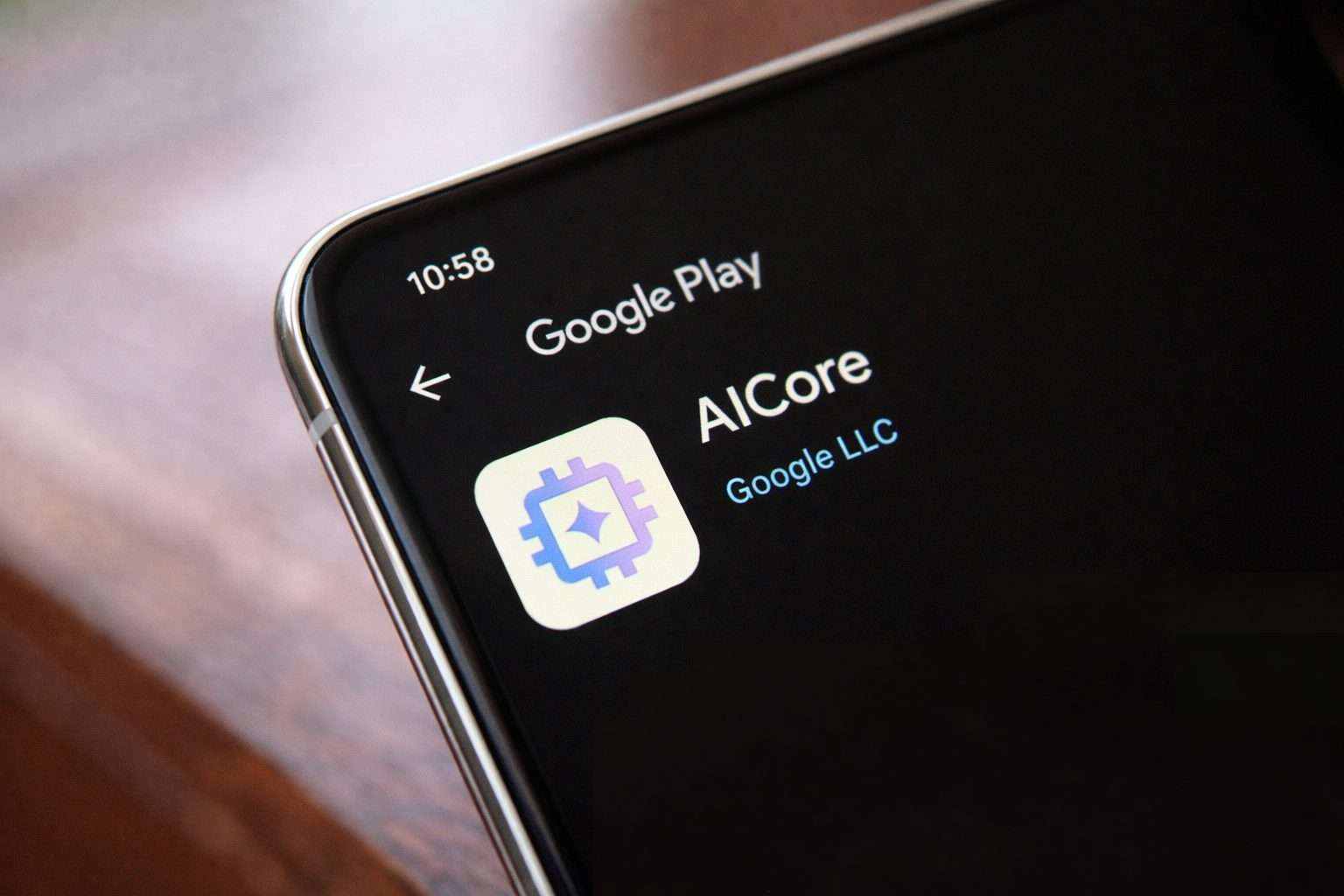
Android Authority reported that turning off Google’s AICore system service on Samsung phones can disable certain on-device AI features and shift others to cloud processing. Editor Andy Walker tested this on a Galaxy S24 FE with Android 16 and found that image tools like Samsung Gallery’s Generative Edit and Sketch to image only worked after he disabled the “process data only on device” option. Meanwhile, Circle to Search and Live Transcribe remained functional. He didn’t notice any speed improvements, and the app still used about 1.3GB of storage after being turned off. However, Walker mentioned colleagues and online users who claimed better battery life on some devices. Android Authority
The debate heats up as handset makers embed “AI” tools directly into phones, not as optional apps but core system features. Once built in and always running, they add another drain users try to cut back on when battery life runs low.
The story of privacy suddenly becomes a trade-off. Without local AI, the phone might shift the workload elsewhere, potentially sending text or images online rather than storing them on the device.
Google Play states that Android AICore drives features “across Android” and provides apps with up-to-date AI models. According to the listing’s data-safety section, the app doesn’t share data with third parties but might gather app-performance details and device IDs, with all data encrypted while in transit. Android Authority
Google’s Android developer docs reveal that the Gemini Nano model—a compact variant of Gemini built for phones—runs within Android’s AICore system service. It leverages device hardware to speed up inference, the process of generating responses, while ensuring the model stays current. The page also guides developers to APIs for summarisation, proofreading, rewriting, image descriptions, and speech recognition, all functioning offline.
In a 2023 post on the Android Developers Blog, Dave Burke introduced Android AICore as a system service in Android 14 that lets apps tap into Gemini Nano, while managing models and safety features. Burke emphasized that AICore is “private by design” and cut off from the network, citing Android’s Private Compute Core as an example of keeping sensitive processing isolated from internet access. Android Developers Blog
Samsung explains its Galaxy AI features are divided between on-device and cloud processing. Users can turn off cloud processing entirely using a “master switch” in the Galaxy AI settings called “Process data only on device.” The company notes that while most translations happen locally on the device, “most other features require a network connection and will utilize the cloud in some way.” Samsung
Companies handling large fleets of phones already have clear control options. Microsoft’s Intune guidance identifies AICore as an on-device AI system app. It also provides the package name “com.google.android.aicore” for admins aiming to disable it on Android Enterprise devices. Microsoft Learn
Users focused on battery life or privacy face a different set of risks. According to Samsung’s Knox enterprise docs, Galaxy AI features handled on-device don’t use your data for training. But features processed in the cloud might feed data into model training. This highlights how moving tasks off your phone shifts where your data travels and how it’s used.
The impact varies. For users who seldom engage with AI features, disabling AICore might just feel like shedding unnecessary bulk. But for others, it can subtly transform an offline tool into an online one—or cause a feature to stay greyed out until the settings are switched back.