
LONDON, June 23, 2026, 10:04 (BST)
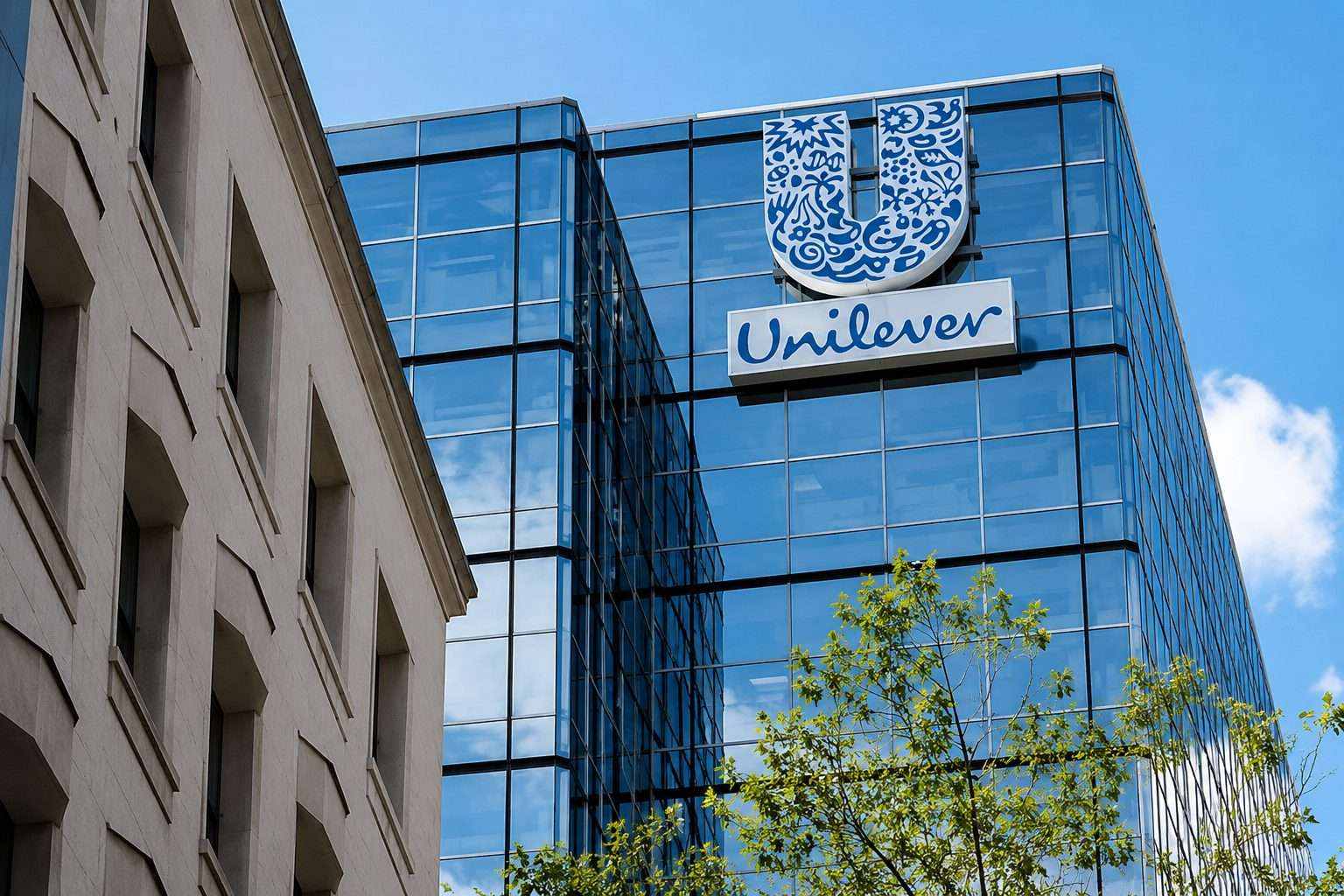
Unilever shares edged higher on Tuesday, resisting a broad London selloff as investors sought relative shelter in consumer staples and assessed the group’s World Cup marketing drive. The stock was quoted at 4,402 pence, up 0.2%, on data stamped 10:01 BST and delayed by 20 minutes.
The FTSE 100 was down 0.8% at 10,357.27 at 09:47 BST, leaving Unilever ahead of the benchmark by roughly one percentage point. Consumer staples are often treated as defensive shares because demand for soap, deodorant and other everyday goods tends to hold up better when investors turn cautious.
The wider retreat followed fresh pressure across global equity markets after a technology-led selloff. Oil prices also fell as concern over Iranian supplies eased, offering possible relief for packaging, freight and chemical costs, though any benefit to Unilever’s margins would take time to filter through.
Unilever’s latest company update came on Monday and centred on its largest sports partnership activation, linked to the FIFA World Cup 2026. More than 35 brands, including Dove, Rexona and Axe, are being promoted across over 120 markets, supported by 50,000 creators and 180 limited-edition products.
“This activation reflects how we’re engaging with sport not just as sponsorship, but as a platform to build brand desire and cultural relevance to drive superior growth,” said Afke van de Klashorst, vice president of integrated brand experience at Unilever Personal Care. The update did not disclose the campaign’s cost or a specific sales target. Unilever
The push matters because Unilever is trying to show that growth is coming from units sold, rather than price rises alone. First-quarter underlying sales growth — revenue growth excluding currency movements and major portfolio changes — was 3.8%, comprising volume growth of 2.9% and pricing of 0.9%. The company maintained its full-year outlook.
But costs remain the immediate risk. Unilever said in April that it expected €750 million to €900 million of inflation in 2026, €350 million to €500 million more than first estimated. Finance chief Srinivas Phatak said there would be “frequent price increases but in small doses,” while Quilter Cheviot analyst Chris Beckett warned that in developed European markets “it’s not easy to take pricing.” Reuters
The other large valuation question is the planned separation of Unilever’s foods business and its combination with McCormick. The deal values the unit at about $44.8 billion; Unilever shareholders are due to own 65% of the combined company, while Unilever is set to receive $15.7 billion in cash.
Davis Householder of consultancy MycoManagement said “operational disentanglement is usually where value is won or lost,” pointing to the work needed to separate supply chains, distribution and brand systems. That execution issue may matter more to the shares than the World Cup campaign once the current defensive bid fades. Reuters
Capital returns offer some support. Unilever completed a €1.5 billion buyback on June 5 after purchasing about 30.7 million shares, though the programme is finished and is no longer a fresh daily source of market demand.
Reckitt, a close UK-listed consumer-staples peer, also gained about 0.2% in early business. That strengthened the reading that Tuesday’s relative resilience was partly sector-led, rather than a company-specific re-rating of Unilever.
The next clean test comes on July 28, when Unilever is due to publish second-quarter and half-year results. Investors will look for continued volume growth, evidence that planned price rises are sticking and clearer milestones for the McCormick transaction.