
Sydney, May 19, 2026, 08:04 AEST
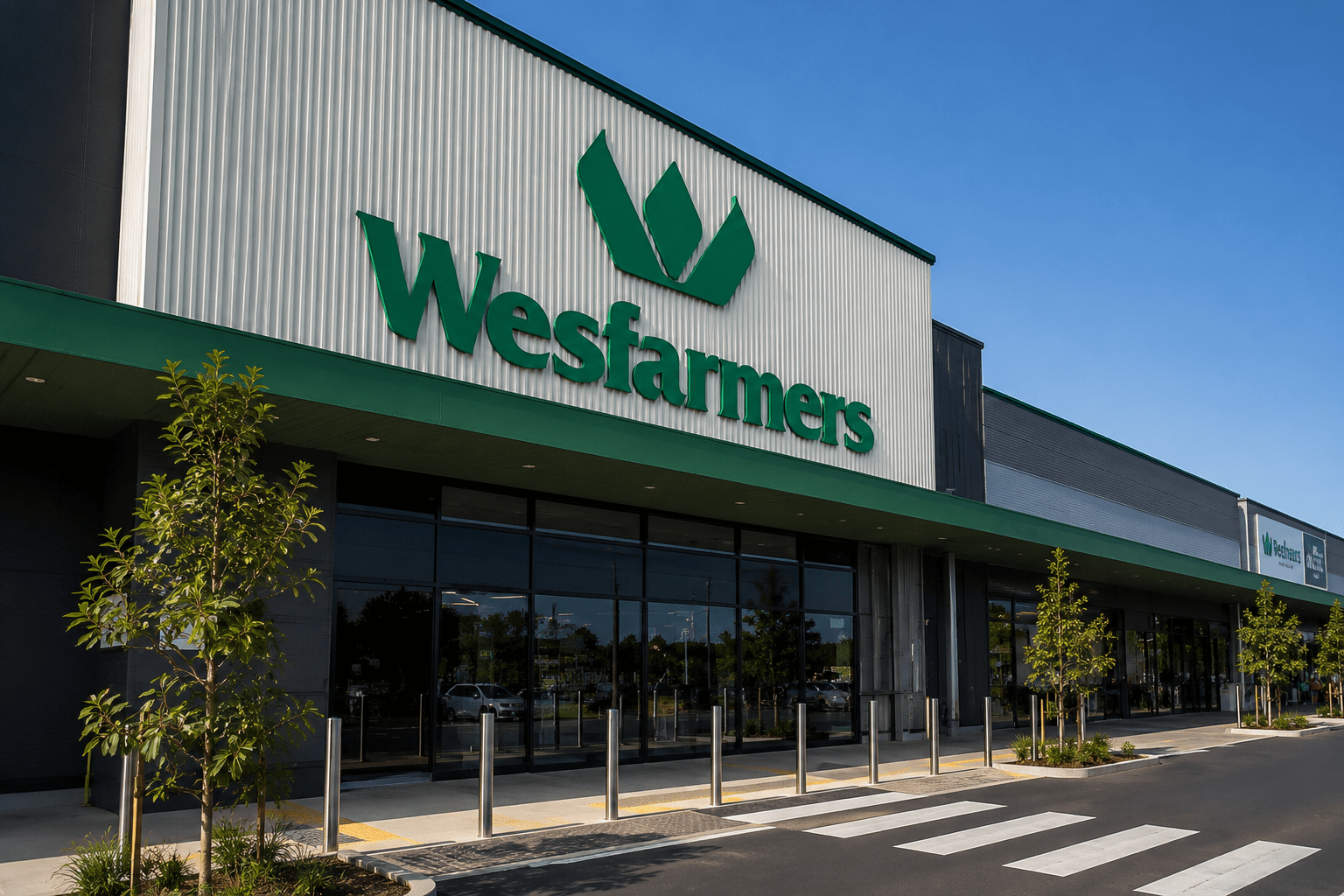
Wesfarmers Ltd shares slipped on Monday, leaving the Bunnings and Kmart owner close to its 52-week low as Australia’s benchmark sharemarket fell to a seven-week trough. Wesfarmers closed at A$71.26, down 0.57%, while the S&P/ASX 200 fell 1.45% to 8,505.3.
The timing matters because Tuesday trade had not opened at publication. Normal ASX trading runs from 10 a.m. to 4 p.m. Sydney time on business days, and market-hours data listed May 19 as a regular session, leaving Monday’s close as the latest market price investors carry into the new day.
The stock’s move was modest compared with some of Monday’s market damage, but the level is awkward. Wesfarmers traded between A$71.14 and A$72.29 on volume of 1.01 million shares; Google Finance listed its 52-week low at A$70.80.
The broader tape did most of the work. The S&P/ASX 200, the main index tracking large Australian-listed companies, dropped 125.5 points, while the All Ordinaries lost 1.52% to 8,735.4 as higher oil prices and inflation worries hit risk appetite. Inflation means rising prices, and for retailers it can cut what households have left to spend.
IG market analyst Tony Sycamore said China had shown “little appetite” for helping reopen the Strait of Hormuz, Morningstar reported with AAP, tying the local selloff to oil and global inflation fears. Energy was the only ASX sector to gain, while consumer-facing stocks fell 0.9%. Morningstar
Peers gave a mixed read. Coles rose 0.2% to A$20.85, while Woolworths was unchanged at A$32.98; those supermarket-heavy names sell more everyday goods, while Wesfarmers has larger exposure to hardware, apparel and office products, where some purchases can be delayed.
There was no new Wesfarmers ASX announcement on Monday. The company’s announcements page showed its latest notice was May 14, when it said a strategy briefing would be held in Sydney on June 10, with materials released to the ASX before an 8:30 a.m. AEST webcast.
That briefing now carries more weight. In February, Wesfarmers reported first-half revenue of A$24.21 billion, net profit after tax of A$1.60 billion and a fully franked interim dividend of A$1.02 a share, meaning the dividend carries Australian tax credits for eligible investors. Managing Director Rob Scott said “higher costs continued to weigh” on households and businesses.
Reuters reported at the time that Wesfarmers shares slid despite the profit beat because early second-half sales growth came in below expectations. The company owns Bunnings, Kmart and other retail and industrial assets, so investors are watching whether value pricing and productivity savings can offset softer household demand.
The share price has already lost ground beyond Monday’s move. Trading Economics data showed Wesfarmers down 4.52% over four weeks and 13.97% over 12 months, with Monday’s close valuing the company at about A$80.86 billion.
But the risk is that the downside case stays simple: oil keeps inflation high, interest-rate uncertainty lingers, and households postpone spending on home improvement, apparel or office goods. Wesfarmers also said the Covalent Lithium refinery ramp-up had been extended to address intermittent odour issues, while its industrial businesses remain exposed to commodity prices, foreign exchange and seasonal outcomes.
For now, the market has a near-term marker rather than a fresh company shock. Monday’s close put Wesfarmers near a one-year low; June 10 is the next scheduled chance for management to argue that the group’s low-price model, data investments and cost discipline are enough to steady the stock.