
SAN FRANCISCO, Jan 19, 2026, 03:39 PST
- Android Police pointed out a resurgence in minimalist phones, spotlighting new models from Mudita and Punkt.
- Punkt’s MC03 keeps “trusted” apps apart from the “wild” ones and delivers its privacy tools via a subscription service.
- Mudita’s Kompakt sports an E Ink screen and an “Offline+” switch that cuts all radios and sensors, ensuring a genuine disconnect.
Android Police reported yesterday that minimalist phones have reached a new level, becoming “finally worth buying.” The story notes the category’s shift beyond basic “dumb phones,” as makers offer sleeker software and clearer limits. It calls out Mudita’s Kompakt and Punkt’s MC03 as examples of different ways to simplify while keeping users somewhat connected.
Unfortunate timing for mainstream phone makers, but a clear win for some. Punkt launched the MC03 earlier this month, pitching it as a privacy-first handset “as we enter the age of AI.” Founder and CEO Petter Neby highlighted how users feel “stressed and overwhelmed” by endless tracking and monetisation. The device separates a curated “Vault” from a freer “Wild Web” area, and its AphyOS software moves to a subscription model after one year, priced at $9.99 monthly.
The MC03, built in Germany as Punkt confirms, openly acknowledges that privacy alone won’t drive phone sales. The Verge highlighted its upgrades over the MC02, including a sharper screen and longer-lasting battery, an IP68 rating, and a commitment to three OS updates plus five years of security patches—placing it in the same league as repair- and privacy-first options like Fairphone.
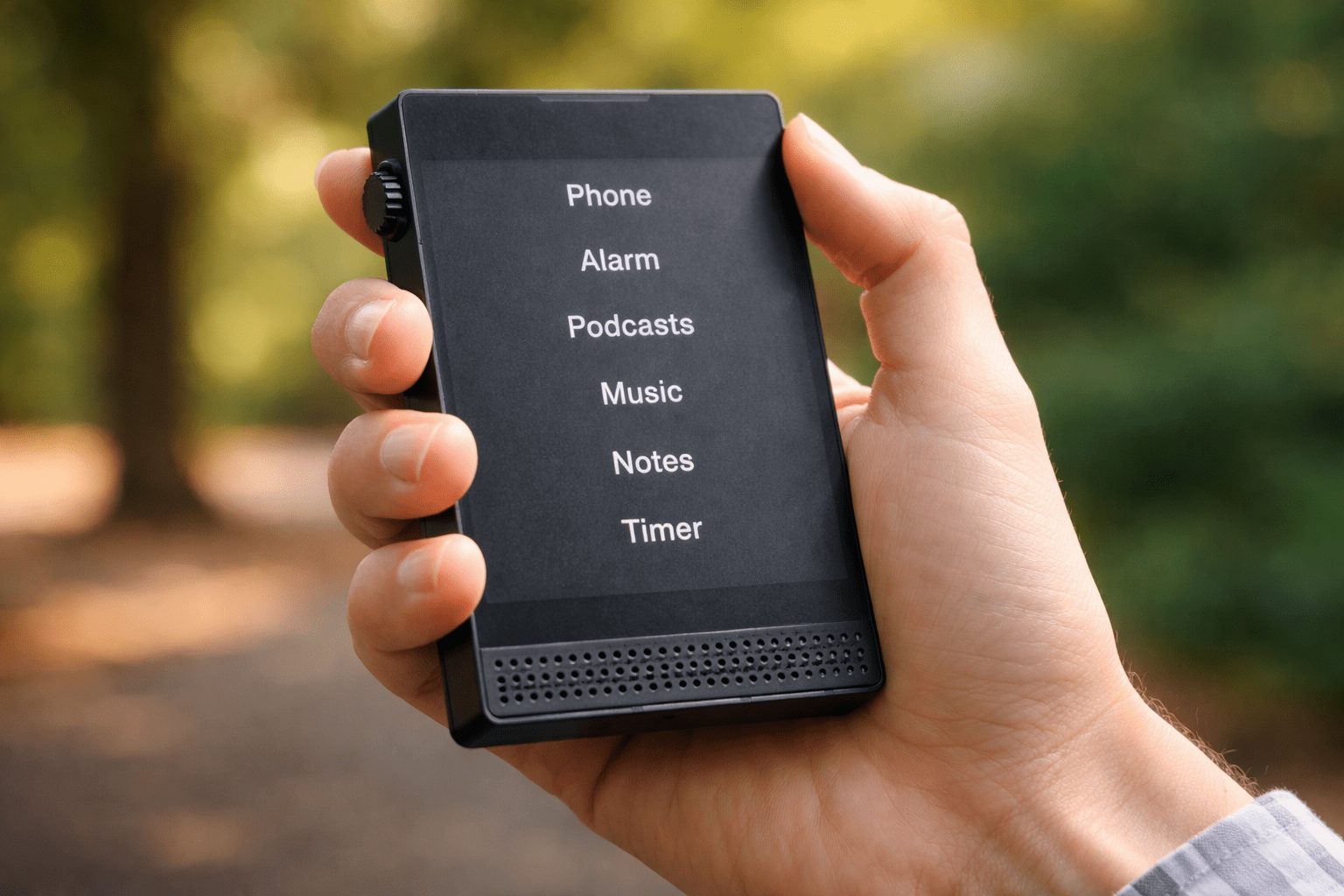
Mudita’s approach is simple: break the usual smartphone cycle. The Kompakt sports a 4.3-inch E Ink display—the same e-paper technology used in e-readers—powered by a custom OS. It has a physical “Offline+” button that cuts off the microphones and GSM modem, while the software disables the camera, Wi-Fi, and Bluetooth. Users can sideload Android apps, but Mudita warns that those dependent on Google services may not function properly. They’re committed to delivering five years of software and security updates.
At Mudita’s store, the Kompakt is priced at $369. Its selling point? Sticking strictly to “essential tools” without any tracking, ads, or distracting apps.
Android Authority got an early look at the Kompakt at CES this month. The phone sports a 3.5mm headphone jack, IP54-rated dust and water resistance, 32GB of built-in storage with expansion up to 2TB, and a 3,300 mAh battery that Mudita says can last as long as six days. They also highlighted a physical switch that cuts power to radios and sensors, calling it the centerpiece of the phone’s “Offline+ Mode.”
Both launches revolve around software designed to introduce deliberate friction. Punkt focuses on embedding privacy by separating trusted tools from everything else. Meanwhile, Mudita tackles smartphone overstimulation through its design, avoiding the usual settings menus that most users ignore.
This change matters because earlier minimalist gadgets made users settle for frustrating trade-offs: slow interfaces, spotty connections, or missing essentials like navigation. Now, companies are prioritizing control over nostalgia — and they’re charging accordingly, both upfront for the hardware and, in Punkt’s case, through a monthly subscription.
Here’s the snag. Getting users to shell out for subscriptions when security updates are typically free is tough. Plus, most people find it hard to verify those “privacy-first” claims. When it comes to e-paper, E Ink screens still falter with video, fast scrolling, or heavy apps. And sideloading? That often turns a “simple phone” into a weekend project.
The hope is that a niche of buyers will embrace these limitations. If Punkt manages to ship by the end of January as planned, and Mudita keeps its software stable without caving to the urge to add “just one more app,” then 2026 could show whether minimalist phones stick around or fade away.