Privacy 24 November 2025 - 17 April 2026

New Chrome Privacy Reports Raise Fingerprinting Fears as Edge, Firefox and Brave Offer Built-In Defenses

New Chrome Privacy Reports Raise Fingerprinting Fears as Edge, Firefox and Brave Offer Built-In Defenses

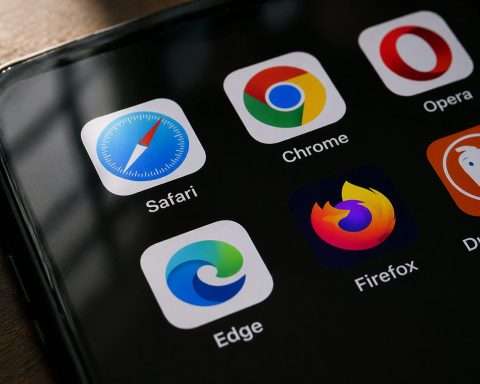
Google Chrome is facing renewed privacy questions after a series of reports Friday pointed out the browser still doesn't have native protections against browser fingerprinting—a tracking tactic that picks up on details like fonts, screen size, and graphics hardware to identify users. According to The Register, which referenced privacy consultant Alexander Hanff, Chrome remains vulnerable to “at least thirty distinct fingerprinting techniques.” Timing is key here—Chrome commands 66.7% of the global browser market, per Statcounter’s March data. That kind of reach means any privacy gap, no matter how slim, could impact a massive chunk of web traffic.
April 17, 2026
XChat Gets April 17 iPhone, iPad Date as X Revives Voice Notes and Privacy Questions Mount

XChat Gets April 17 iPhone, iPad Date as X Revives Voice Notes and Privacy Questions Mount

X’s messaging app, XChat, is due for release on iPhone and iPad on April 17, per its App Store listing. This follows the recent return of voice notes within the service. With the launch, Elon Musk’s platform gets a standalone chat app, stepping further away from its core social feed. X's decision to spin off XChat as a standalone app steps up its rivalry with WhatsApp, Telegram, and Signal, aligning with Musk’s wider push to remake X as a “super app.” This isn’t just a typical feature tweak; the move puts X’s ambitions on the line, challenging the company to prove it can carve out a dedicated product from private messaging.
April 13, 2026
Samsung Galaxy S26 Ultra Goes on Sale Worldwide as Privacy Display Drives Early Orders

Samsung Galaxy S26 Ultra Goes on Sale Worldwide as Privacy Display Drives Early Orders

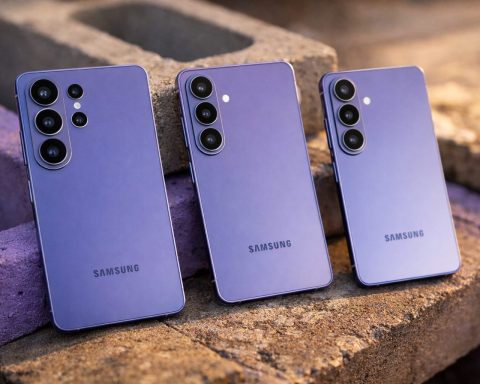
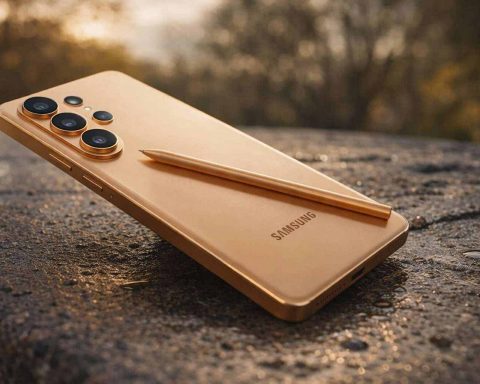
Samsung Electronics announced Wednesday that its Galaxy S26 Ultra, the flagship in its latest smartphone series, has hit shelves worldwide. According to the company, more than 70% of global pre-order customers picked the Ultra. The device is up for grabs through carriers, retailers, and Samsung.com. That's crucial right now—Samsung is leaning on the Ultra as the centerpiece of its high-end lineup, after ceding the global smartphone crown to Apple last year. With memory-chip prices climbing, the new launch also puts a spotlight on consumer appetite: Samsung raised prices for the base and Plus versions in major markets, but kept the Ultra steady.
March 11, 2026
iPhone battery dying by afternoon? A 2026 audit points to one Wi‑Fi tweak — plus 4 privacy switches

iPhone battery dying by afternoon? A 2026 audit points to one Wi‑Fi tweak — plus 4 privacy switches

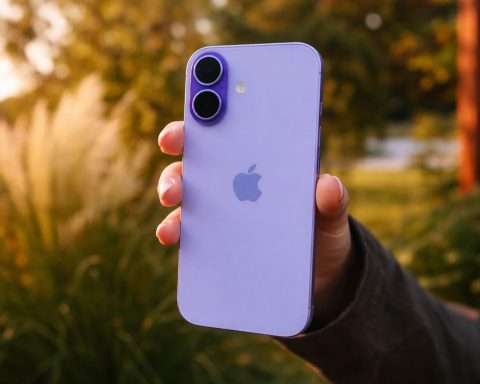
A personal audit of iPhone settings shared Sunday found that restricting Background App Refresh—Apple’s feature that lets apps update while running in the background—to Wi‑Fi only boosted mid-afternoon battery life on an iPhone 15 Pro from 38%–42% up to 55%–60%. K. Nik reported on YourTango that the week-long experiment also included clearing and disabling Apple’s Significant Locations & Routes log, blocking tracking prompts, and turning off iPhone analytics sharing. Battery life and privacy now often go hand in hand: settings that keep feeds updated and services responsive tend to keep radios, sensors, and processors active. Liz Ticong’s Jan. 29 guide for TechRepublic points out that background features running all day usually cause battery drain—and that simple adjustments can extend battery
February 2, 2026
Apple’s new iPhone privacy switch can blur carrier location tracking — here’s who gets it

Apple’s new iPhone privacy switch can blur carrier location tracking — here’s who gets it

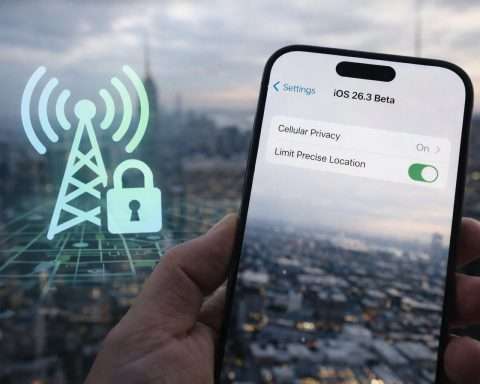
Apple has introduced a new privacy setting that lets some iPhone and iPad users limit how precisely mobile carriers can determine their location, tightening control over tracking that happens outside apps. The “Limit Precise Location” option appears after upgrading to iOS 26.3 or later, according to Apple support information and a report by BleepingComputer. https://www.bleepingcomputer.com/news/apple/new-apple-privacy-feature-limits-location-tracking-on-iphones-ipads/ The change targets a basic reality of mobile service: carriers can estimate where a device is based on which cell towers it connects to as it moves. Apple says the setting reduces the precision of the location data available to the network, shifting it from street-level detail to a broader area.
February 2, 2026
Starlink’s privacy policy now lets customer data train AI — and it’s on by default

Starlink’s privacy policy now lets customer data train AI — and it’s on by default

SpaceX’s Starlink has revised its privacy policy to permit the use of customer data for training machine learning and AI models, unless users choose to opt out. The update also gives Starlink the ability to share this data with service providers and “third-party collaborators.” https://finance.yahoo.com/news/musks-starlink-updates-privacy-policy-230853500.html This change comes as SpaceX considers an initial public offering—their first public share sale—later this year and negotiates a merger with Elon Musk’s AI firm xAI, raising questions about the data Starlink gathers and its potential uses.
January 31, 2026
Google dodges $2.36 billion disgorgement bid in privacy class action, but $425 million verdict stands

Google dodges $2.36 billion disgorgement bid in privacy class action, but $425 million verdict stands

A U.S. federal judge in San Francisco turned down a push to tack on over $2 billion in extra penalties against Alphabet’s Google in a privacy class action. The court refused to force Google to hand over $2.36 billion in alleged profits or halt certain data practices. At the same time, the judge rejected Google’s attempt to decertify the class, keeping the September jury verdict intact. The ruling is pivotal because it caps the amount users can claim after trial in a case centered on a privacy “off” switch. Seeborg called the post-verdict motions from both parties efforts to “augment and upset the verdict in various ways.”
January 31, 2026
Bondu AI toy leak: 50,000 kids’ chat logs were visible to anyone with a Gmail login

Bondu AI toy leak: 50,000 kids’ chat logs were visible to anyone with a Gmail login

Bondu, the maker of AI chat-enabled stuffed toys for kids, restricted access to an online console after researchers discovered it allowed anyone with a Gmail account to view transcripts of children’s conversations and personal information. The company told the researchers that over 50,000 chat logs were exposed via the portal but said it found no signs of access beyond the researchers themselves. The episode arrives amid a wave of companies integrating large language models—AI that crafts text from prompts—into kids’ products, usually alongside parent apps and cloud dashboards. This setup opens the door to a rich stash of personal data and expands the potential points for leaks.
January 30, 2026
No more peeking? Samsung hints a built-in privacy screen for Galaxy S26 phones

No more peeking? Samsung hints a built-in privacy screen for Galaxy S26 phones

Samsung Electronics announced Wednesday a new privacy feature for Galaxy phones aimed at limiting what onlookers can view on your screen in public. The company calls it “privacy at a pixel level” and says the feature will be “coming to Galaxy very soon.” Phone manufacturers are pushing privacy harder than ever, with more people using their devices for banking, work chats, and one-time codes in crowded places. The tricky problem of “shoulder surfing”—when someone sneaks a look at your screen on buses or trains—remains hard to solve. For years, accessory makers have offered stick-on privacy filters as a workaround.
January 28, 2026
Google to pay $68 million to end Google Assistant “recordings” lawsuit — who’s covered

Google to pay $68 million to end Google Assistant “recordings” lawsuit — who’s covered

Google will pay $68 million to resolve a lawsuit alleging its Google Assistant recorded and shared private conversations without user consent, fueling targeted advertising. The class-action deal, filed Friday in federal court in San Jose, California, covers users impacted by “false accepts”—moments when the assistant mistakenly triggers on its wake word—dating back to May 18, 2016, according to court documents. The deal arrives as voice assistants embedded in phones, earbuds, and smart home devices become ubiquitous, evolving from a convenient tool into a growing privacy headache. Plaintiffs argue simply: gadgets designed to capture commands can also overhear without consent, and those recordings might be shared beyond what users expect.
January 26, 2026
Google Pixel “Take a Message” bug may leak your background audio — Google investigates

Google Pixel “Take a Message” bug may leak your background audio — Google investigates

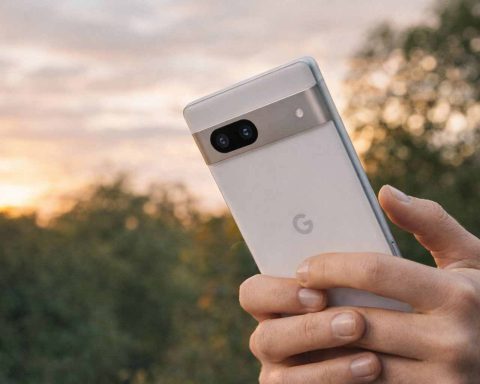
Alphabet’s Google is looking into a bug reported by some Pixel users where callers can hear background sounds when the “Take a Message” feature activates after a missed call. The reports raise concerns since the feature is promoted as a hands-free solution for missed calls, not as a way to open a live audio feed to a stranger. If it activates accidentally—say, in a pocket or on a desk—it might reveal far more than just the caller’s message.
January 23, 2026
Doomscrolling fatigue? Minimalist phones are “finally worth buying” as Mudita, Punkt push privacy-first models

Doomscrolling fatigue? Minimalist phones are “finally worth buying” as Mudita, Punkt push privacy-first models

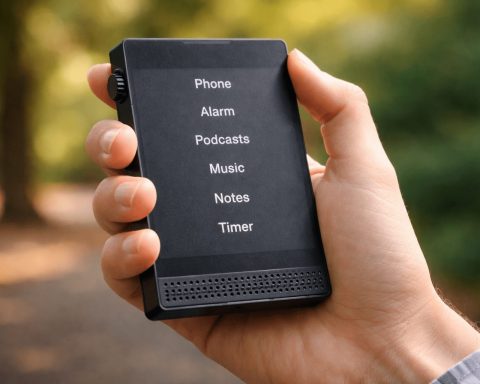
Android Police reported yesterday that minimalist phones have reached a new level, becoming “finally worth buying.” The story notes the category’s shift beyond basic “dumb phones,” as makers offer sleeker software and clearer limits. It calls out Mudita’s Kompakt and Punkt’s MC03 as examples of different ways to simplify while keeping users somewhat connected. Unfortunate timing for mainstream phone makers, but a clear win for some. Punkt launched the MC03 earlier this month, pitching it as a privacy-first handset “as we enter the age of AI.” Founder and CEO Petter Neby highlighted how users feel “stressed and overwhelmed” by endless tracking and monetisation. The device separates a curated “Vault” from a freer “Wild Web” area, and its AphyOS software moves
January 19, 2026
Apple’s Siri is getting Google Gemini — why the AI deal is drawing fresh privacy and antitrust scrutinySAN FRANCISCO, Jan 17

Apple’s Siri is getting Google Gemini — why the AI deal is drawing fresh privacy and antitrust scrutinySAN FRANCISCO, Jan 17

Apple’s decision to base a revamped Siri on Google’s Gemini is renewing questions about how far two longtime partners can deepen ties, with privacy lawyers and analysts pointing to possible regulatory blowback. The move lands as U.S. antitrust enforcers look harder at Google’s distribution agreements and as Apple tries to show its own AI push can turn into something users notice, not just a promise on a launch-stage.
January 17, 2026
Changing Your Phone’s DNS in 2026: Faster Browsing, Better Privacy, and Today’s DNS News (Jan. 15, 2026)

Changing Your Phone’s DNS in 2026: Faster Browsing, Better Privacy, and Today’s DNS News (Jan. 15, 2026)

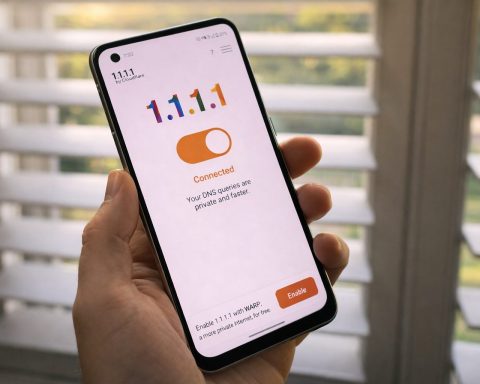
DNS is the internet’s “address book”—and it’s suddenly in the spotlight. Here’s what today’s DNS headlines mean, why changing DNS on your Android or iPhone can improve speed and privacy, and how to do it safely. DNS is one of those internet essentials most people never touch—until it breaks, slows down, or becomes part of a bigger security story. On January 15, 2026, DNS is showing up in the news for exactly those reasons: performance, privacy, and how critical “name lookups” have become to national security and everyday cyber safety.
January 15, 2026
India’s Smartphone Security Overhaul: Source-Code Reviews, App Privacy Limits and the New Telecom Cybersecurity Push (Jan 11, 2026)

India’s Smartphone Security Overhaul: Source-Code Reviews, App Privacy Limits and the New Telecom Cybersecurity Push (Jan 11, 2026)

India is weighing sweeping smartphone security standards that could require Apple, Samsung, Google and Xiaomi to submit source code for review—part of a broader telecom cybersecurity crackdown aimed at stopping fraud, scams and data breaches. NEW DELHI — January 11, 2026 — India is considering a major overhaul of smartphone security rules that would force device makers to share source code for government review and redesign how phones handle sensitive permissions, pre-installed apps and software updates. The proposals—reported today in Reuters coverage—have triggered strong industry opposition from major brands and the manufacturers’ group MAIT, setting up a high-stakes policy fight over cybersecurity vs. proprietary technology and privacy.
January 11, 2026
Punkt MC03 Launches: $699 Made‑in‑Germany Privacy Smartphone Brings Proton “Vault” Security — but AphyOS Requires a Subscription

Punkt MC03 Launches: $699 Made‑in‑Germany Privacy Smartphone Brings Proton “Vault” Security — but AphyOS Requires a Subscription

Jan. 3, 2026 — As privacy concerns collide with the reality that modern phones run on data-driven business models, Swiss tech brand Punkt is taking a different bet at the start of 2026: a premium Android-based smartphone that’s assembled in Germany, splits your digital life into two separate “zones,” and funds ongoing privacy features through a paid software subscription instead of advertising and tracking. The Verge+2punkt.ch+2 The result is the Punkt MC03, announced ahead of CES 2026 in Las Vegas and positioned as a “smarterphone” for people who want full smartphone capability without surrendering everything to Big Tech defaults. 9to5Google+2punkt.ch+2
January 3, 2026
CISA Issues Urgent Spyware Warning For iPhone And Android — How To Secure Your Smartphone Today (November 28, 2025)

CISA Issues Urgent Spyware Warning For iPhone And Android — How To Secure Your Smartphone Today (November 28, 2025)

America’s top cyber defense agency has issued an unusually blunt warning: sophisticated spyware campaigns are now actively targeting iPhone and Android users through popular messaging apps like Signal, WhatsApp, Telegram and standard SMS. In response, the Cybersecurity and Infrastructure Security Agency has updated its mobile security playbook and is urging people—especially high‑risk users—to lock down their smartphones immediately. Cybersecurity Dive+2The Hacker News+2 A new Forbes report highlights that CISA’s guidance isn’t just theoretical. It translates into concrete, step‑by‑step settings changes for both iOS and Android designed to make your device much harder to compromise. Forbes
November 28, 2025