
NEW YORK, January 21, 2026, 12:23 EST
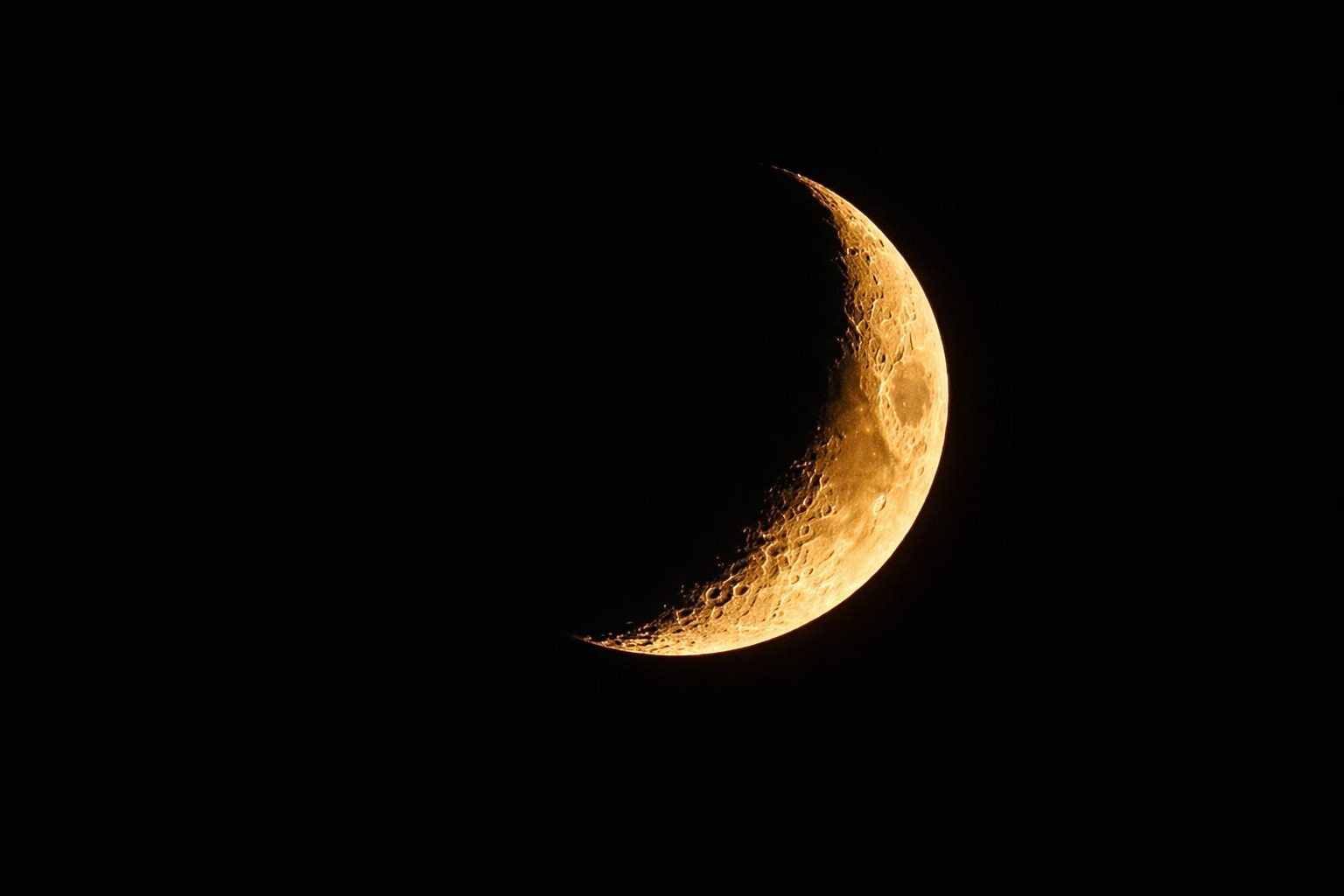
Today’s moon is a waxing crescent, with about 9% of its surface lit over New York near midday, according to timeanddate.com. The last new moon happened on Jan. 18 at 2:51 p.m. local time, and the first quarter is set for late on Jan. 25 at 11:47 p.m., per the site’s lunar calendar.
This matters because the moon remains thin enough that much of the late evening stays darker than it will later this month, making it easier for stargazers and night-sky photographers to spot faint stars. EarthSky pointed out the crescent will hang low in the western sky after sunset and added that the moon will pass by Saturn on Jan. 22 and 23 during the early evening.
The U.S. Naval Observatory pegged Jan. 21 as a waxing crescent with just 7% illumination, marking the new moon phase at 19:52 UTC on Jan. 18. That’s mid-afternoon Eastern time in the U.S., highlighting how quickly the moon’s appearance shifts from one night to the next.
Italian amateur astronomer and astrophotographer Giuseppe Donatiello told Space.com that “the phases of the moon are a consequence of its motion around Earth” and the shifting angle with the sun. He also noted that “approximately every day the moon delays its rising (and setting) by about 50 minutes,” which causes the waxing moon to appear in a darker sky as the week progresses. Space
“Waxing” refers to the portion of the moon that’s lit increasing, while “crescent” means we see less than half the moon’s disk illuminated from Earth. NASA outlines eight phases in a roughly 29.5-day cycle and notes that crescents can display “earthshine”—a faint glow on the moon’s dark side caused by sunlight bouncing off Earth. NASA Science
Timing also plays a key role for coastal waters. According to NOAA, tides spike during new and full moons, when the sun, moon, and Earth line up and their gravitational forces combine—this is known as spring tides. Around quarter moons, when these bodies form a right angle, tides tend to be milder.
Many well-known trackers and apps now agree on the same basic call — waxing crescent — but the exact illumination percentage can differ depending on clock time, location, and rounding. This discrepancy is normal, which explains why two sources might match on the phase yet show different numbers.
That thin crescent is easy to overlook. A low cloud, haze, a bright city skyline, or a blocked western horizon can erase it entirely, and twilight can snuff it out before it even becomes visible.
Here’s the headline for tonight: a thin crescent will hang low after sunset, with the moon appearing significantly fuller in just a few nights.