Astronomy 22 January 2026 - 11 March 2026

3I/ATLAS Just Gave Scientists a Rare Look Inside an Interstellar Comet

3I/ATLAS Just Gave Scientists a Rare Look Inside an Interstellar Comet

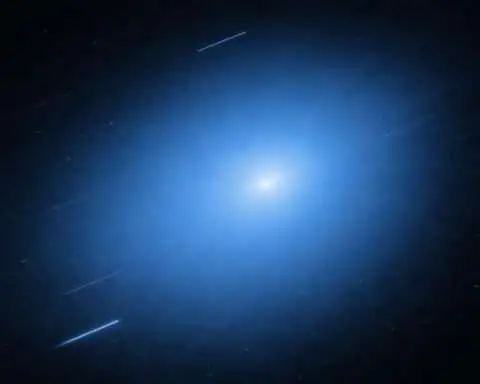
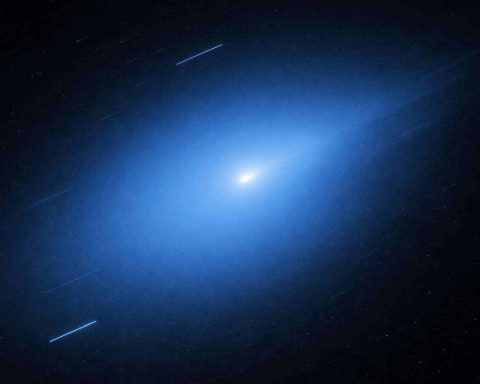
MAUNAKEA, Hawaii, May 6, 2026, 12:04 HST A group led by Yoshiharu Shinnaka at Kyoto Sangyo University spotted fresh evidence of chemical changes in 3I/ATLAS, the interstellar comet, after it swung close to the Sun—suggesting what’s under the surface doesn’t necessarily match what’s on top. The observations came from the Subaru Telescope on Maunakea, according to a Wednesday piece in Big Island Now.
May 7, 2026
NASA satellite crash today: Van Allen Probe A heads for Earth years earlier than expected

NASA satellite crash today: Van Allen Probe A heads for Earth years earlier than expected

NASA’s Van Allen Probe A, which retired after nearly 14 years in orbit, was expected to drop back through Earth’s atmosphere Tuesday evening. The U.S. Space Force pegged the re-entry for around 7:45 p.m. EDT. The agency said the bulk of the 1,323-pound satellite should incinerate on the way down, but some pieces could make it through. The timing is pressing: this re-entry’s happening within hours, and there’s no set target for where debris might hit if it makes it to the ground. NASA’s calculated the odds of anyone getting hurt at roughly 1 in 4,200. That’s low, but not nothing.
March 11, 2026
ESA releases new JUICE photo of interstellar comet 3I/ATLAS as fresh data reaches Earth

ESA releases new JUICE photo of interstellar comet 3I/ATLAS as fresh data reaches Earth

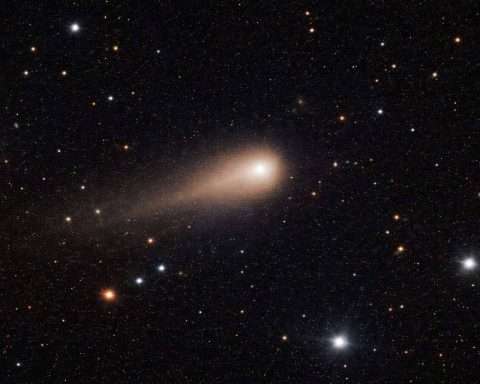
The European Space Agency has published a fresh shot of interstellar comet 3I/ATLAS, picked up by its Jupiter Icy Moons Explorer, which is heading for Jupiter. The image, snapped by Juice’s JANUS science camera on Nov. 6, 2025, from a distance of roughly 66 million km, shows a luminous gas halo trailing a distinctive tail. According to ESA, JANUS logged over 120 images during the session. 3I/ATLAS has become just the third confirmed interstellar visitor to sweep through our solar system, following 1I/‘Oumuamua’s 2017 flyby and 2I/Borisov in 2019. The ATLAS survey telescope in Río Hurtado, Chile, picked it up on July 1, 2025. According to ESA, the comet barreled past the Sun at speeds topping 250,000 km/h. Earth was
March 5, 2026
Hidden tunnel on Venus? Old Magellan radar points to a giant lava tube

Hidden tunnel on Venus? Old Magellan radar points to a giant lava tube

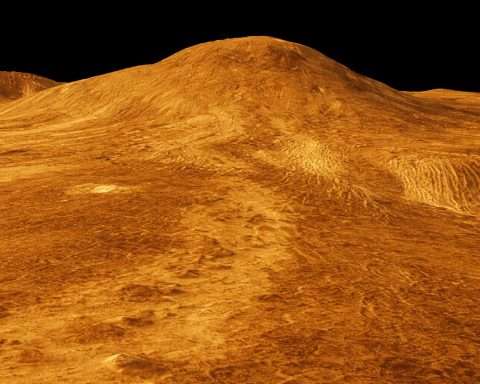
Scientists reexamining radar data from NASA’s Magellan mission have uncovered what appears to be a massive underground lava tube on Venus. This marks the first time a subsurface formation has been identified on the planet. https://www.reuters.com/science/radar-data-reveals-cavernous-underground-lava-tube-venus-2026-02-09/?utm_source=chatgpt.com Timing is critical since Venus remains mostly a radar-mapped planet. Its dense clouds prevent regular cameras from seeing through, pushing space agencies to gear up for a fresh wave of Venus missions that will rely on advanced radar to chart the planet’s battered surface and surroundings.
February 10, 2026
This black hole ate a star — and it’s still belching a brighter jet years later

This black hole ate a star — and it’s still belching a brighter jet years later

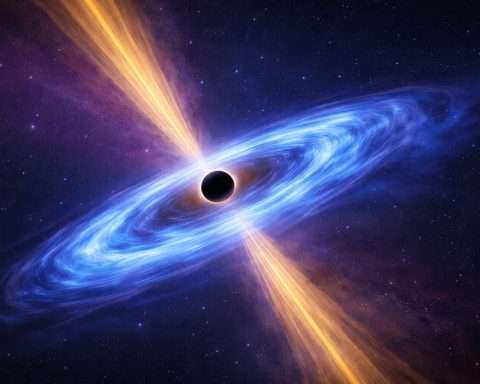
A supermassive black hole located about 665 million light-years away is still blasting an increasingly bright jet into space years after it tore apart a star, astronomers revealed Thursday. This persistent outflow ranks among the most powerful single radio wave events ever recorded, they said. https://www.reuters.com/science/black-hole-continues-belch-years-after-chewing-up-star-2026-02-05/ The timing is key here. The radio jet didn’t appear immediately after the star died; instead, it grew stronger over several years. This defies the usual expectations for such events and suggests that other jets that ignite late might have slipped under the radar.
February 5, 2026
Jupiter just got “smaller”: NASA’s Juno updates the planet’s official size and shape

Jupiter just got “smaller”: NASA’s Juno updates the planet’s official size and shape

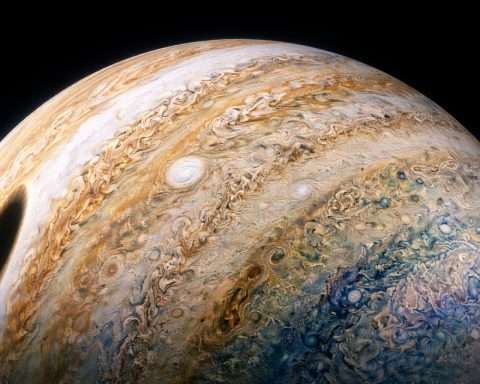
NASA’s Juno spacecraft has produced the most accurate measurements to date of Jupiter’s size and shape, revealing that the giant planet is a bit smaller than previously believed. These revised numbers appear in a study published this week in Nature Astronomy. Reuters The change in Jupiter’s radius is slight, but it’s significant since this measurement serves as a key reference for modeling the planet’s interior and atmosphere. These models, in turn, shape scientists’ broader understanding of gas giants, including those orbiting distant stars.
February 4, 2026
Sun fires 4 strong solar flares as NOAA tracks X8.1 blast and possible Earth brush-by

Sun fires 4 strong solar flares as NOAA tracks X8.1 blast and possible Earth brush-by

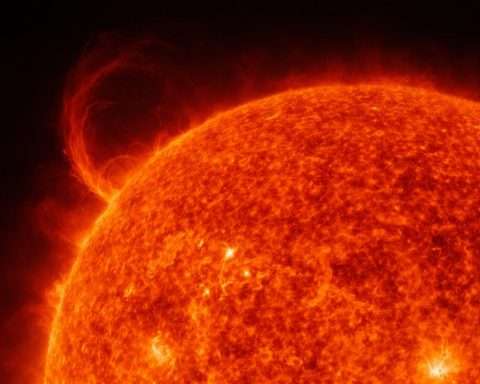
BOULDER, Colo., Feb 2, 2026, 08:11 U.S. space-weather experts reported that an active sunspot group unleashed another powerful X8.1 solar flare. Modeling of the linked coronal mass ejection indicates most of the ejected material will pass to the north and east of Earth, with only potential glancing impacts expected late on Feb. 5 UTC. NOAA’s Space Weather Prediction Center noted the same region has been firing off M- and X-class flares since early Monday, and it’s expected to remain active.
February 2, 2026
Erased for centuries, Hipparchus’ star catalog resurfaces after particle accelerator scan

Erased for centuries, Hipparchus’ star catalog resurfaces after particle accelerator scan

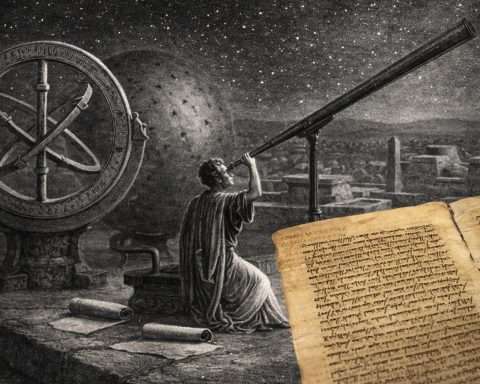
MENLO PARK, California — January 30, 2026, 11:29 PST At the SLAC National Accelerator Laboratory, researchers harnessed X-ray beams from their synchrotron—a type of particle accelerator—to unveil erased star maps hidden within a centuries-old palimpsest, a manuscript that was scraped clean and reused. These pages, part of the Codex Climaci Rescriptus, include fragments linked to an ancient star catalog credited to the Greek astronomer Hipparchus, the lab reported.
January 30, 2026
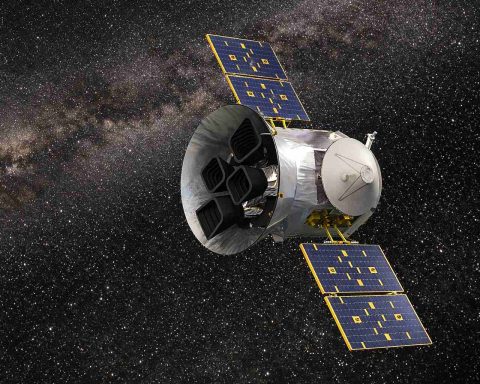
NASA’s TESS Spots Rare Interstellar Comet 3I/ATLAS — New Data Target Its Spin

NASA’s TESS Spots Rare Interstellar Comet 3I/ATLAS — New Data Target Its Spin

NASA’s TESS spacecraft, known for hunting planets, has snapped new images of the interstellar comet 3I/ATLAS. This recent dataset offers scientists a close-up look at how the comet is acting as it leaves our solar system. Why this matters now: 3I/ATLAS ranks just third among known objects confirmed to have originated outside our solar system. Time is ticking for gathering valuable observations as it dims and moves away.
January 30, 2026
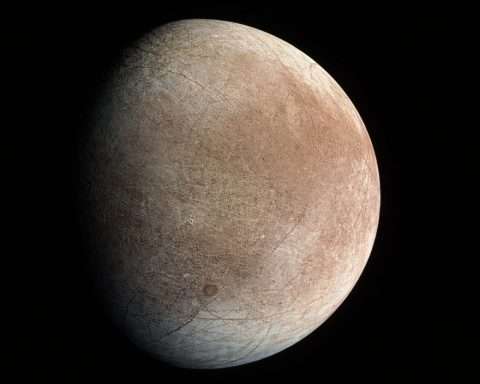
NASA spots ammonia on Europa in old Galileo data, sharpening hunt beneath the ice

NASA spots ammonia on Europa in old Galileo data, sharpening hunt beneath the ice

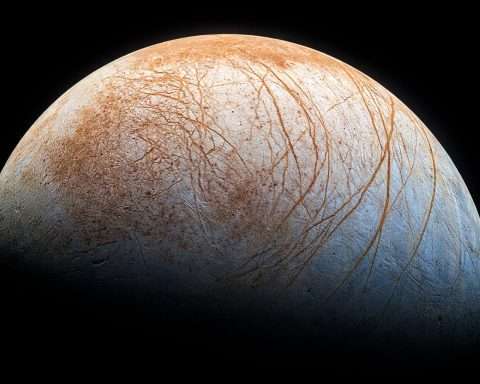
On Thursday, NASA announced that scientists have identified ammonia-bearing compounds on Europa’s surface by reevaluating data collected during the Galileo mission decades ago. The agency emphasized the importance of detecting ammonia because it contains nitrogen, a key element for life as we know it on Earth. Additionally, ammonia can function like antifreeze, reducing the freezing point of water. NASA pointed out that ammonia breaks down quickly in space, suggesting it may have arrived on the surface fairly recently.
January 30, 2026
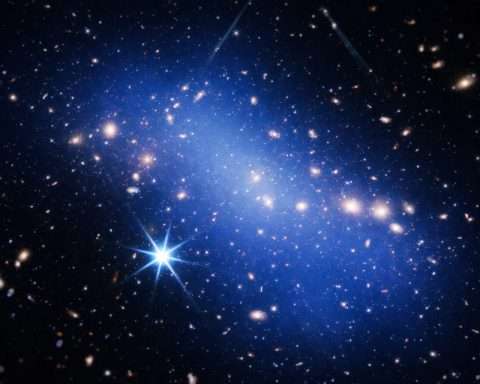
James Webb and Chandra spot a massive early-universe galaxy cluster — and it formed too fast

James Webb and Chandra spot a massive early-universe galaxy cluster — and it formed too fast

WASHINGTON, Jan. 30, 2026, 12:16 p.m. EST NASA’s James Webb Space Telescope and the Chandra X-ray Observatory have detected a forming galaxy cluster dating back to about a billion years after the Big Bang, researchers announced on Friday. Dubbed JADES-ID1, the system includes at least 66 candidate galaxies and an estimated mass around 20 trillion times that of the Sun, from a time when the universe was still very young.
January 30, 2026
Webb Breaks the Cosmic Distance Record With MoM-z14, Seen Just 280 Million Years After the Big Bang

Webb Breaks the Cosmic Distance Record With MoM-z14, Seen Just 280 Million Years After the Big Bang

NASA’s James Webb Space Telescope has confirmed the most distant galaxy yet seen, catching MoM-z14 as it looked just 280 million years after the Big Bang, NASA and the European Space Agency said on Wednesday. The agencies measured a redshift of 14.44 — how much the universe’s expansion has stretched the galaxy’s light — putting it at the current edge of what telescopes can observe. https://science.nasa.gov/missions/webb/nasa-webb-pushes-boundaries-of-observable-universe-closer-to-big-bang/?utm_source=chatgpt.com The detection pushes Webb deeper into “cosmic dawn,” the universe’s first few hundred million years, when the earliest galaxies were switching on. Astronomers chase these targets because they offer direct checks on how fast stars and galaxies could assemble after the universe began.
January 29, 2026
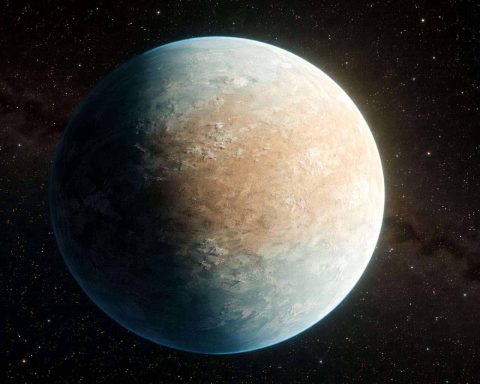
NASA spots an “ice-cold Earth” exoplanet candidate in Kepler data — and it may sit near the habitable zone

NASA spots an “ice-cold Earth” exoplanet candidate in Kepler data — and it may sit near the habitable zone

NASA scientists, together with an international team, have uncovered an Earth-sized exoplanet candidate while combing through data from the now-retired Kepler Space Telescope. This discovery might provide a rare opportunity to examine a long-period, near-Earth-size planet orbiting a relatively bright star nearby. Called HD 137010 b, the planet orbits near the outer edge of its star’s habitable zone — that’s the area where liquid water could potentially exist with the right atmosphere — though it’s likely colder than Mars. Timing is crucial since planets with orbits close to Earth’s year are tough to spot using Kepler’s main method: tracking repeated dips in starlight. Missing just one transit could force a wait of a year or longer for the next chance.
January 28, 2026
AI tool AnomalyMatch combs Hubble archive, flags 1,300 cosmic anomalies — NASA, ESA

AI tool AnomalyMatch combs Hubble archive, flags 1,300 cosmic anomalies — NASA, ESA

NASA reported Tuesday that researchers deploying an AI tool called AnomalyMatch sifted through nearly 100 million image cutouts from the Hubble Legacy Archive, identifying over 1,300 unusual objects. The European Space Agency noted that more than 800 of these anomalies haven’t appeared in any scientific papers before. https://science.nasa.gov/missions/hubble/ai-unlocks-hundreds-of-cosmic-anomalies-in-hubble-archive/?utm_source=chatgpt.com The agencies described the outcome as tackling a straightforward issue: experts simply can’t sift through the flood of telescope data image by image. They added that even citizen-science projects fall short when dealing with archives as massive as Hubble’s.
January 27, 2026
New James Webb dark matter map exposes the universe’s hidden “cosmic web” in record detail

New James Webb dark matter map exposes the universe’s hidden “cosmic web” in record detail

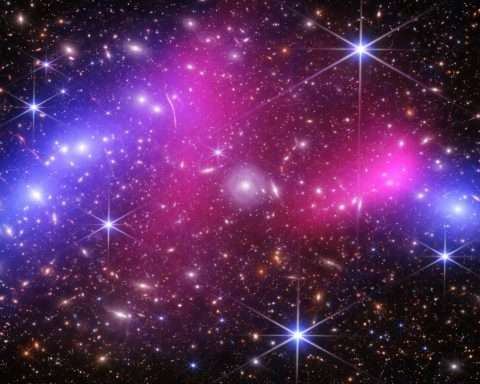
Astronomers using NASA’s James Webb Space Telescope have created the most detailed map yet of dark matter in the COSMOS field, tracing the invisible substance that makes up roughly 85% of the universe’s matter. The data aligns with the leading Lambda-CDM model — which stands for dark energy and cold dark matter. Diana Scognamiglio described Webb as “a new pair of glasses for the universe,” while co-author Jacqueline McCleary called dark matter halos the “nurseries of galaxies.” The improved map is crucial because researchers rely on it to study galaxy growth and the way matter clusters across cosmic time—key to understanding everything from galaxy clusters to the Milky Way. Scognamiglio noted that the Webb-based map is “twice as sharp” as
January 26, 2026
Europa’s ‘sinking ice’ may be feeding its hidden ocean with life-ready chemicals, study says

Europa’s ‘sinking ice’ may be feeding its hidden ocean with life-ready chemicals, study says

A new modeling study reveals that salty ice patches on Jupiter’s moon Europa might break off and sink through its ice shell, ferrying oxidants and other chemicals down to the ocean below — possibly creating a route for life-supporting ingredients. https://www.gadgets360.com/science/news/europa-s-ice-drips-may-feed-its-hidden-ocean-with-life-supporting-nutrients-10877761 This is significant since Europa is among the best bets in the solar system to hunt for life beyond Earth. It holds more liquid water beneath its icy shell than all Earth’s oceans together. Jupiter’s radiation creates compounds on the surface that microbes might exploit, but scientists have wrestled with how those surface materials could reach the ocean below. https://www.sciencedaily.com/releases/2026/01/260122073620.htm
January 25, 2026
Webb catches a baby Sun-like star making crystals — and blasting them toward comet territory

Webb catches a baby Sun-like star making crystals — and blasting them toward comet territory

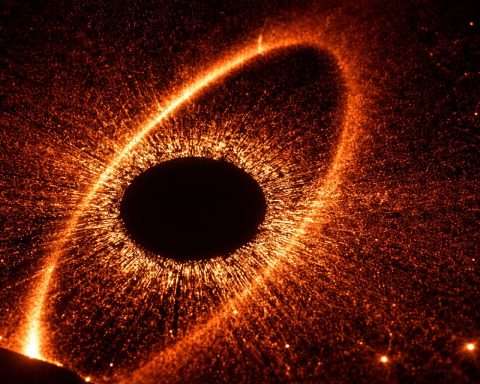
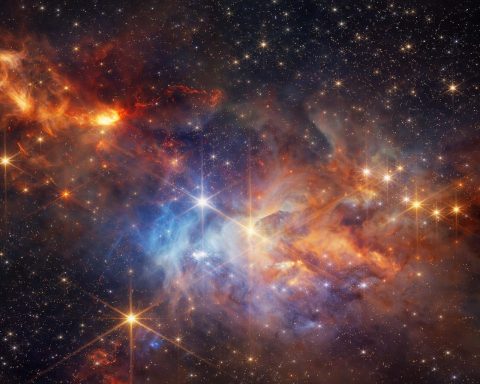
NASA’s James Webb Space Telescope detected heat-formed crystals close to a young star similar to our Sun and found evidence these crystals are drifting toward the chilly edges of its planet-forming disk, shedding fresh light on the comet mystery. Crystalline silicates require intense heat to form, but comets in our solar system mostly linger in frigid zones far from the Sun. This new research links the crystals to the scorching inner region of a young system and to winds capable of pushing them outward—an essential piece for models explaining the mix of hot and cold materials.
January 22, 2026
Night sky tonight (Jan. 22, 2026): Northern Lights odds linger as Moon slides past Saturn

Night sky tonight (Jan. 22, 2026): Northern Lights odds linger as Moon slides past Saturn

The Met Office says parts of northern Scotland might still catch a glimpse of the Northern Lights tonight as geomagnetic activity winds down following this week’s solar storm. However, widespread cloud cover is likely to block much of the view. This is important since the recent spike in space weather sent auroras far beyond their typical high-latitude zones, leaving many enthusiasts hoping for another display. It also keeps airlines and satellite operators on alert, as space weather can interfere with radio communications and degrade navigation signals.
January 22, 2026
NASA’s TESS pauses planet hunt to track interstellar comet 3I/ATLAS as a rare alignment hits

NASA’s TESS pauses planet hunt to track interstellar comet 3I/ATLAS as a rare alignment hits

NASA has shifted its planet-hunting satellite TESS to focus on a special observation of interstellar comet 3I/ATLAS, pausing its usual star survey for exoplanet searches. The updated schedule reveals TESS will point along the solar system’s ecliptic from Jan. 15-22, then pick up again with its Sector 99 campaign. The timing is crucial since a recent paper predicted 3I/ATLAS would line up within less than a degree of the Earth-Sun axis this Thursday—a configuration called near-opposition. At such tiny viewing angles, dust can produce an “opposition surge,” a nonlinear brightness spike caused by the way light scatters off particles.
January 22, 2026