Cosmology 26 January 2026 - 29 January 2026

James Webb and Chandra spot a massive early-universe galaxy cluster — and it formed too fast

James Webb and Chandra spot a massive early-universe galaxy cluster — and it formed too fast

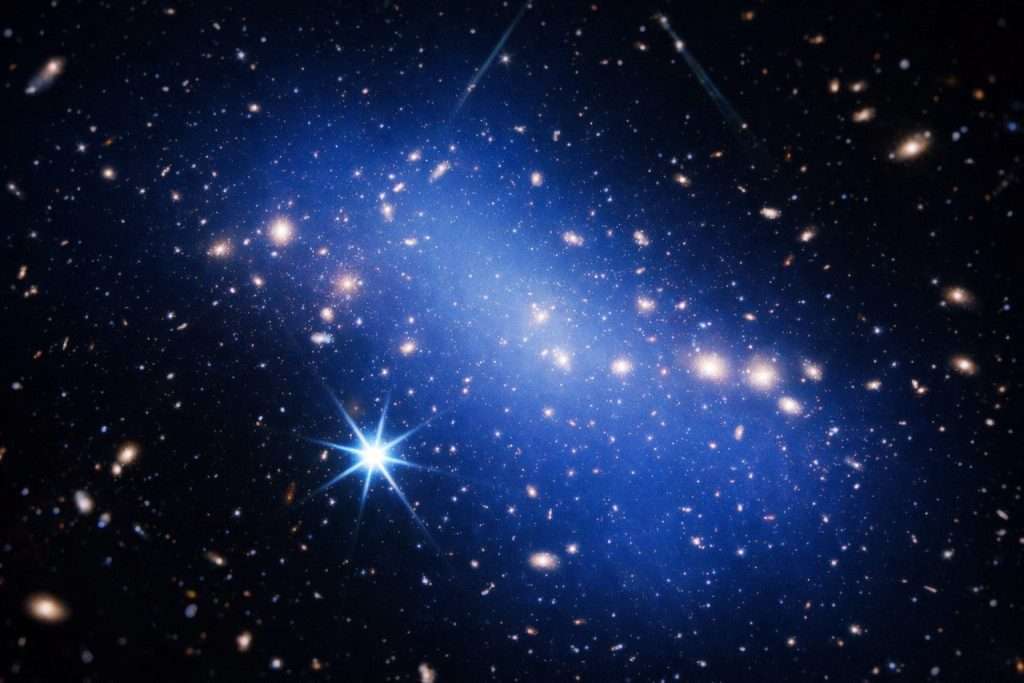
WASHINGTON, Jan. 30, 2026, 12:16 p.m. EST NASA’s James Webb Space Telescope and the Chandra X-ray Observatory have detected a forming galaxy cluster dating back to about a billion years after the Big Bang, researchers announced on Friday. Dubbed JADES-ID1, the system includes at least 66 candidate galaxies and an estimated mass around 20 trillion times that of the Sun, from a time when the universe was still very young.
January 30, 2026
Webb Breaks the Cosmic Distance Record With MoM-z14, Seen Just 280 Million Years After the Big Bang

Webb Breaks the Cosmic Distance Record With MoM-z14, Seen Just 280 Million Years After the Big Bang

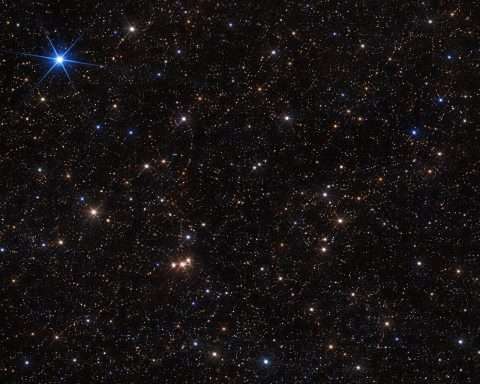
NASA’s James Webb Space Telescope has confirmed the most distant galaxy yet seen, catching MoM-z14 as it looked just 280 million years after the Big Bang, NASA and the European Space Agency said on Wednesday. The agencies measured a redshift of 14.44 — how much the universe’s expansion has stretched the galaxy’s light — putting it at the current edge of what telescopes can observe. https://science.nasa.gov/missions/webb/nasa-webb-pushes-boundaries-of-observable-universe-closer-to-big-bang/?utm_source=chatgpt.com The detection pushes Webb deeper into “cosmic dawn,” the universe’s first few hundred million years, when the earliest galaxies were switching on. Astronomers chase these targets because they offer direct checks on how fast stars and galaxies could assemble after the universe began.
January 29, 2026
New James Webb dark matter map exposes the universe’s hidden “cosmic web” in record detail

New James Webb dark matter map exposes the universe’s hidden “cosmic web” in record detail

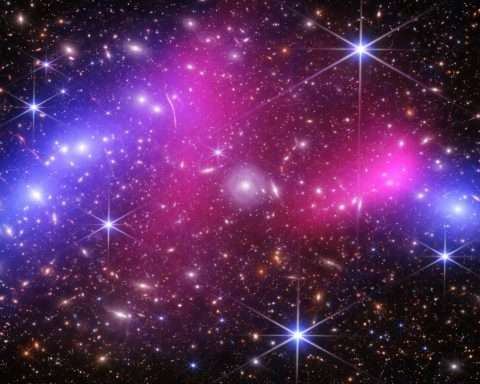
Astronomers using NASA’s James Webb Space Telescope have created the most detailed map yet of dark matter in the COSMOS field, tracing the invisible substance that makes up roughly 85% of the universe’s matter. The data aligns with the leading Lambda-CDM model — which stands for dark energy and cold dark matter. Diana Scognamiglio described Webb as “a new pair of glasses for the universe,” while co-author Jacqueline McCleary called dark matter halos the “nurseries of galaxies.” The improved map is crucial because researchers rely on it to study galaxy growth and the way matter clusters across cosmic time—key to understanding everything from galaxy clusters to the Milky Way. Scognamiglio noted that the Webb-based map is “twice as sharp” as
January 26, 2026