Astronomy 15 November 2025 - 21 January 2026

3I/ATLAS Just Gave Scientists a Rare Look Inside an Interstellar Comet

3I/ATLAS Just Gave Scientists a Rare Look Inside an Interstellar Comet

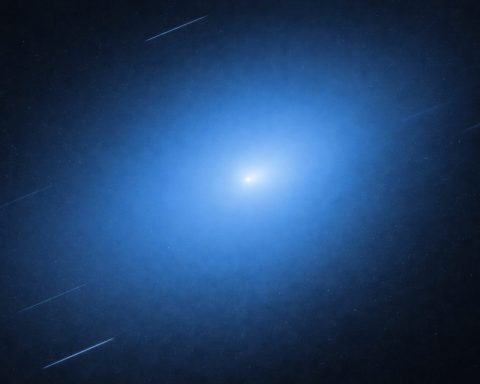
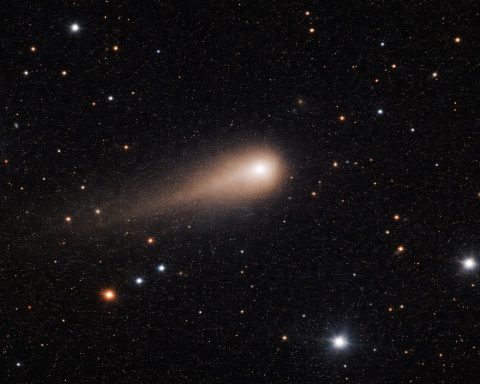
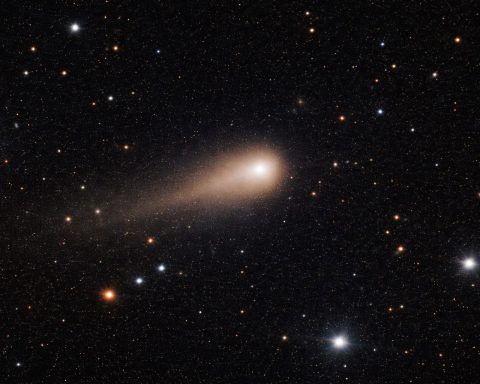
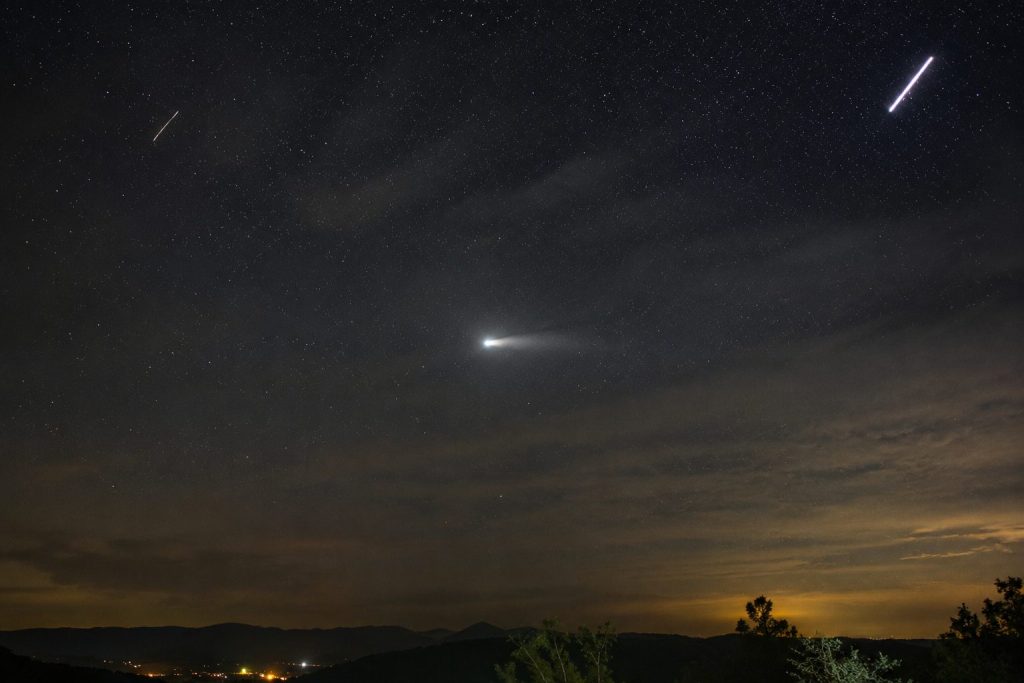
MAUNAKEA, Hawaii, May 6, 2026, 12:04 HST A group led by Yoshiharu Shinnaka at Kyoto Sangyo University spotted fresh evidence of chemical changes in 3I/ATLAS, the interstellar comet, after it swung close to the Sun—suggesting what’s under the surface doesn’t necessarily match what’s on top. The observations came from the Subaru Telescope on Maunakea, according to a Wednesday piece in Big Island Now.
May 7, 2026
Northern Lights Tonight? NOAA says aurora could reach New York as solar storm lingers

Northern Lights Tonight? NOAA says aurora could reach New York as solar storm lingers

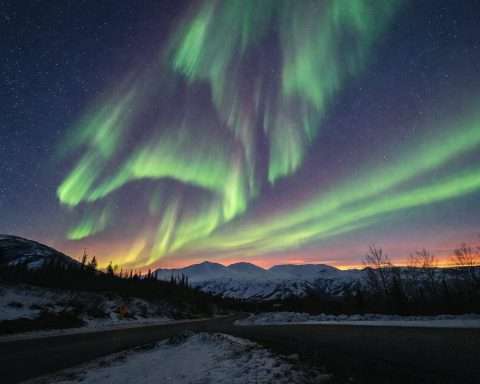
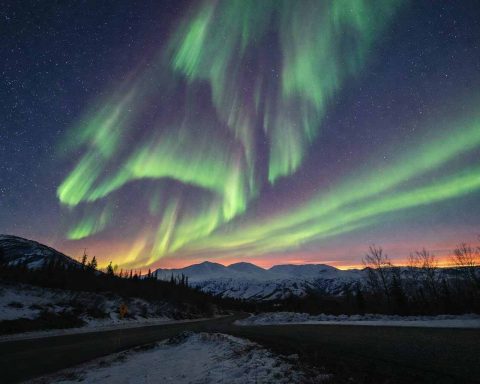
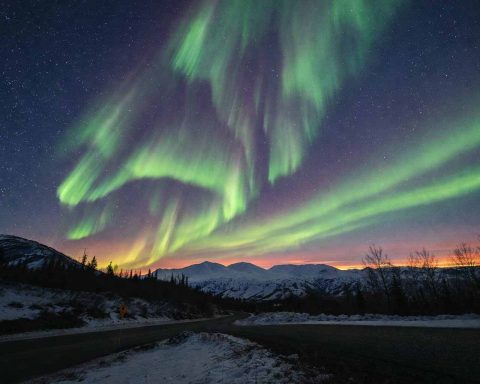
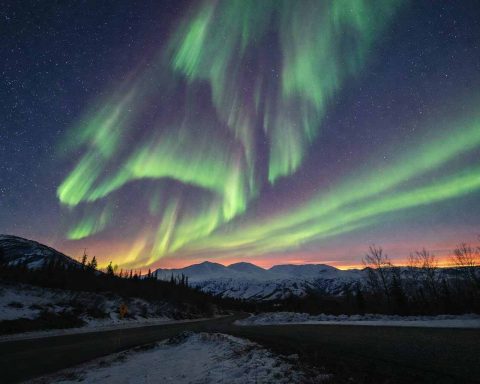
U.S. space weather forecasters extended geomagnetic storm warnings on Wednesday, indicating auroras might be visible farther south than normal—potentially reaching as low as New York—as the aftermath of a strong solar eruption persisted. NOAA alerts recorded a severe event late Tuesday, with auroras possibly visible as far south as Alabama and northern California, though forecasts predict weaker activity later in the week. The revived “night sky tonight” craze has a catch: geomagnetic storms can mess with satellites, navigation signals, and radio communications, even as they provide a rare spectacle for stargazers. Shawn Dahl, a service coordinator at NOAA’s Space Weather Prediction Center, noted that the current storm’s strength hasn’t been witnessed in over twenty years.
January 21, 2026
Moon phase today: Exact waxing crescent for Jan. 21 — plus what it means for tonight

Moon phase today: Exact waxing crescent for Jan. 21 — plus what it means for tonight

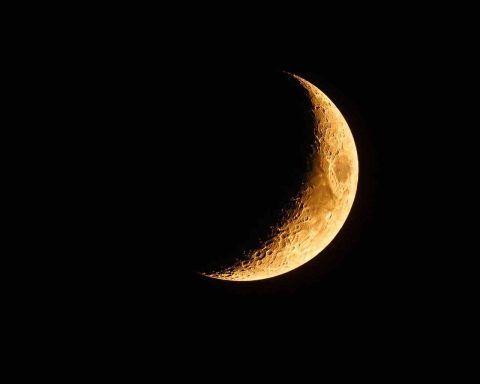
Today’s moon is a waxing crescent, with about 9% of its surface lit over New York near midday, according to timeanddate.com. The last new moon happened on Jan. 18 at 2:51 p.m. local time, and the first quarter is set for late on Jan. 25 at 11:47 p.m., per the site’s lunar calendar. This matters because the moon remains thin enough that much of the late evening stays darker than it will later this month, making it easier for stargazers and night-sky photographers to spot faint stars. EarthSky pointed out the crescent will hang low in the western sky after sunset and added that the moon will pass by Saturn on Jan. 22 and 23 during the early evening.
January 21, 2026
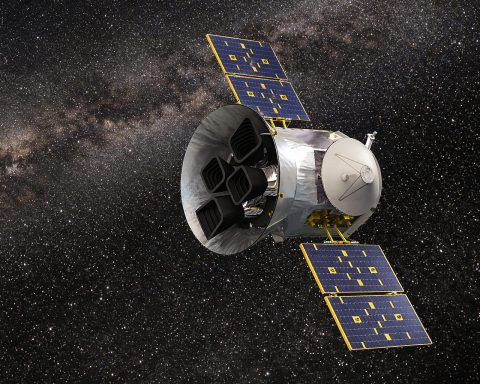
NASA interrupts TESS survey to track interstellar comet 3I/ATLAS as SPHEREx spots stronger gases

NASA interrupts TESS survey to track interstellar comet 3I/ATLAS as SPHEREx spots stronger gases

NASA has retasked its Transiting Exoplanet Survey Satellite to run a special observation of interstellar comet 3I/ATLAS, temporarily interrupting its Sector 99 schedule, the agency said. The Jan. 15–22 pointing will deliver continuous photometry — precise brightness measurements — and NASA said the data will be calibrated and publicly archived with no proprietary period. The move reflects a short window. NASA says 3I/ATLAS is only the third known interstellar object — after 1I/'Oumuamua and 2I/Borisov — and its hyperbolic track means it will not stay bound to the sun. It poses no danger to Earth and should remain observable with a small telescope into spring, NASA says.
January 21, 2026
Northern Lights Could Reach Farther South Tonight After NOAA Flags Severe Solar Storm

Northern Lights Could Reach Farther South Tonight After NOAA Flags Severe Solar Storm

U.S. space weather forecasters said severe geomagnetic storm levels were reached early Tuesday, raising the odds that the northern lights will be visible far beyond their usual Arctic zone on the night sky of Jan. 20. NOAA’s Space Weather Prediction Center said G4 levels were observed again at 3:23 a.m. and 5:21 a.m. EST after first hitting that threshold on Monday afternoon. The storm matters for more than skywatchers. NOAA said a severe solar radiation storm was also in progress, a rare event that can raise radiation exposure risks for astronauts and flights on polar routes, and increase threats to satellites and space launch systems. The agency said it had notified airlines, the FAA, NASA, FEMA and the North American
January 20, 2026
Comet 3I/ATLAS suddenly looks “fully active” — and astronomers say the window is closing

Comet 3I/ATLAS suddenly looks “fully active” — and astronomers say the window is closing

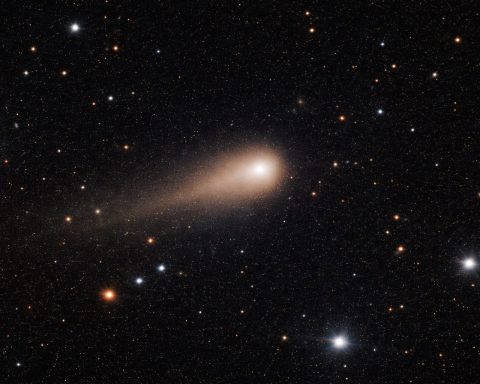
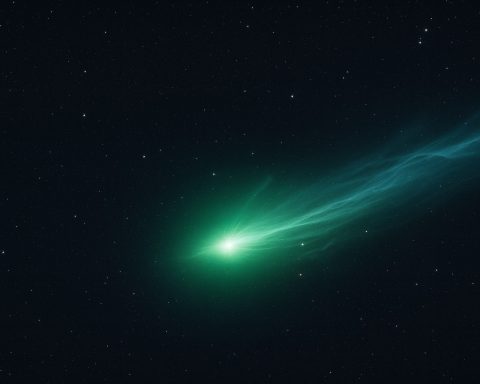
NASA’s SPHEREx space telescope detected that interstellar comet 3I/ATLAS has entered a noticeably more active phase following its closest approach to the Sun, called perihelion. Carey Lisse from Johns Hopkins University Applied Physics Laboratory called it “a much more active object.” The timing is crucial because this visitor ranks among the rarest targets astronomers have tracked. NASA notes that 3I/ATLAS is only the third confirmed interstellar object spotted in our solar system, following 1I/‘Oumuamua and 2I/Borisov. It’s moving on a hyperbolic trajectory—too fast for the Sun’s gravity to capture. NASA confirms it posed no threat to Earth, passing about 1.8 astronomical units away on Dec. 19, and it’s expected to swing past Jupiter in March as it heads out.
January 20, 2026
NASA’s TESS pivots to track interstellar comet 3I/ATLAS — and the data will be public

NASA’s TESS pivots to track interstellar comet 3I/ATLAS — and the data will be public

NASA’s Transiting Exoplanet Survey Satellite, better known as TESS, has paused its regular mission to focus on interstellar comet 3I/ATLAS. The spacecraft is now tracking this visitor from beyond our solar system as it makes its exit. The timing is crucial since this object is already moving away. Having passed its closest point to the Sun, it’s dimming as it retreats, reducing the window for extended, consistent observation.
January 18, 2026
NASA’s TESS abruptly pivots to watch interstellar comet 3I/ATLAS — what it’s looking for

NASA’s TESS abruptly pivots to watch interstellar comet 3I/ATLAS — what it’s looking for

NASA announced on Friday that its Transiting Exoplanet Survey Satellite will pause its ongoing Sector 99 observations for a special campaign tracking the interstellar comet 3I/ATLAS. The data collected from this comet will be calibrated and made publicly accessible following the mission’s usual protocols. This development is significant because 3I/ATLAS is a rare visitor from beyond our solar system—only the third confirmed object of its kind, following 1I/ʻOumuamua in 2017 and 2I/Borisov in 2019. Interstellar comets like this carry material that formed around other stars, providing a distant but direct glimpse into how planets and smaller bodies develop elsewhere.
January 17, 2026
Night sky tonight: Northern lights risk rises as a new moon darkens skies

Night sky tonight: Northern lights risk rises as a new moon darkens skies

The night sky tonight could include a brief run of northern lights in parts of northern Britain and the northern United States, as space weather forecasters tracked a rise in geomagnetic activity through the weekend. Britain’s Met Office said coronal hole fast winds may boost the auroral oval, with a chance of sightings reaching northern Scotland if skies clear. The timing is good for anyone planning a late look. The moon is down to about 1% illumination ahead of Sunday’s new moon at 19:52 GMT, when the lunar disk slips close to the sun and leaves darker skies. “The moon does not emit its own light but reflects that of the sun,” said Giuseppe Donatiello, an Italian amateur astronomer and
January 17, 2026
NASA’s Artemis II moon rocket starts its slow crawl to the pad — what happens before a February launch

NASA’s Artemis II moon rocket starts its slow crawl to the pad — what happens before a February launch

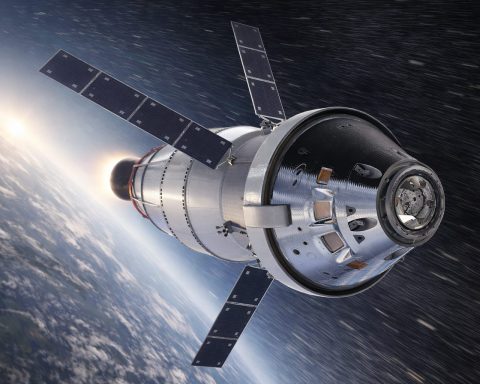
CAPE CANAVERAL, Florida, January 17, 2026, 10:32 EST NASA kicked off the rollout of its Artemis II Moon rocket to Launch Pad 39B at Kennedy Space Center on Saturday, marking a critical milestone for the agency’s first crewed lunar mission in over five decades. The four-mile journey began promptly at 7:04 a.m. EST, with the earliest opportunity to launch set for Feb. 6, according to NASA.
January 17, 2026
Northern lights forecast tonight: NOAA flags G1 geomagnetic storm risk as new moon nears

Northern lights forecast tonight: NOAA flags G1 geomagnetic storm risk as new moon nears

Space weather forecasters are calling for a rise in geomagnetic activity late Friday and through the weekend, raising the odds of auroras in high-latitude skies in both hemispheres. The timing matters for skywatchers because the moon is thinning toward a Jan. 18 new moon, cutting glare and making faint light easier to pick out. In northern latitudes, long winter nights give wider viewing windows, while far-southern observers have shorter darkness in midsummer.
January 16, 2026
Comet 3I/ATLAS Today (15 November 2025): ESA Path Update, Tail Revival, Radio Signals and Alien Claims Explained

Comet 3I/ATLAS Today (15 November 2025): ESA Path Update, Tail Revival, Radio Signals and Alien Claims Explained

Updated: 15 November 2025 The interstellar comet 3I/ATLAS is back in our morning sky and back in the headlines. On 15 November 2025, new images, refined orbital calculations and fresh commentary have sharpened our picture of this rare visitor from another star system — while also fuelling yet another round of “is it aliens?” speculation.
November 15, 2025