Space 21 January 2026 - 1 June 2026

EchoStar Faces $40 Billion Test After SpaceX, AT&T Deals

EchoStar Faces $40 Billion Test After SpaceX, AT&T Deals

EchoStar is trading in Monday premarket as traders keep adjusting to what’s basically a new pitch for the company—less the old pay-TV story, more a play on selling spectrum, some SpaceX tie-in and a shot at fixing up the debt mess. EchoStar Corporation’s Nasdaq stock finished Friday at $129.19, dropping 1.4% on the session. Even so, shares gained roughly 4.9% for the week, which started May 26, during the market’s holiday-shortened stretch. EchoStar’s investor-relations figures showed 8.6 million shares traded Friday. The regular Nasdaq hours are 9:30 a.m. to 4 p.m. ET, so Friday’s close was the last full-session price before trading resumes on Monday.

June 1, 2026
Geospace Rallied in Holiday Week; Monday Test Still Looms

Geospace Rallied in Holiday Week; Monday Test Still Looms

Geospace Technologies Corp. finished the shortened week up, even after dropping 4.49% Friday to close at $8.30. Shares traded between $8.21 and $8.57 on the day, with about 133,000 shares changing hands. For the week, the seismic and smart-water technology stock climbed about 2.5% from last Friday’s $8.10 close. It's relevant now because this move followed a tough financial update from earlier in May, not any new catalyst from the company. The market is weighing Geospace's cost reductions and work on new projects against ongoing weak demand in smart-water and continued cash burn.
June 1, 2026
Rocket Lab Stock Surges Again After Record Q1 Revenue, Golden Dome Win And Neutron Deals

Rocket Lab Stock Climbs Again: The Defense Milestone Behind Wall Street’s Space Trade

Rocket Lab shares climbed on Wednesday, outpacing a flat-to-mixed market, after the space company said a U.S. missile-defense satellite program passed a key design checkpoint and investors kept bidding up publicly traded space names. The Nasdaq-listed stock was up 3.5% at $148.25 near mid-afternoon in New York, after trading between $137.99 and $156.20. The move valued Rocket Lab at about $89.7 billion, market data showed.
May 27, 2026
Elon Musk’s SpaceX Is Now Powering Claude After Anthropic’s 80-Fold AI Surge

Elon Musk’s SpaceX Is Now Powering Claude After Anthropic’s 80-Fold AI Surge

Anthropic is tapping SpaceX for a major AI hardware boost, locking up the entire Colossus 1 data center in Memphis as it hunts for more capacity. The Claude developer is aiming to relieve usage caps that have irked its paying customers and developers. The urgency around the deal stems from runaway demand for Claude—Anthropic’s Claude Code programming tool in particular. Chief Executive Dario Amodei said they’d braced for 10x expansion, but the first quarter blew past that, with revenue and usage rocketing up 80-fold annualized. Amodei described the spike as “just crazy” and “too hard to handle.”
May 8, 2026
NASA Satellite Re-entry Alert: Van Allen Probe A’s Final Descent Carries Low Risk

NASA Satellite Re-entry Alert: Van Allen Probe A’s Final Descent Carries Low Risk

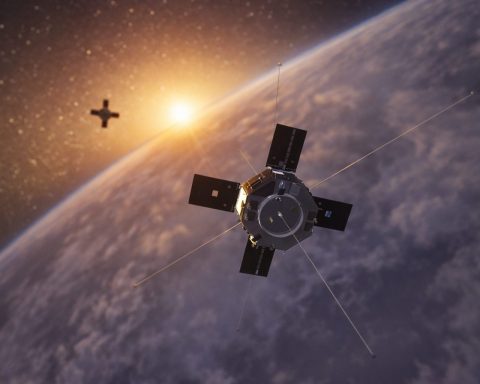
NASA’s most recent tracking for the retired Van Allen Probe A indicated re-entry wouldn’t happen until after midnight U.S. Eastern time on Wednesday, throwing last-minute uncertainty over when the spacecraft might finally come down. Most of the 1,323-pound probe is expected to incinerate in the atmosphere, according to NASA, but there’s a chance some parts could make it through. The re-entry window has drifted from NASA’s original Tuesday night estimate, and it’s still broad—a reminder of the challenges tracking the descent of an old satellite during an active solar cycle. This wraps up a mission whose data is still in use, helping researchers analyze space weather—NASA’s catchall for solar phenomena that affect satellites, astronauts, communications, navigation, and even Earth’s power
March 11, 2026
NASA satellite crash today: Van Allen Probe A heads for Earth years earlier than expected

NASA satellite crash today: Van Allen Probe A heads for Earth years earlier than expected

NASA’s Van Allen Probe A, which retired after nearly 14 years in orbit, was expected to drop back through Earth’s atmosphere Tuesday evening. The U.S. Space Force pegged the re-entry for around 7:45 p.m. EDT. The agency said the bulk of the 1,323-pound satellite should incinerate on the way down, but some pieces could make it through. The timing is pressing: this re-entry’s happening within hours, and there’s no set target for where debris might hit if it makes it to the ground. NASA’s calculated the odds of anyone getting hurt at roughly 1 in 4,200. That’s low, but not nothing.
March 11, 2026
NASA Satellite Crash Alert: Van Allen Probe A Set for Earth Re-Entry With Low Risk to People

NASA Satellite Crash Alert: Van Allen Probe A Set for Earth Re-Entry With Low Risk to People

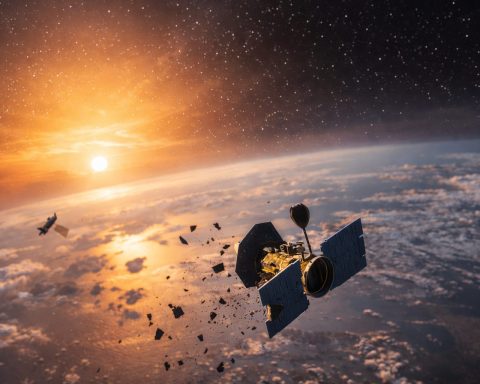
NASA on Tuesday said its Van Allen Probe A, out of commission, was projected to plunge back through Earth's atmosphere at about 7:45 p.m. EDT. A few pieces could make it all the way down, but the odds of anything causing harm are still low. The satellite, launched in 2012, tips the scales at around 1,323 pounds. The re-entry is in the spotlight, with forecasts offering only a broad time frame and no set landing zone for any fragments that might survive. The lack of a designated target comes as worries mount over debris in congested orbits. NASA told Scientific American there’s “no targeted area” for any pieces that could make it through.
March 10, 2026
SpaceX’s Starlink phone idea surfaces as IPO plans and new services take shape

SpaceX’s Starlink phone idea surfaces as IPO plans and new services take shape

SpaceX is gearing up to expand its Starlink lineup with new products that could deepen its foothold in telecom and space services. Among the rumored launches: a Starlink-connected phone, direct-to-device internet, and a space-tracking service, according to sources close to the company. These moves come as SpaceX prepares for an anticipated IPO later this year. https://www.reuters.com/business/media-telecom/starlink-fuels-spacex-growth-with-potential-phone-more-internet-services-2026-02-05/?utm_source=chatgpt.com The push is crucial since Starlink has become the revenue engine fueling SpaceX's progress. Two insiders revealed the company pulled in roughly $8 billion in profit last year, on revenues between $15 billion and $16 billion, with Starlink making up somewhere between 50% and 80% of that haul.
February 5, 2026
Pentagon urged to probe SpaceX over possible Chinese ownership — why it’s suddenly a flashpoint

Pentagon urged to probe SpaceX over possible Chinese ownership — why it’s suddenly a flashpoint

Democratic U.S. senators pressed the Pentagon on Thursday to immediately investigate SpaceX amid claims that Chinese investors have quietly acquired stakes in the private rocket company. Senators Elizabeth Warren and Andy Kim warned Defense Secretary Pete Hegseth that such investments could represent “a national security threat, potentially jeopardizing key military, intelligence, and civilian infrastructure.” The request targets a firm embedded deep within U.S. defense infrastructure. SpaceX handles launches for military and intelligence satellites and operates its Starlink network, which the Pentagon relies on and also uses to bolster Ukraine’s defense, lawmakers noted.
February 5, 2026
Amazon AWS CEO says space data centers are ‘pretty far’ off as Musk bets on orbital AI

Amazon AWS CEO says space data centers are ‘pretty far’ off as Musk bets on orbital AI

Amazon Web Services CEO Matt Garman dismissed the concept of orbital data centers—essentially server farms in space—as “pretty far” from being feasible. He highlighted the high costs tied to rocket payload limits and launch expenses, calling the idea “just not economical.” The surge in AI is ramping up demand for computing power and cooling, putting pressure on land-based data centers and the power grids that support them. This strain is driving cloud companies and startups to explore alternatives, such as deploying hardware in orbit, where issues like land scarcity and heat dissipation might be less problematic.
February 4, 2026
Jupiter just got “smaller”: NASA’s Juno updates the planet’s official size and shape

Jupiter just got “smaller”: NASA’s Juno updates the planet’s official size and shape

NASA’s Juno spacecraft has produced the most accurate measurements to date of Jupiter’s size and shape, revealing that the giant planet is a bit smaller than previously believed. These revised numbers appear in a study published this week in Nature Astronomy. Reuters The change in Jupiter’s radius is slight, but it’s significant since this measurement serves as a key reference for modeling the planet’s interior and atmosphere. These models, in turn, shape scientists’ broader understanding of gas giants, including those orbiting distant stars.
February 4, 2026
SpaceX halts Falcon 9 launches after Starlink flight hits second-stage snag

SpaceX halts Falcon 9 launches after Starlink flight hits second-stage snag

SpaceX has grounded flights of its Falcon 9 rocket after a problem hit the vehicle's second stage following a Starlink launch on Monday, the company said. The mission deployed 25 satellites, but the upper stage later suffered an “off-nominal condition” while preparing for a planned deorbit, and SpaceX said it was reviewing data “to determine root cause and corrective actions before returning to flight.” Falcon 9 flew 165 times in 2025; SpaceX gave no return-to-flight timetable, and an Federal Aviation Administration spokesman was furloughed amid the U.S. government shutdown, while the rocket’s last failure came in 2024 — its first since 2016 — during another Starlink mission. That pause matters because Falcon 9 has become the backbone of SpaceX’s launch
February 3, 2026
Singapore forms National Space Agency of Singapore (NSAS) to chase the $1.8 trillion space economy forecast for 2035

Singapore forms National Space Agency of Singapore (NSAS) to chase the $1.8 trillion space economy forecast for 2035

Singapore plans to launch its own space agency on April 1, 2026, consolidating efforts around national space capabilities and new regulations for the sector. The Ministry of Trade and Industry said this step will enable the country to “fully harness the value and opportunities of the growing global space economy.” Tan See Leng made the announcement during the inaugural space summit. Officials note that space-based systems already support digital connectivity, navigation, maritime monitoring, and climate resilience in this trade-reliant city-state. At the summit, Tan urged the agency to help Singapore “unlock the full potential of space technology applications for Singapore’s national and regional needs,” while safeguarding its assets amid a growing crowded space environment.
February 2, 2026
Sun fires 4 strong solar flares as NOAA tracks X8.1 blast and possible Earth brush-by

Sun fires 4 strong solar flares as NOAA tracks X8.1 blast and possible Earth brush-by

BOULDER, Colo., Feb 2, 2026, 08:11 U.S. space-weather experts reported that an active sunspot group unleashed another powerful X8.1 solar flare. Modeling of the linked coronal mass ejection indicates most of the ejected material will pass to the north and east of Earth, with only potential glancing impacts expected late on Feb. 5 UTC. NOAA’s Space Weather Prediction Center noted the same region has been firing off M- and X-class flares since early Monday, and it’s expected to remain active.
February 2, 2026
SpaceX asks FCC to approve 1 million solar-powered AI data-center satellites

SpaceX asks FCC to approve 1 million solar-powered AI data-center satellites

SpaceX has filed a request with the Federal Communications Commission seeking approval to deploy as many as 1 million solar-powered satellites. The company claims these would serve as orbital data centers dedicated to artificial intelligence, according to the filing. The company presented the plan as a solution to surging demand for computing power, arguing that energy, not chips, is the main bottleneck on Earth. It referenced projections from the International Energy Agency showing that electricity consumption by data centers might more than double by 2035 as AI adoption expands.
February 1, 2026
SpaceX’s $8 billion profit revealed as Starlink fuels record IPO plans

SpaceX’s $8 billion profit revealed as Starlink fuels record IPO plans

SpaceX generated about $8 billion in profit in 2025 on $15 billion to $16 billion of revenue, two people familiar with the company’s results said, offering a rare look at Elon Musk’s rocket-and-satellite business as it prepares to list its shares later this year. SpaceX did not return a request for comment. The figures, which have not been previously reported, have already shaped early banker estimates that SpaceX could raise more than $50 billion at a valuation above $1.5 trillion, the people said. They added that the timetable being discussed is close to Musk’s 55th birthday on June 28.
January 31, 2026
Ukraine turns to Elon Musk’s SpaceX after Russian drones are found using Starlink

Ukraine turns to Elon Musk’s SpaceX after Russian drones are found using Starlink

Ukraine is collaborating with U.S. satellite firm SpaceX to address reports that Russian long-range drones are leveraging Starlink, Defence Minister Mykhailo Fedorov revealed Thursday. https://www.reuters.com/business/media-telecom/ukraine-working-with-spacex-stop-russian-drones-use-starlink-kyiv-says-2026-01-29/ This matters now because Starlink allows an operator to maintain drone control even when the target zone is swamped with electronic warfare—radio jamming tactics both sides deploy to block attacks. Ukraine’s cities and rear positions have faced repeated long-range drone strikes this winter, and Kyiv is eager to seal off any new vulnerabilities.
January 29, 2026
Rocket Lab’s first 2026 launch puts Open Cosmos telecom satellites in orbit — and the Europe angle is getting louder

Rocket Lab’s first 2026 launch puts Open Cosmos telecom satellites in orbit — and the Europe angle is getting louder

Rocket Lab confirmed a successful deployment of two satellites for Open Cosmos on Thursday during its inaugural Electron launch of 2026, inserting the spacecraft into a 1,050-km circular orbit. Open Cosmos’ latest launch is significant because the company aims to rapidly transform spectrum rights into operational hardware in orbit, responding to Europe’s push for greater control over satellite communications and data links. According to Open Cosmos, these two satellites mark the debut of its planned low-Earth-orbit telecom constellation — LEO referring to satellites positioned close to Earth, which helps reduce signal latency.
January 22, 2026
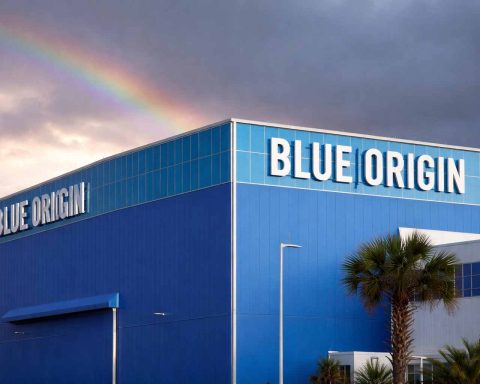
Bezos’ Blue Origin takes on Starlink with TeraWave plan for 5,408 satellites

Bezos’ Blue Origin takes on Starlink with TeraWave plan for 5,408 satellites

On Wednesday, Blue Origin unveiled TeraWave, a satellite network promising symmetrical data speeds reaching 6 terabits per second. The service aims to support tens of thousands of enterprise, data center, and government customers. The company plans to start deploying the constellation of 5,408 satellites in the fourth quarter of 2027. The bet arrives as cloud computing relentlessly devours bandwidth, pushing customers with vast networks to seek backup routes beyond just fiber. Major outages tend to flip redundancy from a “nice to have” into an urgent buy.
January 22, 2026
Bezos’ Blue Origin takes on Starlink with 5,408-satellite TeraWave network plan

Bezos’ Blue Origin takes on Starlink with 5,408-satellite TeraWave network plan

Blue Origin revealed on Wednesday plans for a massive 5,408-satellite communications network named TeraWave. Targeting data centers, governments, and major corporations, the project takes on Elon Musk’s SpaceX in a competitive market. Jeff Bezos’s company aims to begin satellite deployment by the fourth quarter of 2027. The announcement comes amid soaring demand for fast, reliable connections to handle massive data transfers, fueled partly by the rise of AI tools and the related expansion in computing infrastructure. Major users are seeking backup paths when fiber networks get congested, damaged, or face geopolitical risks.
January 22, 2026
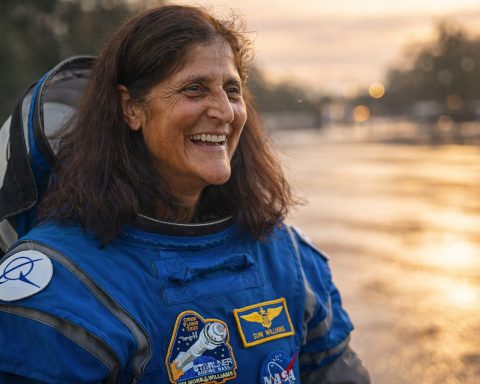
NASA’s Suni Williams retires after Starliner saga, ending a record-setting run

NASA’s Suni Williams retires after Starliner saga, ending a record-setting run

NASA announced Tuesday that astronaut Sunita “Suni” Williams has retired after a 27-year career with the agency. The departure comes at a tricky time for NASA’s human spaceflight efforts: the agency is juggling two U.S.-made spacecraft for missions to the International Space Station while pushing forward with Artemis, its ambitious return-to-the-Moon program.
January 21, 2026