
Washington, Feb 3, 2026, 14:08 EST
- Falcon 9 flights paused after second-stage issue following Starlink deployment
- SpaceX reviewing data; no return-to-flight timeline given
- NASA targets Crew-12 launch to the ISS no earlier than Feb. 11
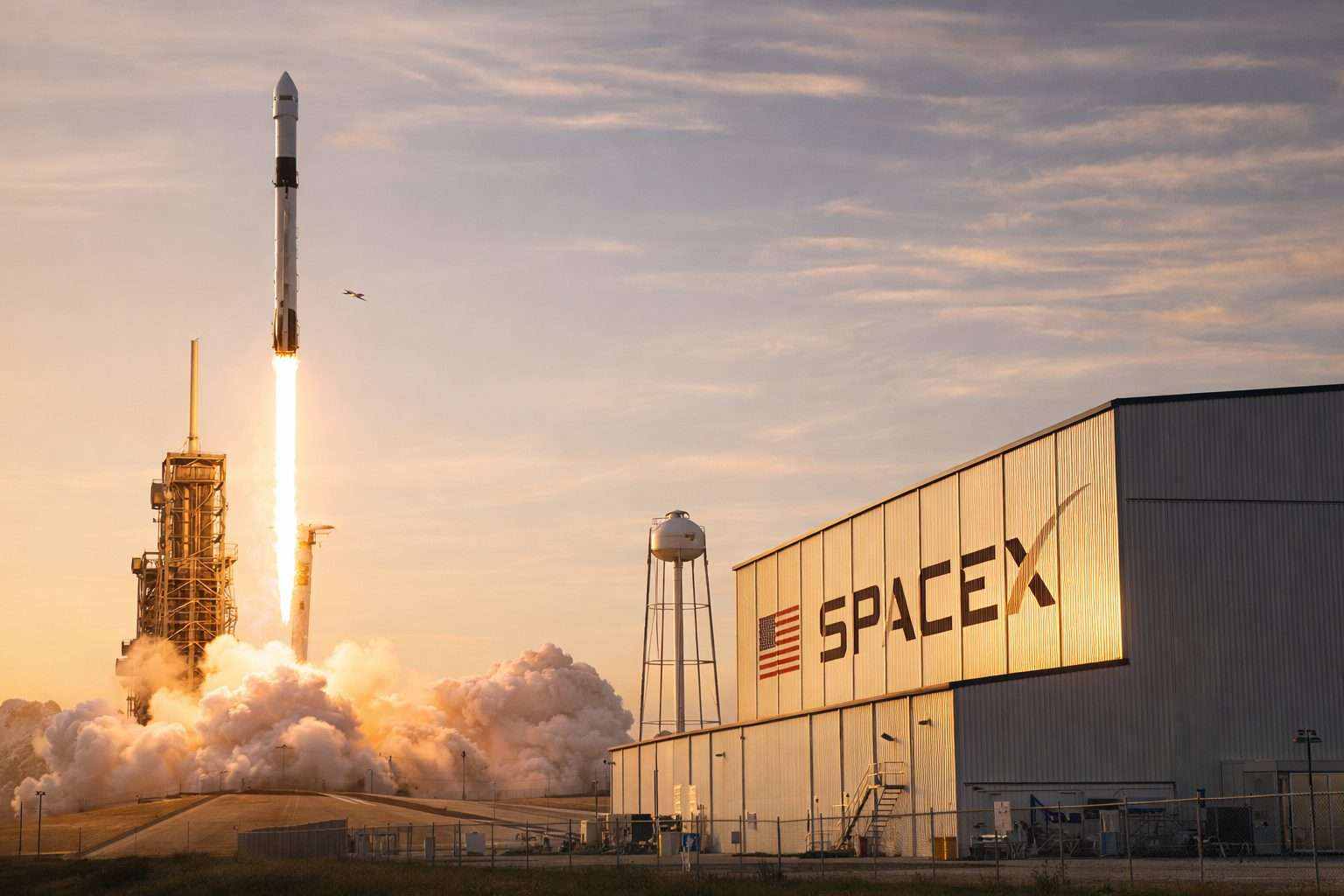
SpaceX has grounded flights of its Falcon 9 rocket after a problem hit the vehicle’s second stage following a Starlink launch on Monday, the company said. The mission deployed 25 satellites, but the upper stage later suffered an “off-nominal condition” while preparing for a planned deorbit, and SpaceX said it was reviewing data “to determine root cause and corrective actions before returning to flight.” Falcon 9 flew 165 times in 2025; SpaceX gave no return-to-flight timetable, and an Federal Aviation Administration spokesman was furloughed amid the U.S. government shutdown, while the rocket’s last failure came in 2024 — its first since 2016 — during another Starlink mission. Reuters
That pause matters because Falcon 9 has become the backbone of SpaceX’s launch business and its Starlink broadband network. A second-stage issue is awkward: that upper stage must finish the job in orbit and then safely dispose of itself.
The timing also brushes up against NASA’s near-term plans. The agency said Crew-12 is targeted to launch from Cape Canaveral no earlier than Feb. 11 with commander Jessica Meir, pilot Jack Hathaway, and mission specialists Sophie Adenot of the European Space Agency and Andrey Fedyaev of Roscosmos headed for the International Space Station.
SpaceX said the second stage ran into trouble during preparation for its deorbit burn, an engine firing used to steer the stage back into the atmosphere. “Off-nominal” is industry shorthand for something outside the expected range.
Falcon 9 lifted off from Vandenberg Space Force Base in California at 7:47 a.m. local time on Monday, carrying 25 Starlink satellites, Space.com reported. The booster, designated B1071, landed on the drone ship Of Course I Still Love You in the Pacific Ocean after its 31st flight, and the satellites deployed about an hour later. SpaceX said the vehicle later “performed as designed” to “passivate” the stage — a step that vents leftover propellant — while Space.com said the Starlink network now has about 9,628 active satellites, citing tracker Jonathan McDowell. Space
After a payload drop-off, the Falcon 9 upper stage normally fires its engine again to target reentry over remote water, limiting the chance debris survives over land. If that disposal step fails, the stage can linger in orbit or come down on a less predictable path.
But SpaceX has not said what broke, and the fix could be quick or messy. A deeper issue could stretch the pause and slow the flow of satellites to orbit.
Other U.S. launch firms, including United Launch Alliance and Rocket Lab, can carry some payloads, but they do not match Falcon 9’s tempo. That leaves customers watching SpaceX’s next update closely.
SpaceX did not say when Falcon 9 will fly again. For now, the satellites from Monday’s mission are operating in orbit, and the company is sifting through flight data.