Space 9 August 2025 - 20 January 2026

EchoStar Faces $40 Billion Test After SpaceX, AT&T Deals

EchoStar Faces $40 Billion Test After SpaceX, AT&T Deals

EchoStar is trading in Monday premarket as traders keep adjusting to what’s basically a new pitch for the company—less the old pay-TV story, more a play on selling spectrum, some SpaceX tie-in and a shot at fixing up the debt mess. EchoStar Corporation’s Nasdaq stock finished Friday at $129.19, dropping 1.4% on the session. Even so, shares gained roughly 4.9% for the week, which started May 26, during the market’s holiday-shortened stretch. EchoStar’s investor-relations figures showed 8.6 million shares traded Friday. The regular Nasdaq hours are 9:30 a.m. to 4 p.m. ET, so Friday’s close was the last full-session price before trading resumes on Monday.
June 1, 2026
Comet 3I/ATLAS suddenly looks “fully active” — and astronomers say the window is closing

Comet 3I/ATLAS suddenly looks “fully active” — and astronomers say the window is closing

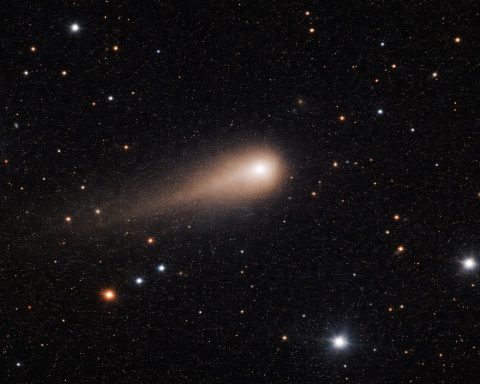
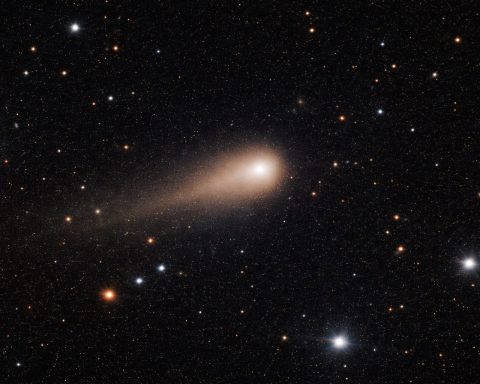
NASA’s SPHEREx space telescope detected that interstellar comet 3I/ATLAS has entered a noticeably more active phase following its closest approach to the Sun, called perihelion. Carey Lisse from Johns Hopkins University Applied Physics Laboratory called it “a much more active object.” The timing is crucial because this visitor ranks among the rarest targets astronomers have tracked. NASA notes that 3I/ATLAS is only the third confirmed interstellar object spotted in our solar system, following 1I/‘Oumuamua and 2I/Borisov. It’s moving on a hyperbolic trajectory—too fast for the Sun’s gravity to capture. NASA confirms it posed no threat to Earth, passing about 1.8 astronomical units away on Dec. 19, and it’s expected to swing past Jupiter in March as it heads out.
January 20, 2026
NASA’s TESS pivots to track interstellar comet 3I/ATLAS — and the data will be public

NASA’s TESS pivots to track interstellar comet 3I/ATLAS — and the data will be public

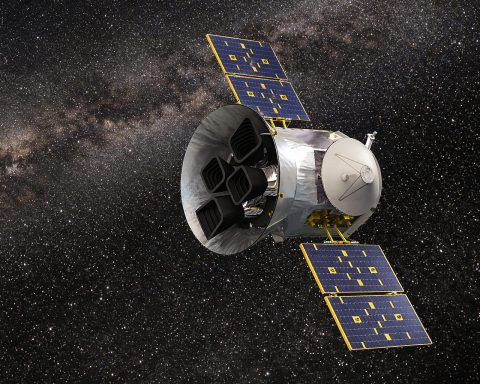
NASA’s Transiting Exoplanet Survey Satellite, better known as TESS, has paused its regular mission to focus on interstellar comet 3I/ATLAS. The spacecraft is now tracking this visitor from beyond our solar system as it makes its exit. The timing is crucial since this object is already moving away. Having passed its closest point to the Sun, it’s dimming as it retreats, reducing the window for extended, consistent observation.
January 18, 2026
NASA’s TESS abruptly pivots to watch interstellar comet 3I/ATLAS — what it’s looking for

NASA’s TESS abruptly pivots to watch interstellar comet 3I/ATLAS — what it’s looking for

NASA announced on Friday that its Transiting Exoplanet Survey Satellite will pause its ongoing Sector 99 observations for a special campaign tracking the interstellar comet 3I/ATLAS. The data collected from this comet will be calibrated and made publicly accessible following the mission’s usual protocols. This development is significant because 3I/ATLAS is a rare visitor from beyond our solar system—only the third confirmed object of its kind, following 1I/ʻOumuamua in 2017 and 2I/Borisov in 2019. Interstellar comets like this carry material that formed around other stars, providing a distant but direct glimpse into how planets and smaller bodies develop elsewhere.
January 17, 2026
Starlink vs Iran: SpaceX satellite internet faces tough jamming test amid crackdown

Starlink vs Iran: SpaceX satellite internet faces tough jamming test amid crackdown

Iran’s effort to suppress dissent is emerging as a major security challenge for SpaceX’s Starlink, following the company’s move to offer free satellite internet access to Iranians this week, sources including activists, analysts, and researchers report. Starlink, which accounted for $15 billion of SpaceX’s revenue in 2024, now faces signal jamming and GPS spoofing attacks—manipulated location data that can disrupt the alignment of its terminals. This moment is crucial because Starlink has evolved beyond a consumer gadget into vital infrastructure, especially in regions where governments sever cables, throttle mobile networks, or shut down the internet entirely. If Iran manages to consistently disrupt the service, the issue won’t remain confined to Iran alone.
January 17, 2026
NASA’s Artemis II moon rocket starts its slow crawl to the pad — what happens before a February launch

NASA’s Artemis II moon rocket starts its slow crawl to the pad — what happens before a February launch

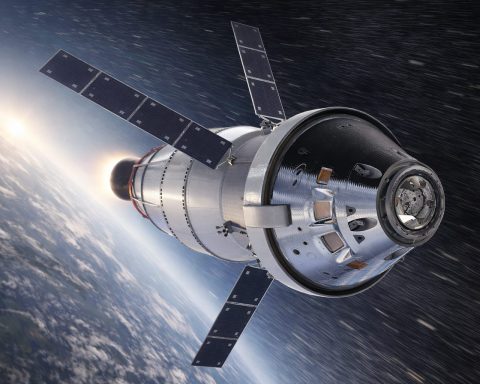
CAPE CANAVERAL, Florida, January 17, 2026, 10:32 EST NASA kicked off the rollout of its Artemis II Moon rocket to Launch Pad 39B at Kennedy Space Center on Saturday, marking a critical milestone for the agency’s first crewed lunar mission in over five decades. The four-mile journey began promptly at 7:04 a.m. EST, with the earliest opportunity to launch set for Feb. 6, according to NASA.
January 17, 2026
Starlink in Iran: SpaceX faces its toughest test yet as Tehran tries to jam satellite internet

Starlink in Iran: SpaceX faces its toughest test yet as Tehran tries to jam satellite internet

Iran's efforts to cut off communications amid a brutal crackdown are running into Elon Musk’s Starlink. SpaceX recently made the satellite internet service free for Iranians, and existing terminals inside the country have managed to keep some connections up and running. The timing is crucial since Tehran has mostly cut off internet access amid protests, forcing activists and rights organizations to hunt for any way to share images and reports beyond the country’s borders. Despite being banned, Starlink’s dishes stand out as one of the rare options still functioning.
January 16, 2026
Open Cosmos wins Liechtenstein’s Ka-band spectrum filings for a European LEO broadband push

Open Cosmos wins Liechtenstein’s Ka-band spectrum filings for a European LEO broadband push

Open Cosmos, a UK-based satellite firm, has clinched Liechtenstein’s priority filings for Ka-band spectrum. This move marks a crucial regulatory milestone as it aims to develop its own LEO broadband constellation across Europe. Timing is crucial. Throughout Europe, “sovereign” communications have moved beyond policy discussions into a pressing reality, with governments seeking secure connectivity solutions that don’t rely on a limited range of private networks.
January 14, 2026
FCC clears SpaceX to add 7,500 more Starlink satellites — and loosen a key limit that caps capacity

FCC clears SpaceX to add 7,500 more Starlink satellites — and loosen a key limit that caps capacity

SpaceX just got the green light from the FCC to launch an additional 7,500 second-generation Starlink satellites. This approval paves the way for the company to boost satellite broadband capacity and enhance direct-to-device mobile service. What really affects users isn’t merely the number of satellites. The agency also approved lower orbital altitudes and adjustments to power and beam regulations, which, simply put, allow Starlink to squeeze more usable bandwidth into the same slice of sky.
January 14, 2026
Your Smartphone Can Now Text via SpaceX’s Starlink Satellites – Here’s Everything You Need to Know

Your Smartphone Can Now Text via SpaceX’s Starlink Satellites – Here’s Everything You Need to Know

For decades, making a call outside of cell tower range meant carrying a bulky satellite phone. Today, that’s changing. Your everyday smartphone can now connect directly to satellites for basic services like text messaging, thanks to emerging satellite-to-phone networks. SpaceX’s Starlink – best known for broadband dishes – has entered the mobile arena with Starlink Direct to Cell, a service enabling standard phones to communicate with satellites in orbit starlink.com starlink.com. The goal: eliminate “no signal” dead zones so that you can stay connected anywhere you can see the sky starlink.com t-mobile.com. This new capability is rolling out gradually. Early offerings focus on texting and emergency features, with data and voice services to follow. It’s a dramatic development at the
September 2, 2025
Cosmic Gold Rush

Cosmic Gold Rush: Inside the 2025 Race to Harvest Asteroid Riches

Is the first trillionaire going to be an asteroid miner? Many believe so – even a U.S. senator famously predicted “the world’s first trillionaire will be made in space.” cruz.senate.gov The reason: asteroids are loaded with precious resources. A single metal-rich asteroid like 16 Psyche, now being explored by NASA, has been speculatively valued at $10,000 quadrillion – far more than the entire global economy earth.com. These space rocks contain abundant metals and even water ice that could be turned into rocket fuel. In theory, a small asteroid might hold more platinum than has ever been mined on Earth. No wonder asteroid mining is dubbed the “cosmic gold rush.” Not long ago, asteroid mining was pure science fiction. But today
August 19, 2025
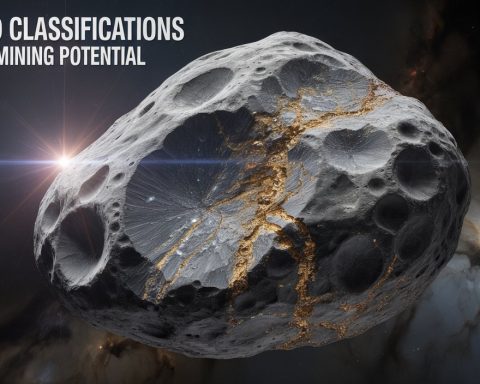
Asteroid Classifications and Their Mining Potential

Asteroid Minerals: Mining C-Type, S-Type & M-Type Space Rocks Worth Trillions

Asteroid mining is often touted as the next gold rush in space, with experts predicting it could birth the first trillionaire phys.org. Thousands of asteroids orbit near Earth, many laden with water, metals, and minerals that could revolutionize industries. This comprehensive report explores the types of asteroids most relevant to mining – C-type, S-type, M-type – their composition and economic potential, how scientists identify these space rocks, the major players driving the asteroid mining race, and the latest developments in this emerging frontier. We’ll also examine expert projections on when asteroid mining might become reality and what it means for our future. Not all asteroids are created equal. Astronomers classify asteroids by their composition and spectral properties into several types,
August 17, 2025
Inside the Race to Scout and Mine Space’s Richest Rocks

Asteroid Gold Rush: Inside the Race to Scout and Mine Space’s Richest Rocks

When NASA opened a capsule of asteroid dust in late 2023, they found something astonishing: black grains from asteroid Bennu laden with carbon and water reuters.com. It was a cosmic treasure hinting at resources that could one day fuel rockets or be sold for enormous profit. Little wonder that visionaries are eyeing asteroids as the next gold rush. Astrophysicist Neil deGrasse Tyson even predicted “the first trillionaire there will ever be is the person who exploits the natural resources on asteroids” vanderbilt.edu. What sounds like science fiction is fast becoming reality, with space agencies and startups racing to reconnoiter asteroids – scouting their composition, testing mining technology, and paving the way for extraterrestrial resource extraction. This report dives into the
August 16, 2025
Satellites Powered by Water

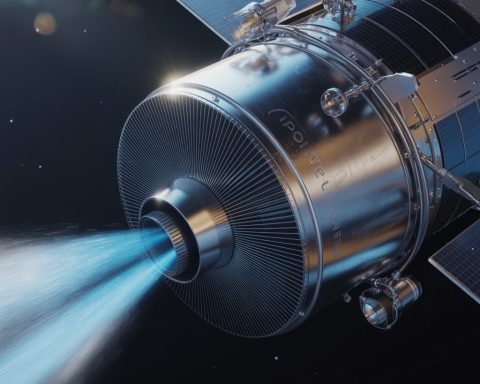
Satellites Powered by Water? The Revolutionary Propellant Changing Spaceflight

Imagine a future where satellites are propelled not by toxic fuels or rare gases, but by plain old water. It might sound like science fiction, but water-powered satellite drives are rapidly becoming a reality. These novel propulsion systems use H₂O as a propellant – either blasting out superheated steam or breaking water into hydrogen and oxygen for combustion – to maneuver spacecraft in orbit. The appeal is clear: water is cheap, abundant, green, and far safer to handle than traditional rocket fuels esa.int, nasa.gov. As retired astronaut Chris Hadfield put it, being able to propel spacecraft with nothing more than solar energy and distilled water is “a great freedom,” especially since water is widely available in space spaceref.com. In this
August 16, 2025
Asteroid Mining

The New Gold Rush: How Asteroid Mining Could Create Trillionaires and Change Earth’s Future (2025 Update)

Imagine a rock in space worth more than the entire global economy. It sounds like science fiction, but remote asteroid mining – using robotic spacecraft to extract valuable resources from asteroids – is fast moving from fantasy toward reality. Enthusiasts call it the next gold rush in space, with astrophysicist Neil deGrasse Tyson famously predicting that “the first trillionaire... will be the person who mines asteroids.” brainyquote.com While that may be hyperbole, the excitement is real: asteroids are rich in metals like platinum and gold, water ice for fuel, and other materials that could revolutionize industries on Earth and support future space colonies. Here we’ll break down what remote asteroid mining is, why it matters, who’s leading the charge, and
August 14, 2025
Laser Reflectors are Revolutionizing Satellite Communications

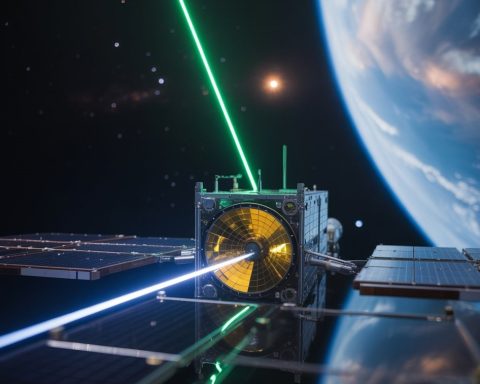
How Laser Reflectors are Revolutionizing Satellite Communications

Imagine beaming ultra-fast internet from space using lasers, or tracking a satellite with pinpoint accuracy via a reflected beam of light. Laser reflectors for satellite-to-Earth optical communications are making these scenarios a reality. By bouncing laser signals between satellites and ground stations, these systems enable data to travel at light-speed with vastly higher bandwidth than traditional radio links. NASA officials hail optical communication as “a boon for scientists and researchers who always want more from their space missions,” noting that “more data means more discoveries” e laser links, laser reflector technology is transforming how we communicate with and through satellites. At the heart of this technology is the retroreflector – essentially a sophisticated mirror device that reflects an incoming laser
August 14, 2025
Guide to Satellite Earth Monitoring

Complete Guide to Satellite Earth Monitoring: How Space Tech Is Watching Our Planet Now

Every day, hundreds of eyes in the sky are quietly observing Earth. From high above, satellites track hurricanes forming in the ocean, measure the dwindling ice at the poles, and even count crops growing in fields. This complete guide breaks down how this space-based monitoring works, its evolution over time, and why it matters. We’ll explore the major ways satellite Earth observation is used – from environmental protection and climate change tracking to agriculture, disaster response, urban planning, and national security – and highlight the key players. We’ll also cover the latest developments to show how space technology is watching our planet right now. Satellite Earth monitoring means using satellites orbiting our planet to collect information about Earth’s surface, oceans,
August 10, 2025
What Are Nano-Satellites and CubeSats

What Are Nano-Satellites and CubeSats?

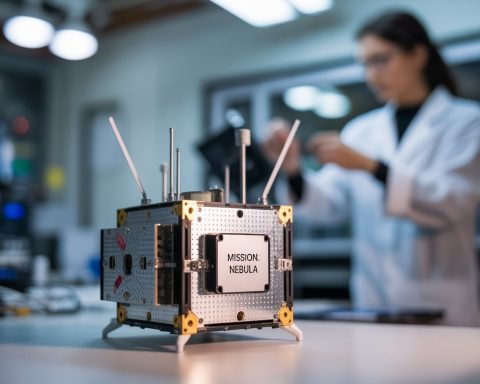
Nano-satellites are small satellites defined by mass – typically between 1 kg and 10 kg nanosats.eu. They are part of the broader “small satellite” family, which includes microsatellites and even smaller classes like picosatellites and femtosatellites nanosats.eu. Nano-satellites are tiny compared to conventional satellites, yet they can perform useful missions in orbit. CubeSats are a specific type of nano-satellite defined not just by mass but by a standardized size and form factor. A CubeSat is built from one or more 10×10×10 cm cubic units mdpi.com. A 1U CubeSat is a cube roughly 10 cm on a side and weighs up to about 1.3–2 kg mdpi.com. Larger CubeSats are made by combining these units – for example, a 3U CubeSat is
August 9, 2025
How Reusable Rockets Are Revolutionizing Space Travel

Launch, Land, Repeat: How Reusable Rockets Are Revolutionizing Space Travel

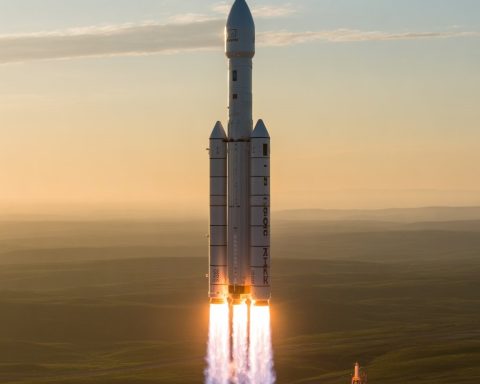
Rocket launches once meant saying goodbye to expensive hardware after a single use. For decades, rockets were treated as disposable – each mission dumping spent boosters and stages into oceans or burning them up in the atmosphere. Today, a radical shift is underway. Reusable rockets – launch vehicles designed to fly, land, and fly again – are transforming the economics and possibilities of space travel. By recovering and refurbishing major rocket components instead of discarding them, companies are driving down launch costs and ramping up launch frequency. This report delves into what reusable rockets are, how they came to be, who’s leading the charge, and why they matter for the economy, the environment, the military, and the future of space
August 9, 2025