Lifestyle 9 August 2025 - 25 October 2025

This 6-Pound iPhone Case Is Going Viral — And It Might Finally Curb Your Phone Addiction

This 6-Pound iPhone Case Is Going Viral — And It Might Finally Curb Your Phone Addiction

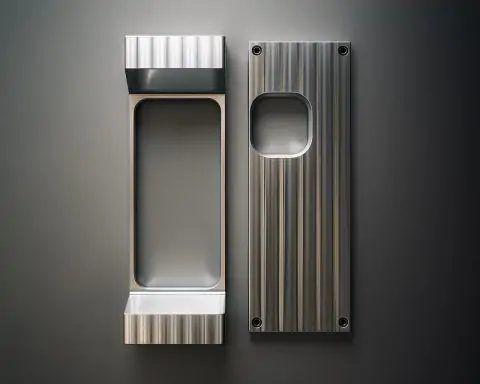
The “6-Pound Phone Case” is exactly what it sounds like: a heavy stainless-steel cover for an iPhone. It was designed by Logan Ivey and his colleagues at Matter Neuroscience. Ivey explains he tried everything – flip phones, app blockers, timed lock boxes – but none worked for him. Finally he asked himself, “How can I keep all the functionality of my phone, but still use it less?” govtech.com. The answer: make the phone really heavy and inconvenient to use govtech.com notebookcheck.net. The result is a blocky steel case reminiscent of old ‘brick’ mobile phones. It adds 6 pounds to the device – heavier than many laptops notebookcheck.net – and encloses the phone in two screwed-together halves. There are cutouts for
October 25, 2025
Does Putin Use Body Doubles? The Truth Behind the Rumors

Does Putin Use Body Doubles? The Truth Behind the Rumors

Speculation that Putin might use decoys dates back nearly to the start of his rule. In August 2000, just months after Putin became president, Russia’s Federal Protective Service chief Yevgeny Murov publicly stated that Putin “had no doubles,” addressing early rumors head-on en.wikipedia.org. Putin himself denied the idea in 2001, dismissing whispers that he had a stand-in. The notion may have seemed far-fetched – but it never fully died out. By 2004, even a Russian tabloid was running a story about an “alleged body double” from Putin’s hometown trying to sell the president’s ancestral house en.wikipedia.org, blurring tabloid gossip with conspiracy. Throughout the 2000s and 2010s, the Putin body-double theory simmered on the fringes. A popular meme in the 2010s
August 17, 2025
Glow-in-the-Dark Houseplants

Glow-in-the-Dark Houseplants Are Finally Real—Here’s the Science, Safety, and Shopping Guide (2025 Deep‑Dive)

“Bioluminescent ornamental plants” are living houseplants engineered to make their own light—no UV lamp or spray needed. The first consumer model, Light Bio’s Firefly Petunia, uses a mushroom bioluminescence pathway that runs on a common plant metabolite, so the glow is continuous but dim to human eyes. The USDA determined in 2023 that this petunia is unlikely to pose increased plant‑pest risk; despite a 2024 court decision that changed biotech oversight, that USDA determination remains valid. Sales expanded in 2024–2025 across the U.S. only. Meanwhile, lab research in 2024–2025 pushed brightness up by 10–100× in test plants, hinting at more varieties ahead. APHIS, Federal Register, Nature They’re plants that biologically produce light via enzymes and a light‑emitting molecule. Unlike fluorescent
August 15, 2025
What Are Nano-Satellites and CubeSats

What Are Nano-Satellites and CubeSats?

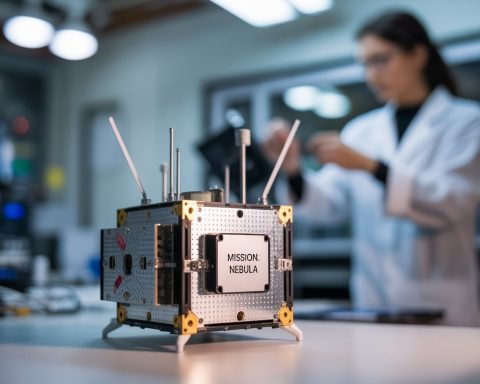
Nano-satellites are small satellites defined by mass – typically between 1 kg and 10 kg nanosats.eu. They are part of the broader “small satellite” family, which includes microsatellites and even smaller classes like picosatellites and femtosatellites nanosats.eu. Nano-satellites are tiny compared to conventional satellites, yet they can perform useful missions in orbit. CubeSats are a specific type of nano-satellite defined not just by mass but by a standardized size and form factor. A CubeSat is built from one or more 10×10×10 cm cubic units mdpi.com. A 1U CubeSat is a cube roughly 10 cm on a side and weighs up to about 1.3–2 kg mdpi.com. Larger CubeSats are made by combining these units – for example, a 3U CubeSat is
August 9, 2025