
New York, May 27, 2026, 15:03 (EDT)
- Rocket Lab traded up 3.5% at $148.25 in afternoon dealing, against a mixed broader market.
- The company said it passed a key review for a Space Development Agency missile-tracking constellation tied to an $816 million award.
- Space peers also rose, with Intuitive Machines, AST SpaceMobile and Planet Labs higher as investors kept chasing listed space names.
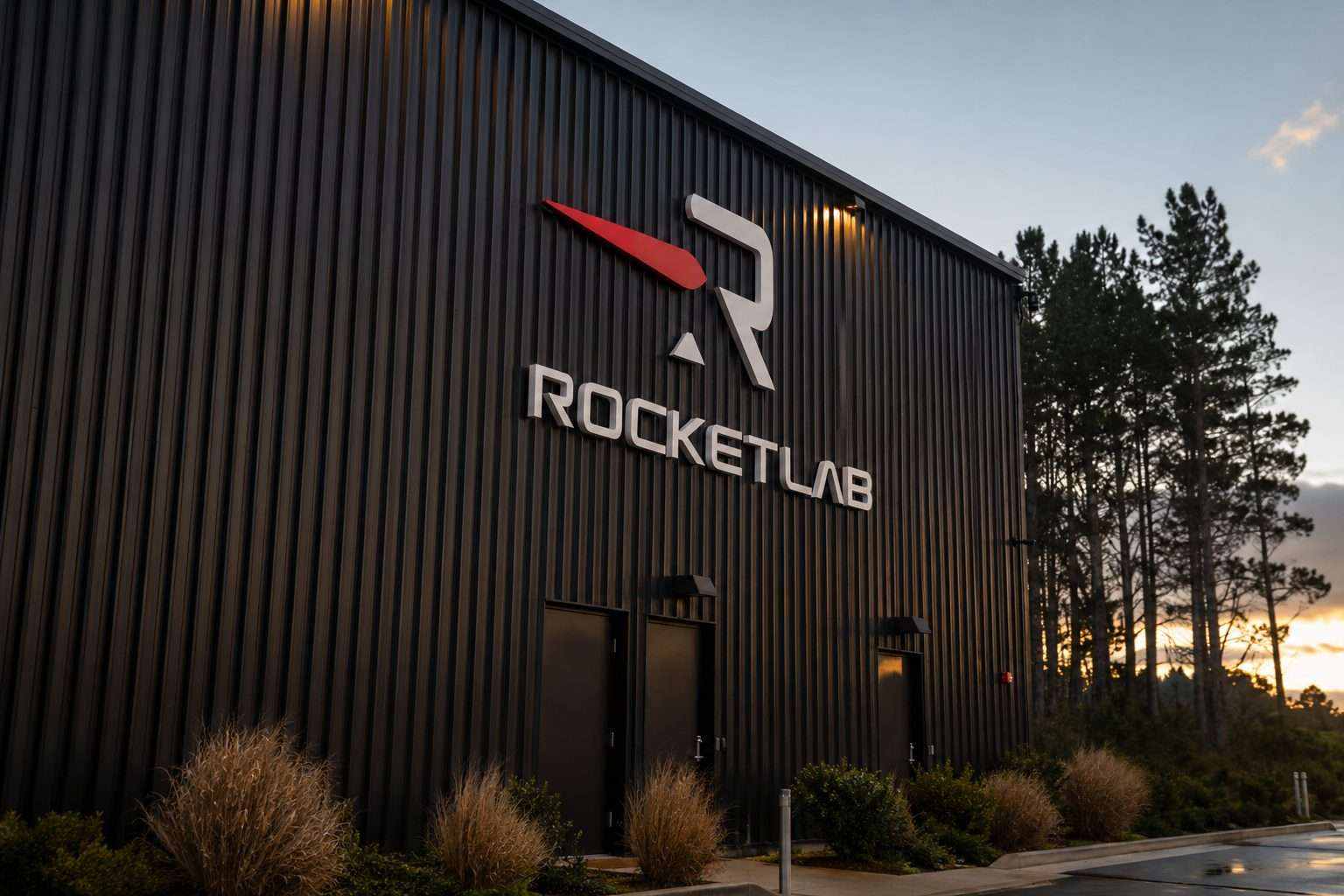
Rocket Lab shares climbed on Wednesday, outpacing a flat-to-mixed market, after the space company said a U.S. missile-defense satellite program passed a key design checkpoint and investors kept bidding up publicly traded space names.
The Nasdaq-listed stock was up 3.5% at $148.25 near mid-afternoon in New York, after trading between $137.99 and $156.20. The move valued Rocket Lab at about $89.7 billion, market data showed.
The index backdrop was quieter. The SPDR S&P 500 tracker was little changed, while the Invesco QQQ, which tracks large Nasdaq names, slipped 0.1%. That made Rocket Lab’s move stand out, even inside a hot corner of the market.
The immediate trigger was Rocket Lab’s announcement that it had passed System Requirements Review, or SRR, for the Space Development Agency’s Tracking Layer Tranche 3 constellation. An SRR is an early program gate: it checks whether a proposed design meets the customer’s operational needs before deeper engineering work proceeds.
That matters because investors are increasingly valuing Rocket Lab as more than a small-launch provider. The company said the program would use its Lightning satellite platform and in-house components including infrared sensors, solar arrays, avionics, optical terminals and propulsion systems. Rocket Lab said its roughly $816 million TRKT3 award, together with a prior roughly $515 million SDA award, brings its SDA work to more than $1.3 billion.
Brad Clevenger, president of Rocket Lab USA, said the review “validates our approach to delivering space infrastructure.” The company framed the program as part of its push into national-security space work, where contract size and mission complexity tend to be higher than in one-off launch services. Rocket Lab Corporation
There was another piece of fresh news. Late Tuesday, Rocket Lab said it had completed the acquisition of Motiv Space Systems, a California robotics and motion-control company now rebranded as Rocket Lab Robotics. Founder and CEO Peter Beck said the deal gives Rocket Lab “everything needed to lead the next era of Mars exploration”; Motiv CEO Chris Thayer said joining Rocket Lab would help “accelerate that vision.” Rocket Lab Corporation
The broader tape helped. Reuters reported that U.S. space stocks have drawn fresh attention as investors look toward a possible SpaceX initial public offering, the sale of shares to public investors for the first time. Peter Andersen, founder of Andersen Capital Management, told Reuters that SpaceX going public had “acted as a lens” for investors looking at space travel and support systems. Reuters
The competitive read was mixed but supportive. Intuitive Machines rose about 14.2%, AST SpaceMobile gained about 7.0% and Planet Labs advanced about 3.0%, market data showed. Those companies do not match Rocket Lab line for line, but they sit in the same investor bucket: public space infrastructure names with high expectations and uneven profit profiles.
Rocket Lab’s latest rally also rests on earlier results. On May 7, the company reported record first-quarter revenue of more than $200 million and a backlog of more than $2.2 billion. Backlog is contracted work not yet recognized as revenue, and it is a key gauge for a company trying to show that launches, spacecraft and defense programs can turn into repeat business.
But the downside case has not gone away. In a recent SEC prospectus, Rocket Lab said it may sell up to $3 billion of common stock through an at-the-market program, a structure that lets a company sell shares gradually into public trading. The filing said such sales could dilute earnings per share and may depress the stock price; if that supply arrives while execution slips on defense satellites, robotics integration or future launch plans, the trade could turn quickly.
For now, buyers are treating Rocket Lab as a defense-and-space infrastructure story, not just a rocket-launch story. That is a richer narrative. It is also a harder one to prove.